A Renaissance Celebration: Timpani Sheet Music Preview

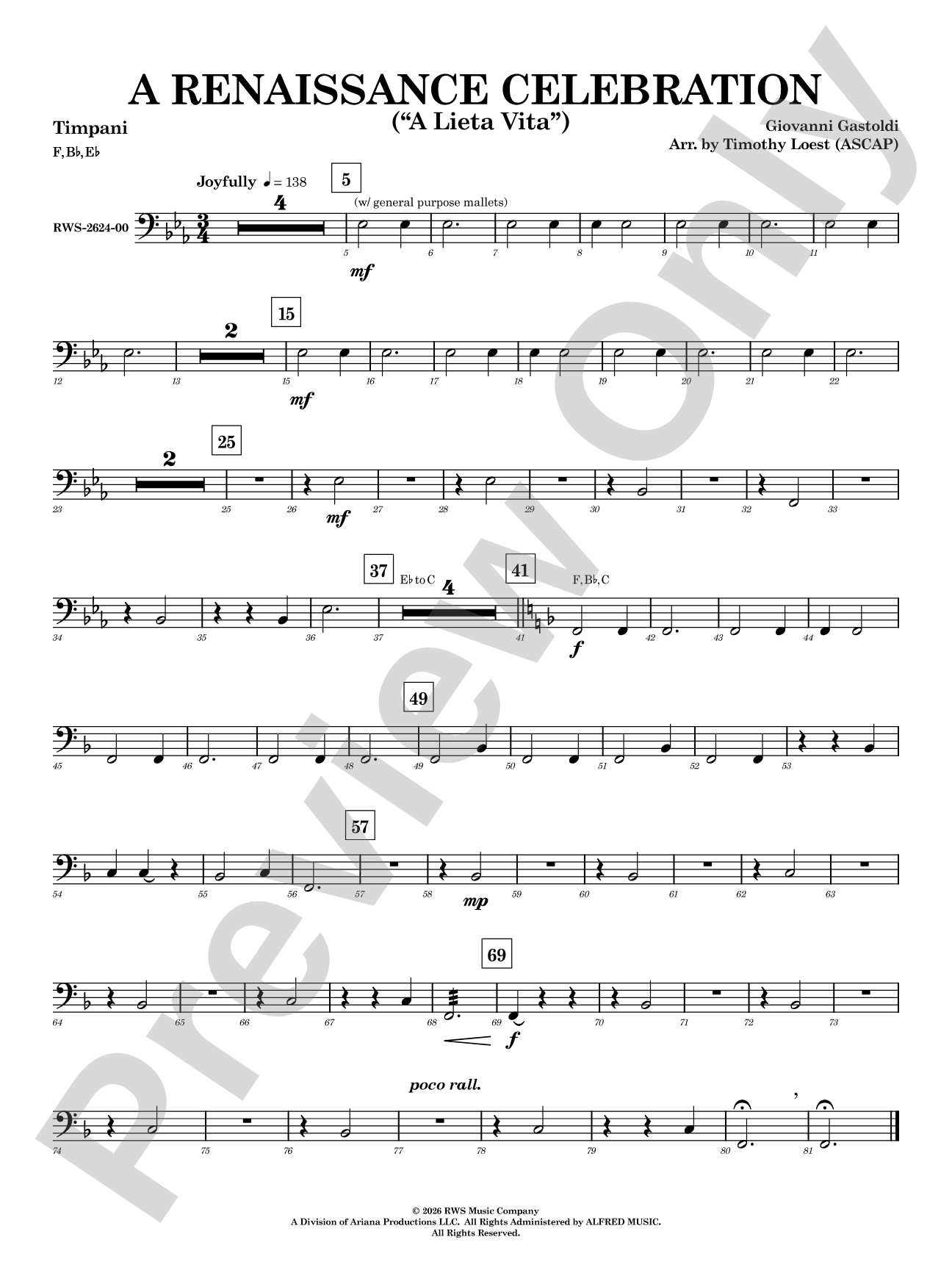
A Renaissance Celebration: Timpani

("A Lieta Vita")

By Giovanni Gastoldi / arr. Timothy Loest

Grade: 2.5

Item: 98-PC-0000024_TMP

Digital Download
$3.00
Description
Timeless joy abounds in this enchanting arrangement of a 16th-century Renaissance masterwork by Italian composer Giovanni Gastoldi. Students and audiences will be swept away as they dive into a piece that celebrates not just music, but an enduring legacy that invites everyone to embrace happiness in their lives.

A Renaissance Celebration: Timpani isn't in MakeMusic Cloud just yet...but it could be. Let us know you'd like to see it, and you'll help shape what comes next. In the meantime, start a free trial and dive into thousands of interactive titles your students can play along with today.

Sample Audio
0:00
0:00
Sample Video
Additional Details
Series: RWS - Developing Band
Publisher: RWS Music Company
SKU: 98-PC-0000024_TMP

More about this title

About the Composer: Giovanni Gastoldi

Giovanni Gastoldi (c. 1556-1609) was an Italian Renaissance composer and maestro di cappella whose output bridged the late Renaissance and early Baroque periods. He gained particular renown for his ballets and lighter vocal works, which were performed across Europe and influenced the development of dance music during his era.

Gastoldi's gift lay in crafting melodies that were both memorable and joyful, with clear harmonic progressions that made his works accessible to performers of varying skill levels. His compositions remain staples in music education because they combine genuine artistic merit with the pedagogical clarity that helps developing musicians understand Renaissance style and form.

Why we love this

Loest's arrangement opens Renaissance repertoire to developing bands without sacrificing the character and elegance of the original. The Grade 2.5 voicing strikes that rare balance where students engage meaningfully with historical material while staying well within technical reach, making it an ideal choice for building cultural literacy alongside technical growth.

What to expect

Bright and celebratory without ever feeling frivolous. The piece radiates the kind of genuine happiness rooted in Renaissance melodic warmth and harmonic clarity, inviting both performers and listeners into a moment of shared musical contentment that feels timeless rather than quaint.

Who it's for

Grade 2.5 concert bands seeking repertoire that honors musical history while remaining approachable for developing ensembles. Directors programming festival or contest events will appreciate material that satisfies both the joy-focused concert setting and the technical demands of adjudication.

How to get the most out of it

  • Shape the phrasing in long, singing lines rather than letting rhythmic figures become mechanical. Renaissance melodies breathe, so encourage musicians to think of their parts as extended vocal lines even when playing instrumental figurations.
  • Balance the texture so that the primary melody emerges clearly without overwhelming support voices. In arrangements of this type, clarity of line often matters more than blend.
  • Let the natural Renaissance harmonic motion guide your tempo and articulation choices. Avoid over-styling with modern rubato; the piece speaks most powerfully when rhythms sit steady and harmonies resolve transparently.
  • Pay attention to voice leading in transition passages. Arrangers often handle modulations or sectional joints differently than students expect, so mark these moments clearly in rehearsal.

How to use it

Pair this with other Renaissance or early Baroque arrangements to create a themed concert segment that educates audiences about compositional lineage. It also works beautifully as a festival entry, where the accessible Grade 2.5 level and robust musical content make a strong impression without requiring an advanced ensemble.

Skills your students will build

  • Reading Renaissance harmonic language and voice leading
  • Sustaining long melodic phrases with consistent tone quality
  • Balancing ensemble texture across multiple independent lines
  • Understanding historical style through contemporary performance
  • Managing tempo stability in music built on clear rhythmic patterns

You May Also Like