
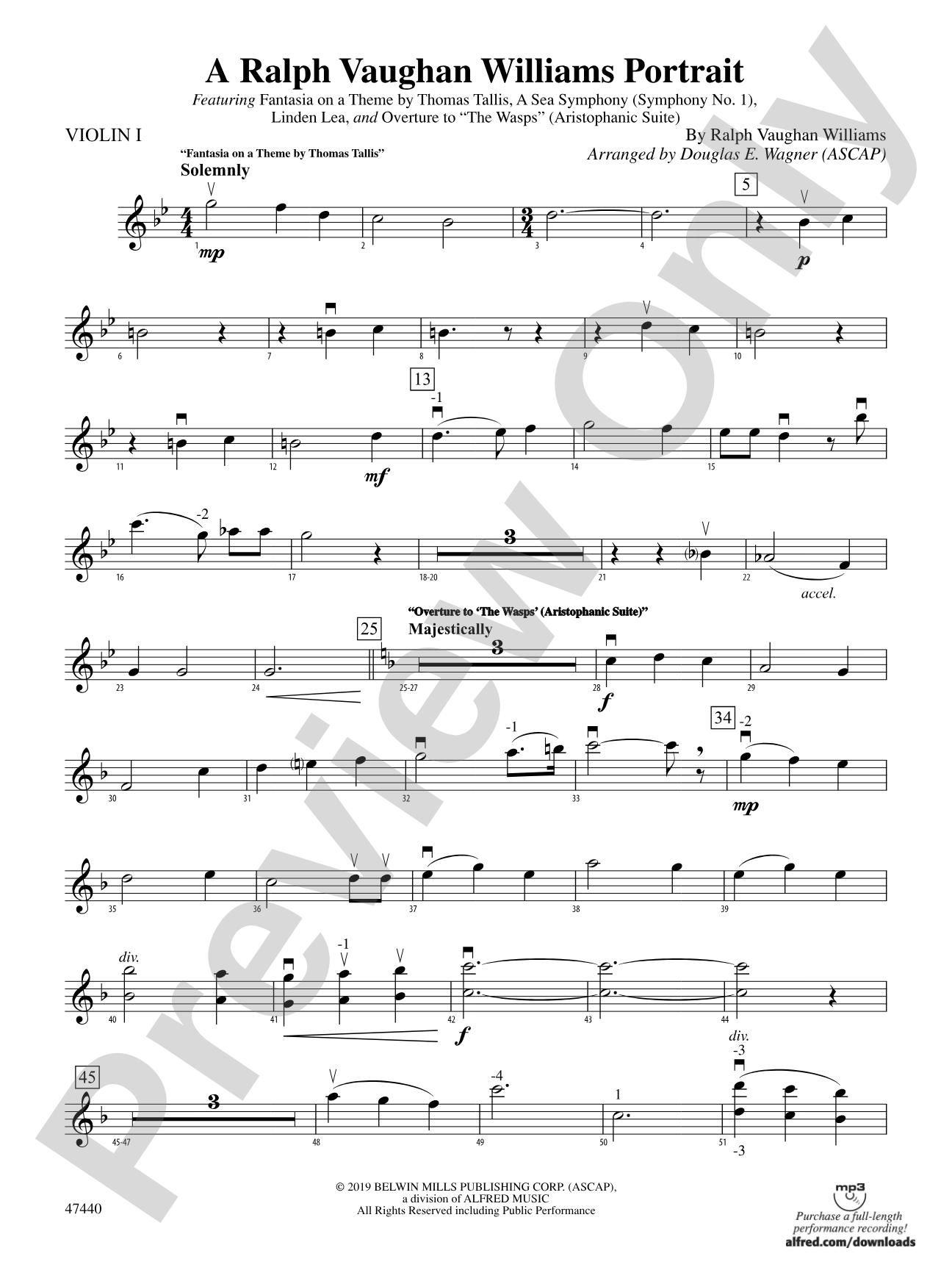

A Ralph Vaughan Williams Portrait: 1st Violin
Featuring: Fantasia on a Theme by Thomas Tallis / A Sea Symphony (Symphony No. 1) / Linden Lea / Overture to The Wasps (Aristophanic Suite)
By Ralph Vaughan Williams / arr. Douglas E. Wagner
Grade: 3
Item: 00-PC-0017970_VN1
$5.99
Pickup currently not available
Description
This work features "Fantasia on a Theme by Thomas Tallis," Sea Symphony (Symphony No. 1)," "Linden Lea," and "Overture to 'The Wasps'" (Aristophanic Suite). Interesting melodies, beautiful orchestrations, and smooth transitions will help your orchestra create an artistic performance. Perfect for both festivals and concerts, this piece is an excellent finale for any performance.


Don't just read it, hear it, play along with it, and watch your students grow with it. In MakeMusic Cloud, A Ralph Vaughan Williams Portrait: 1st Violin comes alive with professional accompaniment, adjustable tempo, and built-in practice tools that turn solo practice into real progress.
Open in the Player
Jump straight in and assign it today.
Start Your Free Trial
Open this title and explore the full library in minutes.
Sample Audio
1
Audio File
--:--
0:00
0:00
Sample Video
Additional Details
Series:
Belwin Concert String Orchestra
Publisher:
Alfred Music
Page Count:
124
SKU:
00-PC-0017970_VN1
More about this title
About the Composer: Ralph Vaughan Williams
Ralph Vaughan Williams (1872-1958) shaped the landscape of 20th-century British music by drawing deeply from English folk traditions, hymn tunes, and modal harmonies. His compositional voice emerged from a conviction that art music could be rooted in vernacular song without sacrificing sophistication or emotional depth.
In the classroom and rehearsal hall, Vaughan Williams remains essential. His works balance accessibility with genuine artistic substance, making him ideal for developing musicians who need to engage with complex orchestration and expressive phrasing. Teachers value him because he demonstrates how melody and harmony can serve emotional truth rather than mere technical display.
Why we love this
Wagner's arrangement captures four beloved Vaughan Williams pieces in a single, cohesive concert work that moves fluidly across contrasting moods without losing focus. String orchestras at this level rarely find material that combines genuine masterwork substance with genuinely playable orchestration, yet this collection delivers both. The journey from the expansive "Fantasia on a Theme by Thomas Tallis" through the seascape impressionism of "Sea Symphony" to the pastoral warmth of "Linden Lea" and the spirited humor of "Wasps" creates a complete artistic arc that audiences recognize as genuine.
What to expect
This arrangement unfolds as a guided tour through English musical consciousness, moving from the spiritual contemplation of medieval plainchant through impressionistic seascapes and into bucolic contentment and theatrical wit. Each movement preserves the emotional integrity of the original while remaining firmly grounded in string orchestra sonority. The overall effect is one of artistic completeness, as if your ensemble is genuinely interpreting a masterwork rather than performing an excerpt.
Who it's for
String orchestras at the intermediate level (Grade 3) performing concerts, festivals, or competitions will find this arrangement both musically rewarding and technically accessible. Directors seeking to program substantial British repertoire without overextending their ensemble's range can rely on this collection to deliver depth and polish. Student players benefit from encountering Vaughan Williams' harmonic language and orchestrational sophistication within a coherent concert-length experience.
How to get the most out of it
- Balance the opening of the Tallis "Fantasia" by allowing the divisi sections to speak clearly; these are not background filler but essential harmonic voices that define the piece's luminous quality.
- Shape the Sea Symphony movement with attention to the swell and recede of dynamic waves; avoid driving forward mechanically and instead let the music breathe between its larger gestures.
- Anchor "Linden Lea" with a warm, singing tone from the first violins while keeping inner voices lightly textured so the folk-song melody can emerge without weight.
- Bring rhythmic clarity and character to the "Wasps" Overture by keeping the ensemble rhythmically unified; this finale needs buoyancy and ensemble lock to land effectively.
How to use it
Position this as a strong concert closer or festival finale where you want to leave your audience with a sense of artistic satisfaction and cultural grounding. The work's internal variety means it stands well on its own without additional programming, though it pairs effectively with contemporary or American works if you wish to frame it within a broader thematic concert. Alternatively, use individual movements as standalone pieces within a larger program to introduce students to Vaughan Williams across multiple concerts throughout the season.
Skills your students will build
- Reading divisi string sections and maintaining harmonic balance across multiple voices
- Shaping long melodic lines with architectural awareness rather than phrase-by-phrase impulse
- Responding to modal and chromatic harmonic language distinctly different from common-practice tonality
- Managing dynamic nuance and tonal color to evoke mood and atmosphere rather than display technical prowess
- Achieving ensemble precision in rhythmically diverse contexts, from meditative slow passages to energetic allegro writing