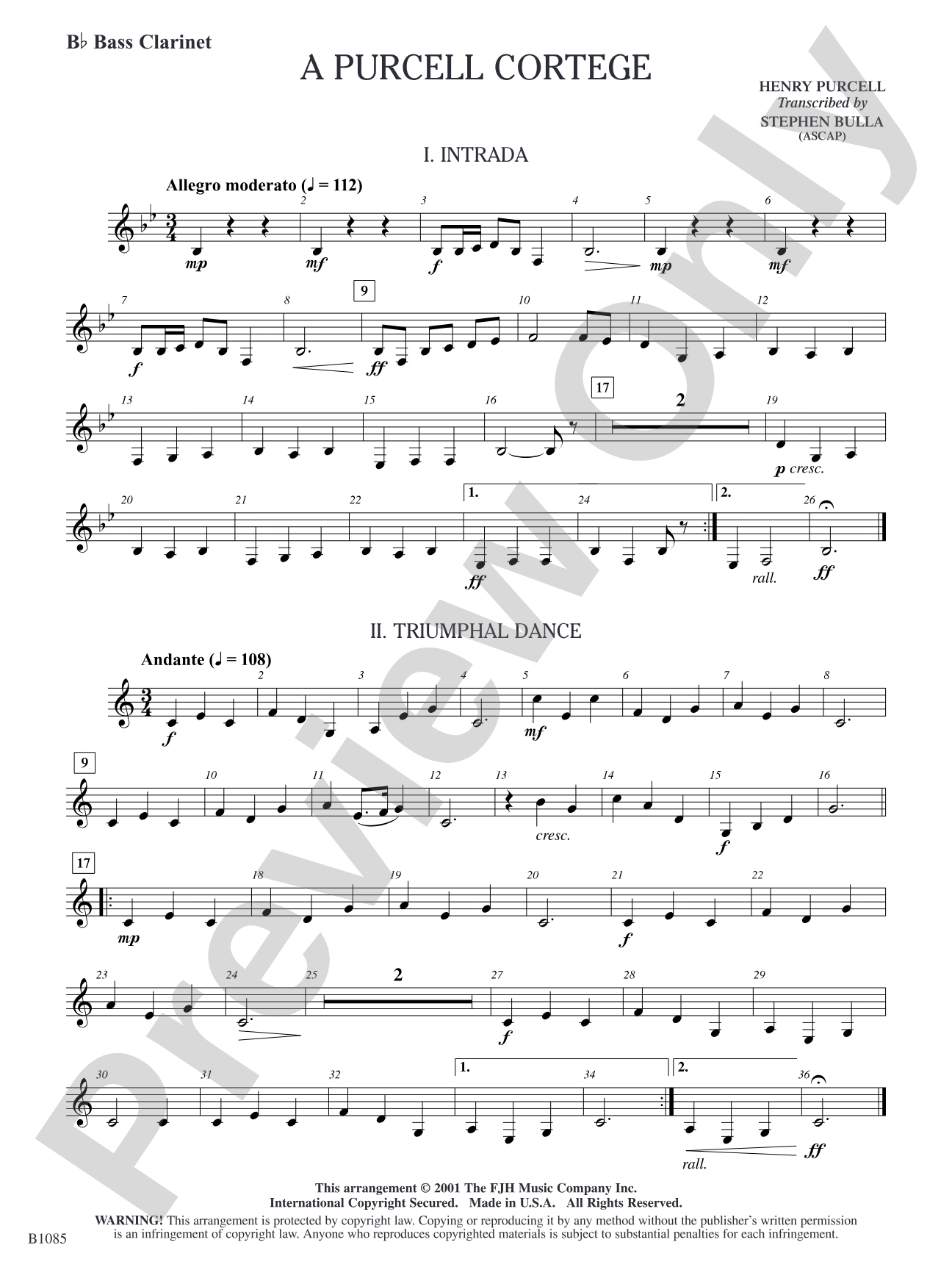
This four-movement work captures the essence of Henry Purcell's musical style. The scoring and ranges make this piece very idiomatic and accessible for all instruments. This is excellent teaching material and is ideal for any concert or festival appearance. (6:25)
Discover MakeMusic Cloud: thousands of interactive titles your students can play along with today.
Henry Purcell (1659-1695) stands as England's greatest Baroque composer, a figure whose harmonic language and instrumental writing shaped centuries of British music. His works span sacred music, opera, and instrumental suites, all marked by expressive depth and structural clarity that make them ideal models for teaching compositional craft.
Why we love this
Stephen Bulla's arrangement respects Purcell's voice-leading and harmonic genius while making the material sit beautifully across a concert band. The four-movement structure gives you programmatic variety without asking too much from younger players, and the idiomatic writing means your ensemble sounds polished from the first rehearsal.
What to expect
Elegant and purposeful. The cortege form (a slow procession-like movement typical of the period) carries a stately dignity that concert bands rarely get to explore. Purcell's harmonies feel both sophisticated and accessible, moving with the confidence of a composer who understood instrumental color intimately.
Who it's for
Directors programming at the Grade 3 level who want to introduce students to Baroque compositional thinking without overshooting technical demands. This works equally well for a concert setting or a festival appearance where you need music that sounds substantial but stays within reach.
How to get the most out of it
Shape the phrases as you would a vocal line. Purcell's melodies want to breathe, so resist rushing through the natural cadences.
Balance the inner voices carefully; they often carry harmonic information that clarifies the harmonic progression for listeners.
Let the arrangement's texture changes guide your dynamic choices. Purcell works best when each instrumental combination feels intentional.
Give yourself time with the recorded accompaniment to lock the ensemble's rhythmic foundation before focusing on expressive details.
How to use it
Use this to frame a concert around Baroque or historical themes, or pair it with a contemporary piece to highlight how modern composers build on classical foundations. At six and a half minutes, it anchors a program without dominating the rehearsal calendar.
Skills your students will build
Phrasing and breath management in instrumental lines originally conceived for voices
Harmonic listening, particularly recognizing cadential patterns and chord progressions
Balance within four-part texture, distinguishing melody from accompaniment from inner voices
Stylistic interpretation of Baroque ornamentation and articulation
Ensemble blend when multiple instruments carry thematic material simultaneously
You May Also Like
Scan to Complete Your Purchase
Use your phone's camera to scan the code below
You'll log in on your phone and the order will be added to your account