
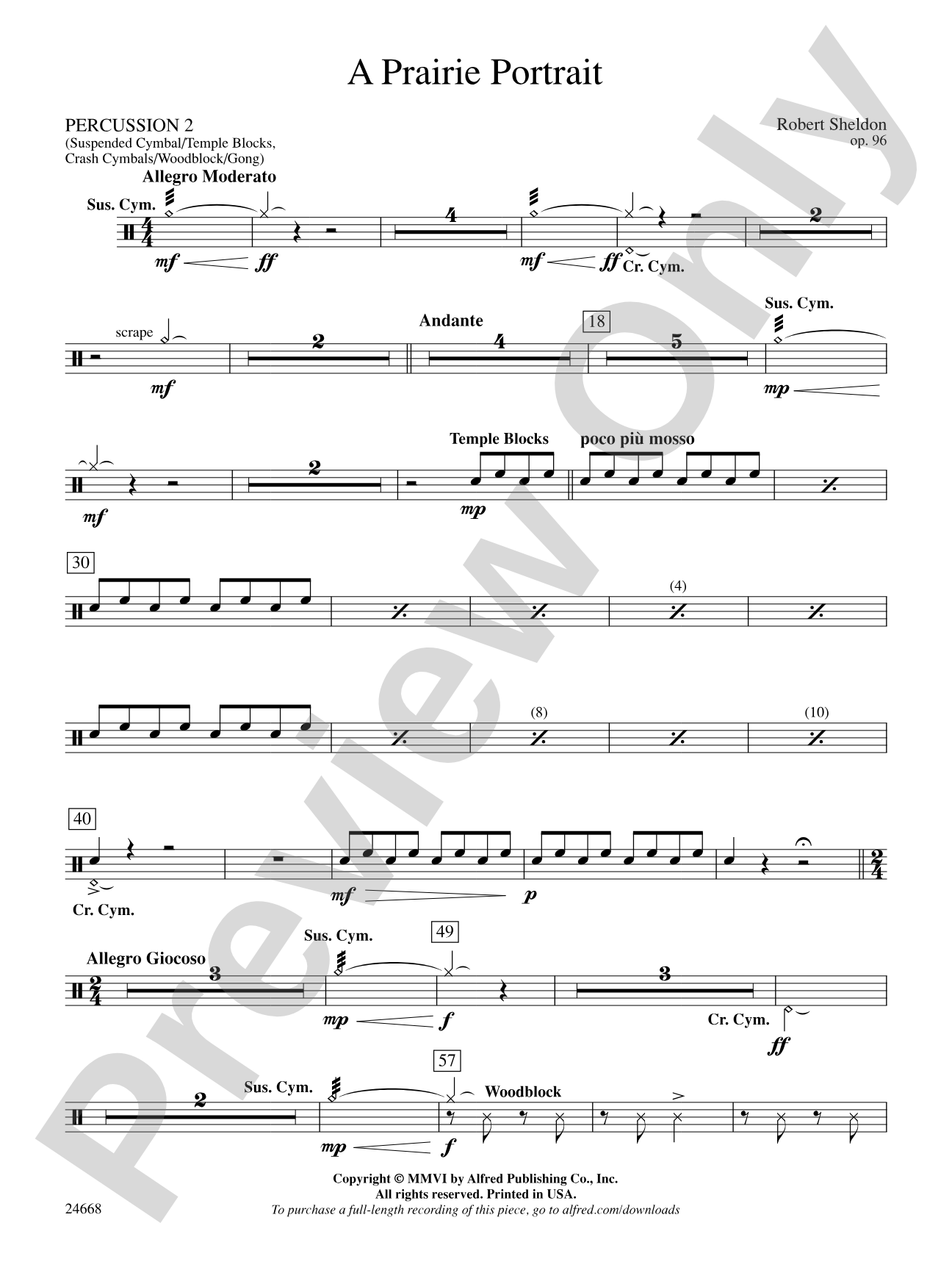

A Prairie Portrait: 2nd Percussion
By Robert Sheldon
Grade: 3 (Medium)
Item: 00-PC-0000836_PC2
$5.99
Pickup currently not available
Description
A Prairie Portrait was inspired by the poetry of Carl Sandburg. The lyrical quality of the music is a testament to the loving words he wrote as a tribute to his birthplace. The pioneer spirit shines through the opening of the work, full of youthful optimism and energy. The lyrical section that follows represents the poet's "hankering" for another day and beautiful night on the prairie, giving us the warm feelings of love and security we all feel about the place we call home. This title is available in MakeMusic Cloud.


Don't just read it, hear it, play along with it, and watch your students grow with it. In MakeMusic Cloud, A Prairie Portrait: 2nd Percussion comes alive with professional accompaniment, adjustable tempo, and built-in practice tools that turn solo practice into real progress.
Open in the Player
Jump straight in and assign it today.
Start Your Free Trial
Open this title and explore the full library in minutes.
Sample Audio
1
Audio File
--:--
0:00
0:00
Sample Video
No sample videos found.
Additional Details
Series:
Alfred Concert Band
Publisher:
Alfred Music
Page Count:
286
SKU:
00-PC-0000836_PC2
More about this title
About the Composer: Robert Sheldon

Robert Sheldon stands among the most frequently performed wind band composers of our time. His works appear regularly on festival programs and contest lists worldwide, and ensembles from Japan to Australia to Carnegie Hall have championed his music. He has received honors from the American School Band Directors Association, Phi Beta Mu, and ASCAP, and earned a honorary doctorate from VanderCook College of Music in 2020.
Beyond composing, Sheldon remains deeply engaged in music education through conducting, clinician work, and authorship. He serves as lead author of Sound Innovations for Concert Band and accepts commissions regularly while producing numerous publications annually. His schedule includes frequent guest conducting at All-State and Regional Honor Bands, as well as educational seminars at universities and state music education conferences across North America, Europe, Asia, and Australia.
Why we love this
Sheldon captures something genuinely moving here: a work that sounds mature and poetic without demanding virtuosity beyond Grade 3 capability. The dual structure (energetic opening followed by lyrical development) gives your band room to show both technical clarity and emotional depth, making it ideal for students who are just developing their ability to shape longer musical phrases.
What to expect
The opening sweeps forward with youthful vitality and wide-open optimism. Then the music softens into something tender and nostalgic, evoking quiet moments on an endless landscape, holding all the comfort and security of a place called home.
Who it's for
Concert bands at the Grade 3 level looking for repertoire that develops musicality and emotional expression without overwhelming technical demands. Directors seeking a piece that programs well in mixed concert formats and works equally effectively at festival or contest settings.
How to get the most out of it
- Build contrast between the opening's pioneer energy and the lyrical prairie section by adjusting your conducting tempo slightly and allowing the slower music genuine breath. This shift is the emotional heart of the work.
- Balance the melodic voices carefully in the lyrical section so that the primary theme sings clearly while inner parts provide warm harmonic support without overpowering the line.
- Use the full dynamic range (from the quiet, introspective moments to the fuller climaxes) to honor Sandburg's poetic intent. Grade 3 bands often pull back too conservatively; this piece rewards players who commit to its expressive arc.
- Address any sectional intonation issues early, especially in the slower section where exposed voicing makes imprecision more noticeable. Sustained tones in the lyrical passage are your tuning foundation.
How to use it
This pairs naturally with Americana or patriotic concert themes, or as the centerpiece of a program exploring American poetry and musical language. Its accessible Grade 3 level and substantial page count (286 pages of score and parts) make it suitable for festival competitions or a spring concert where you want to showcase emotional maturity alongside technical progress.
Skills your students will build
- Sustaining long, lyrical melodic lines with consistent tone quality and phrasing
- Listening for balanced inner-voice harmony in slower sections
- Contrasting articulation and energy between energetic and reflective sections
- Intonation awareness in exposed harmonic passages
- Responding to subtle tempo and dynamic shaping from the conductor