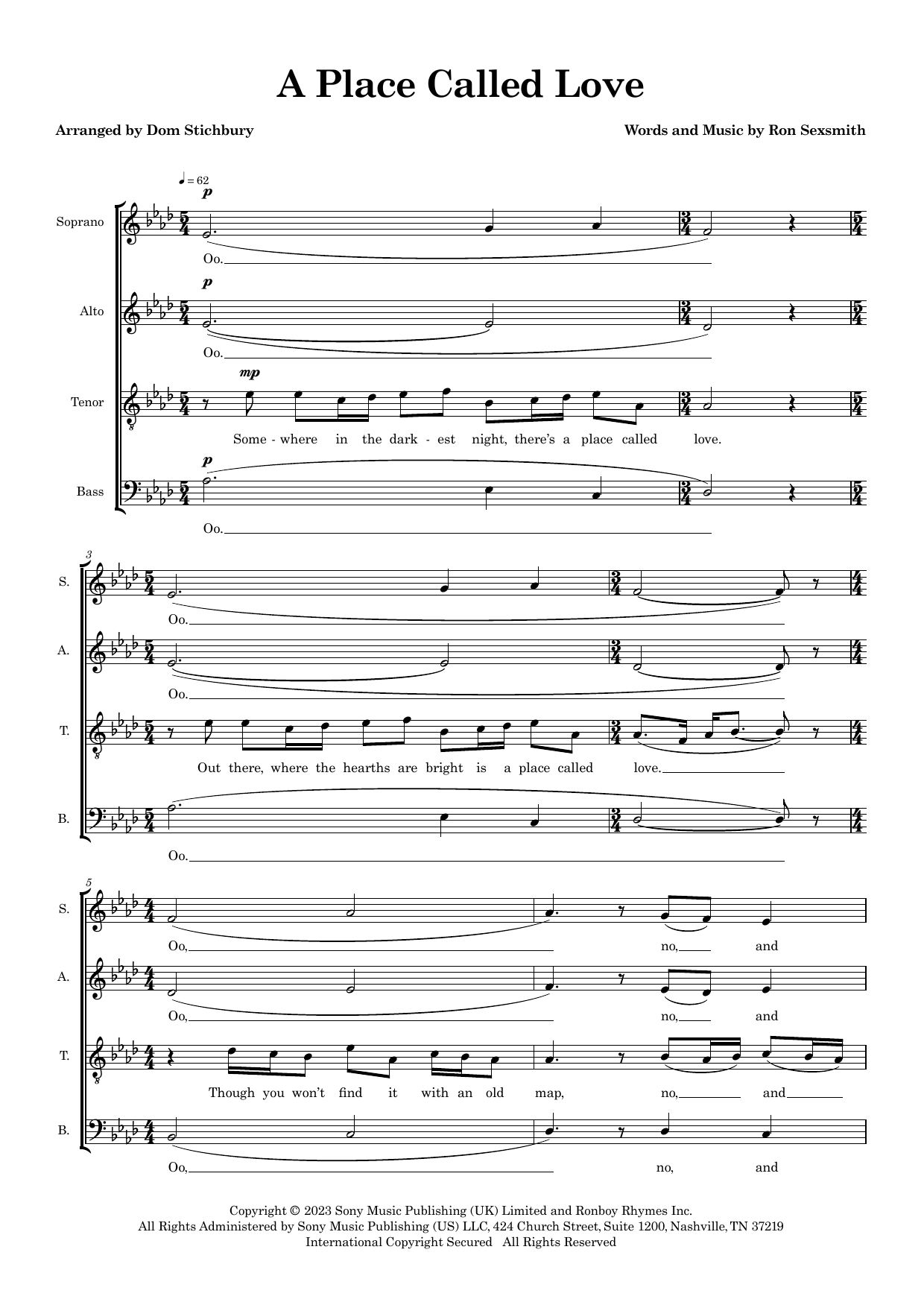
A Place Called Love (arr. Dom Stichbury) Sheet Music Preview

A Place Called Love (arr. Dom Stichbury): SATB Choral Octavo

As performed by Ron Sexsmith / Arranged by Dom Stichbury

Item: 35-DS01890861

Digital Download
$1.99
Description

A Place Called Love (arr. Dom Stichbury): SATB Choral Octavo isn't in MakeMusic Cloud just yet...but it could be. Let us know you'd like to see it, and you'll help shape what comes next. In the meantime, start a free trial and dive into thousands of interactive titles your students can play along with today.

Sample Audio
No sample audio found.
Sample Video
Additional Details
Publisher: Hal Leonard
Page Count: 5
SKU: 35-DS01890861

More about this title

About the Artist: Ron Sexsmith

Ron Sexsmith is a Canadian singer-songwriter known for his introspective lyrics and sophisticated pop sensibilities. His work spans four decades of recorded music, with a catalog that emphasizes emotional honesty and melodic craft. For choral arrangers and directors, Sexsmith's songs offer rich harmonic material and character-driven narratives that translate beautifully to ensemble settings.

Why we love this

Dom Stichbury's arrangement captures the warmth of Sexsmith's original without oversimplifying the harmonic language. The piece sits comfortably for mixed voices while preserving the melodic integrity that makes the song resonate, giving your singers material that feels contemporary and emotionally substantive rather than saccharine.

What to expect

Intimate and reflective, the piece invites singers and listeners into a personal space. The harmonic language feels modern without being dated, and the arrangement respects the quiet intensity of the original while giving voices room to breathe and connect.

Who it's for

This octavo works for intermediate to advanced choirs seeking contemporary material with substance. It suits groups comfortable with pop idioms and harmonic complexity, and it programs well for concerts featuring secular, introspective repertoire.

How to get the most out of it

  • Balance the melody across voice parts carefully; the tune may migrate between sections, and clear communication during rehearsal prevents the line from getting lost in four-part texture.
  • Approach the lyrical content with specificity. These words demand genuine expression, not performed sentiment, so spend time on diction and phrasing before perfecting pitch.
  • Keep accompaniment accompaniment texture transparent enough that harmonic movement supports rather than obscures the singers' lines.

How to use it

Place this alongside other contemporary art songs or as a contrasting moment in a mixed concert. Its emotional weight makes it effective as a penultimate selection before a final celebratory piece, or as a standalone offering in a program built around singer-songwriter material.

Skills your students will build

  • Balancing independent melodic lines while maintaining harmonic awareness
  • Sustaining legit singing tone in pop and contemporary contexts
  • Executing stylistically appropriate diction and phrasing in non-classical genres
  • Blending four-part harmony with textural transparency

You May Also Like