
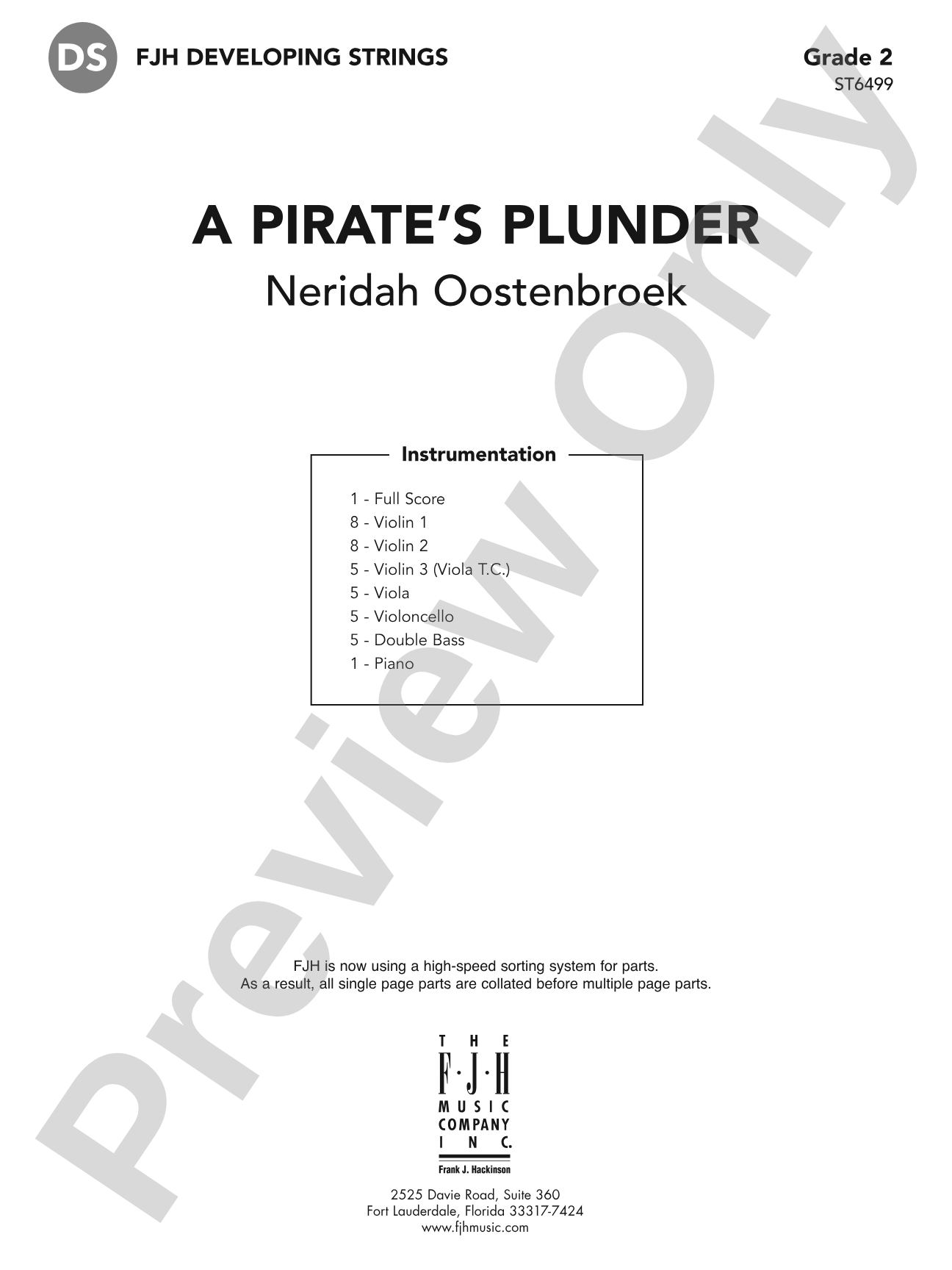
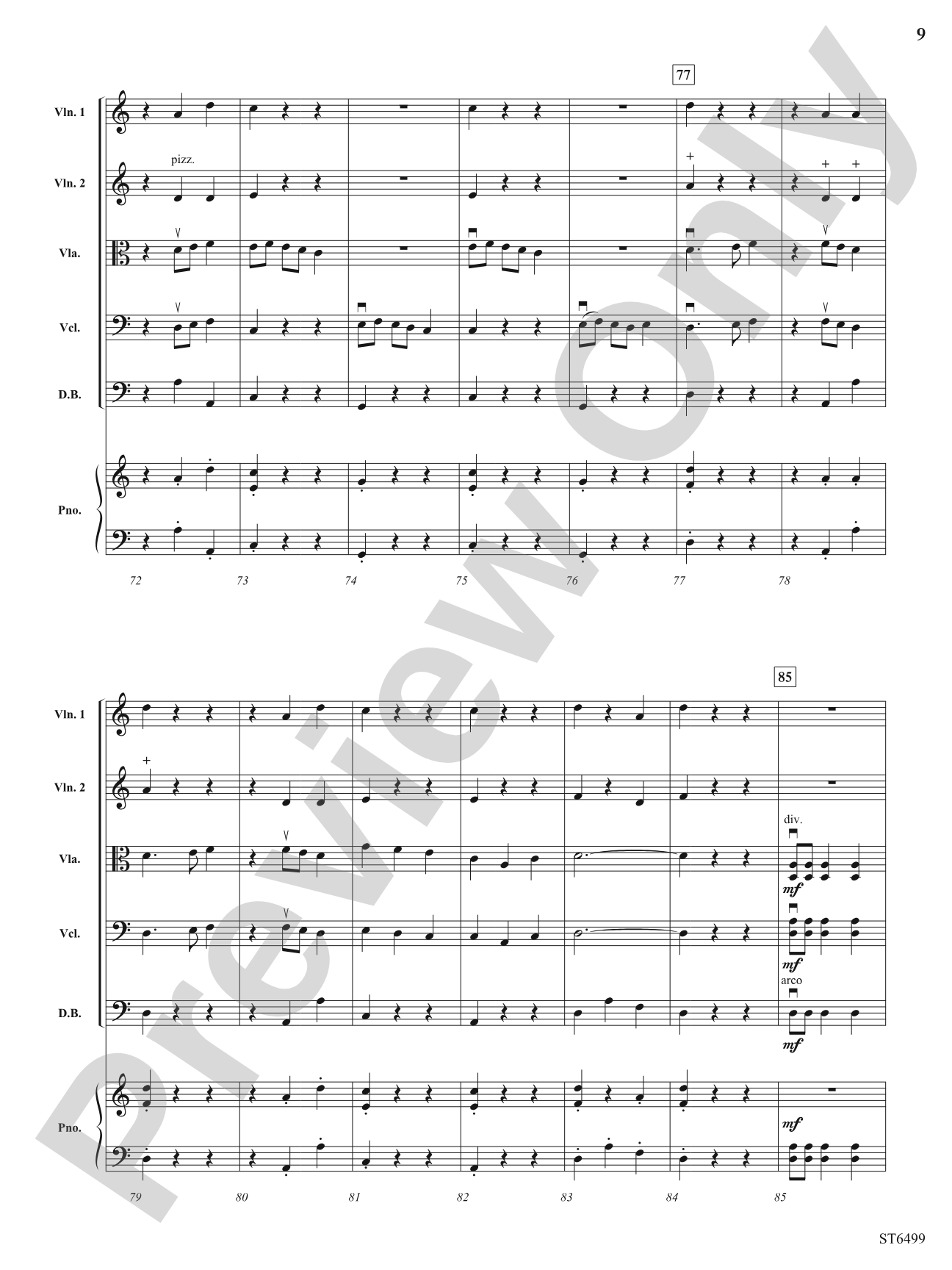
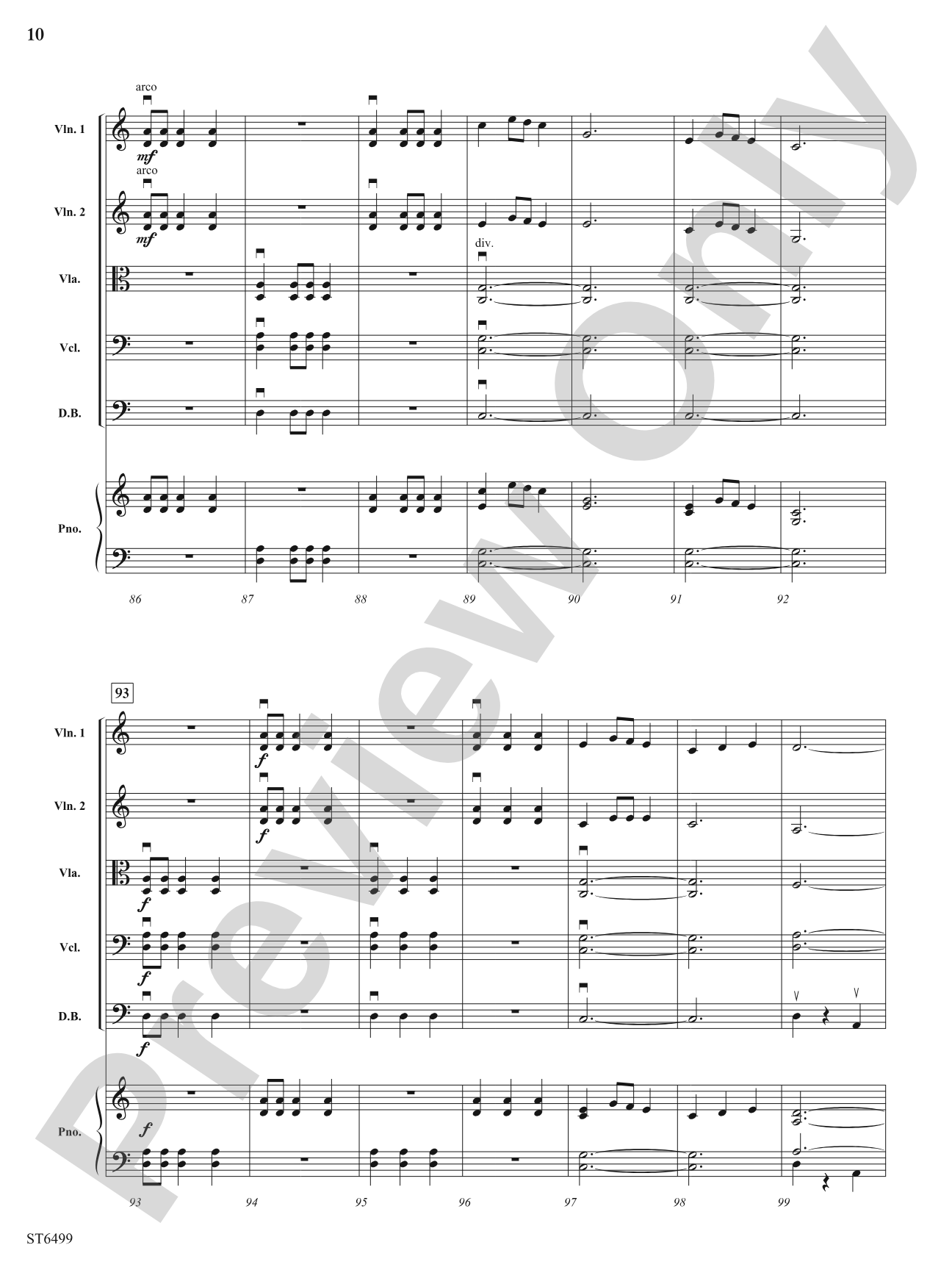
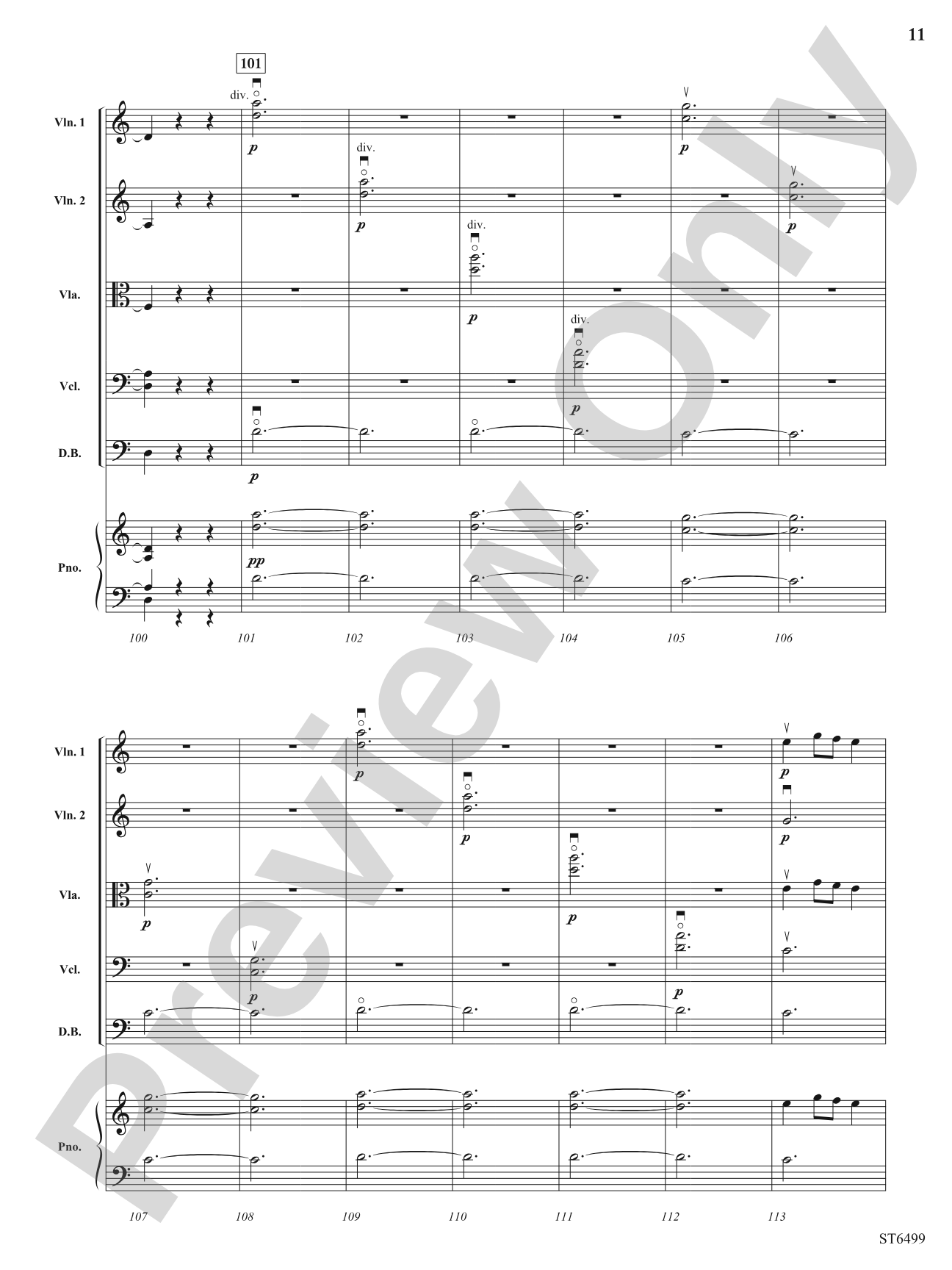
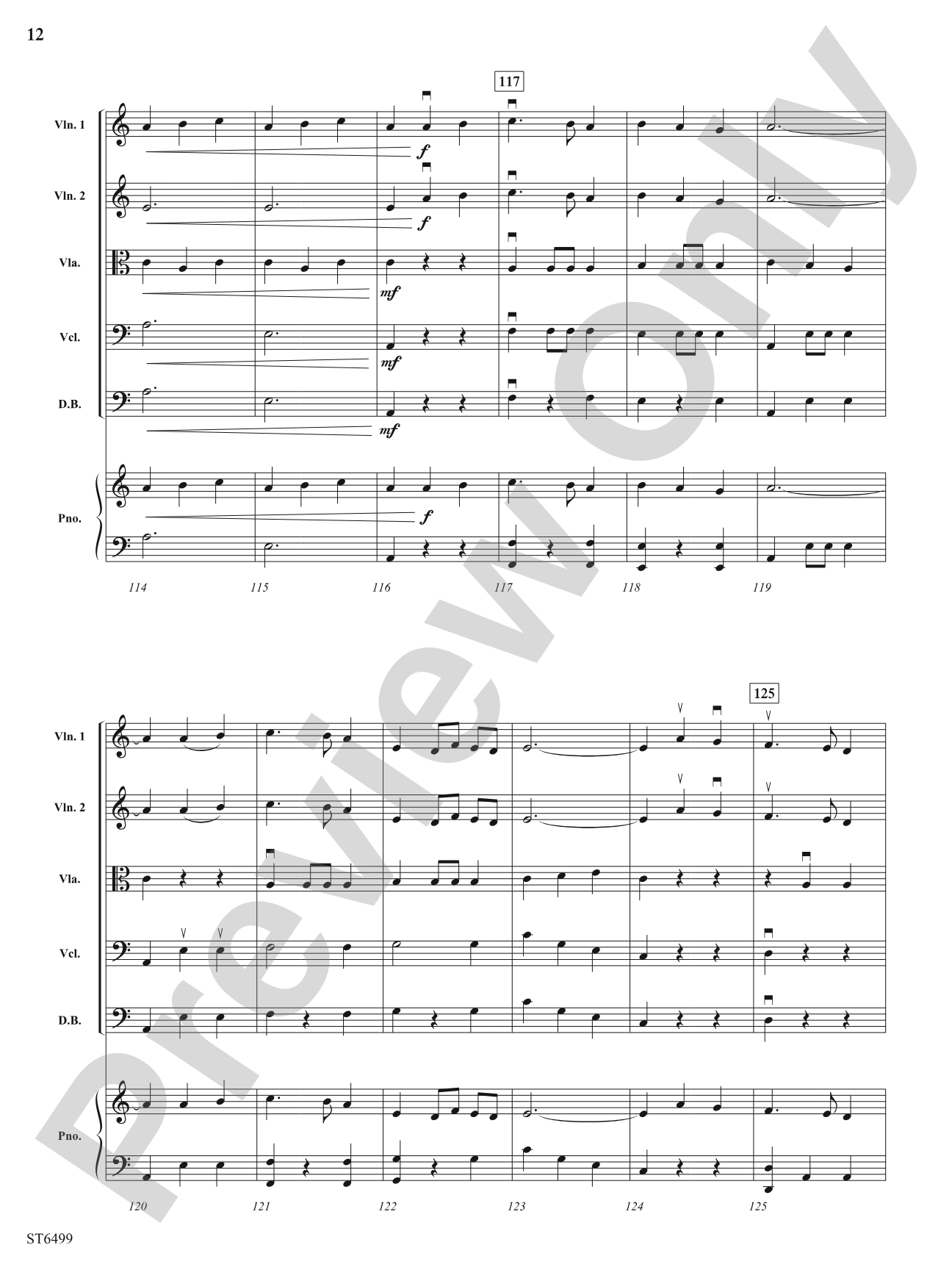

A Pirate's Plunder: String Orchestra Conductor Score & Parts
By Neridah Oostenbroek
Grade: 2
Item: 98-DST6499

$55.00
Pickup currently not available
Buy Extra Parts (Digital PDF Download)
| Product | Price | Quantity |
|---|---|---|
| A Pirate's Plunder: Score | $6.00 | |
| A Pirate's Plunder: Violin 1 | $7.00 | |
| A Pirate's Plunder: Violin 2 | $7.00 | |
| A Pirate's Plunder: Violin 3 (Viola T.C.) | $7.00 | |
| A Pirate's Plunder: Viola | $7.00 | |
| A Pirate's Plunder: Violoncello | $7.00 | |
| A Pirate's Plunder: Double Bass | $7.00 | |
| A Pirate's Plunder: Piano | $7.00 |
Parts Added to Cart!
Description
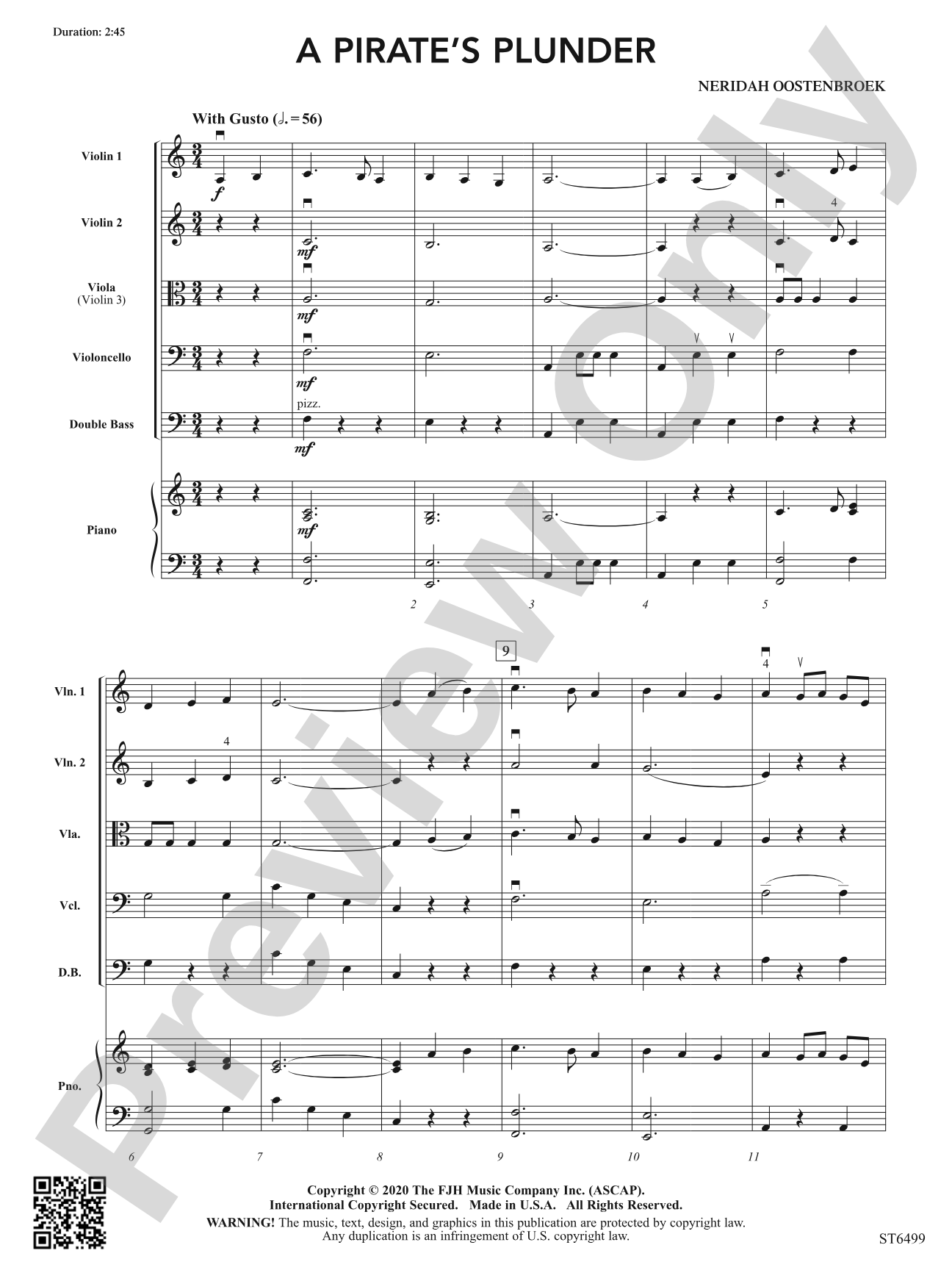
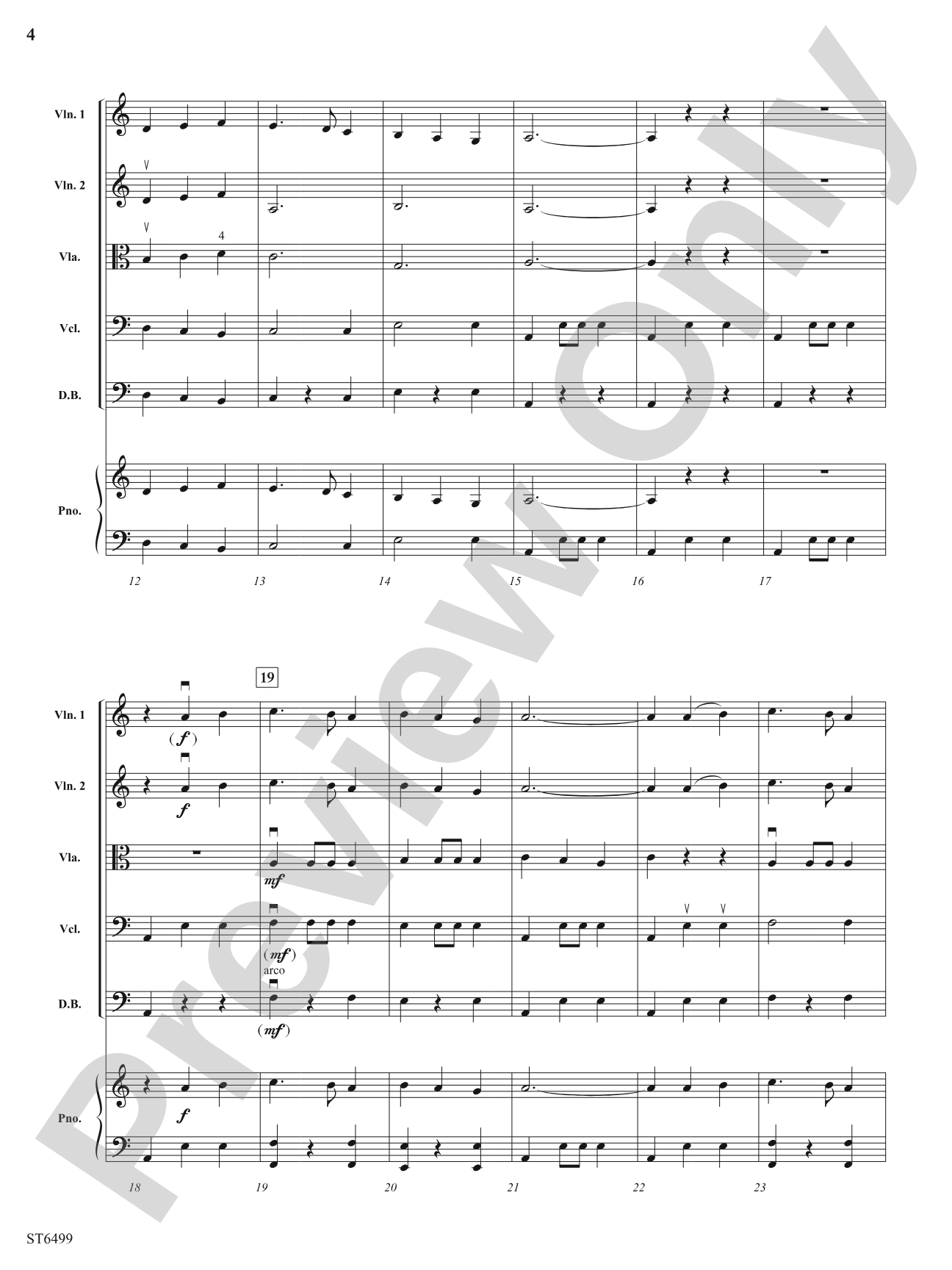
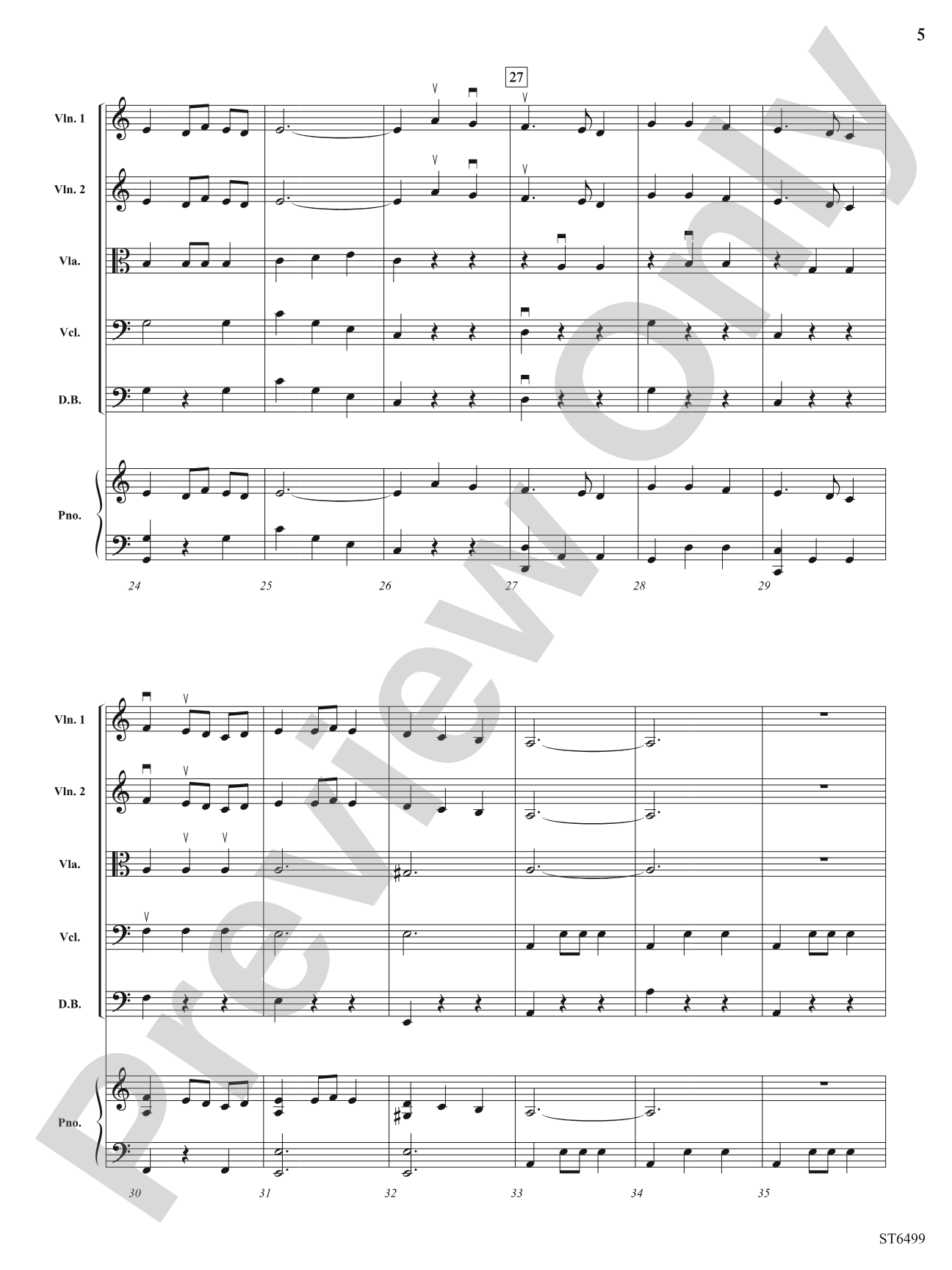
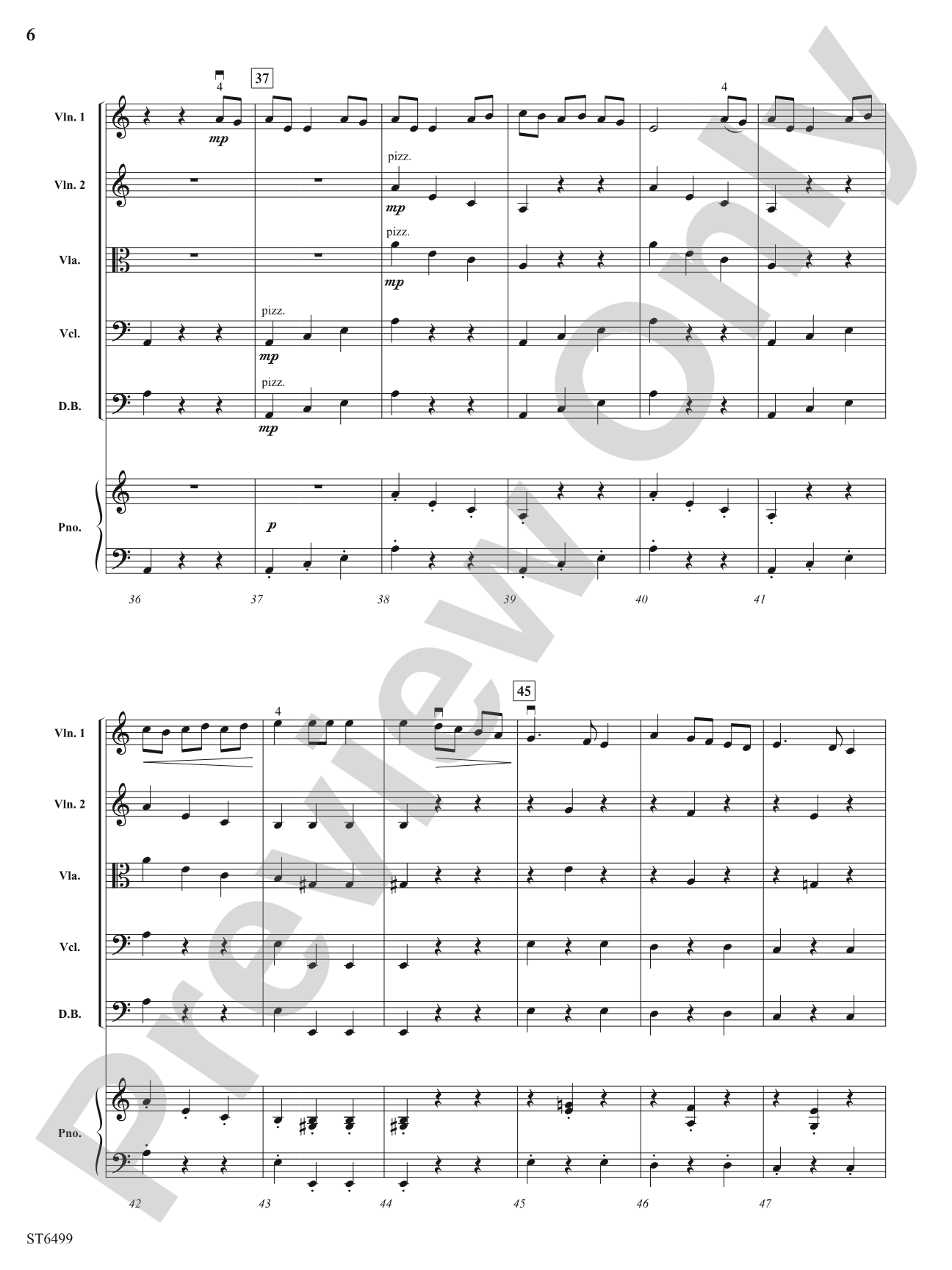
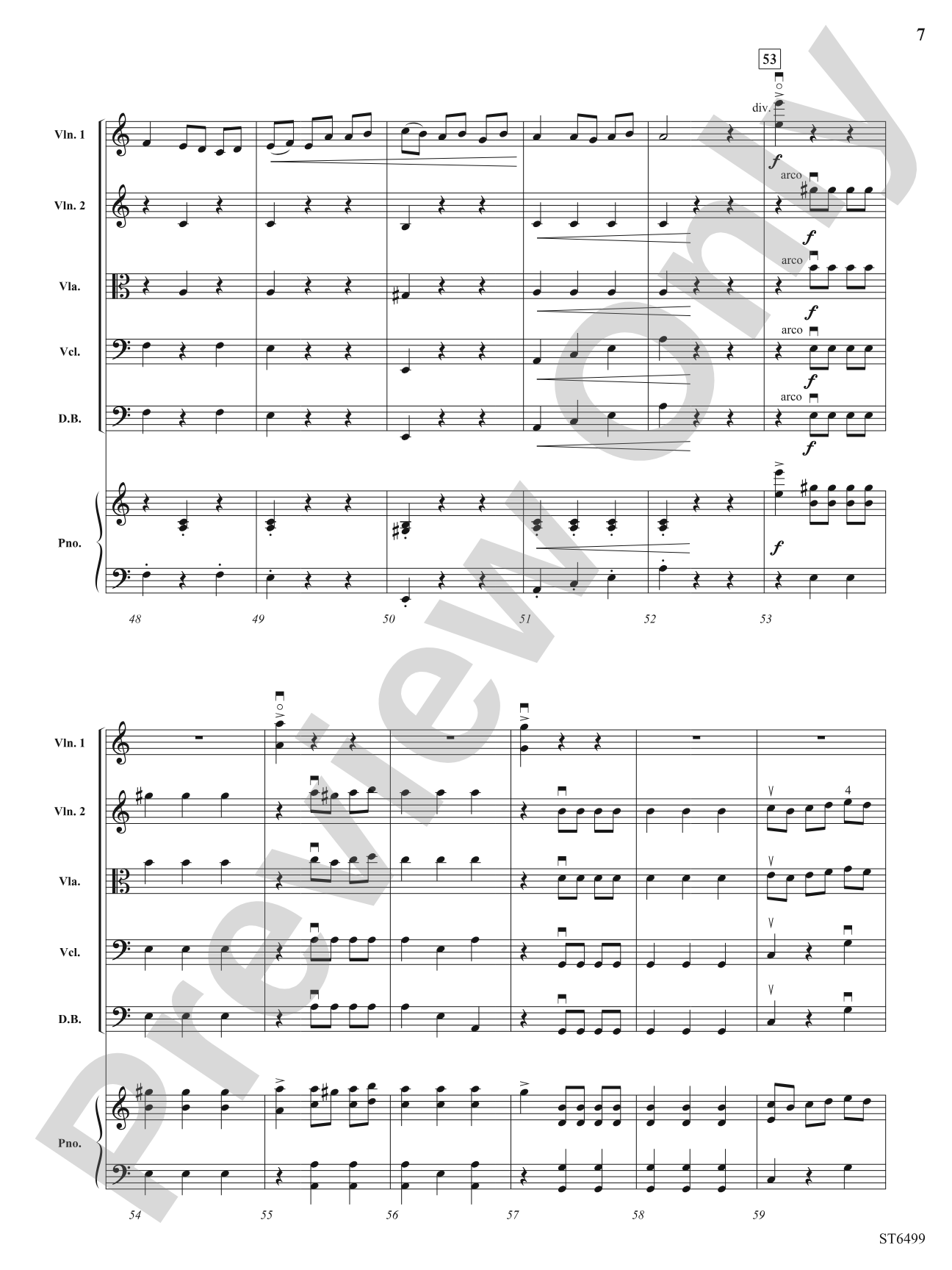
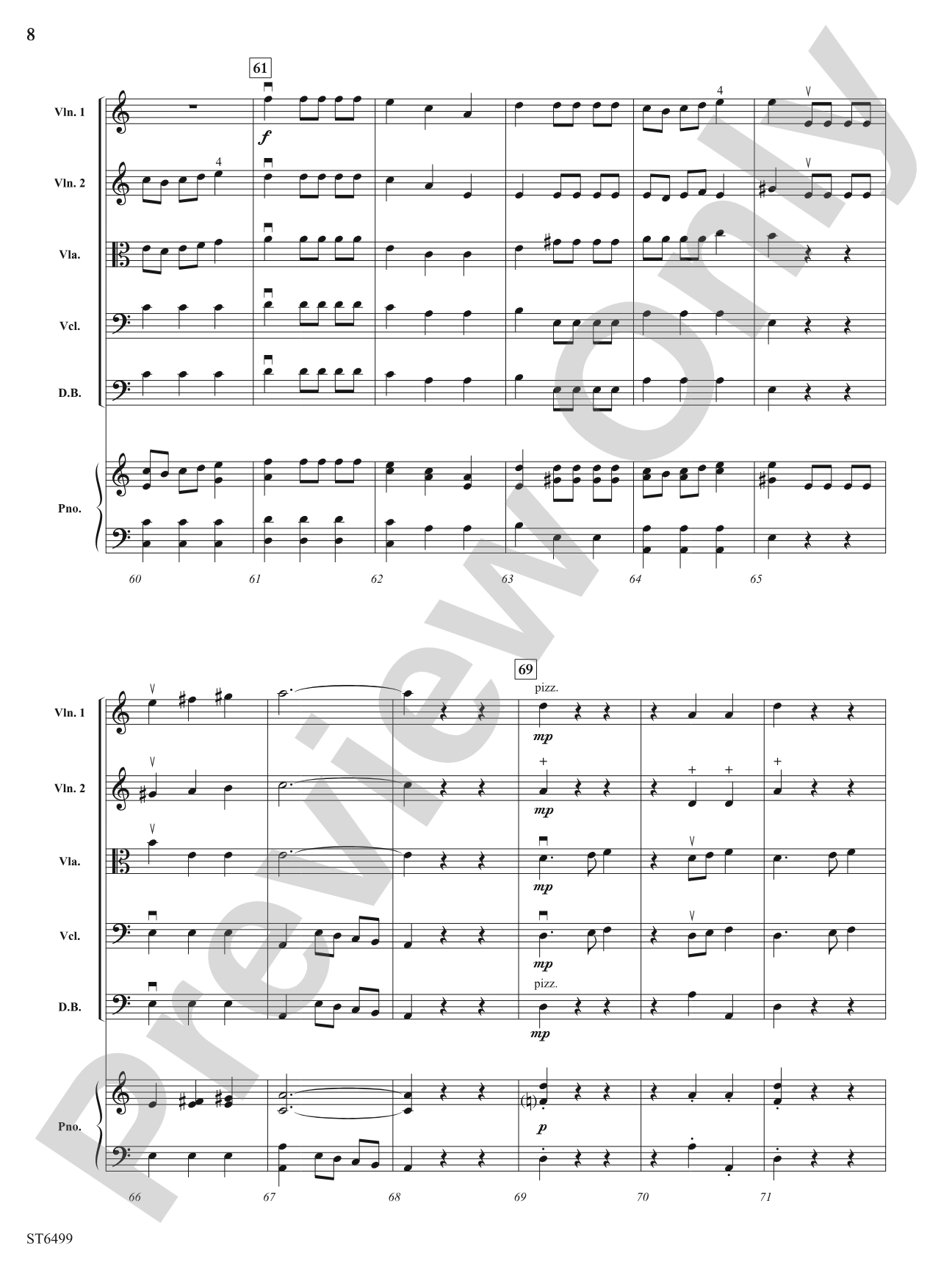
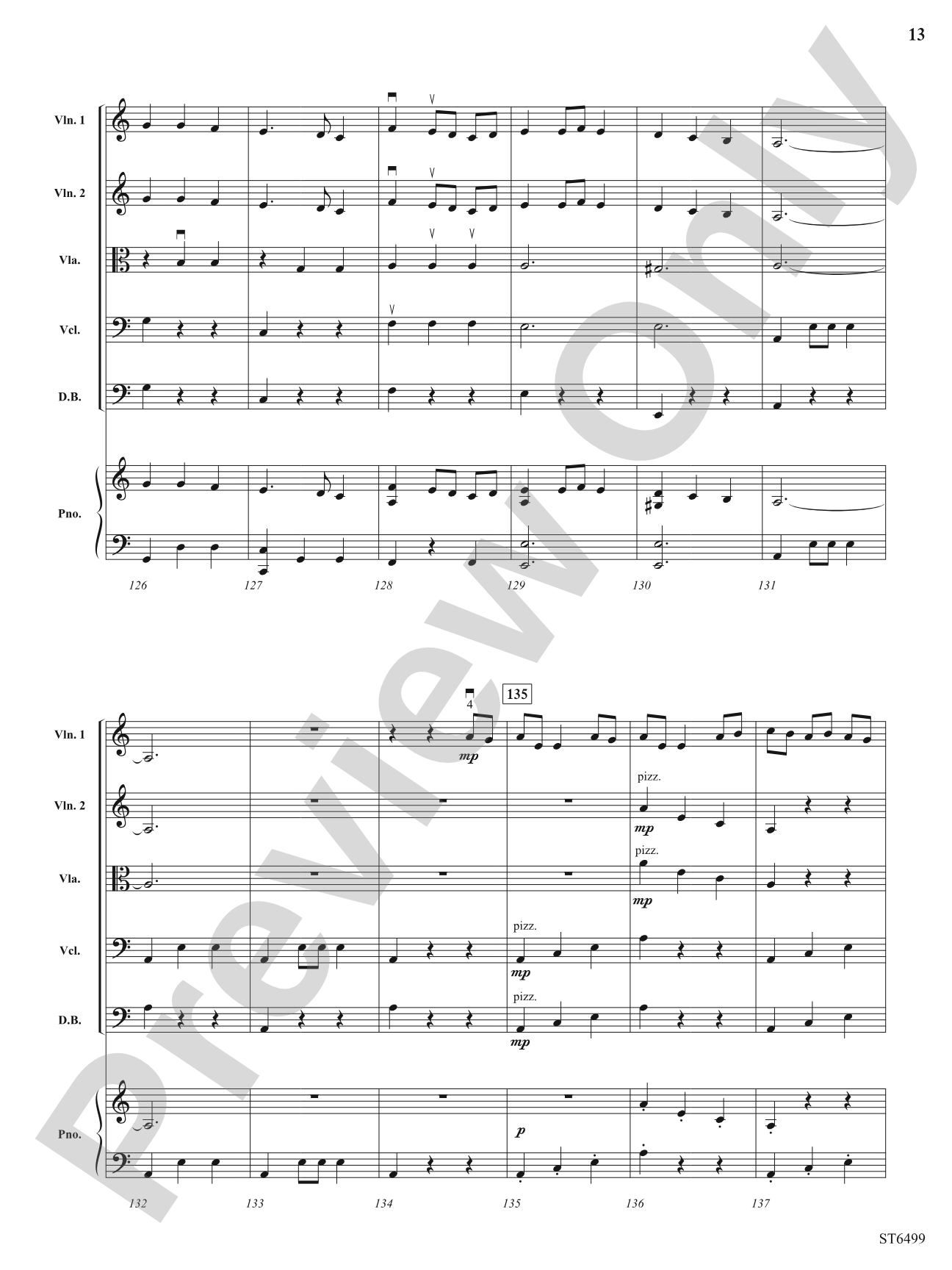
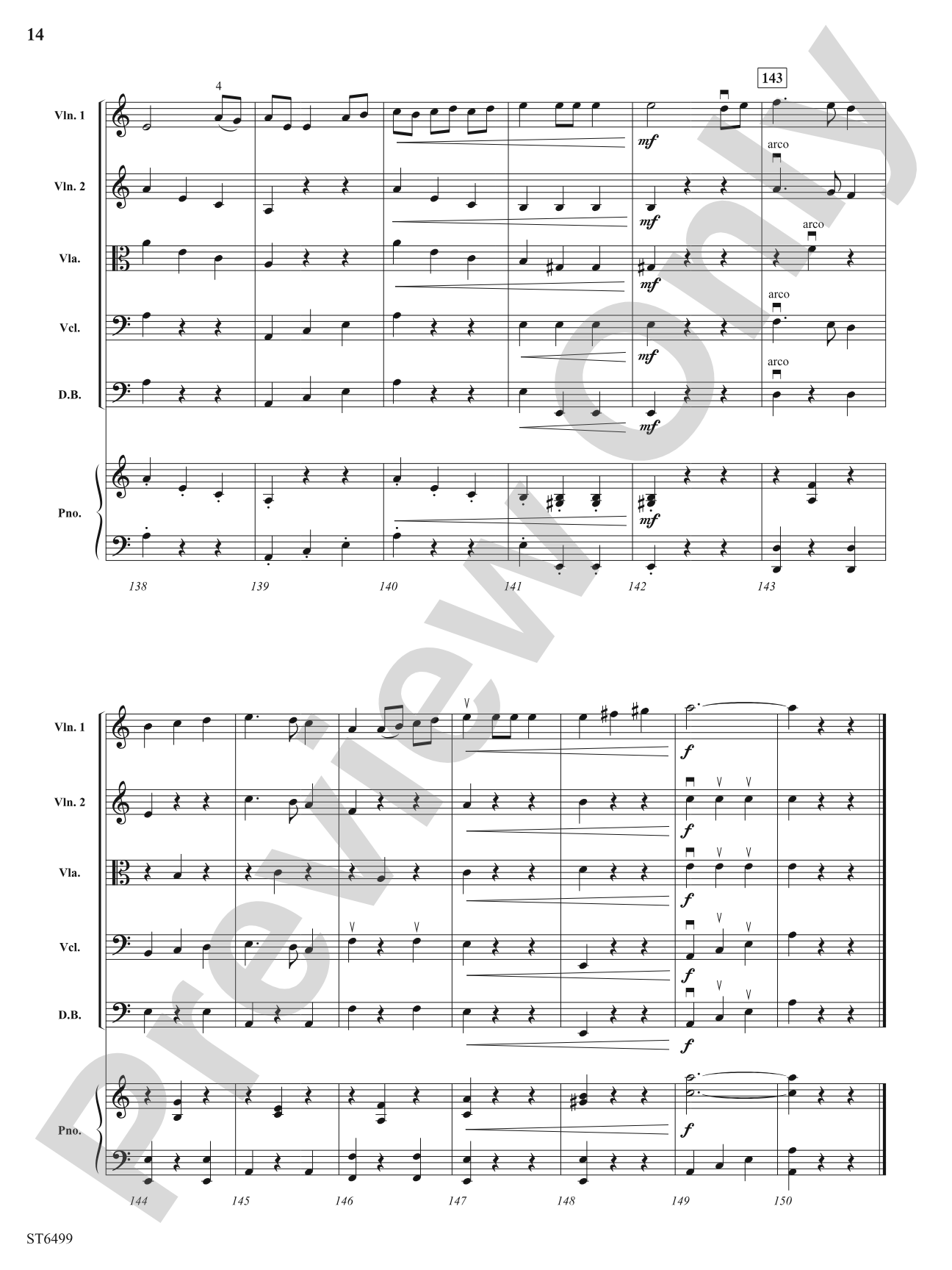
Embark on a journey across the high seas with this gusty piece that captures the rogue nature of Caribbean pirates. Featuring contrasting sections and techniques such as harmonics, pizzicato, and double stops, there is never a dull moment. Sure to be a student favorite!


Don't just read it, hear it, play along with it, and watch your students grow with it. In MakeMusic Cloud, A Pirate's Plunder: String Orchestra Conductor Score & Parts comes alive with professional accompaniment, adjustable tempo, and built-in practice tools that turn solo practice into real progress.
Open in the Player
Jump straight in and assign it today.
Start Your Free Trial
Open this title and explore the full library in minutes.
Sample Audio
1
Audio File
--:--
0:00
0:00
Sample Video
No sample videos found.
Additional Details
Series:
FJH Developing Strings
Publisher:
The FJH Music Company, Inc.
SKU:
98-DST6499
More about this title
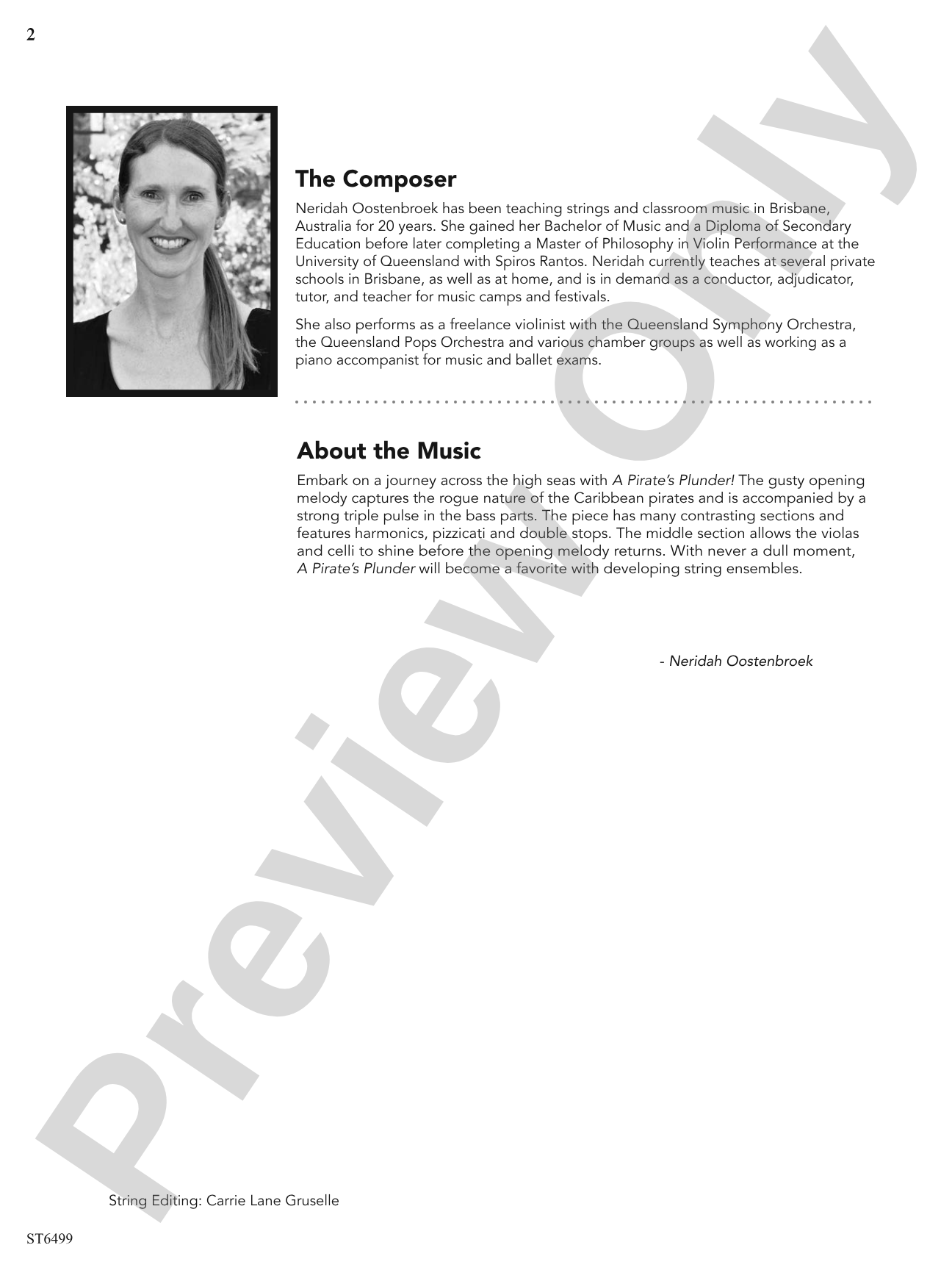
About the Composer: Neridah Oostenbroek

Neridah Oostenbroek brings two decades of string and classroom music teaching experience from Brisbane, Australia, to her compositional work. She holds a Bachelor of Music and Diploma of Secondary Education, along with a Master of Philosophy in Violin Performance from the University of Queensland, where she studied with Spiros Rantos.
Active across multiple musical roles, Oostenbroek conducts, adjudicates, and leads clinics at music camps and festivals. She performs as a freelance violinist with the Queensland Symphony Orchestra and Queensland Pops Orchestra, appears in chamber ensembles, and works as a piano accompanist for music and ballet examinations. Her deep involvement in both performance and education directly shapes her understanding of what works in the string classroom.
Why we love this
Oostenbroek crafts programmatic storytelling that engages young players without oversimplifying the musical language. The mix of pizzicato, harmonics, and double stops keeps every section of the orchestra active and challenged, making rehearsals feel genuinely collaborative rather than repetitive.
What to expect
Swashbuckling energy and salty adventure drive the piece forward, complete with the kind of rhythmic vitality and timbral variety that keeps young string players invested. Moments of humor and scrappy character sit alongside genuinely beautiful sustained passages, painting a vivid picture of rogues on the open water.
Who it's for
Grade 2 string orchestras ready to tackle extended techniques while staying engaged by a narrative arc. This works well for ensembles that have basic pizzicato and position-shifting under their belts and are hungry for pieces that feel like "real" concert music, not exercises.
How to get the most out of it
- Balance the pizzicato sections carefully; they should sparkle without overwhelming the sustained lines. Have pizzicato players practice with a consistent pluck and tap the string lightly rather than snap it.
- Introduce harmonics early in rehearsals and let students experiment with them individually before combining with the ensemble. A quick demonstration of where the finger lands will prevent frustration.
- Use the contrasting sections as a rehearsal organizing tool: mark clear boundaries between "calm" and "adventurous" moments so students understand the structural drama.
- Encourage vibrato in the longer sustained passages to add character and richness, but save it for specific phrases rather than applying it uniformly throughout.
How to use it
This pairs beautifully with other programmatic works on a family or spring concert where younger audiences appreciate the storytelling. The Caribbean flavor also makes it an engaging opener or closer for a concert built around cultural themes or a pirate-themed community event.
Skills your students will build
- Pizzicato technique and consistency across a section
- Natural harmonics on open strings and lower positions
- Double stops in a variety of positions
- Dynamic contrast and phrasing in program music
- Reading and executing contrasting articulations within a single piece