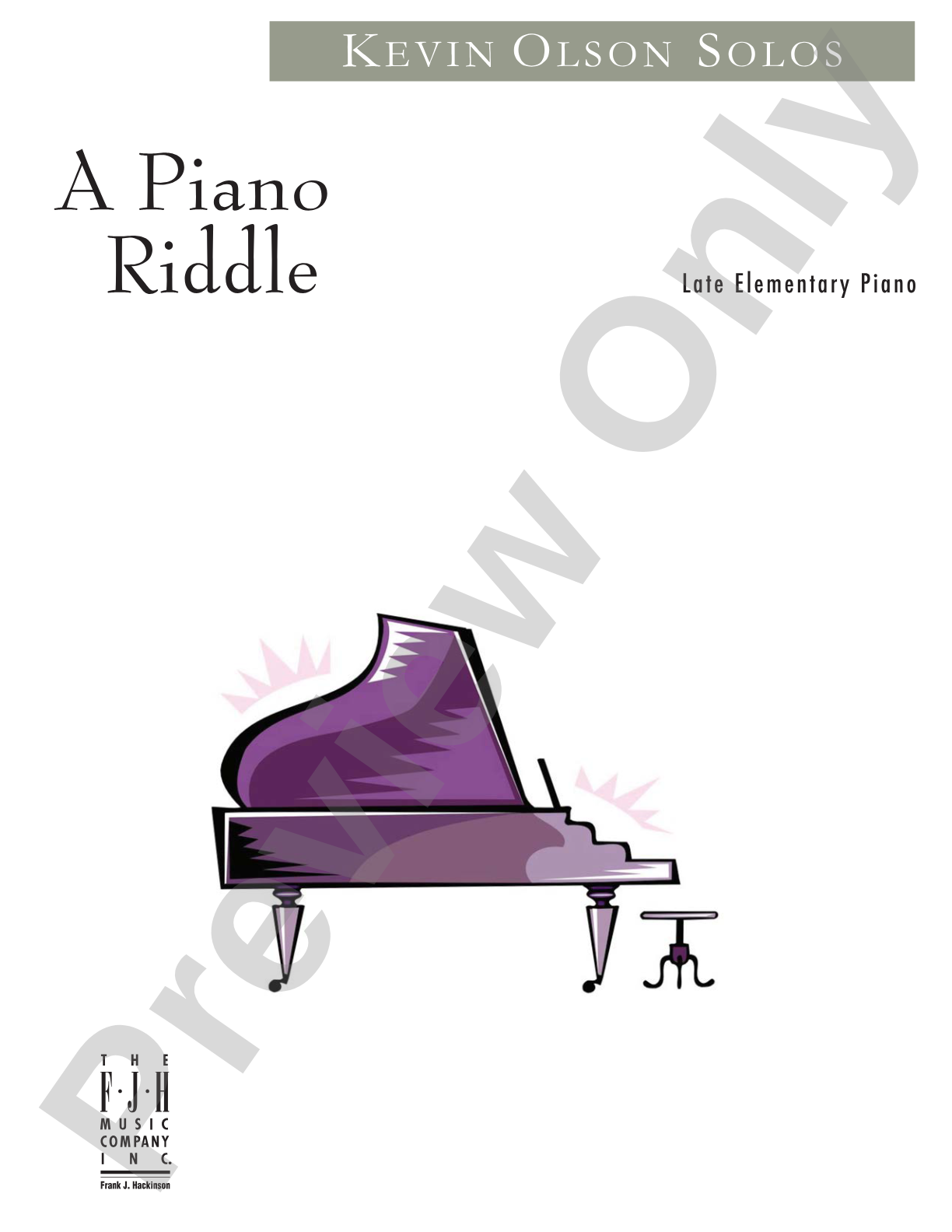
A clever piece that playfully describes a riddle about a boy named Ray who practiced Every Day. Written in the key of F major and in 4/4 , this piece contains long legato lines, and a left hand accompaniment that sometimes uses a B natural. Just in case you cannot figure out the riddle, the answer is at the end of the piece!
Discover MakeMusic Cloud: thousands of interactive titles your students can play along with today.
Kevin Olson brings a gift for writing pedagogical music that engages students while respecting their developing abilities. His work in the Written For You series demonstrates a deep understanding of what motivates young pianists, pieces that tell stories, contain surprises, and reward careful practice.
Why we love this
The riddle itself becomes the teaching tool here. Students aren't just reading notes; they're actively solving a puzzle through music, which transforms practice from an obligation into a detective mission. Olson's playful approach to the B natural in the left hand keeps players alert while maintaining the accessibility elementary students need.
What to expect
Gentle and contemplative, with moments of quiet pride. The piece invites reflection without demanding intensity, making it feel like a conversation between the pianist and the story rather than a challenge to overcome.
Who it's for
Late elementary pianists ready to explore legato playing and key signatures with accidentals beyond the natural key. This works especially well for students who respond to narrative and reward, since solving the riddle becomes their payoff for solid preparation.
How to get the most out of it
Sustain the legato lines without losing shape. Long notes should bloom rather than go limp; let each phrase breathe at its natural endpoints.
Prepare the left hand for that B natural by marking it clearly in pencil during practice. It's easy to default to B flat, so isolate those moments and drill them separately.
Read the ending carefully before you perform. Knowing what the riddle's answer is will help you phrase the final measures with appropriate satisfaction and clarity.
How to use it
Pair this with other narrative-driven repertoire for a recital program that spotlights storytelling in music. It also fits beautifully in a spring or early summer concert where lighter, more playful character pieces balance heavier classical standards.
Skills your students will build
Sustaining legato lines across hand positions
Reading accidentals (B natural) outside the home key signature
Coordinating smooth left-hand accompaniment patterns with right-hand melody
Phrasing and shaping longer melodic statements
You May Also Like
Scan to Complete Your Purchase
Use your phone's camera to scan the code below
You'll log in on your phone and the order will be added to your account