
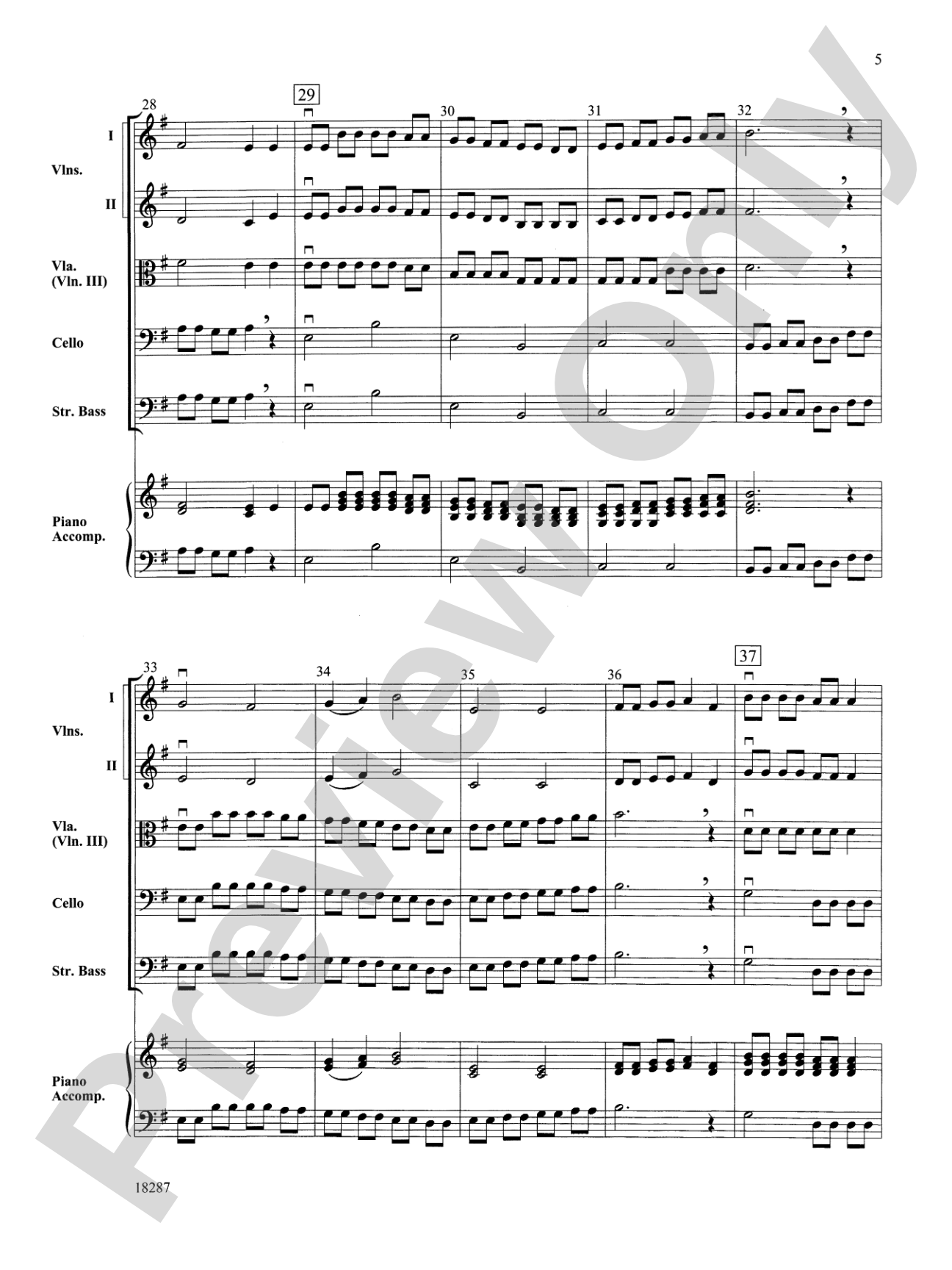
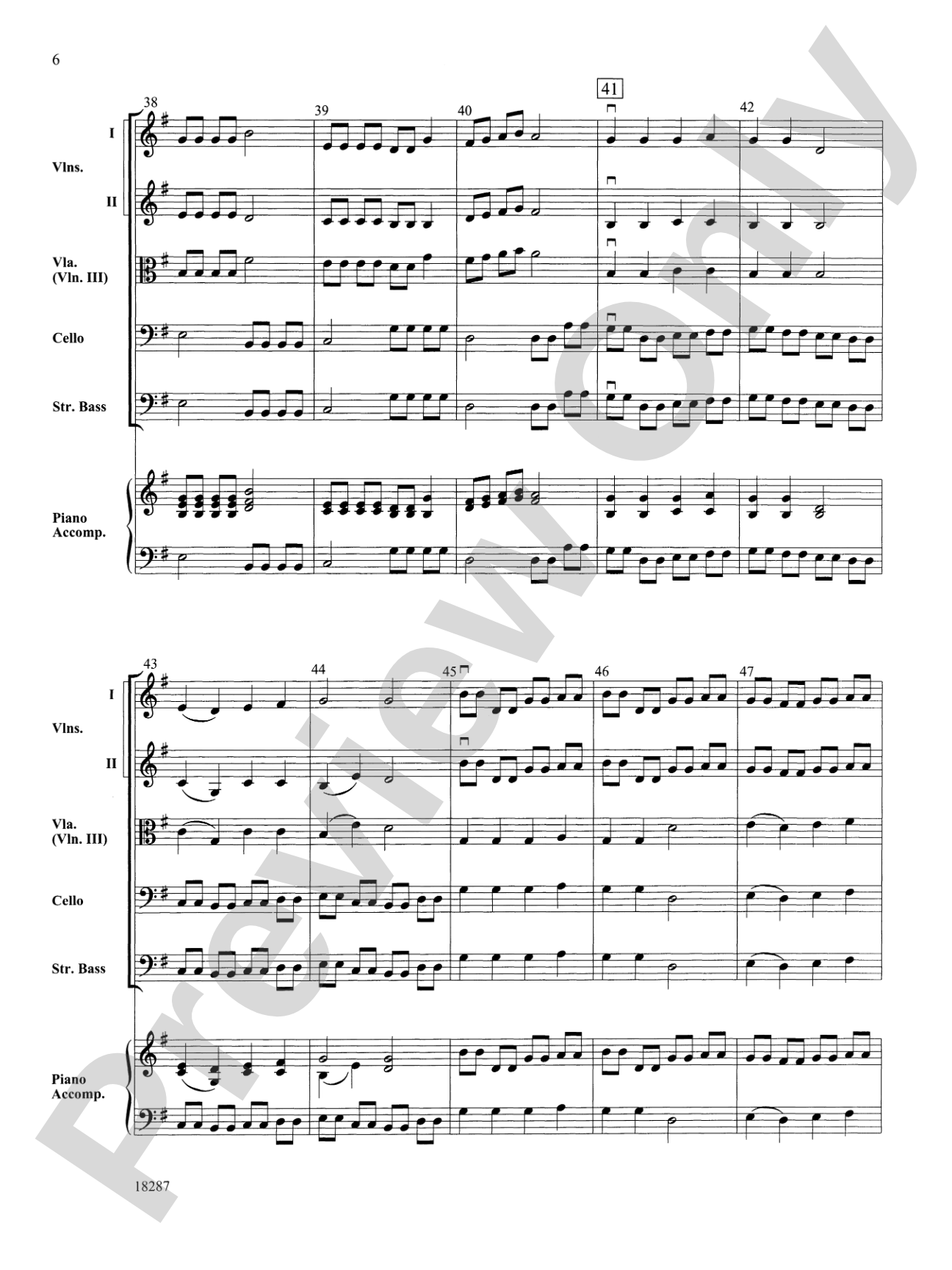
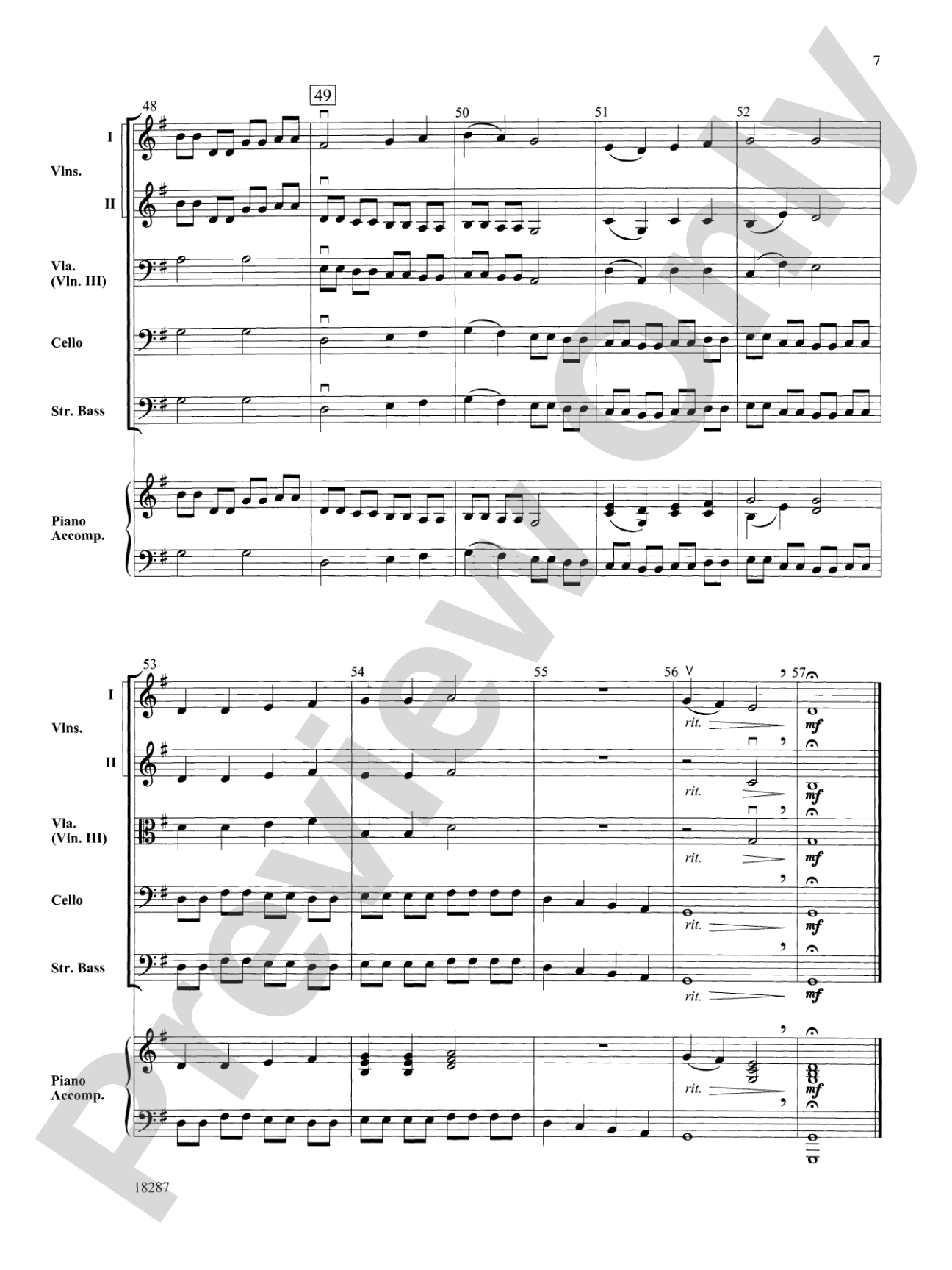


A Perpetual Motion Christmas: String Orchestra Conductor Score & Parts
Arr. Mark Williams
Grade: 1
Item: 00-PK-0000267

$46.00
Pickup currently not available
Buy Extra Parts (Digital PDF Download)
Parts Added to Cart!
Description
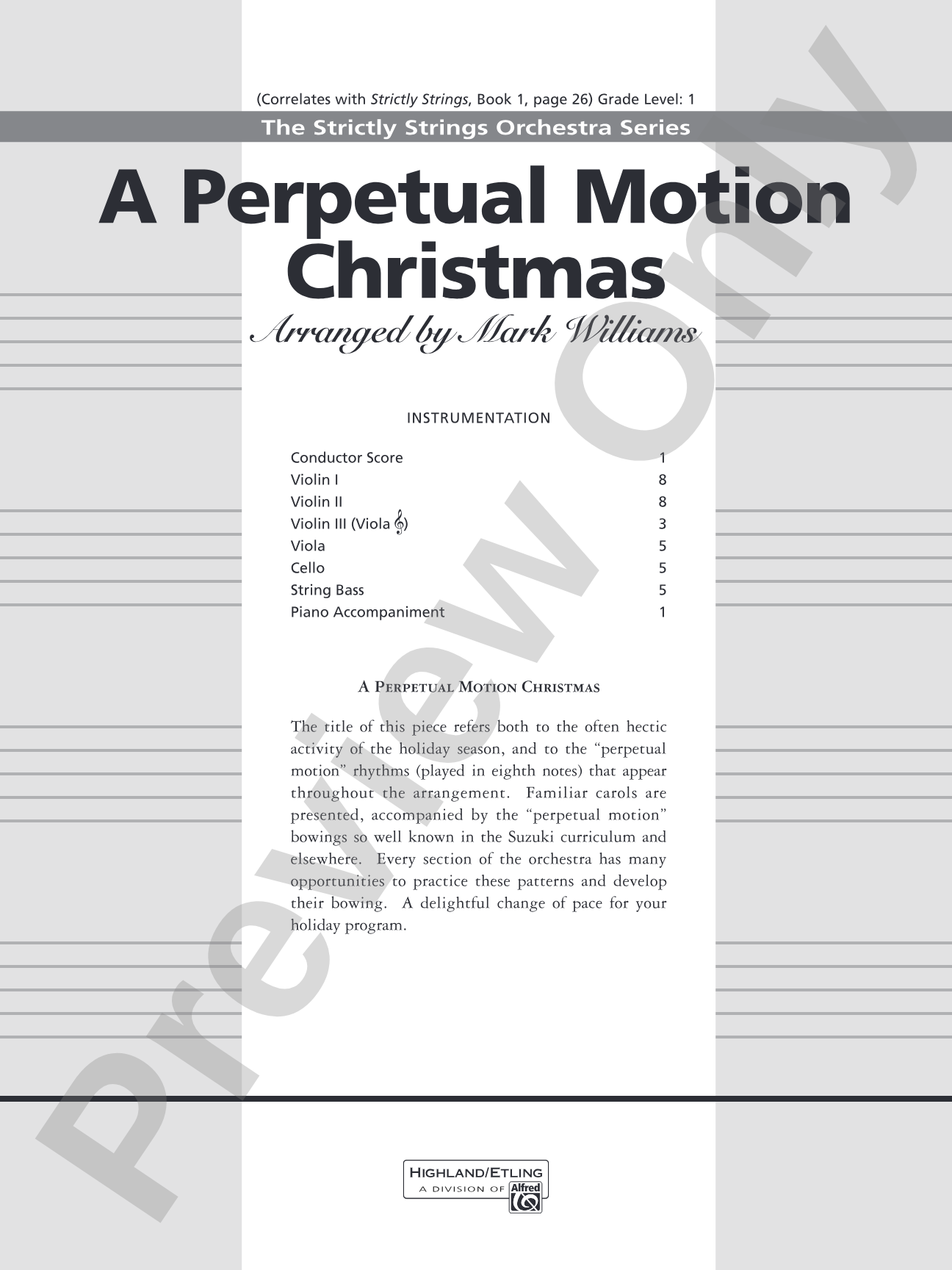
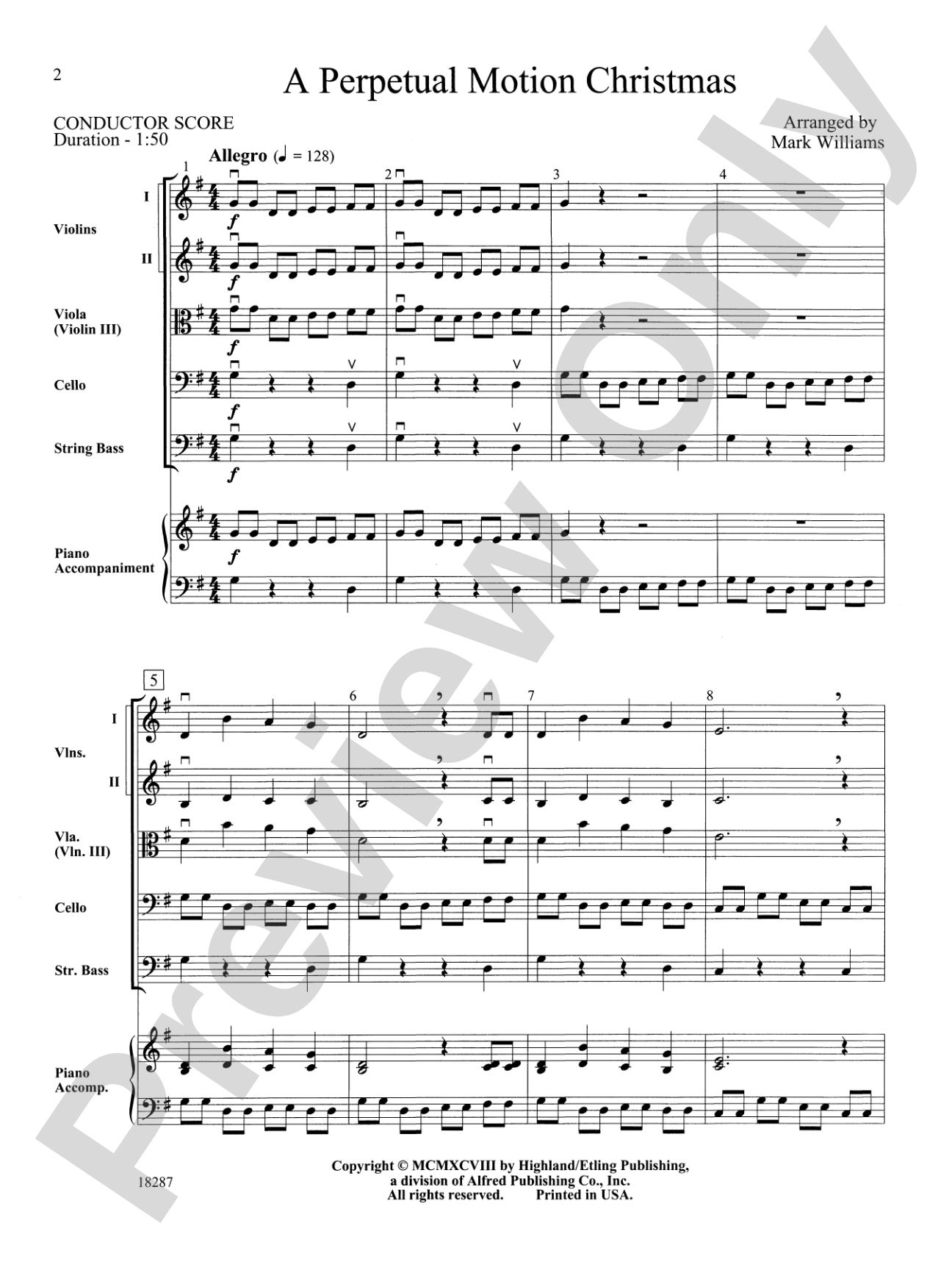
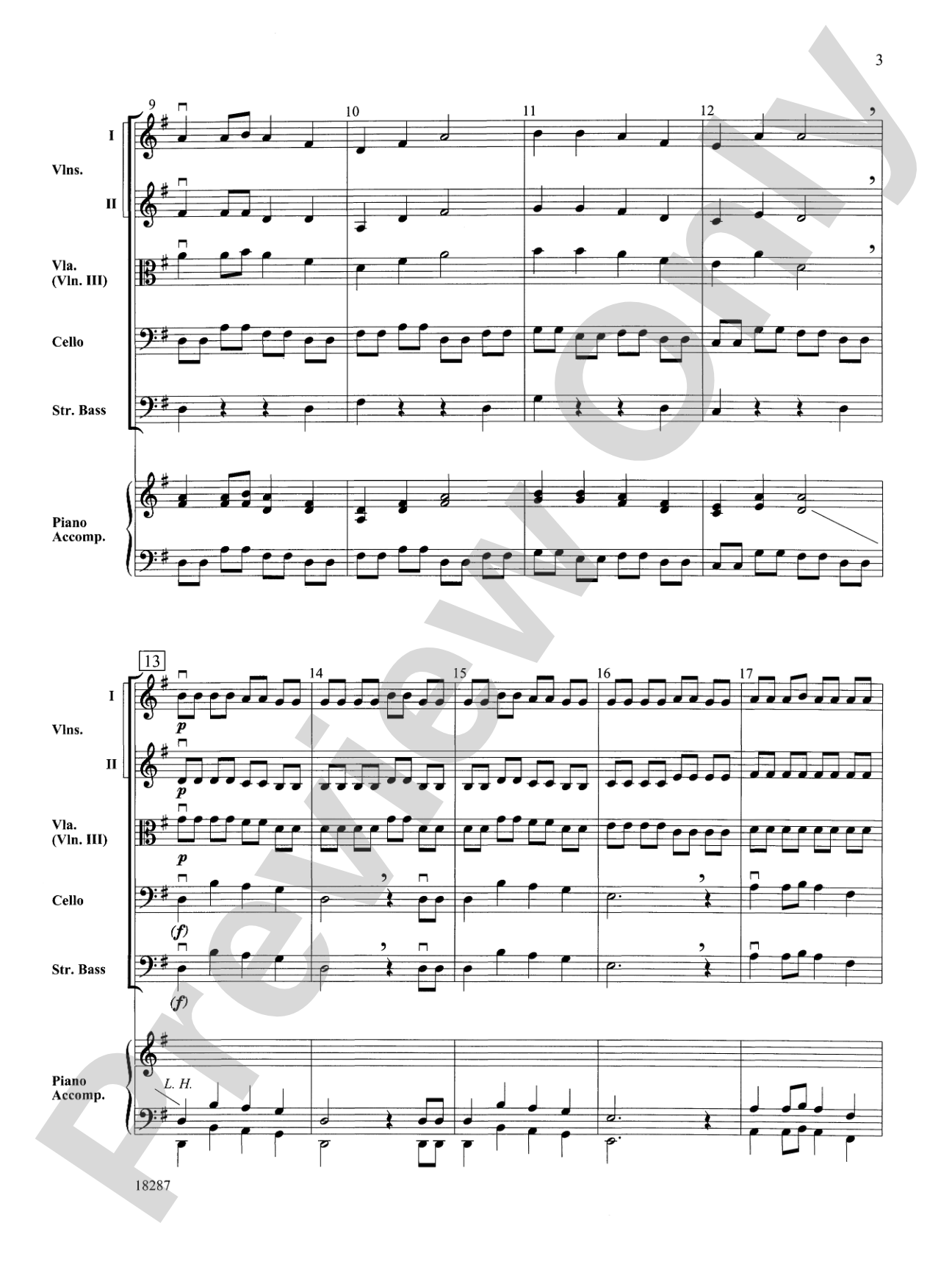
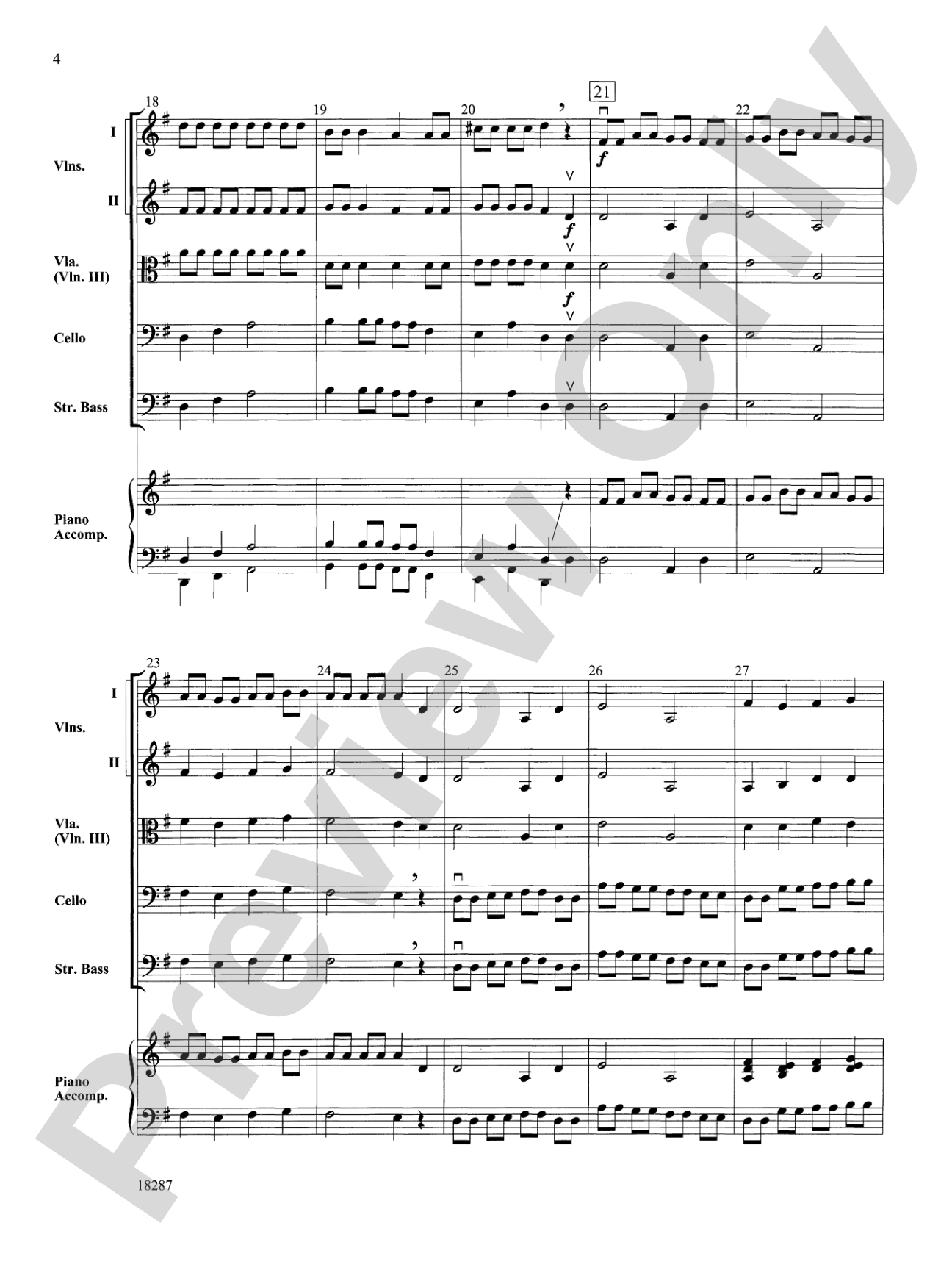
The title of this piece refers both to the often hectic activity of the holiday season and the "perpetual motion" rhythms (played in eighth notes) that appear throughout the arrangement. Familiar carols are presented, accompanied by the "perpetual motion" which is passed between different sections of the orchestra. You'd better slow down-you don't want to miss this one!


Don't just read it, hear it, play along with it, and watch your students grow with it. In MakeMusic Cloud, A Perpetual Motion Christmas: String Orchestra Conductor Score & Parts comes alive with professional accompaniment, adjustable tempo, and built-in practice tools that turn solo practice into real progress.
Open in the Player
Jump straight in and assign it today.
Start Your Free Trial
Open this title and explore the full library in minutes.
Sample Audio
1
Audio File
--:--
0:00
0:00
Sample Video
Additional Details
Series:
Highland/Etling Strictly Strings
Publisher:
Alfred Music
Page Count:
72
SKU:
00-PK-0000267
More about this title
About the Arranger: Mark Williams

Mark Williams built a career writing music that works in real school orchestras and bands. A prolific composer with over 200 published works, he understood what student musicians could achieve at each level, and he wrote accordingly. His background included teaching elementary band in Washington state, performing as a bassoon player, and serving as conductor of the Spokane British Brass Band, which meant he knew ensembles from the inside.
Williams traveled as a clinician and guest conductor across 34 states, five Canadian provinces, and Australia, sharing his knowledge of ensemble writing with directors everywhere. He earned recognition through the Western International Band Clinic's Gralia Competition and multiple ASCAP Special Awards. His education degrees from Eastern Washington University and his service as woodwind arranger for the 560th Air Force Band deepened his understanding of orchestration and instrumental pedagogy. Co-authoring the Accent on Achievement Band Method solidified his influence on music education across North America.
Why we love this
Williams captures the actual texture of holiday season chaos, constant motion, overlapping voices, familiar melodies threading through it all, without sacrificing playability at Grade 1. The rhythmic toolkit of perpetual eighth notes becomes a teaching tool as much as a compositional choice, letting every section feel integrated into the arrangement rather than accompanying someone else's tune.
What to expect
Organized energy. The piece moves, constantly, intentionally, while landing on carols you already know, creating a sense of motion within familiarity. The eighth-note figures create forward momentum without overwhelm, and the orchestration gives every section something meaningful to do.
Who it's for
String orchestras at the beginner level who want a Christmas program piece that sounds festive and polished without excessive technical demands. Conductors looking for music that keeps young players engaged while building rhythmic precision and sectional awareness will find this particularly rewarding.
How to get the most out of it
- Establish a steady tempo first in sectionals, then add the perpetual motion layer by layer. Start with one section playing the carol melody while another holds whole notes, then integrate the rhythmic figures gradually.
- Balance is crucial when the eighth-note motion passes between sections. Use sectional rehearsals to ensure the accompaniment sits beneath the melody without competing for attention.
- Mark clear cutoffs and releases, especially at phrase endings where the perpetual motion might want to spill over. This clarity keeps the piece feeling intentional rather than frantic.
- Encourage consistent bow speed through the perpetual motion passages. Students who maintain evenness in their eighth-note figures will help unify the ensemble sound and reinforce the 'motion' concept.
How to use it
Place this in a holiday concert where you want to showcase ensemble cohesion and rhythmic control. It pairs well before or after a slower, more lyrical carol arrangement, creating nice contrast. The Grade 1 accessibility also makes it ideal for an early-in-the-season December performance before advanced repertoire demands peak.
Skills your students will build
- Maintaining steady eighth-note rhythms while tracking independent melody lines
- Sectional coordination and ensemble balance when accompaniment figures transfer between strings
- Phrase shaping and dynamic control within a fast-moving texture
- Listening and rhythmic precision in a perpetually active harmonic environment