
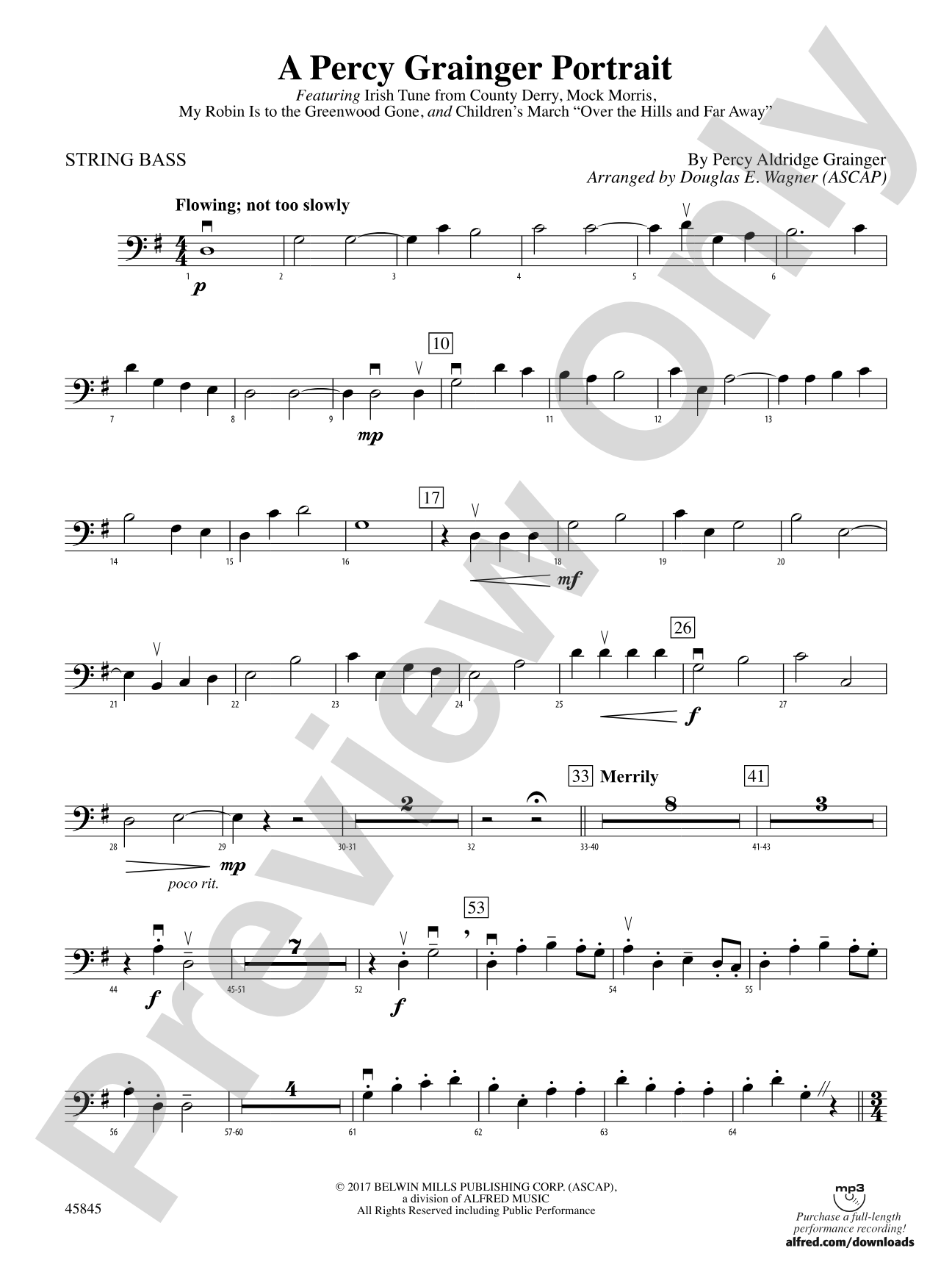

A Percy Grainger Portrait: String Bass
Featuring: Irish Tune from County Derry / Mock Morris / My Robin Is to the Greenwood Gone / Children's March: Over the Hills and Far Away
By Percy Aldridge Grainger / arr. Douglas E. Wagner
Grade: 3
Item: 00-PC-0017645_SB
$5.99
Pickup currently not available
Description
The innovative variety found in the music of Percy Grainger is showcased in this string-friendly arrangement of four of his endearing favorites from the concert repertoire. Included are "Irish Tune from County Derry," "Mock Morris," "My Robin Is to the Greenwood Gone," and "Children's March: Over the Hills and Far Away." This arrangement by Douglas E. Wagner presents a highly musical programming option for concert or contest, written to bring out the very best from your players. (4:15)


Don't just read it, hear it, play along with it, and watch your students grow with it. In MakeMusic Cloud, A Percy Grainger Portrait: String Bass comes alive with professional accompaniment, adjustable tempo, and built-in practice tools that turn solo practice into real progress.
Open in the Player
Jump straight in and assign it today.
Start Your Free Trial
Open this title and explore the full library in minutes.
Sample Audio
1
Audio File
--:--
0:00
0:00
Sample Video
Additional Details
Series:
Belwin Concert String Orchestra
Publisher:
Alfred Music
Page Count:
124
SKU:
00-PC-0017645_SB
More about this title
About the Composer: Percy Aldridge Grainger
Percy Aldridge Grainger (1882-1961) was an Australian-born composer and pianist whose restless creative energy produced music that defied easy categorization. He drew deeply from folk music traditions, particularly British and Scandinavian sources, treating them with both scholarly care and imaginative freedom. His orchestrations shimmer with color and texture; he loved unconventional instrumental combinations and refused to be bound by conventional harmonic practices, making him one of the most inventive voices of the early 20th century.
Grainger's approach to arrangement and adaptation of folk material shaped how generations of musicians understood the relationship between tradition and originality. He believed folk melodies deserved fresh life in concert settings, and his gift was knowing exactly how to preserve their character while surrounding them with sophisticated, memorable orchestration. His influence on string writing remains immediate and audible.
Why we love this
This collection captures what made Grainger such a vital figure in early 20th-century music: an instinct for orchestration that feels both accessible and imaginative. Wagner's string arrangement preserves the charm and character of each piece while giving your orchestra room to breathe and shine. Programming four contrasting movements together creates a satisfying arc from the lyrical to the rhythmic, perfect for audiences who enjoy color and personality in their concert music.
What to expect
Grainger's ear for color and texture comes alive in these pieces. You'll hear moments of intimate lyricism alongside rhythmic vitality and folk-like directness. The orchestration invites players to hear their individual voice while contributing to a larger tapestry of sound, creating the satisfaction of real musicmaking rather than mere note-reading.
Who it's for
String orchestra conductors seeking concert or contest repertoire that sits comfortably at Grade 3 while delivering genuine musical substance. This arrangement works for programs ranging from advanced middle school orchestras to early high school ensembles that want to explore sophisticated folk-based writing without tackling overly complex harmonic language.
How to get the most out of it
- Balance the melodic lines carefully in "Irish Tune from County Derry." The opening unison statement should be secure, but allow the accompanying voices to support without overwhelming; Grainger's genius lies in how he voices each element.
- In "Mock Morris," commit fully to the rhythmic vitality. The piece thrives on crisp articulation and clear ensemble attacks, so rehearse the rhythmic figures as a collective gesture rather than individual parts.
- Let the sustains breathe in "My Robin Is to the Greenwood Gone." This intimate setting benefits from players who listen to the whole sound rather than focusing narrowly on their own line.
- Approach "Children's March" with forward momentum and joy. The march character works best when the tempo feels inevitable rather than driven; trust the tuning and let the melody sing through the orchestration.
How to use it
Program this as a thematic unit that showcases your orchestra's range in a single work. The four movements move naturally from contemplative to energetic, making it an engaging opener or a solid mid-program anchor. Contest programs benefit from the work's structural clarity and the variety it demonstrates in a single submission.
Skills your students will build
- Balancing melodic and accompaniment roles within an ensemble texture
- Sustaining long lines with musical shape and direction
- Executing clean rhythmic articulation in march-like settings
- Understanding folk melody arrangement and orchestration color
- Responding to tonal character shifts across contrasting movements