
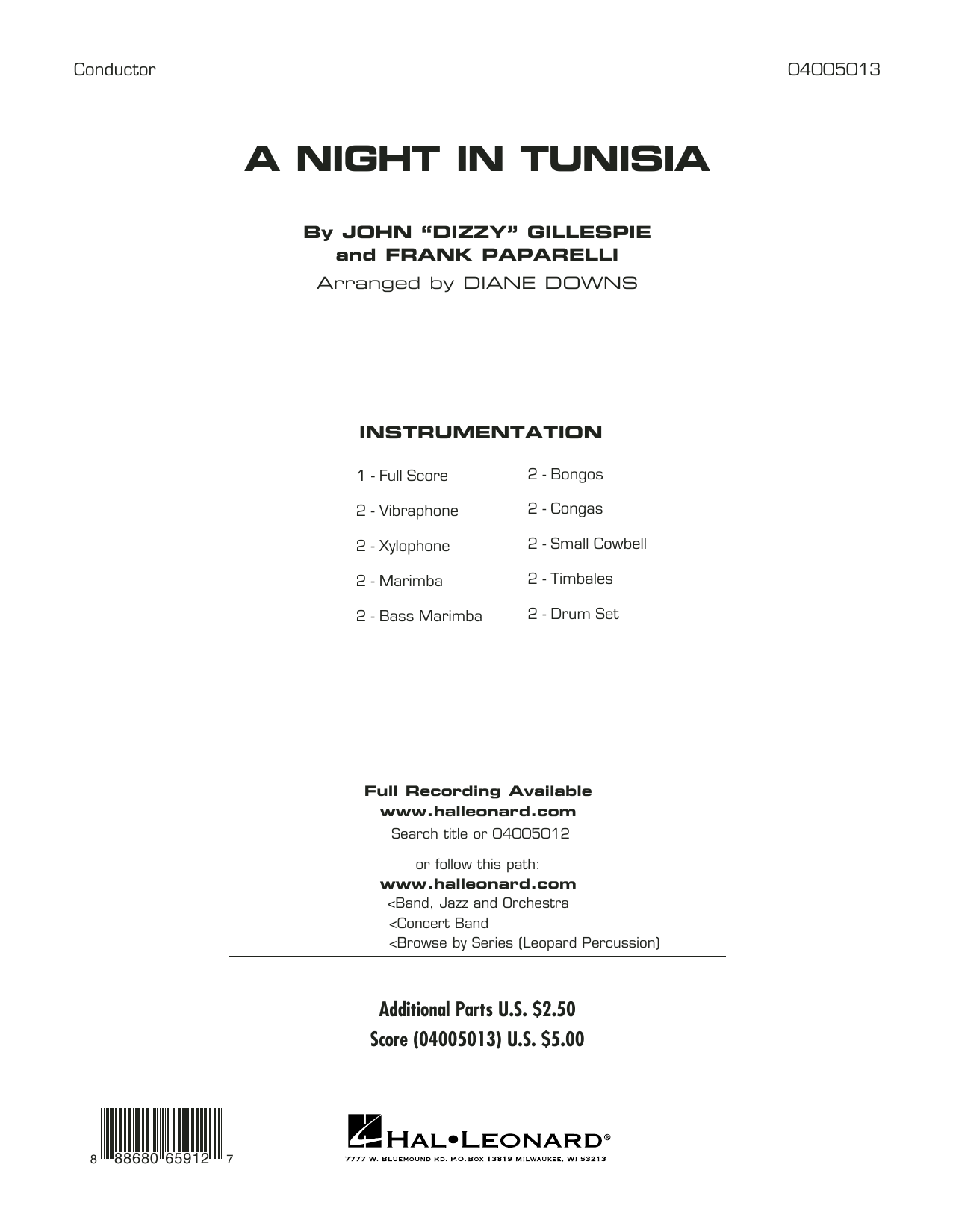

A Night in Tunisia: Concert Band Conductor Score & Parts
As performed by Dizzy Gillespie / Arranged by Diane Downs
Grade: 3
Item: 35-PK00367648
$30.00
Pickup currently not available
Buy Extra Parts (Digital PDF Download)
| Product | Price | Quantity |
|---|---|---|
| A Night in Tunisia - Full Score | $6.00 | |
| A Night in Tunisia - Vibes | $6.00 | |
| A Night in Tunisia - Xylophone | $6.00 | |
| A Night in Tunisia - Marimba | $6.00 | |
| A Night in Tunisia - Bass Marimba | $6.00 | |
| A Night in Tunisia - Bongos | $6.00 | |
| A Night in Tunisia - Congas | $6.00 | |
| A Night in Tunisia - Cowbell | $6.00 | |
| A Night in Tunisia - Timbales | $6.00 | |
| A Night in Tunisia - Drum Set | $6.00 |
Parts Added to Cart!
Description
Dur: 3:00


Discover MakeMusic Cloud: thousands of interactive titles your students can play along with today.
Sample Audio
No sample audio found.
Sample Video
Additional Details
Publisher:
Hal Leonard
SKU:
35-PK00367648
More about this title
About the Artist: Dizzy Gillespie
Dizzy Gillespie transformed jazz trumpet playing and composition in the 1940s, pioneering bebop alongside Charlie Parker and Thelonious Monk. His technical mastery, harmonic sophistication, and playful compositional voice established him as one of the most influential instrumentalists in jazz history.
Gillespie's work emphasizes the marriage of complex harmonies with infectious rhythmic energy. For music educators, his pieces offer a window into how jazz harmony functions and how rhythmic sophistication elevates ensemble playing across genres.
Why we love this
Diane Downs has captured the swagger and sophistication of Gillespie's original without requiring your ensemble to navigate impossible lead trumpet ranges. The arrangement respects the harmonic complexity that makes this tune endure while keeping the Grade 3 setting accessible. Programming this signals to your band that jazz isn't a tangent from their musical development; it's essential vocabulary.
What to expect
Sophisticated and buoyant, with the rhythmic snap of Afro-Cuban percussion under elegant horn writing. The piece maintains bebop's harmonic restlessness while moving with the confidence of a blues that knows exactly where it's going.
Who it's for
Concert bands seeking an authentic jazz arrangement that doesn't require advanced soloists or a lead trumpet capable of extreme range. Any Grade 3 ensemble wanting to explore bebop vocabulary and Latin rhythms in a manageable, rewarding package.
How to get the most out of it
- Balance the Latin percussion foundation against the horn lines so the clave rhythm feels like the heartbeat of the piece, not a decoration underneath.
- Isolate the bridge section with your ensemble before running the full piece; the harmonic movement there often trips up players used to diatonic writing.
- Keep the tempo steady and energetic even during ensemble hits. This tune dies when it slows down.
- Push your saxophones and trombones to lean into the swing feel on eighth notes; straighter rhythms flatten the character entirely.
How to use it
Consider placing this early in a concert to establish energy and sophistication, or use it to bridge a section mixing classical and contemporary work. It pairs naturally with other Latin or bebop influenced pieces and gives your audience permission to expect intelligence and swing from a high school band.
Skills your students will build
- Swing eighth note articulation and feel
- Latin rhythm sectioning and syncopation
- Bebop harmonic language and voice leading
- Reading jazz chord changes and comping figures
- Ensemble balance between percussion foundation and harmonic voices
- Call and response phrasing between sections