
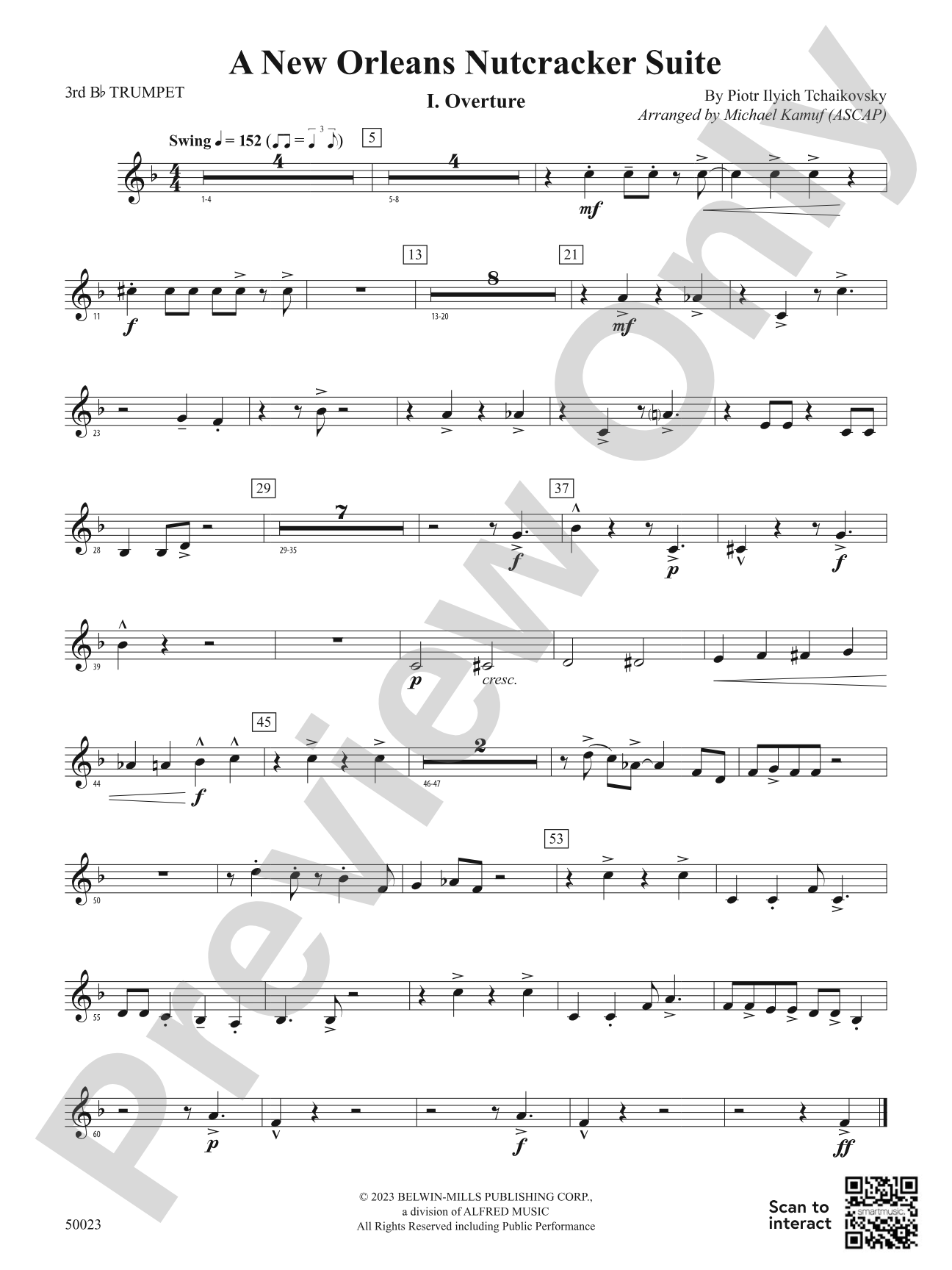

A New Orleans Nutcracker Suite: 3rd B-flat Trumpet
I. Overture II. Dirge for a Sugar Plum Fairy III. Tremé Trepak
By Piotr Ilyich Tchaikovsky / arr. Michael Kamuf
Grade: 3.5
Item: 00-PC-0018979_T3
$3.00
Pickup currently not available
Description
Tchaikovsky strolls the streets of the French Quarter! Arranger Michael Kamuf reimagines the "Overture," "Dance of the Sugar Plum Fairies," and "Trepak" themes by using different New Orleans-based grooves, rich jazz harmony, and plenty of syncopation and rhythmic twists. Students will love playing these themes, and your audience will dance in the aisles! A New Orleans Nutcracker Suite is the perfect addition to your holiday program. Though written as a suite, each movement can stand alone. (6:00)


Don't just read it, hear it, play along with it, and watch your students grow with it. In MakeMusic Cloud, A New Orleans Nutcracker Suite: 3rd B-flat Trumpet comes alive with professional accompaniment, adjustable tempo, and built-in practice tools that turn solo practice into real progress.
Open in the Player
Jump straight in and assign it today.
Start Your Free Trial
Open this title and explore the full library in minutes.
Sample Audio
1
Audio File
--:--
0:00
0:00
Sample Video
Additional Details
Series:
Belwin Concert Band
Publisher:
Alfred Music
SKU:
00-PC-0018979_T3
More about this title
About the Composer: Piotr Ilyich Tchaikovsky
Piotr Ilyich Tchaikovsky (1840-1893) stands as one of the most performed composers in the concert hall, celebrated for melodies that lodge themselves instantly in memory. His gift for writing music that speaks directly to audiences, whether through grand orchestral gesture or intimate lyricism, has made his works foundational to the standard repertoire. The Nutcracker, premiered in 1892, remains his most beloved ballet score; its themes are so recognizable that they've been reimagined countless times across genres and styles while retaining their essential character.
Why we love this
Michael Kamuf's arrangement breathes entirely new life into three iconic Nutcracker movements by grounding them in New Orleans rhythm and jazz vocabulary. The writing respects the original melodies while layering them with syncopation and blues harmony that makes them feel contemporary and irresistible. At Grade 3.5, it lands at a sweet spot where bands with solid fundamentals can execute the grooves authentically without drowning in technical complexity, and your audience gets a genuinely fresh take on music they thought they knew completely.
What to expect
Tchaikovsky's beloved melodies strut and sway through the French Quarter in this vibrant reimagining. You'll recognize the Sugar Plum Fairies instantly, but they're dressed in new harmony and moving to a rhythm that makes you want to move with them. The energy is celebratory and playful, with enough harmonic color to keep musicians engaged while remaining rooted in melodies that feel like old friends.
Who it's for
Concert bands at the intermediate level who want holiday programming that avoids cliché and genuinely engages both players and listeners. This works especially well for bands seeking to diversify their musical language and introduce students to the intersection of classical themes and contemporary jazz-influenced arranging.
How to get the most out of it
- Lock in the rhythmic pocket early in rehearsals. These arrangements live and die by groove; spend time grounding the pulse before worrying about balance or blend.
- Highlight the syncopation without rushing it. The jazz harmony invites a laid-back feel, but the rhythmic twists need precision, not languor.
- Let the melody sing through the accompaniment textures. Even with dense harmonic interest, Tchaikovsky's themes should cut through clearly so the audience tracks the familiar music beneath the new arrangement.
- Adjust articulation by section to create the conversational quality of jazz phrasing. Not everything needs crisp tonguing; some lines benefit from a warmer, connected approach.
How to use it
Position this as your holiday opener to immediately set a festive, contemporary tone and signal that your program will surprise listeners. The six-minute runtime allows you to program all three movements together, or select individual movements to pair with contrasting holiday material. This arrangement also works beautifully as a encore or as a centerpiece in a concert exploring how classical themes translate across genres.
Skills your students will build
- Playing syncopated rhythms with precision and groove
- Executing jazz articulation and phrasing conventions
- Reading and interpreting chord symbols and jazz harmony
- Maintaining steady pulse while navigating rhythmic complexity
- Balancing melody and accompaniment in a texture-rich arrangement