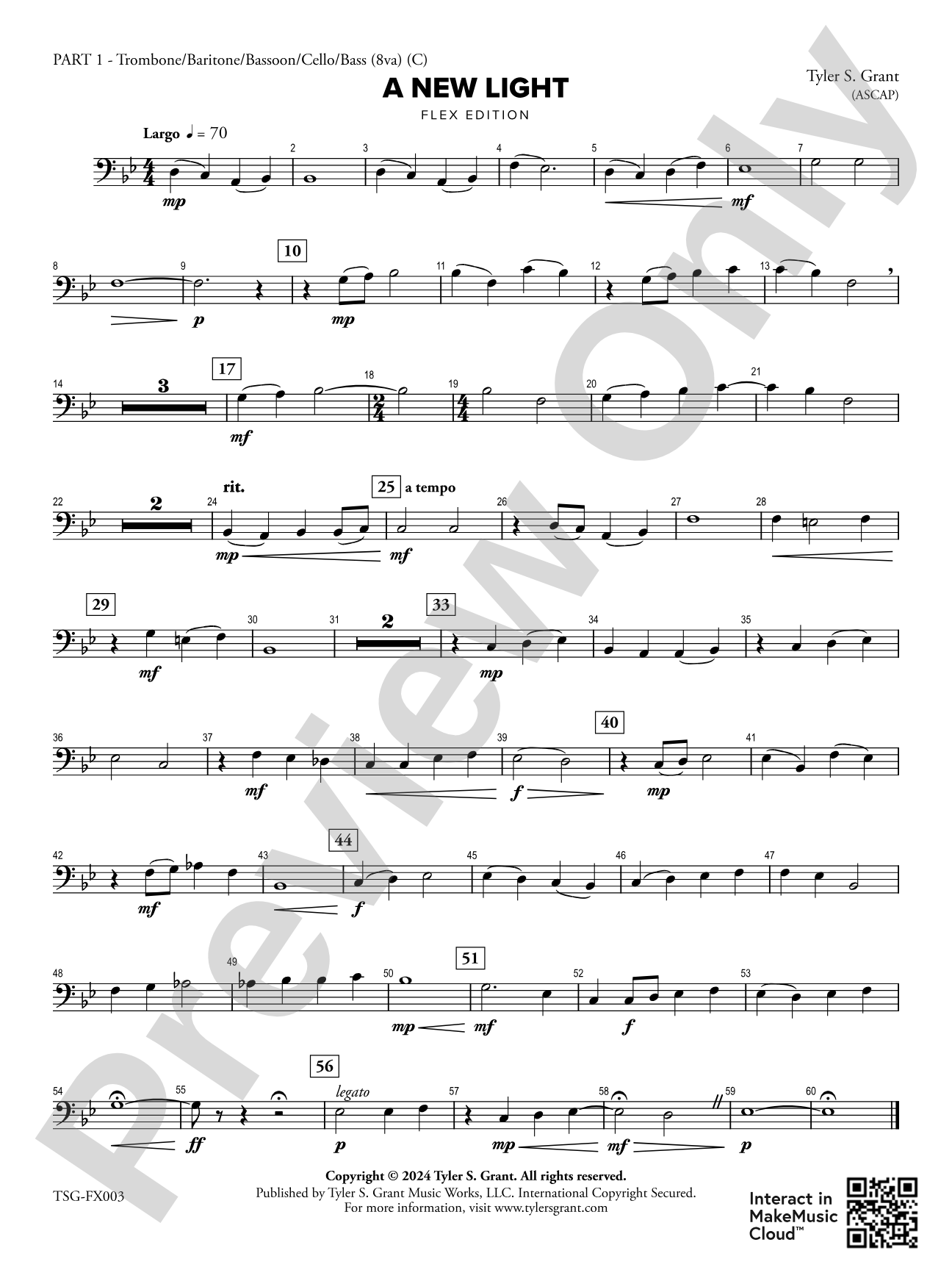
A sequel to his best-selling work At Twilight, Tyler S. Grant once again contributes a captivating lyrical work for developing bands with A New Light. Colorful orchestrations have a chance to shine through modest ranges and easy technical demands. Intriguing harmonic progressions surrounded by memorable melodies will build maturity in your ensemble's listening skills. A gorgeous and colorful work arranged for flexible instrumentation! (3:30)
Original Item#: TSG-FX003
Discover MakeMusic Cloud: thousands of interactive titles your students can play along with today.
Tyler S. Grant has established himself as a prolific composer and arranger whose works appear regularly on state and regional honor ensemble programs across the country. His compositions have earned recognition including a 2014 Dallas Wind Symphony Fanfare Competition win, and his music has been performed by collegiate and professional ensembles throughout North America and at venues including Carnegie Hall, The Midwest Clinic, and the Macy's Thanksgiving Day Parade.
Beyond composing, Grant maintains an active schedule as a conductor and clinician, having worked with over 100 school music programs across more than 15 states. He earned his bachelor's degree in instrumental music education from the University of Alabama and studied conducting with Professor Randall Coleman. Grant has also contributed to Alfred Music's Sound Innovations series and regularly publishes new works for bands and orchestras each year.
Why we love this
Grant knows exactly how to write for young ensembles without sacrificing musical substance. The harmonic language here is sophisticated enough to challenge developing ears while the modest ranges and straightforward technical demands let students focus on ensemble balance, tone quality, and phrasing rather than struggle with mechanics. The flexible instrumentation means you can perform this with the exact ensemble you have on any given day.
What to expect
A lyrical journey with colorful harmonic twists and warm melodic lines that unfold naturally. The writing creates moments where students hear their parts within a larger harmonic landscape, making musical listening feel rewarding rather than abstract.
Who it's for
Developing concert bands and flexible ensembles at the 1.5 grade level who need genuinely musical repertoire that builds musicianship without overwhelming performers with technical demands. This work suits directors seeking pieces that sound far more sophisticated than their difficulty level suggests.
How to get the most out of it
Balance the harmonic progressions by listening for each choir's contribution rather than letting any section dominate. Grant layers colors intentionally, so transparency matters more than volume.
Shape the memorable melodic lines with gentle direction and space between phrases. Young ensembles often rush lyrical writing; allow time for the music to breathe.
Use the 3:30 length as a rehearsal focal point for sustained concentration. Work toward performing the entire piece in one focused run to build listening maturity during performance.
How to use it
Program this as a showcase piece on a concert featuring varied musical styles, or pair it with more rhythmically driven repertoire to demonstrate your ensemble's range. Its modest technical demands make it ideal for a concert midway through the season when musicianship can take the focus.
Skills your students will build
Listening for harmonic color and balance within ensemble textures
Phrasing and shaping lyrical melodic lines
Reading flexible instrumentation and adapting to available forces
Sustaining focused ensemble concentration across a complete work
You May Also Like
Scan to Complete Your Purchase
Use your phone's camera to scan the code below
You'll log in on your phone and the order will be added to your account