
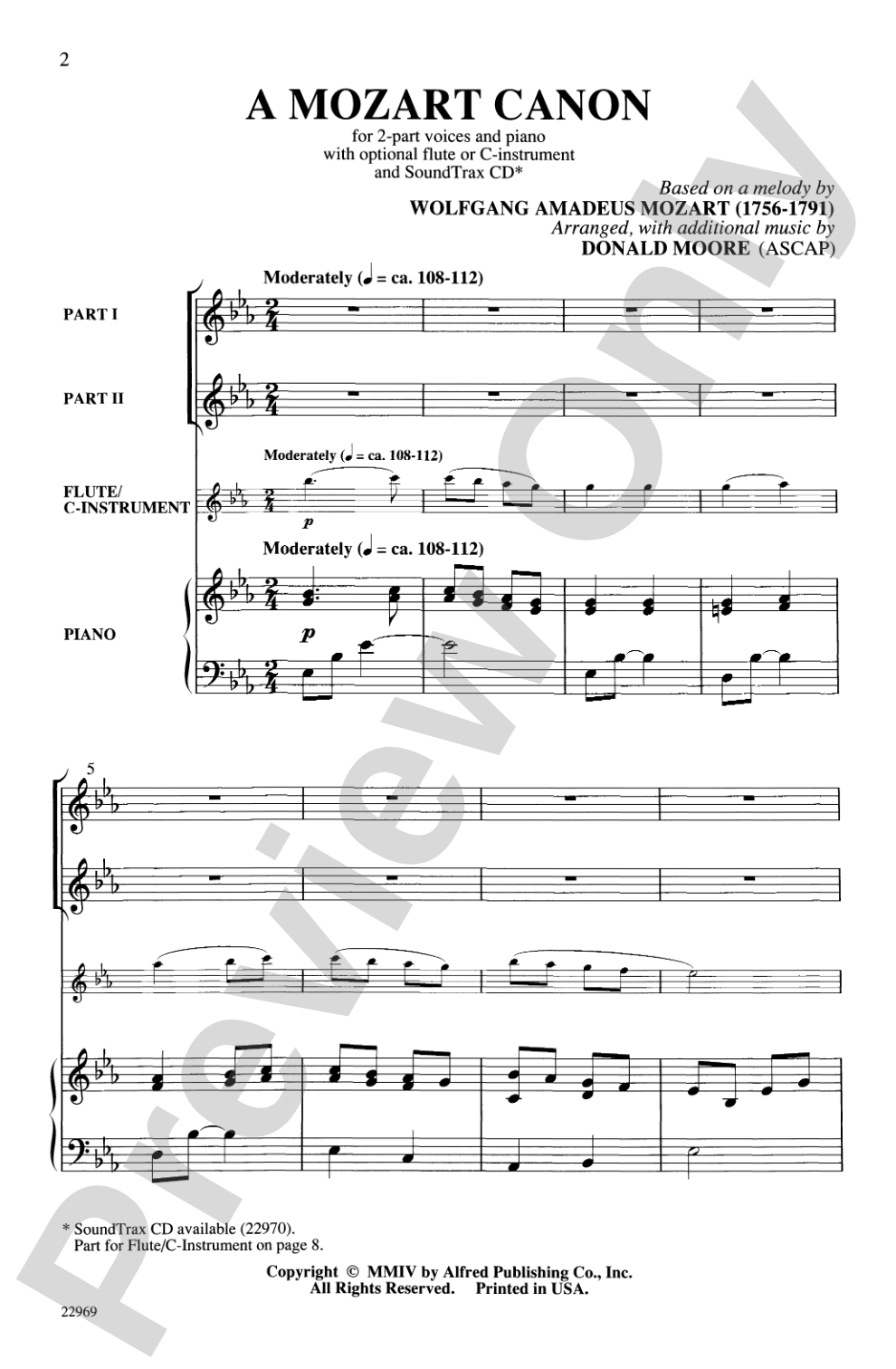

A Mozart Canon: 2-Part Choral Octavo
Based on a melody by Wolfgang Amadeus Mozart / arr., with additional music, by Donald Moore
Item: 00-PO-0003156
$2.05
Minimum order quantity: 20 copies
Pickup currently not available
Description
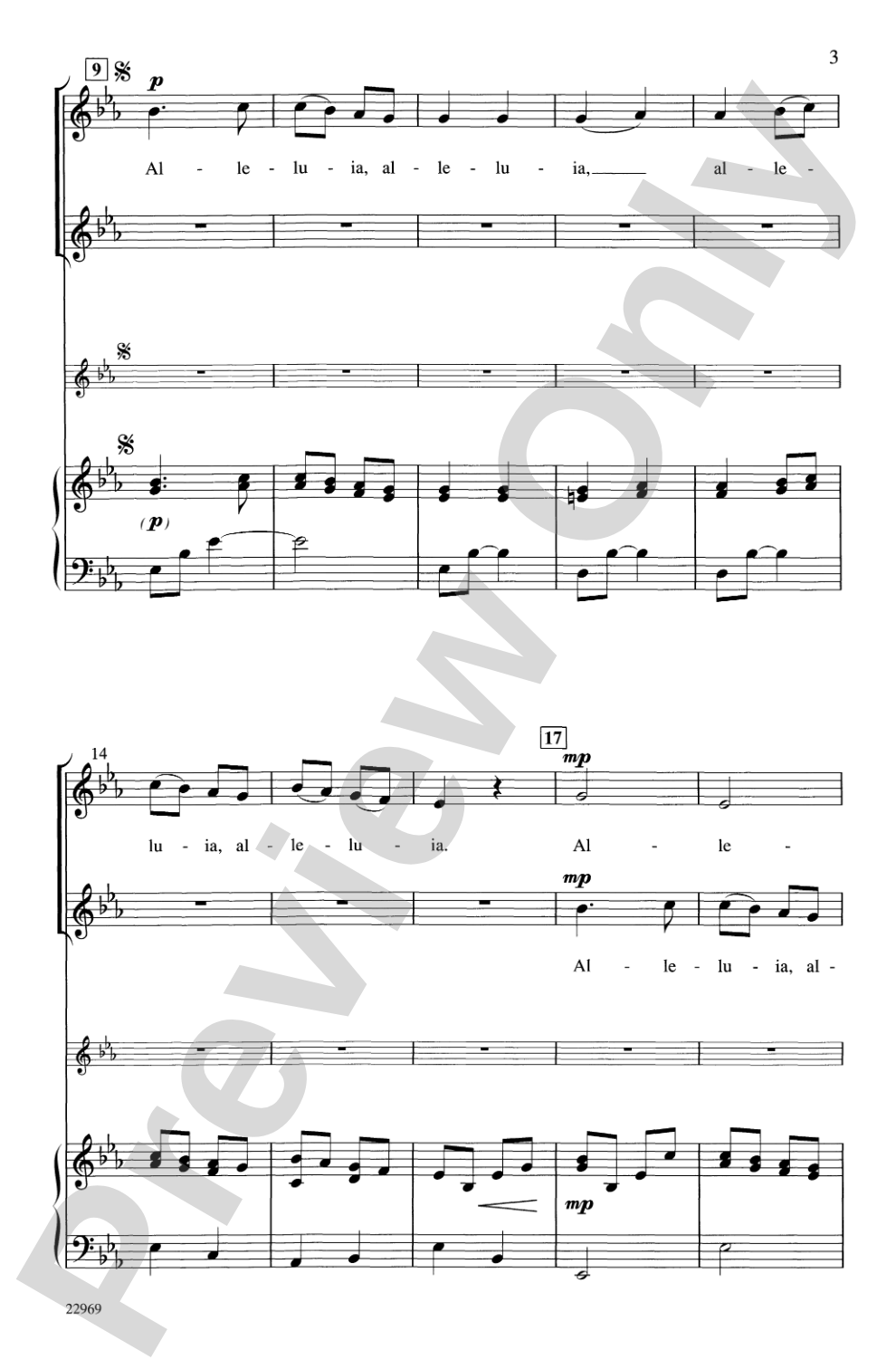
Donald Moore has skillfully crafted a canonic piece based on one of Mozart's most memorable melodies. "Alleluia" from the famed motet, Exsultate Jubilate, is placed in an easy range for young singers, supported by a simple piano accompaniment, enhanced with a light optional flute (or C-instrument) part, and combined with lovely original material. Young voices will shine as they sing this classical sounding piece, written expressly for 2-part choirs. The optional SoundTrax CD boasts a chamber music-like quality. This title is available in MakeMusic Cloud.


A Mozart Canon: 2-Part Choral Octavo isn't in MakeMusic Cloud just yet...but it could be. Let us know you'd like to see it, and you'll help shape what comes next. In the meantime, start a free trial and dive into thousands of interactive titles your students can play along with today.
Request This Title
Tell us you want it.
Start Your Free Trial
Explore everything that's ready to play right now.
Sample Audio
1
Audio File
--:--
0:00
0:00
Sample Video
No sample videos found.
Additional Details
Series:
Alfred Choral Designs
Publisher:
Alfred Music
Page Count:
8
SKU:
00-PO-0003156
More about this title
About the Composer: Wolfgang Amadeus Mozart
Wolfgang Amadeus Mozart (1756-1791) composed some of the most performed and beloved music in the Western canon across every genre. His gift for melody was extraordinary; his lines seem to unfold inevitably yet surprise at every turn. For young singers, Mozart's music offers a direct lesson in phrase shape, harmonic clarity, and the power of a great tune—all hallmarks of classical composition that remain relevant to choral development today.
The "Alleluia" from Exsultate Jubilate, K. 165, stands among Mozart's most recognizable vocal moments. Originally written as a jubilant soprano showpiece in a larger sacred motet, this melody has proven so durable that it adapts gracefully to many contexts and voicings. Its character—bright, celebratory, and singable—makes it an ideal choice for introducing young choirs to masterwork literature.
Why we love this
This arrangement captures everything that makes Mozart's melody magnetic while placing it squarely within the reach of developing singers. Donald Moore's use of canon adds structural interest and musical sophistication without obscuring the beauty of the original tune. For directors programming a concert that bridges classical and contemporary contexts, this piece sounds polished and mature while remaining genuinely achievable for a 2-part choir.
What to expect
Bright and celebratory, with an almost effortless elegance. The piece has the shine of classical repertoire without the weight; there's joy in both the melody and the interplay between the two vocal lines. The simple piano accompaniment frames the singers with warmth rather than fussiness.
Who it's for
Young choir programs with singers ready to tackle partner songs and canonic thinking. This works for elementary through middle school choirs that have basic independence and breath control, as well as treble or unchanged voice choirs at the secondary level.
How to get the most out of it
- Bring out the independence of each voice in the canon without sacrificing blend. The fun of the form lies in hearing both lines clearly, so balance them rather than covering one with the other.
- Shape phrases with the grace and clarity Mozart himself would expect. Avoid a heavy or dragging approach; let the melody breathe naturally and sing through to the end of each phrase.
- If you include the optional flute part, position it to support without dominating. A light, chamber-like texture suits both the material and the recorded accompaniment quality.
How to use it
Open a concert with this if you want to establish sophistication and musical maturity from the start. It pairs well with other Mozart or early classical choral works, or use it as a transition piece between a heavier section and lighter repertoire. The recorded accompaniment also makes it a strong choice for assembly or school-wide performance settings where rehearsal time with live accompaniment may be limited.
Skills your students will build
- Singing independent vocal lines while maintaining blend and unified phrasing
- Understanding canonic form through performance and ear
- Singing in classical style with shape, clarity, and forward motion
- Responding to a text-driven melody with natural articulation and diction