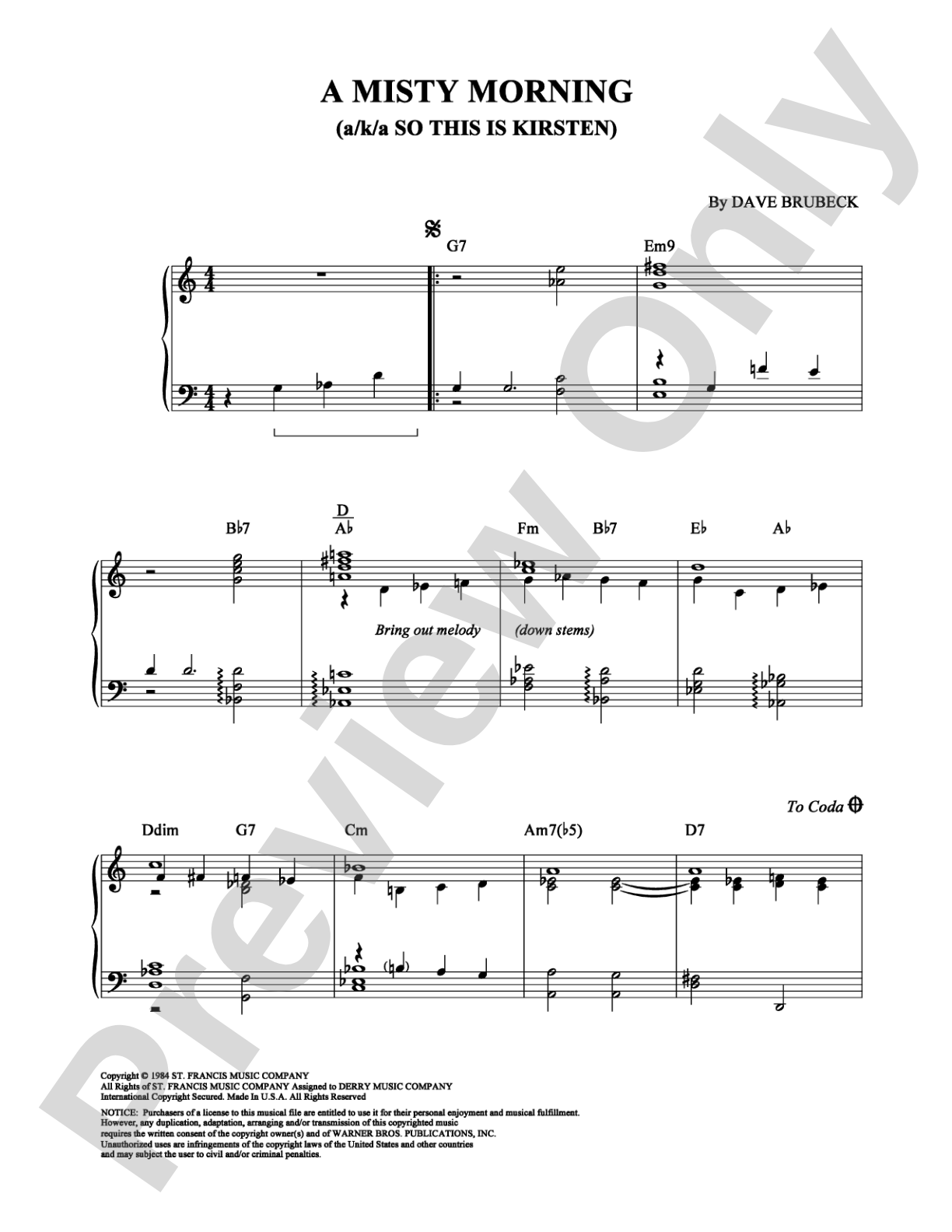
A Misty Morning: Piano Digital Sheet Music

A Misty Morning: Piano Digital Sheet Music

Dave Brubeck

Item: 00-PS-0001317

Digital Download
$3.99
Description

A Misty Morning: Piano Digital Sheet Music isn't in MakeMusic Cloud just yet...but it could be. Let us know you'd like to see it, and you'll help shape what comes next. In the meantime, start a free trial and dive into thousands of interactive titles your students can play along with today.

Sample Audio
No sample audio found.
Sample Video
Additional Details
SKU: 00-PS-0001317

More about this title

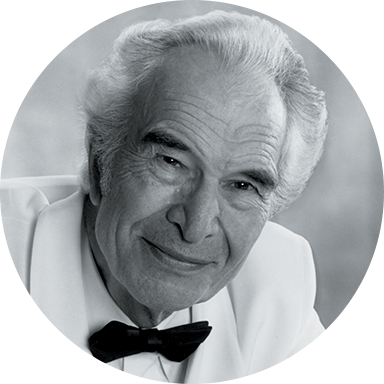
About the Artist: Dave Brubeck

Dave Brubeck

Dave Brubeck built his reputation as a pianist whose improvisational command was matched by his sophistication as a composer. Beyond his role as a jazz innovator, he wrote across multiple forms: choral works, orchestral pieces, chamber music, ballet suites, a string quartet, and large-scale compositions for chorus and orchestra. His study with Darius Milhaud at Mills College in the 1940s shaped his conviction that jazz and classical languages could enrich each other, an approach that defined his artistic vision throughout his career.

Brubeck's cultural impact extended far beyond the bandstand. His 1959 album "Time Out" became the first jazz recording to sell over a million copies, anchored by the now-standard "Take Five." He was also a pioneering force in racial integration during the mid-twentieth century. His sacred works, including the mass "To Hope!" and oratorios like "The Voice of the Holy Spirit" and "Beloved Son," have been performed and recorded worldwide by major orchestras and choirs. Recognition came throughout his lifetime: a Grammy Lifetime Achievement Award for jazz, the Presidential Medal of the Arts from President Clinton, a lifetime achievement honor from the London Symphony Orchestra in 2007, and induction into the American Classical Music Hall of Fame in 2003.

Why we love this

Brubeck's piano writing balances jazz sensibility with compositional rigor. This piece offers pianists a chance to navigate the subtle interplay between notated melody and interpretive freedom that defines his approach. The work sits at an intersection few jazz composers reach: it demands technical fluency while remaining deeply musical.

What to expect

The title evokes something quiet and atmospheric, likely with subtle harmonic movement and introspective melody. Brubeck's touch typically combines lyrical phrasing with rhythmic sophistication, creating music that sounds intimate even at the keyboard.

Who it's for

This piece serves pianists with intermediate-to-advanced technique who want to deepen their understanding of jazz composition and improvisation within a notated context. It appeals to musicians studying Brubeck's catalog or exploring how twentieth-century composers blended classical and jazz aesthetics.

How to get the most out of it

  • Treat the harmonic structure as a framework rather than a cage; Brubeck's jazz roots mean these changes invite intelligent reharmonization and voice-leading choices within the notated score.
  • Pay close attention to how dynamics and touch shape the "misty" quality of the piece; restraint in dynamics often creates more atmosphere than volume.
  • Explore the rhythmic flexibility typical of Brubeck's writing; feel for where the piece wants rubato and where it needs precision, and let the form guide those choices.

How to use it

This works beautifully as a solo recital piece that bridges jazz and classical concert contexts. It also serves as an excellent teaching example when exploring how trained composers approach jazz idioms, or as part of a program celebrating Brubeck's broader compositional legacy beyond his famous quartet recordings.

Skills your students will build

  • Interpreting jazz harmony within notated music
  • Balancing rhythmic precision with stylistic flexibility
  • Voice leading and reharmonization choices in a jazz context
  • Understanding the relationship between melody and underlying chord changes

You May Also Like