
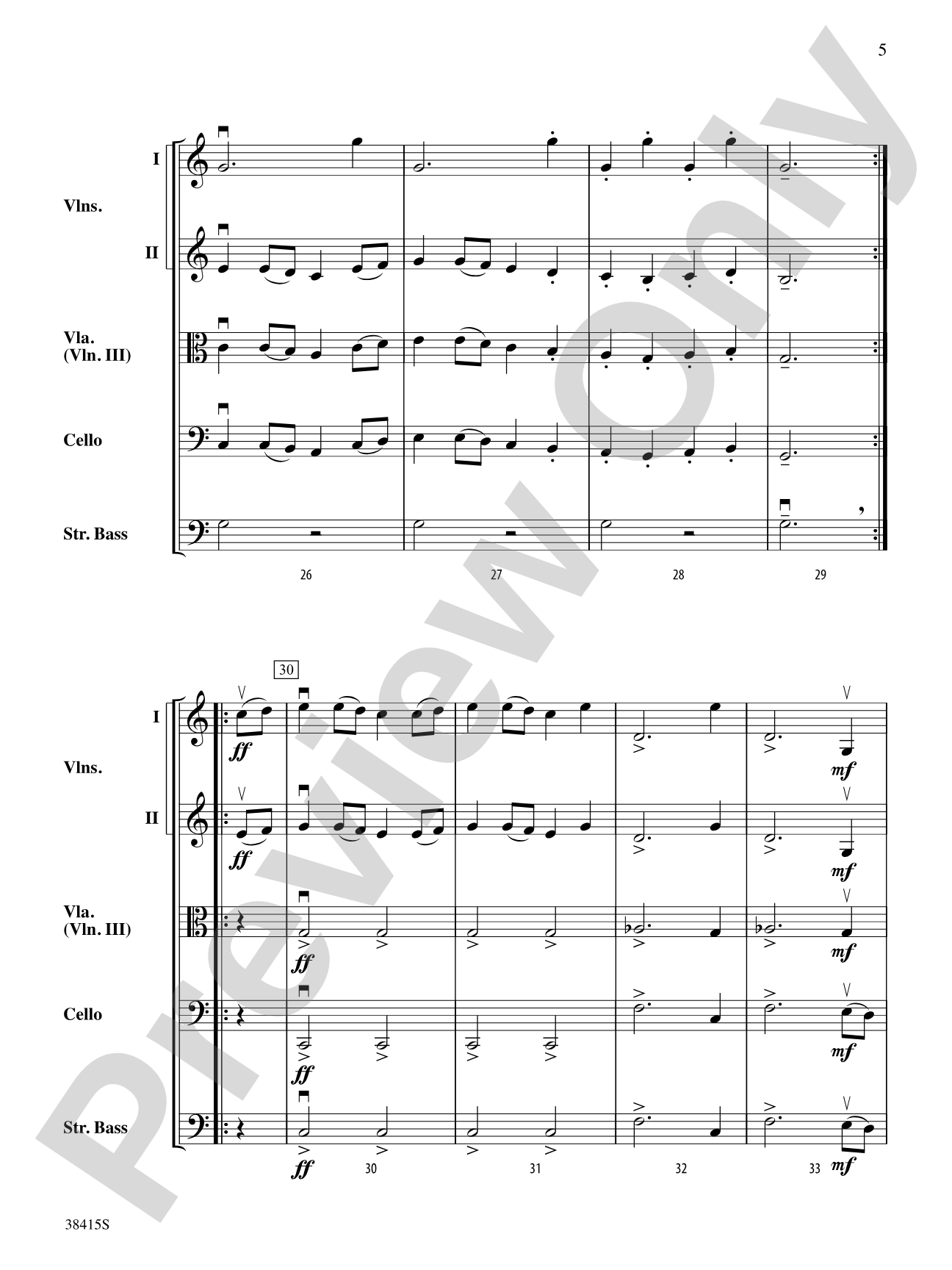
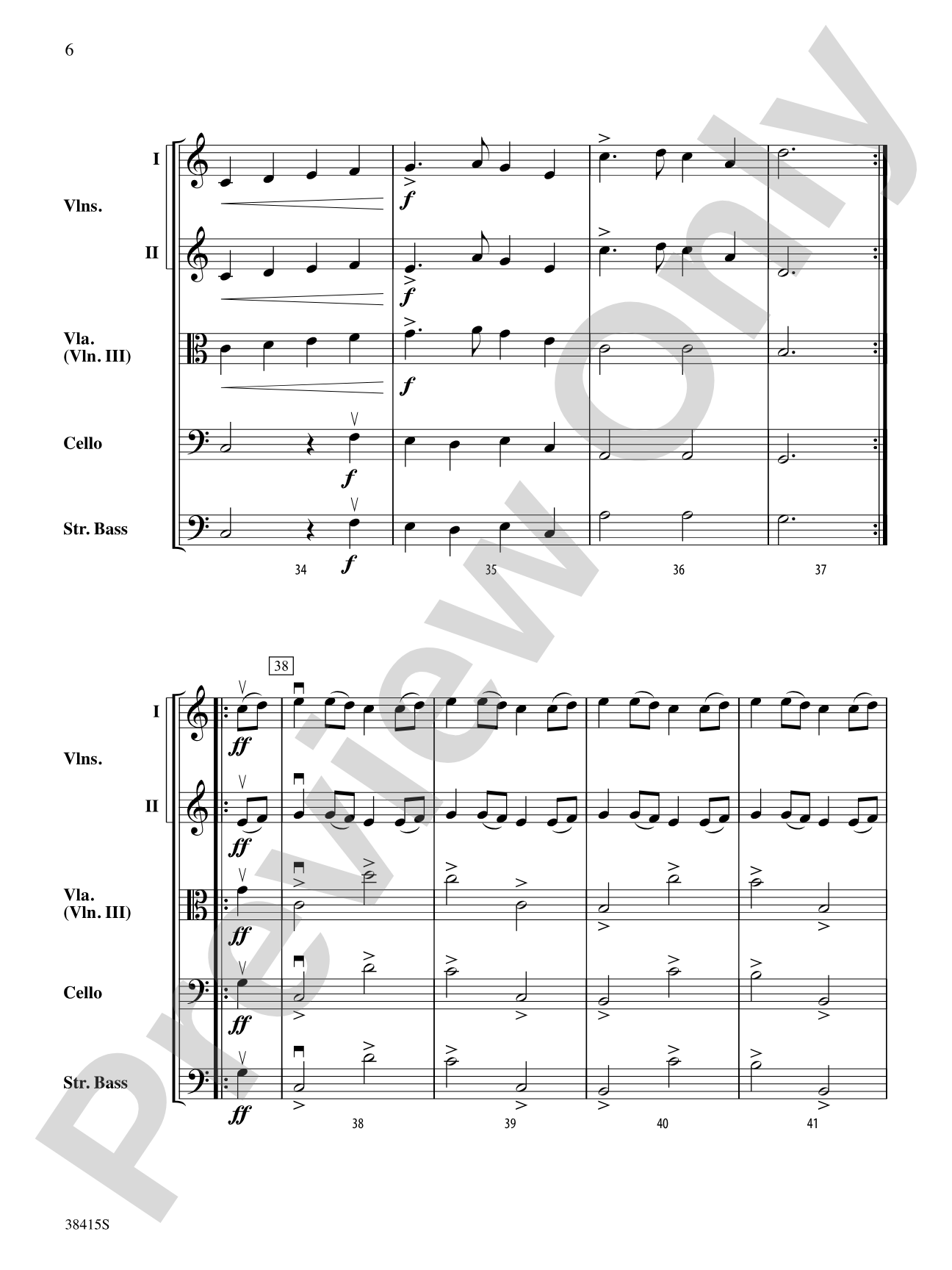
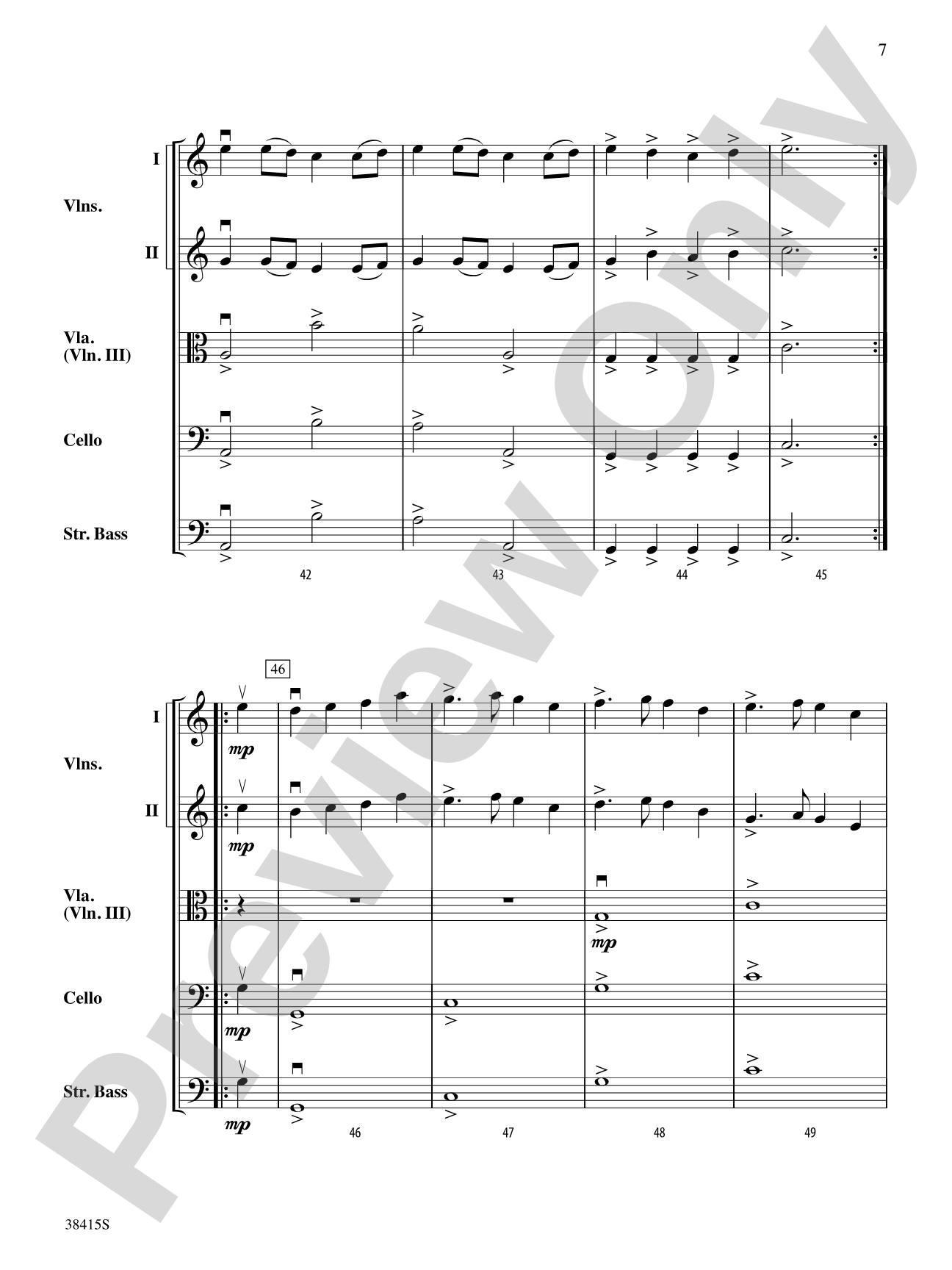
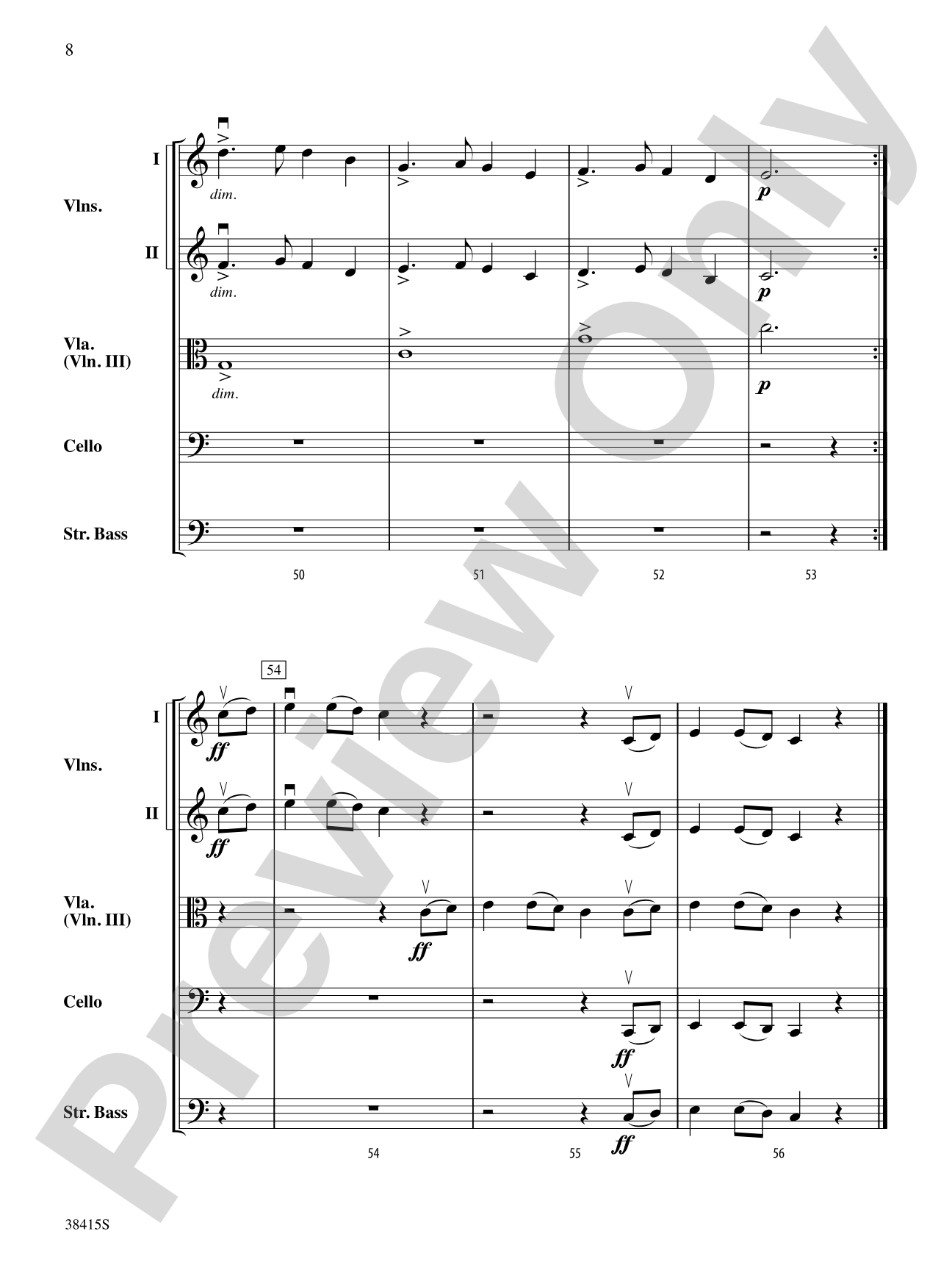

A Midsummer Night's Dream (Dance of the Clowns): String Orchestra Conductor Score & Parts
Dance of the Clowns
By Felix Mendelssohn / arr. Christina Hans
Grade: 2.5
Item: 00-PK-0005226

$48.00
Pickup currently not available
Buy Extra Parts (Digital PDF Download)
Parts Added to Cart!
Description
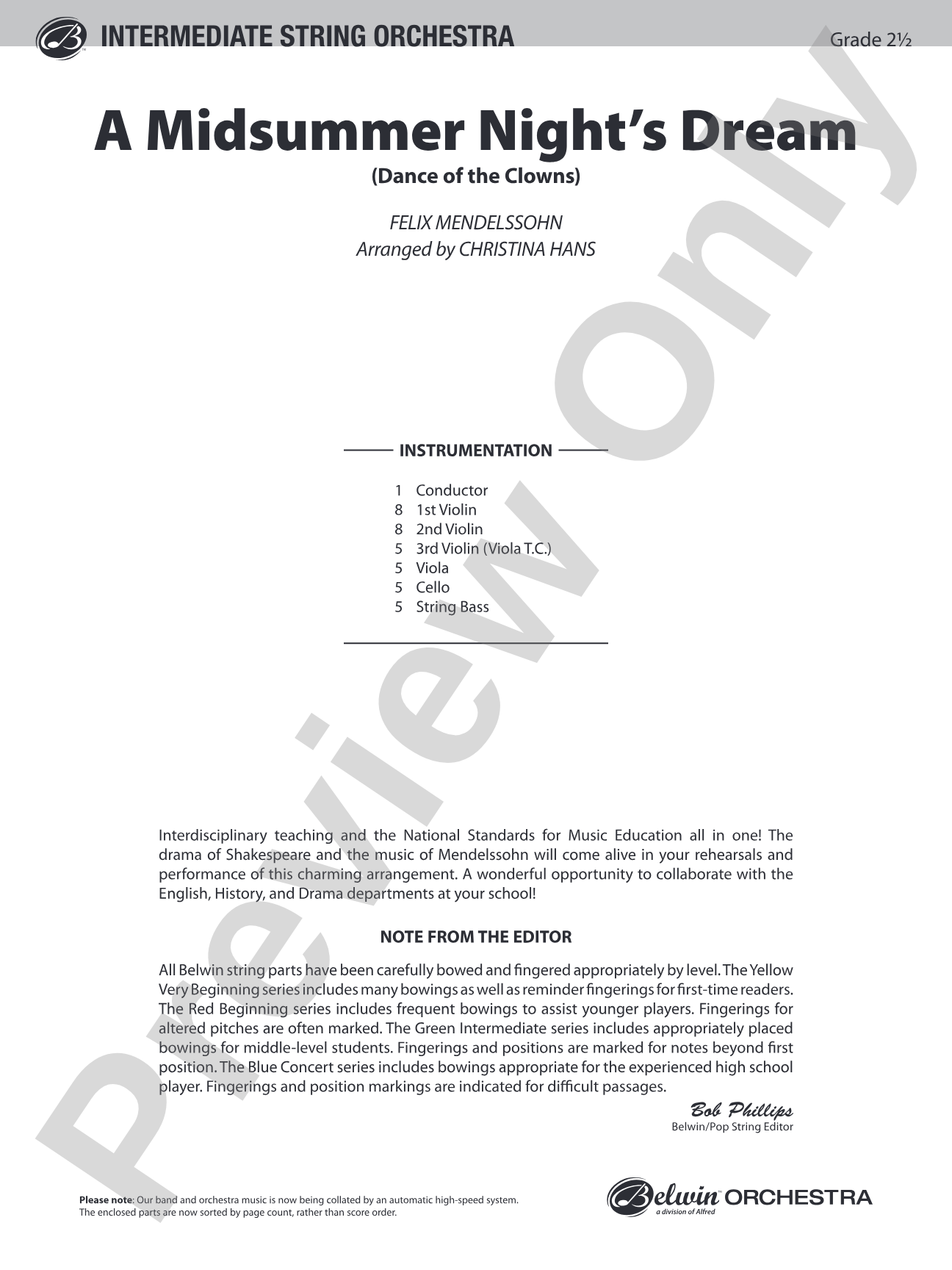
Interdisciplinary teaching and the National Standards for Music Education all in one! The drama of Shakespeare and the music of Mendelssohn will come alive in your rehearsals and performance of this charming arrangement. A wonderful opportunity to collaborate with the English, History, and Drama departments at your school!


Don't just read it, hear it, play along with it, and watch your students grow with it. In MakeMusic Cloud, A Midsummer Night's Dream (Dance of the Clowns): String Orchestra Conductor Score & Parts comes alive with professional accompaniment, adjustable tempo, and built-in practice tools that turn solo practice into real progress.
Open in the Player
Jump straight in and assign it today.
Start Your Free Trial
Open this title and explore the full library in minutes.
Sample Audio
1
Audio File
--:--
0:00
0:00
Sample Video
No sample videos found.
Additional Details
Series:
Belwin Intermediate String Orchestra
Publisher:
Alfred Music
Page Count:
72
SKU:
00-PK-0005226
More about this title
About the Composer: Felix Mendelssohn
Felix Mendelssohn (1809-1847) composed A Midsummer Night's Dream overture and incidental music in two phases of his career: the overture in 1826 and the full suite of pieces in 1843. His approach to Shakespeare's comedy established a model for how orchestral music could capture literary drama and character with precision and wit. The work remains one of the most performed pieces of incidental music in concert settings and educational ensembles.
Mendelssohn's gift for orchestration and his ability to create distinct musical personalities for each dramatic moment make his Midsummer Night's Dream suite an ideal teaching work. The "Dance of the Clowns" movement in particular showcases his talent for character portrayal through rhythmic vitality and instrumental color, making it accessible to developing orchestras while maintaining the sophistication that engages advanced musicians.
Why we love this
This arrangement brings together literature and music in a way that strengthens both disciplines. The movement's comic energy and straightforward orchestration allow orchestras at this level to achieve genuine musical character without overwhelming technical demands. It's the kind of piece that reminds students why they're learning these instruments in the first place.
What to expect
Bright, mischievous, and full of rhythmic bounce. The movement captures the scheming energy of Bottom, Quince, Snug, and Flute as they bumble through their play-within-a-play, with Mendelssohn's orchestration painting each moment of their comic confusion in vivid musical color.
Who it's for
Developing string orchestras at the middle and early high school level will find this arrangement direct and playable. Conductors seeking repertoire that serves multiple curriculum areas will appreciate how naturally it invites collaboration with English and history teachers.
How to get the most out of it
- Establish the comic tone in rehearsal by referencing the absurd characters Mendelssohn depicts. The rhythmic precision that makes the comedy work comes from ensemble clarity, not speed.
- Balance the dance rhythm across all sections. The vitality of this movement depends on every player feeling the pulse equally, whether they're carrying melody or supporting harmonic movement.
- Shape the orchestral color by bringing out instrumental solos as they emerge. Mendelssohn wrote this movement so different instruments could showcase character; resisting the urge to blend everything together will bring out his orchestration.
- Allow the accompaniment figures to breathe. Comic timing in music works much like timing in theater; rushing obscures the humor that Mendelssohn built in.
How to use it
Program this alongside other lighter works in a concert celebrating interdisciplinary learning, or use it as the centerpiece of a performance that pairs with dramatic scenes from the actual play. The arrangement's accessibility and theatrical appeal also make it an excellent festival selection that showcases orchestra musicianship without technical barrier.
Skills your students will build
- Rhythmic coordination across multiple parts moving at different note values
- Dynamic control and terraced dynamics typical of Romantic orchestration
- Listening for and balancing multiple instrumental colors simultaneously
- Maintaining character and theatrical expression within ensemble playing
- Responding to literary context as a guide for musical interpretation