A Mad Russian's Christmas: 2nd Violin Sheet Music Preview

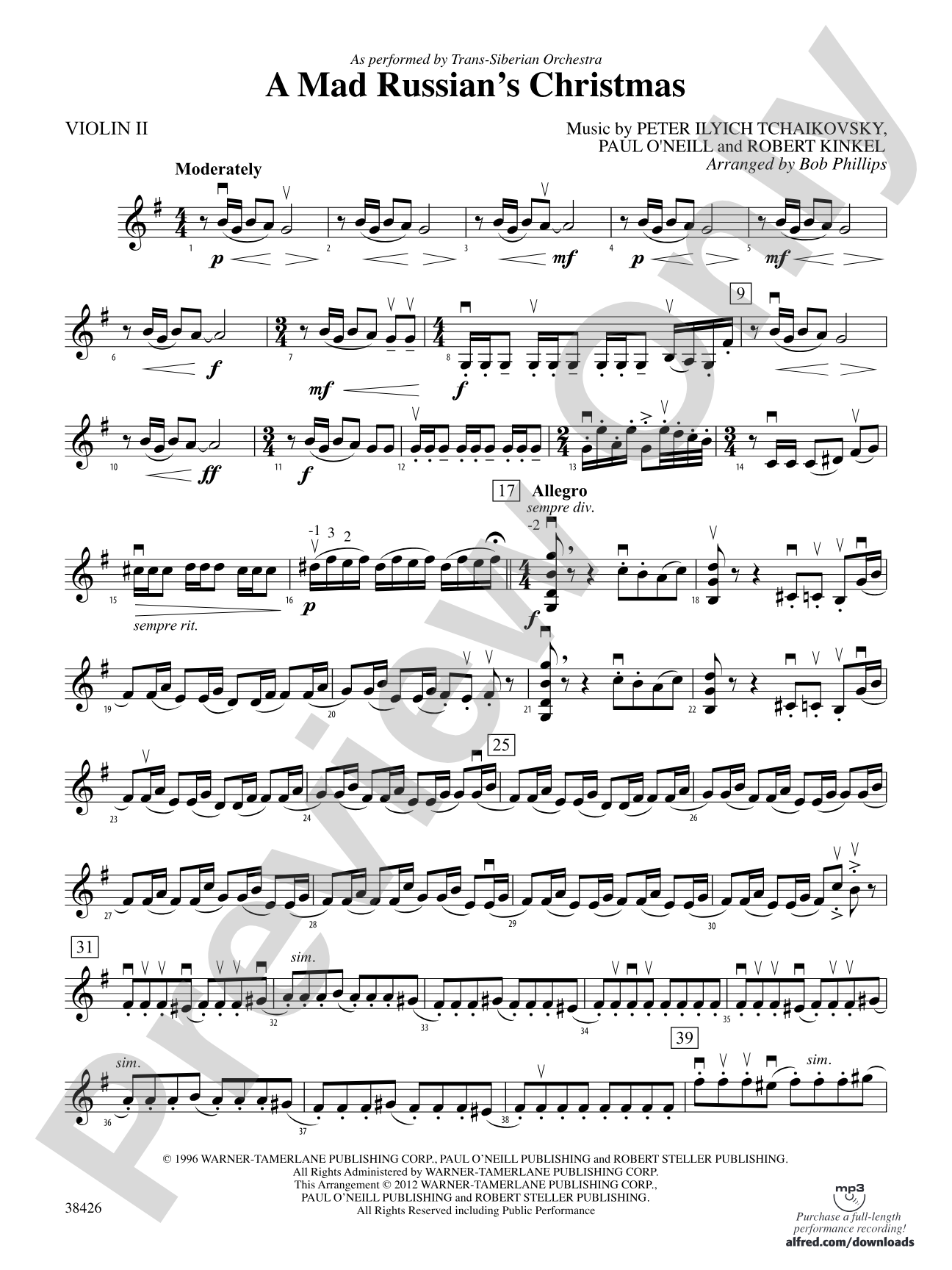
A Mad Russian's Christmas: 2nd Violin

As Performed by Trans-Siberian Orchestra

Music by Peter Ilyich Tchaikovsky, Paul O'Neill, and Robert Kinkel / arr. Bob Phillips

Grade: 3.5

Item: 00-PC-0015492_VN2

Digital Download
$5.99
Description
As performed in the fabulous Trans-Siberian Orchestra live concert, experience "Trepak" from The Nutcracker as you never have before. Though greatly enhanced by adding a rhythm section, the piece can be played by strings alone. An optional electric violin part provides the perfect spot to feature an electric instrument. If you haven't seen TSO, check them out online and then share this one with your students. Perhaps include a field trip to see the band live with lights and effects.

Don't just read it, hear it, play along with it, and watch your students grow with it. In MakeMusic Cloud, A Mad Russian's Christmas: 2nd Violin comes alive with professional accompaniment, adjustable tempo, and built-in practice tools that turn solo practice into real progress.

Sample Audio
0:00
0:00
Sample Video
Additional Details
Series: Pop Intermediate String Orchestra
Publisher: Alfred Music
Page Count: 148
SKU: 00-PC-0015492_VN2

More about this title

About the Composer: Paul O'Neill

Paul O'Neill co-founded the Trans-Siberian Orchestra and served as the ensemble's creative force, composing and arranging the elaborate rock-orchestral hybrid works that defined the group's signature sound. His approach to classical music prioritized accessibility and theatrical presentation, making him a distinctive voice in bridging art music with popular audiences.

Why we love this

This arrangement captures the visceral energy that made the Trans-Siberian Orchestra a phenomenon, turning a familiar ballet excerpt into something that genuinely excites young string players. The optional electric violin and rhythm section elements give your orchestra a chance to sound contemporary and powerful without losing the classical DNA at its core, and the piece works beautifully whether you have all the optional parts or just strings.

What to expect

Electric and propulsive, with the galloping urgency of Trepak but recontextualized through a modern rock lens. The piece crackles with kinetic momentum and theatrical flair, creating a performance experience that feels both familiar and genuinely fresh.

Who it's for

String orchestras at the intermediate level seeking contemporary material with proven crowd appeal and performance energy. This works for groups looking to expand beyond traditional classical programming and for directors who want to give students exposure to rock-orchestral fusion while maintaining musical substance.

How to get the most out of it

  • Lock the rhythmic precision of the string section with the rhythm section parts (if included); this arrangement hinges on driving, tight articulation rather than the lyrical phrasing typical of traditional Nutcracker performances.
  • Feature the electric violin soloist prominently in the mix during rehearsals and performance; this part transforms the texture and deserves space to shine.
  • Establish a clear, energetic pulse from the start; the piece thrives on forward momentum and crisp rhythmic definition across all sections.
  • Balance the orchestral tutti passages so they feel unified and powerful rather than cluttered; coordinate articulation and dynamic shaping among the string parts.

How to use it

Program this as a winter concert centerpiece or as an opener that immediately signals to your audience that your orchestra is contemporary and energetic. It pairs well with traditional string repertoire to show range, or cluster it with other pop-orchestra crossover material to build a cohesive modern section.

Skills your students will build

  • Maintaining rhythmic precision and ensemble lock in fast, driving tempos
  • Balancing classical articulation with rock-influenced energy and pulse
  • Coordinating string sections with rhythm section parts (optional)
  • Performing with theatrical presence and understanding phrasing across genre styles

You May Also Like