
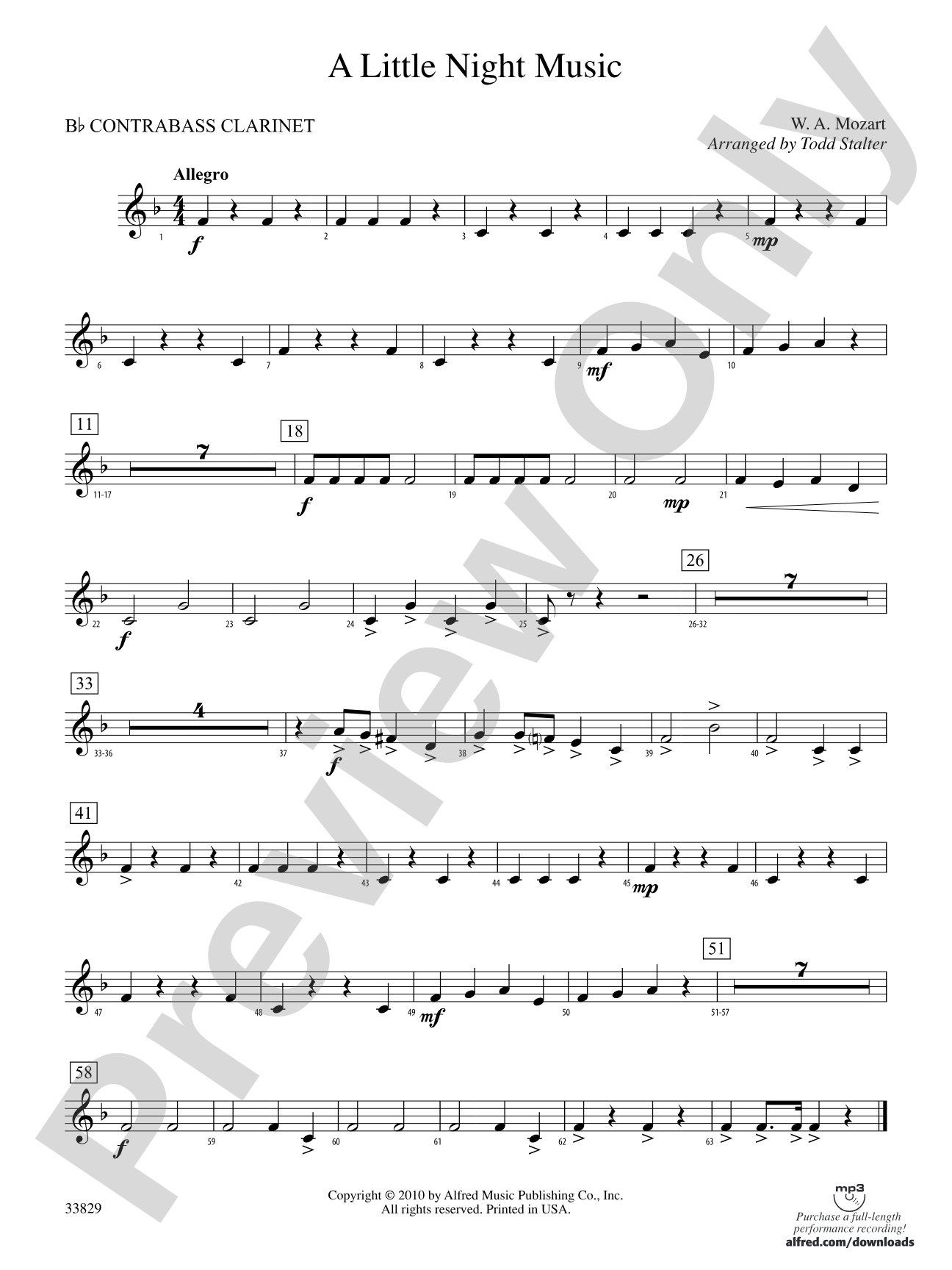

A Little Night Music: (wp) B-flat Contrabass Clarinet
By Wolfgang Amadeus Mozart / arr. Todd Stalter
Grade: 1.5 (Easy)
Item: 00-PC-0014560_wpBCBC
$3.00
Pickup currently not available
Description
Mozart's Serenade No. 13 for strings in G Major, K. 525 is commonly referred to as "Eine Kleine Nachtmusik," which stands for "a little serenade," but is more familiar to music lovers as "a little night music." This arrangement uses themes from the first movement, and is cast in a comfortable key and range for young band musicians. Careful attention to the sudden, extreme dynamic changes will make the performance of this piece really come to life.


Don't just read it, hear it, play along with it, and watch your students grow with it. In MakeMusic Cloud, A Little Night Music: (wp) B-flat Contrabass Clarinet comes alive with professional accompaniment, adjustable tempo, and built-in practice tools that turn solo practice into real progress.
Open in the Player
Jump straight in and assign it today.
Start Your Free Trial
Open this title and explore the full library in minutes.
Sample Audio
1
Audio File
--:--
0:00
0:00
Sample Video
No sample videos found.
Additional Details
Series:
Challenger Band Series
Publisher:
Alfred Music
Page Count:
118
SKU:
00-PC-0014560_wpBCBC
More about this title
About the Composer: Wolfgang Amadeus Mozart
Wolfgang Amadeus Mozart (1756-1791) composed across every major genre of his time: symphonies, concertos, operas, chamber music, and serenades. His output was staggering in both volume and quality; he created over 600 works in just 35 years. Mozart's music combines formal clarity with emotional depth, and his melodies remain instantly recognizable to audiences worldwide.
For young musicians, Mozart's work offers an ideal entry point into the Classical period. His balanced phrases, transparent orchestration, and elegant harmonic language teach fundamentals of structure and style that transfer directly to all musical learning. This arrangement preserves those teaching qualities while making the music accessible to developing band musicians.
Why we love this
Todd Stalter's arrangement captures the grace and humor of Mozart's original while respecting the capabilities of Grade 1.5 musicians. The familiar theme is instantly engaging for audiences, and the emphasis on dynamic contrast gives young players a concrete, musical goal: they can hear their own growth in shaping those sudden shifts from soft to loud. This is Mozart that conductors and students can feel proud performing.
What to expect
Graceful and courtly, with moments of playful surprise. The opening theme has the elegance of a minuet; it invites musicians to play with style and restraint rather than volume. When those dynamic shifts arrive, they create little dramatic gestures that keep the piece charming rather than predictable.
Who it's for
Young concert bands ready for a recognized Classical masterwork that teaches both musicianship and performance skills. This arrangement works especially well for groups with a year or two of playing experience, where students benefit from familiar material that doesn't demand technical virtuosity but does demand musical intention.
How to get the most out of it
- Shape the opening theme with a gentle curve; Mozart's grace depends on phrasing that breathes rather than marches. Let the melody sing even at moderate volume.
- The dynamic changes are extreme and deliberate. Anchor these shifts with confident conducting and section leaders who understand they're not accidental. The contrast creates the piece's character.
- Balance the first violins (flutes, clarinets) carefully so the melody projects clearly. In a Grade 1.5 arrangement, clarity matters more than instrumental blend.
- Keep the accompaniment figures light and rhythmically crisp. Steady eighth-note patterns support the melody without overwhelming it.
How to use it
Program this early in a concert where audiences will recognize and enjoy it immediately. It pairs naturally with other Classical or early Romantic works and serves as a strong anchor piece for a youth or developing ensemble showcase. The familiar melody also makes it effective as a closing piece that sends audiences out with a smile.
Skills your students will build
- Shaping musical phrases with direction and breath
- Executing sudden, extreme dynamic changes with precision
- Balancing melody and accompaniment in orchestral texture
- Reading and interpreting Classical-era style and articulation
- Responding to subtle conducting gestures that shape expression