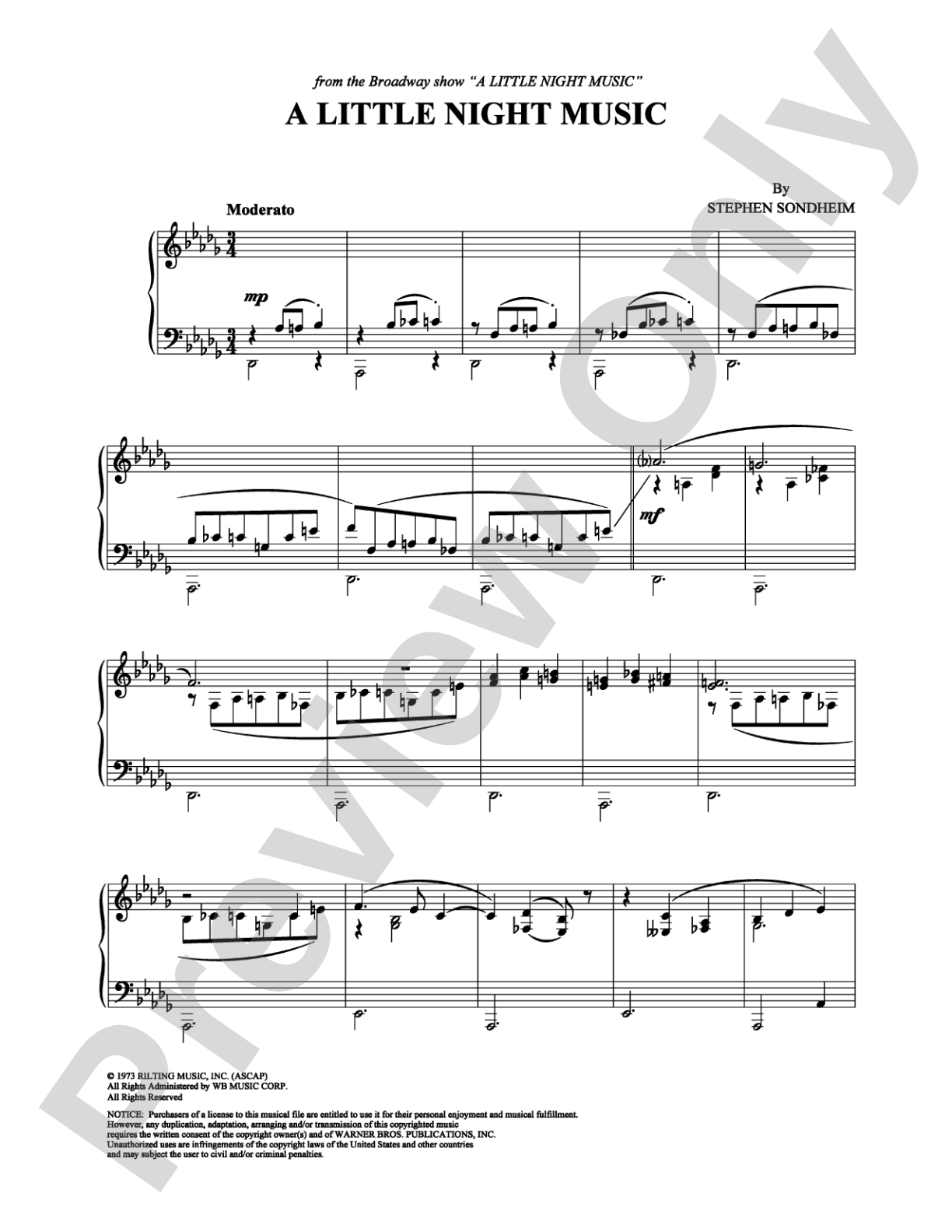
A Little Night Music: Piano Digital Sheet Music

A Little Night Music: Piano Digital Sheet Music

Stephen Sondheim

Item: 00-PS-0009051

Digital Download
$2.95
Description

A Little Night Music: Piano Digital Sheet Music isn't in MakeMusic Cloud just yet...but it could be. Let us know you'd like to see it, and you'll help shape what comes next. In the meantime, start a free trial and dive into thousands of interactive titles your students can play along with today.

Sample Audio
No sample audio found.
Sample Video
Additional Details
SKU: 00-PS-0009051

More about this title

About the Creator: Wolfgang Amadeus Mozart

Wolfgang Amadeus Mozart composed Eine kleine Nachtmusik in 1787, during a period of extraordinary creative productivity in Vienna. The work emerged from his mature compositional voice, blending the clarity and elegance of the Classical style with harmonic sophistication and memorable melodic invention that would define his legacy.

Why we love this

Mozart's serenade transcends its chamber origins when played on solo piano, revealing the melodic architecture that made this work endure for centuries. The digital format lets you access this classic instantly and adjust it to your practice space without managing a physical score.

What to expect

Intimate and conversational, as if Mozart is sharing a pleasant evening through instrumental dialogue. The serenity of the piece carries a gentle momentum that feels both reflective and genuinely engaging.

Who it's for

Pianists working toward intermediate repertoire who want to explore a cornerstone of the classical canon. This piece rewards both students building technique and teachers seeking material that deepens musicality and historical understanding.

How to get the most out of it

  • Approach the opening theme with unhurried elegance; the charm lies in its lyrical phrasing rather than urgency.
  • Maintain clarity in the accompaniment patterns so the melody breathes naturally over the texture.
  • Pay attention to dynamic shape within phrases rather than dramatic shifts; this music unfolds gradually.

How to use it

Ideal for recitals where you want classical sophistication without the virtuosic demands of a full concerto. It also works well in educational settings to demonstrate how a single movement can sustain interest through melodic invention and harmonic refinement.

Skills your students will build

  • Shaping long melodic lines with consistent phrasing
  • Balancing melody against accompaniment texture
  • Navigating the harmonic language of late 18th-century classical style
  • Interpreting stylistically appropriate articulation and rubato

You May Also Like