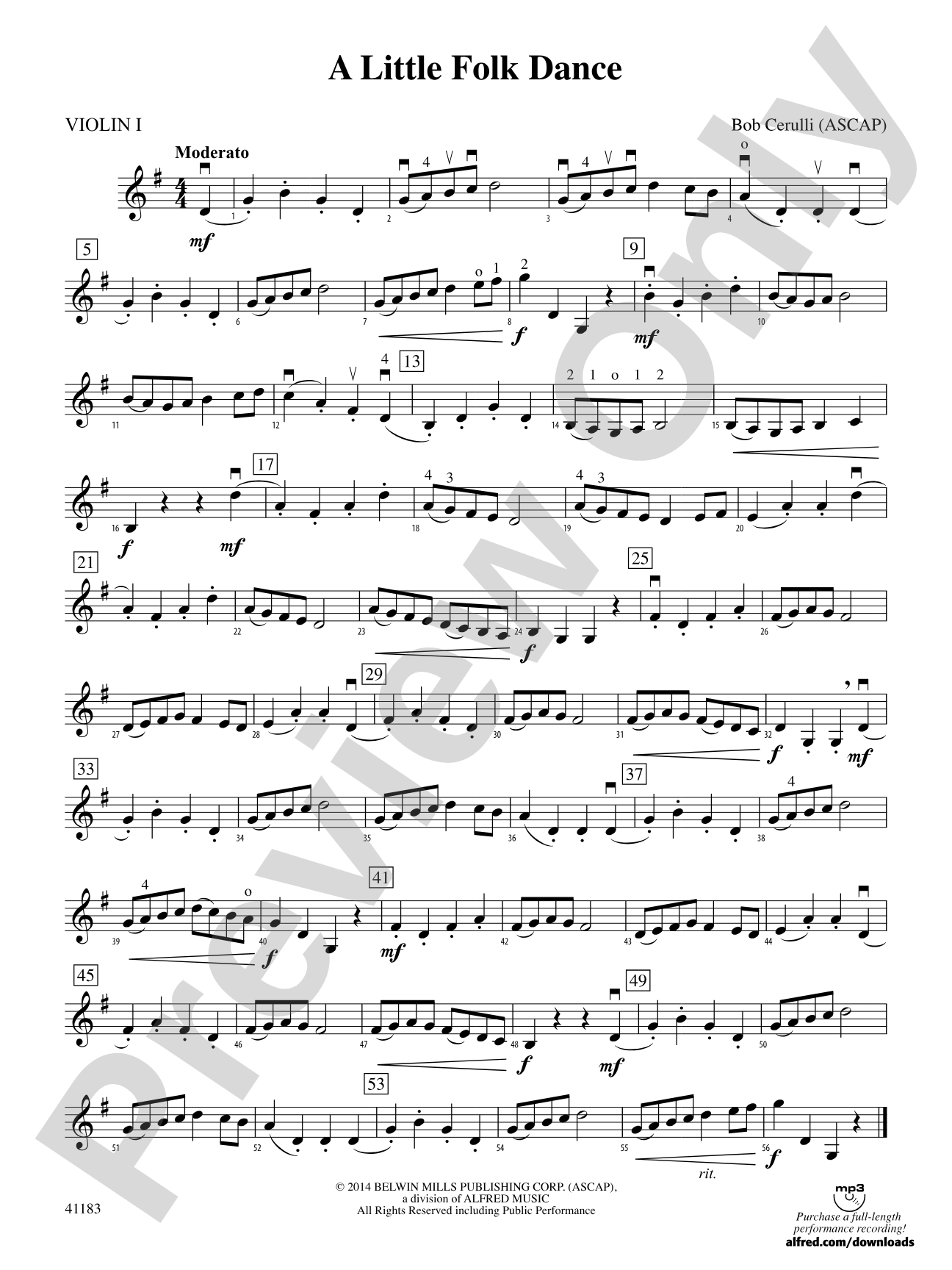
A Little Folk Dance: 1st Violin Sheet Music Preview

A Little Folk Dance: 1st Violin

By Bob Cerulli

Grade: 2

Item: 00-PC-0016311_VN1

Digital Download
$5.99
Description
This fun little tune is in the style of a Baroque gavotte. Every section plays the melody and the 2nd violin often doubles the viola. The perfect piece for a first orchestra experience! (2:15) This title is available in MakeMusic Cloud.

Don't just read it, hear it, play along with it, and watch your students grow with it. In MakeMusic Cloud, A Little Folk Dance: 1st Violin comes alive with professional accompaniment, adjustable tempo, and built-in practice tools that turn solo practice into real progress.

Sample Audio
0:00
0:00
Sample Video
Additional Details
Series: Belwin Beginning String Orchestra
Publisher: Alfred Music
Page Count: 62
SKU: 00-PC-0016311_VN1

More about this title

About the Composer: Bob Cerulli

Bob Cerulli

Bob Cerulli's musical foundation began at the Curtis Institute of Music, where he studied double bass before completing degrees in music education at the University of the Arts and conducting at the College of New Jersey. His orchestral career spanned multiple regional ensembles, including the Buffalo Philharmonic and principal positions with the Greater Trenton Symphony, New Jersey Capital Philharmonic, and Delaware Valley Philharmonic, while simultaneously establishing himself as a freelancer in Philadelphia and Atlantic City working alongside Broadway performers and film composers including Henry Mancini, Michel LeGrand, and Marvin Hamlisch.

Cerulli's compositional work has been performed by major orchestras, including The Philadelphia Orchestra's premiere of his piece Celebration, and his Romance in D Major for cello and piano was written for and premiered by Philadelphia Orchestra Principal Cellist William Stokking. After 29 years teaching music in public schools, he continues as Senior Adjunct Professor at Rowan College at Burlington County and conducts orchestral reading sessions at regional festivals.

Why we love this

Cerulli writes music that respects young string players' technical limitations while delivering genuine musical satisfaction. The Baroque gavotte style anchors this piece in recognizable classical tradition, making it feel substantial rather than simplistic, and the scoring ensures every section experiences the melody so beginners understand their role in the whole.

What to expect

Graceful and purposeful, this gavotte carries the formality of Baroque courtly dance without losing its folk character. The shared melody creates a sense of collaborative discovery, as if the entire orchestra is learning to voice a single tune together.

Who it's for

Beginning string orchestras in their first year of ensemble playing, particularly those ready to move beyond unison exercises into scored parts and actual orchestration. The Grade 2 level makes it accessible to students in their first or second year of private study.

How to get the most out of it

  • Shape the gavotte's natural two-beat emphasis to avoid dragging; the Baroque style asks for rhythmic lift even at modest tempos.
  • Balance the 2nd violin doublings with the viola line so the doubling enriches rather than obscures the harmonic texture.
  • Use the 2:15 length as a rehearsal tool: have students mentally mark where the piece will end, helping them sustain focus through the final statements.

How to use it

Program this as an opening piece on a young ensemble concert to demonstrate the players' growth into scored repertoire; its accessible style and warm orchestration make it an excellent bridge between solo/unison work and more complex chamber writing. The brevity and festival-appropriate difficulty also make it perfect for a winter or spring concert where you're balancing rehearsal time across multiple pieces.

Skills your students will build

  • Reading from individual parts in a full score layout
  • Maintaining ensemble rhythm across multiple entrances
  • Listening to and balancing multiple simultaneous melodic lines
  • Understanding harmonic function through viola and 2nd violin relationships
  • Sustaining tone across longer musical phrases in Baroque style

You May Also Like