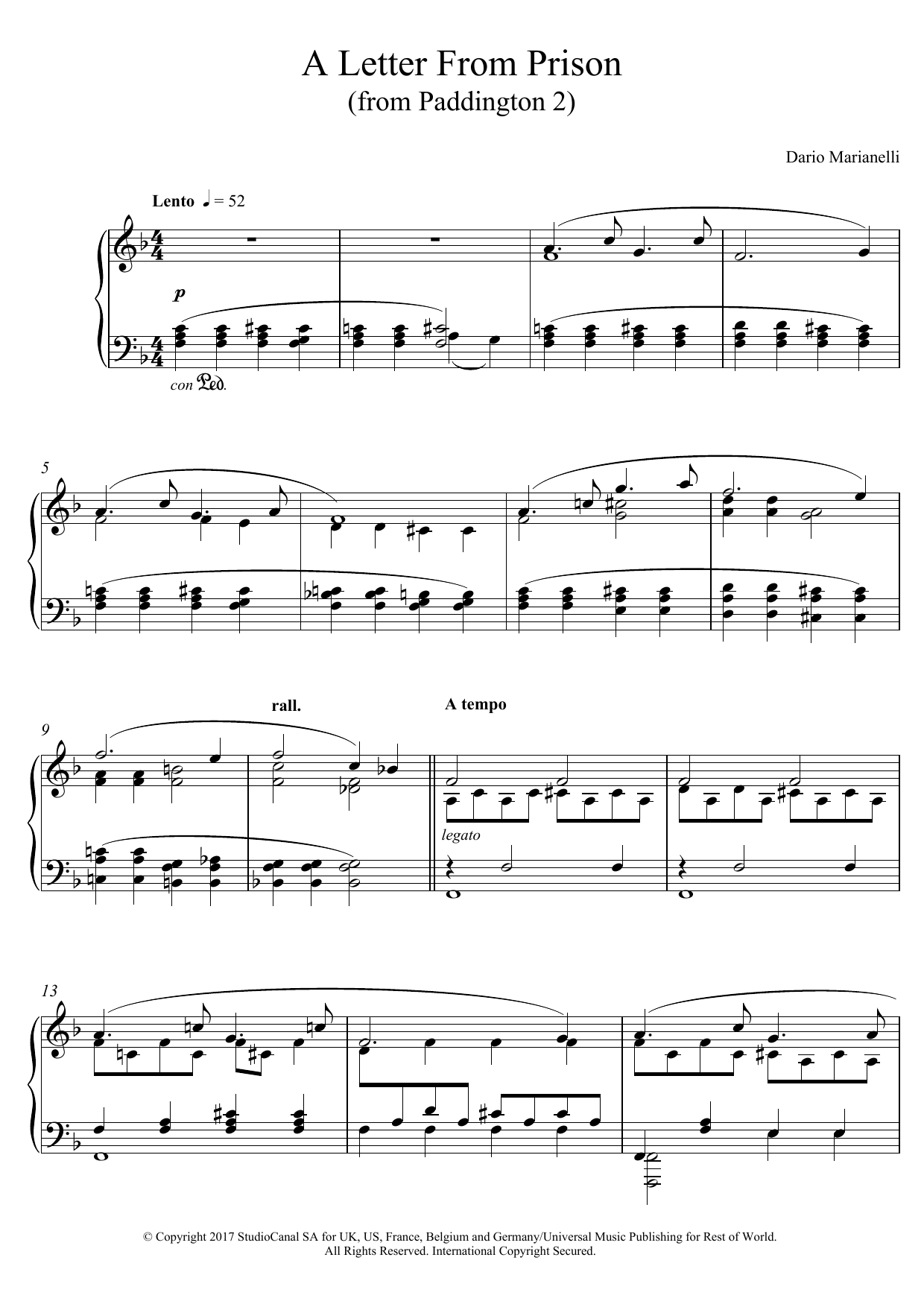
A Letter From Prison (From The Motion Picture "Paddington 2") Sheet Music Preview

A Letter From Prison (From The Motion Picture "Paddington 2"): Piano Solo

As performed by Dario Marianelli

Item: 35-DS00409572

Digital Download
$5.99

One moment…

One moment…

Description

A Letter From Prison (From The Motion Picture "Paddington 2"): Piano Solo isn't in MakeMusic Cloud just yet...but it could be. Let us know you'd like to see it, and you'll help shape what comes next. In the meantime, start a free trial and dive into thousands of interactive titles your students can play along with today.

Sample Audio
No sample audio found.
Sample Video
Additional Details
Publisher: Hal Leonard
Page Count: 2
SKU: 35-DS00409572

More about this title

About the Artist: Dario Marianelli

Dario Marianelli is an Italian film composer whose work spans drama, comedy, and family entertainment. He earned an Academy Award nomination for his score to "Pride and Prejudice" (2005) and has composed for the Paddington films, where his music balances whimsy with genuine emotional depth. His approach to film scoring emphasizes melody and orchestration that serves the narrative without overwhelming it.

Why we love this

This piece captures the film's emotional core in just two pages. Marianelli's orchestral writing translates beautifully to solo piano, preserving the poignant character that made this scene memorable while remaining accessible for intermediate players.

What to expect

The piece unfolds with quiet introspection, tinged with both vulnerability and hope. There's an underlying tenderness in the harmonic movement, reflecting a moment of connection conveyed through written words.

Who it's for

Intermediate pianists will find accessible fingering and a manageable technical range. This works equally well for students seeking expressive film music and for teachers building recital programs that engage younger audiences with contemporary film scores.

How to get the most out of it

  • Honor the rubato inherent in a letter's unfolding. The tempo should breathe rather than drive forward, allowing space for reflection.
  • Balance the melody line with sufficient voice independence in the accompaniment so that both elements remain audible without overplaying dynamics.
  • Pay attention to the arc of the piece as a whole. Build gradually rather than treat each phrase in isolation, letting the emotional weight accumulate toward the conclusion.

How to use it

Pair this with other character-driven film music for a thematic recital, or include it in a pops concert that celebrates storytelling through instrumental music. It also serves as an excellent bridge piece when introducing students to how film composers use orchestral color at the keyboard.

Skills your students will build

  • Sustaining melodic lines while managing harmonic accompaniment patterns
  • Dynamic control and expression through rubato rather than tempo changes
  • Transferring orchestral textures to the piano while maintaining clarity between voices

You May Also Like