A Last Request: Piano Digital Sheet Music

A Last Request: Piano Digital Sheet Music

David Benoit

Item: 00-PS-0002824

Digital Download
$3.99
Description

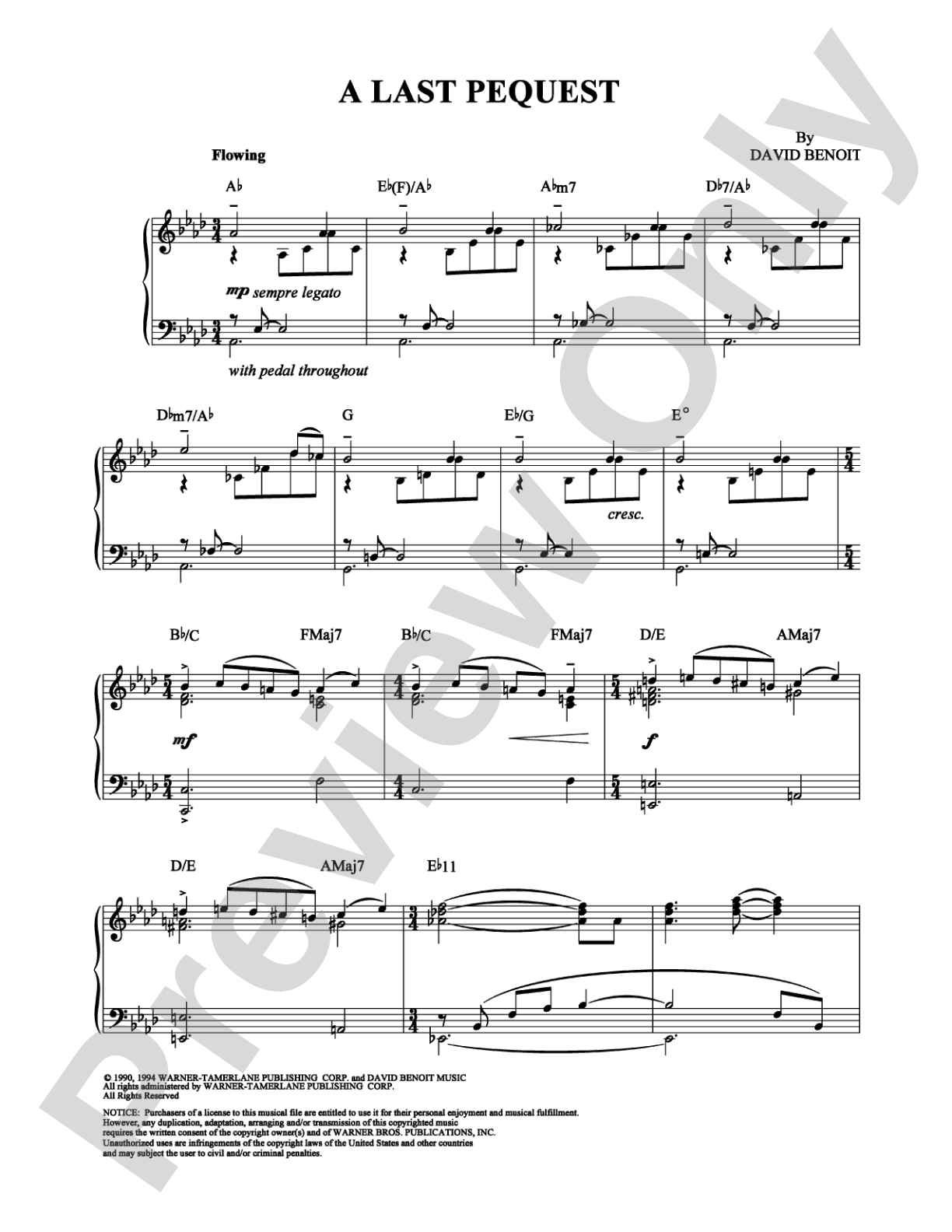
A Last Request: Piano Digital Sheet Music isn't in MakeMusic Cloud just yet...but it could be. Let us know you'd like to see it, and you'll help shape what comes next. In the meantime, start a free trial and dive into thousands of interactive titles your students can play along with today.

Sample Audio
No sample audio found.
Sample Video
Additional Details
SKU: 00-PS-0002824

More about this title

About the Artist: David Benoit

David Benoit is a Grammy-winning pianist and composer whose work bridges jazz, contemporary, and new age idioms. His compositions blend harmonic sophistication with accessible melodic sensibility, and he has built a significant catalog of original works for solo piano that appeal to both jazz musicians and adult students seeking expressive, pianistically rewarding repertoire.

Why we love this

A Last Request feels like a conversation, unhurried, expressive, and deeply musical. Benoit's melodic gift shines here without requiring virtuosic flash, so pianists can focus on phrasing, dynamics, and the kind of rubato that separates playing notes from performing. This is the sort of piece that teaches interpretive maturity.

What to expect

The piece evokes introspection and quiet intensity, with the reflective quality its title suggests. Benoit's harmonic language creates an atmosphere of gentle melancholy, inviting the performer to explore the space between structure and freedom.

Who it's for

Advanced pianists and jazz pianists seeking contemporary repertoire with emotional depth and harmonic sophistication. Adult students and recital performers who value expressive music that showcases command of jazz voicings and stylistic nuance.

How to get the most out of it

  • Shape the phrasing around the emotional arc of the piece rather than strict metronomic time; let rubato serve the lyrical content.
  • Voice the extended jazz harmonies with clarity and separation, allowing each note in complex chords to register distinctly.
  • If improvisation sections are present, use the harmonic foundation as a springboard for personal interpretation while respecting the composition's emotional trajectory.
  • Balance the right-hand melody against left-hand harmonic support; the accompaniment should enhance rather than compete with the primary voice.

How to use it

Feature this as a solo recital piece that demonstrates your pianist's interpretive maturity and jazz fluency. It works equally well in adult studio recitals, jazz piano showcases, or contemporary music programs where emotional authenticity matters as much as technical display.

Skills your students will build

  • Voicing and reharmonizing jazz chord progressions
  • Balancing improvisation with composed material
  • Pedal control in contemporary jazz contexts
  • Phrasing and rubato in non-classical styles
  • Interpreting and performing with emotional intention

You May Also Like