

A La Nanita Nana: SSA Choral Octavo
Traditional Spanish Carol / arr. Victor C. Johnson
Item: 00-PO-0006681
$2.05
Minimum order quantity: 20 copies
Pickup currently not available
Description
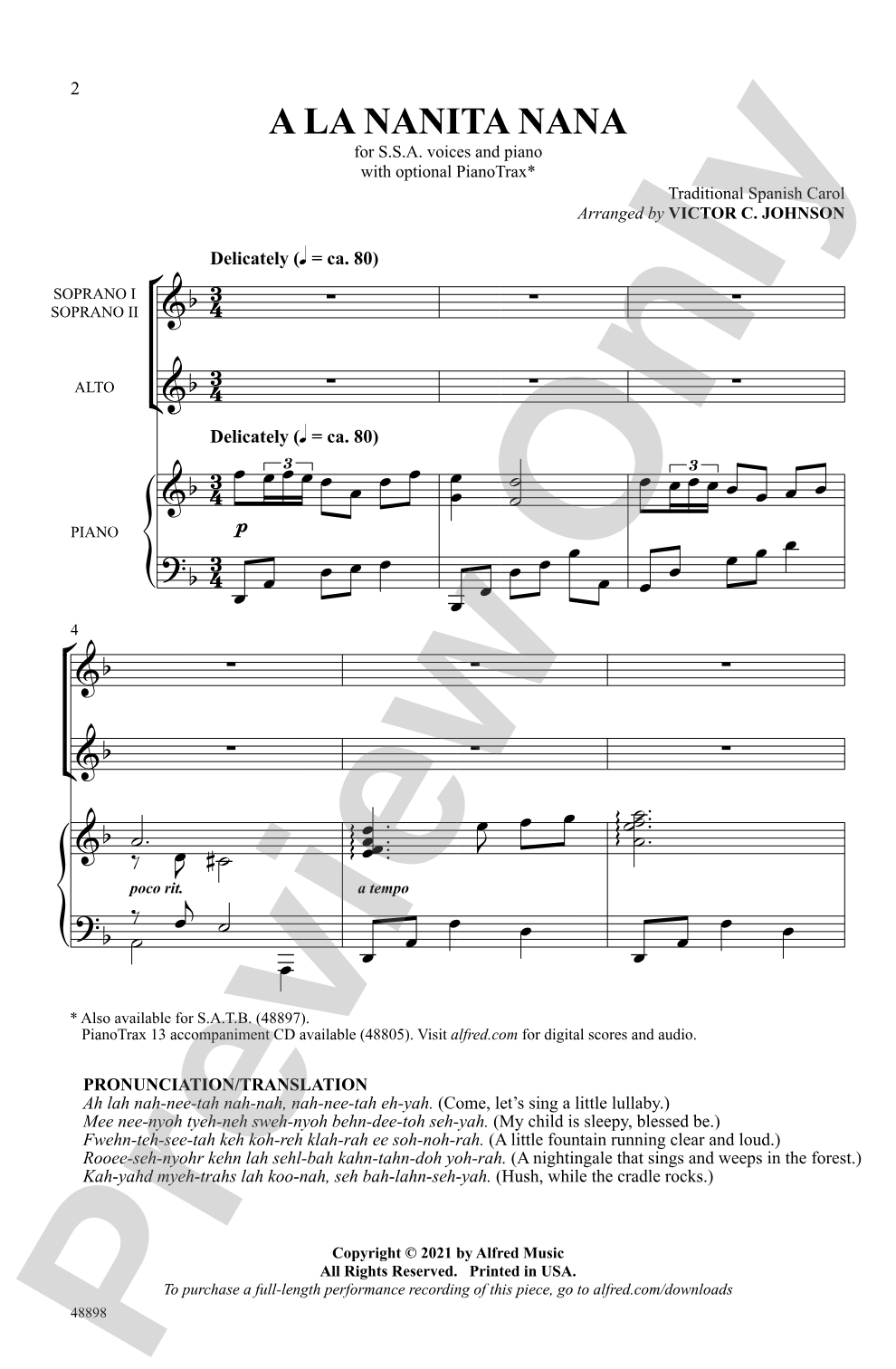
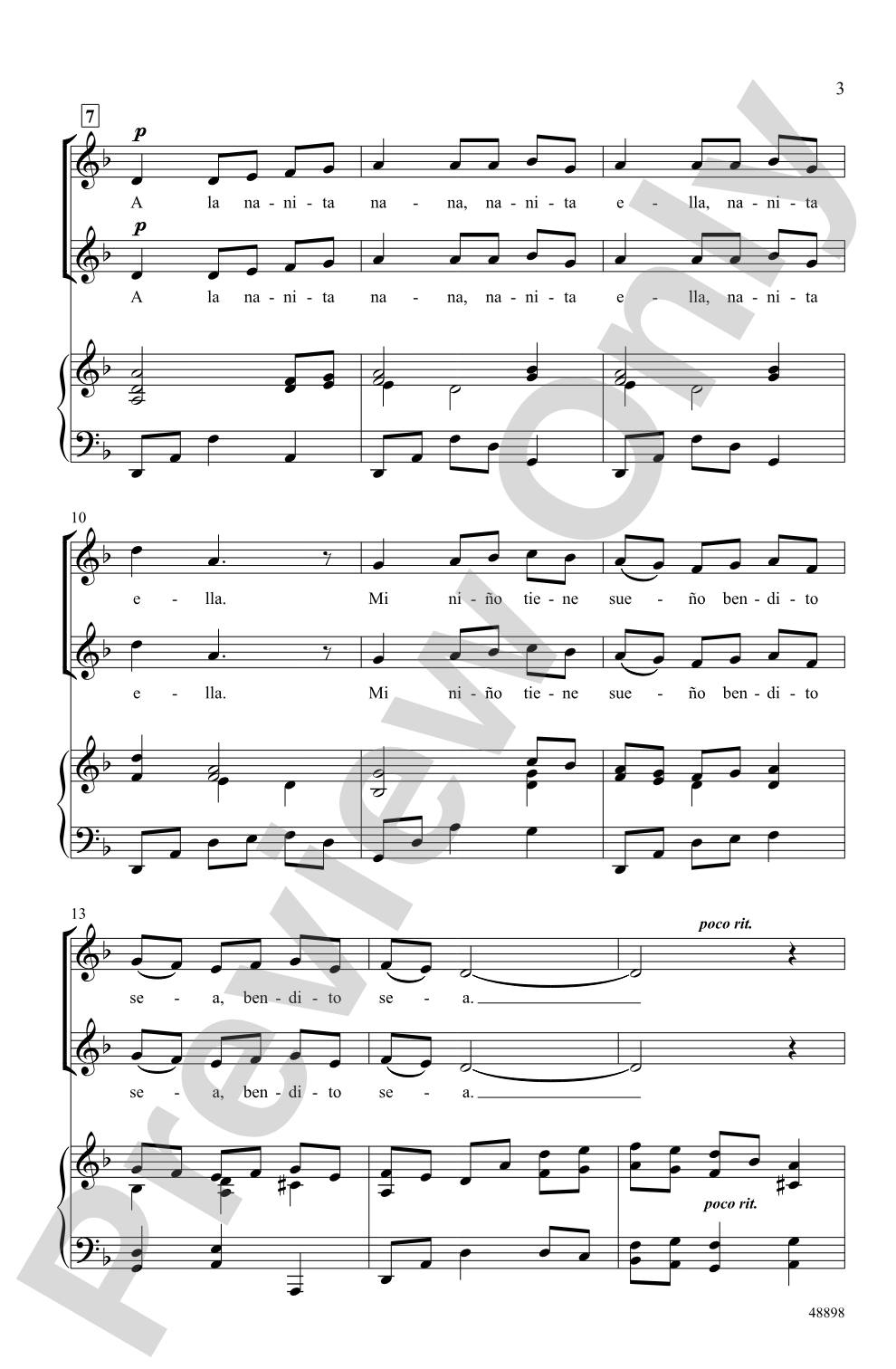
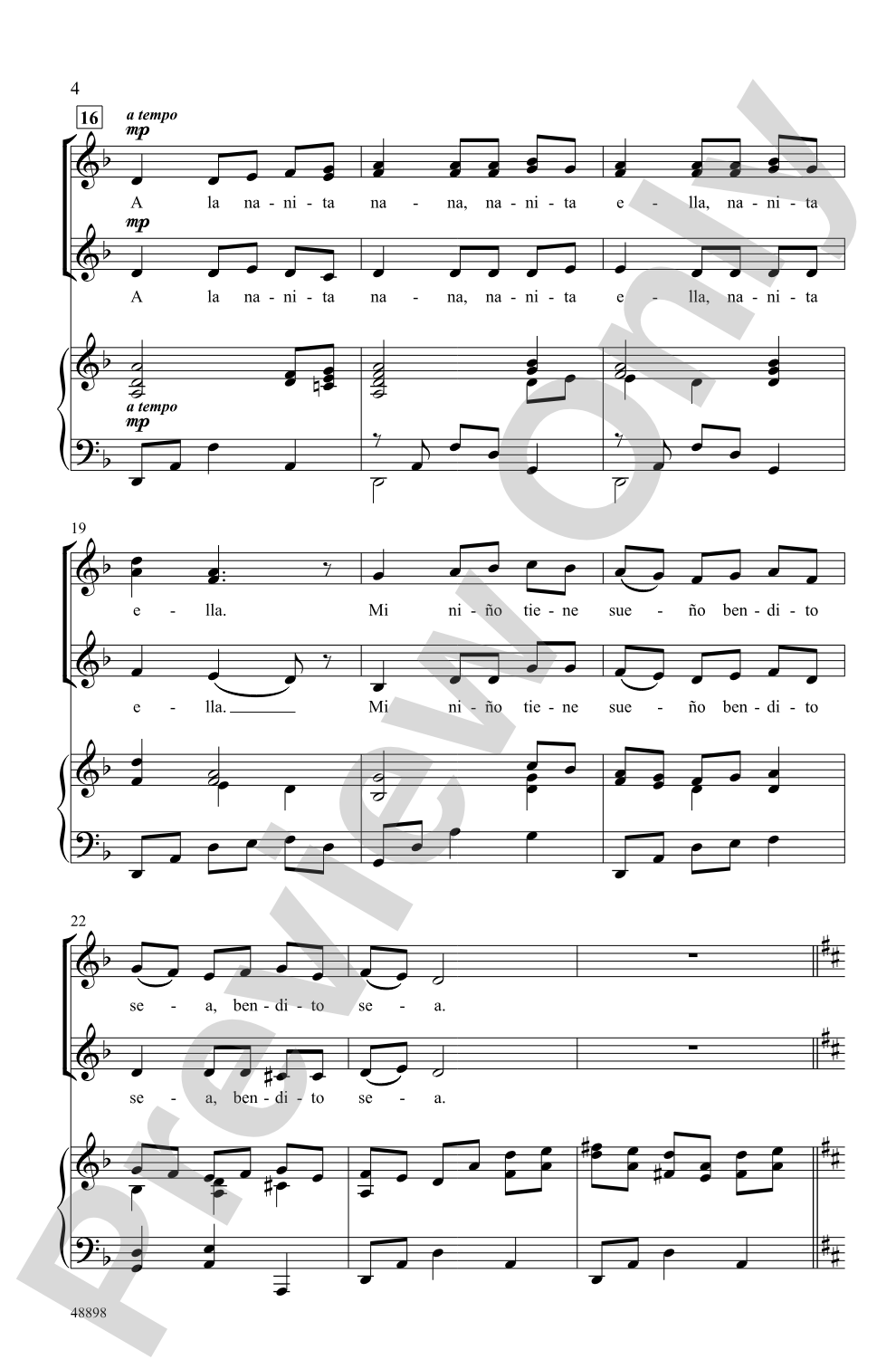
Victor's arrangement of this gentle nativity carol from Spain is sung entirely in the original language (a pronunciation and translation are included). This sensitive treatment captures the lullaby mood and adds a light rhythmic undercurrent in moderate 3/4 time. The tonality shifts seamlessly between D minor and D major to reflect a text that moves from quieting the baby to a rushing fountain and singing birds. While the words do return, no two verses are set in the same manner, creating an ever-evolving arrangement. Piano fingers dance over the keys with triplet turns and easily grasp the bigger chords in the supportive and stylistic accompaniment. A nice contrast on holiday programs.


A La Nanita Nana: SSA Choral Octavo isn't in MakeMusic Cloud just yet...but it could be. Let us know you'd like to see it, and you'll help shape what comes next. In the meantime, start a free trial and dive into thousands of interactive titles your students can play along with today.
Request This Title
Tell us you want it.
Start Your Free Trial
Explore everything that's ready to play right now.
Sample Audio
1
Audio File
--:--
0:00
0:00
Sample Video
Additional Details
Series:
Alfred Choral Designs
Publisher:
Alfred Music
Page Count:
12
SKU:
00-PO-0006681
More about this title
About the Arranger: Victor C. Johnson

Victor C. Johnson, based in Dallas, Texas, serves as School Choral Editor for Sing!, the educational division of Choristers Guild. With more than 500 published choral works, vocal collections, and keyboard pieces to his name, Johnson has shaped choral music education through both his prolific output and his leadership roles in major choral programs.
From 2000 to 2018, Johnson directed choral ensembles at Fort Worth Academy of Fine Arts, where he led the Academy Singers and Academy Men's Choir while serving as Artistic Director of both the Singing Girls of Texas and Children's Choir of Texas. In 2022, he was appointed conductor of the Dallas Symphony Children's Chorus Mixed Ensemble (grades 9-12), the resident youth choir for the Dallas Symphony Orchestra. His professional memberships include the American Choral Directors Association, American Guild of Organists, Texas Music Educators Association, National Association for Music Education, and ASCAP.
Why we love this
Johnson's treatment honors the lullaby character of this Spanish carol while avoiding predictability through constantly shifting harmonic and textural choices. The seamless modulation between D minor and D major mirrors the text's journey from intimate comfort to expansive natural imagery, making the arrangement feel inevitable rather than arbitrary. The piano writing is both supportive and engaging, with triplet figures that keep the accompaniment alive without overshadowing the voices.
What to expect
A gentle rocking motion filled with tenderness, yet never static. The piece breathes with the natural speech rhythm of Spanish text, while the piano's triplet patterns create a subtle hypnotic quality, like a lullaby being sung over and over with small variations each time. As the harmony shifts from minor to major, the mood opens into something luminous and peaceful.
Who it's for
SSA choirs seeking repertoire that bridges sacred tradition and accessible arranging. This piece suits both high school ensembles with developed musicianship and advanced middle school choirs ready to explore tonal subtlety and text-driven harmonic choices.
How to get the most out of it
- Shape each verse distinctly since Johnson sets no two verses identically; mark your score with small notes about textural changes to help singers recognize their role in each section.
- Let the piano's triplet figures establish the gentle rhythmic pulse in 3/4 before the choir enters; this grounds the lullaby feel from the very first measure.
- Balance the D minor and D major tonal shift as a musical reflection of the text's emotional arc rather than an abrupt change; rehearse the transition carefully so singers understand why the harmonic color shifts.
- Use the recorded accompaniment as a rehearsal tool to lock the choir's natural phrasing against the piano's flowing triplet motion, especially in passages where the melody sits against busier keyboard figures.
How to use it
Place this on a Christmas concert to provide a quiet, intimate moment that contrasts sharply with more energetic carols. Its moderate length and manageable range make it an excellent anchor for a multicultural holiday segment, especially if you are programming music beyond the Anglo-American tradition. The Spanish language and gentle sophistication appeal to audiences seeking substance alongside seasonal warmth.
Skills your students will build
- Reading and performing in compound meter (3/4 with triplet subdivisions)
- Singing in Spanish with authentic pronunciation and phrasing
- Recognizing and executing smooth harmonic shifts between relative minor and major tonalities
- Maintaining tonal center and blend while harmonic and textural accompaniment patterns evolve
- Interpreting text-driven arrangement choices where identical lyrics receive different musical treatment