
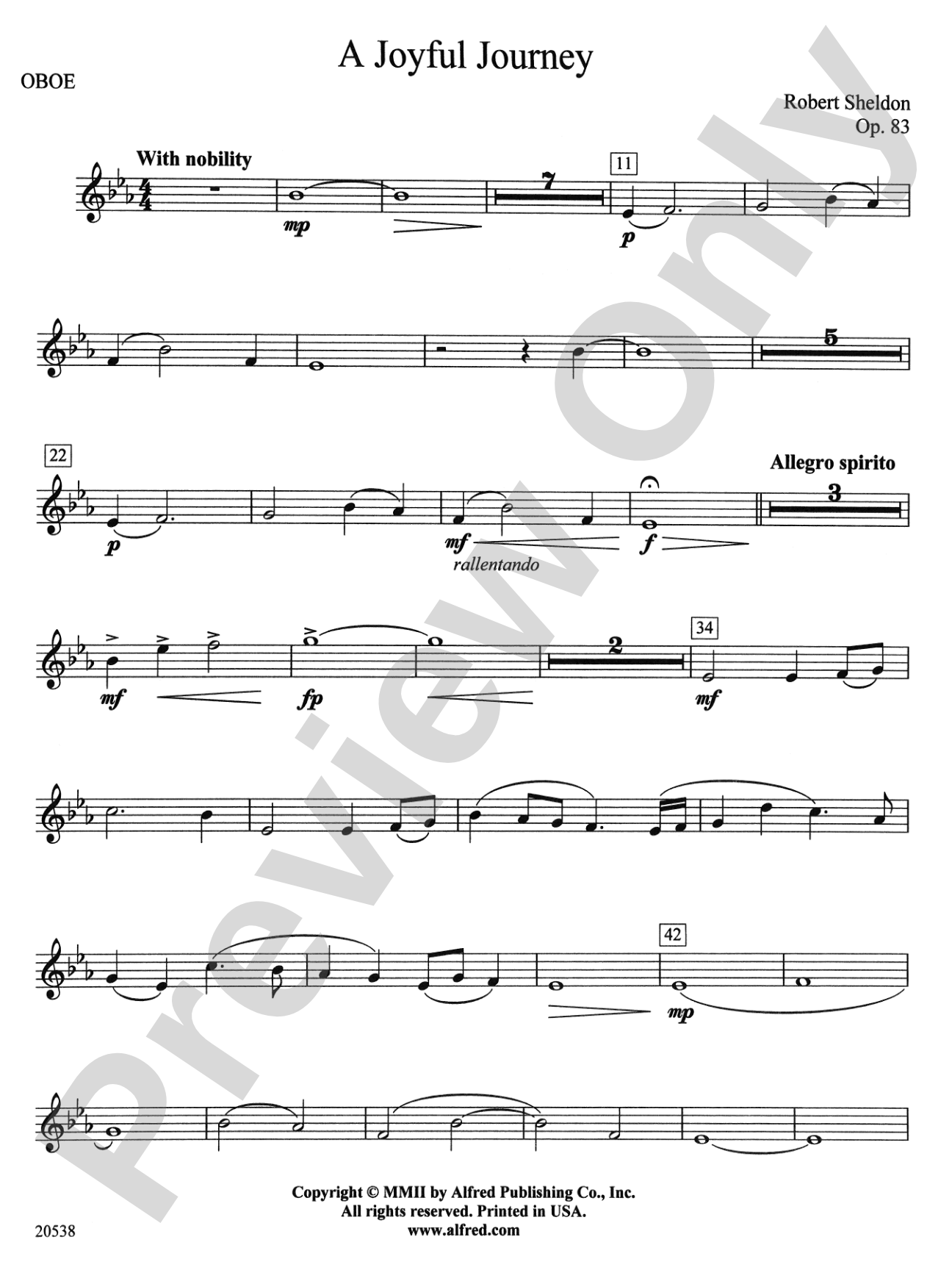

A Joyful Journey: Oboe
By Robert Sheldon
Grade: 2 (Medium Easy)
Item: 00-PC-0000400_O1
$3.00
Pickup currently not available
Description
This stunning new work from Robert Sheldon is a sure winner for your next concert. The emotional introduction of the theme provides your players with great expressive opportunities. The "Allegro Spirito" section takes the same theme of quiet reflection and transforms it to a theme of pride and heroism, leading to a triumphant conclusion. Robert Sheldon has done it again! This title is available in MakeMusic Cloud.


Don't just read it, hear it, play along with it, and watch your students grow with it. In MakeMusic Cloud, A Joyful Journey: Oboe comes alive with professional accompaniment, adjustable tempo, and built-in practice tools that turn solo practice into real progress.
Open in the Player
Jump straight in and assign it today.
Start Your Free Trial
Open this title and explore the full library in minutes.
Sample Audio
1
Audio File
--:--
0:00
0:00
Sample Video
Additional Details
Series:
Young Symphonic
Publisher:
Alfred Music
Page Count:
130
SKU:
00-PC-0000400_O1
More about this title
About the Composer: Robert Sheldon

Robert Sheldon's compositions rank among the most frequently performed works in wind band literature globally. His output spans thousands of commissions and new publications annually, earning recognition from the American School Band Director's Association, Phi Beta Mu, and ASCAP for music that balances accessibility with genuine artistic substance.
Sheldon's reach extends across six continents as a guest conductor, clinician, and advocate for music education. He co-authored Sound Innovations for Concert Band and has conducted his works at Carnegie Hall, Orchestra Hall, Boston Symphony Hall, the Sydney Opera House, and the Kennedy Center. In 2020, VanderCook College of Music awarded him an honorary doctorate in recognition of his sustained contributions to the field.
Why we love this
Sheldon understands how to build emotional architecture within the constraints of a Grade 2 ensemble. The journey from intimate opening to powerful climax gives your band a coherent narrative arc to perform, not just notes to play. You'll find your players are naturally drawn into the expressive demands of the introduction and rewarded by the visceral triumph of the finale.
What to expect
The piece opens with quiet introspection, allowing the ensemble to settle into careful listening and tender expression. When the Allegro Spirito arrives, that same melodic material ignites into pride and forward momentum, building toward a conclusion that feels genuinely earned rather than imposed.
Who it's for
This work suits concert band directors seeking a piece that develops musicianship without overwhelming younger or less experienced ensembles. It works equally well for school bands, community ensembles, and honor bands looking for material with emotional substance and genuine audience appeal.
How to get the most out of it
- Shape the emotional introduction with dynamic restraint and careful phrase breathing. Let the quieter opening breathe; this section sets the stage for everything that follows.
- Mark the transition into Allegro Spirito clearly in rehearsal so the ensemble understands this is the same thematic material transformed, not a new idea. This structural awareness deepens their engagement.
- Build the triumphant conclusion gradually rather than rushing the acceleration. Your band will feel more control and pride in the final statement if the tempo and dynamics climb with intention.
- Balance the solo and section moments throughout. Grade 2 players benefit from hearing their individual voices matter within the larger texture.
How to use it
Program this as a centerpiece for a concert focused on emotional growth or journey themes. It pairs well alongside other Sheldon works or contrasting repertoire because its self-contained narrative arc stands on its own. The Grade 2 level and concert-ready polish make it ideal for mid-year or festival performances when you want to showcase ensemble maturity without excessive preparation time.
Skills your students will build
- Expressive dynamic control and sustained musical phrasing
- Understanding thematic development and transformation across sections
- Balance between solo voices and ensemble texture
- Tempo and character transitions (quiet reflection to energetic heroism)
- Building momentum and architectural shape across a full piece