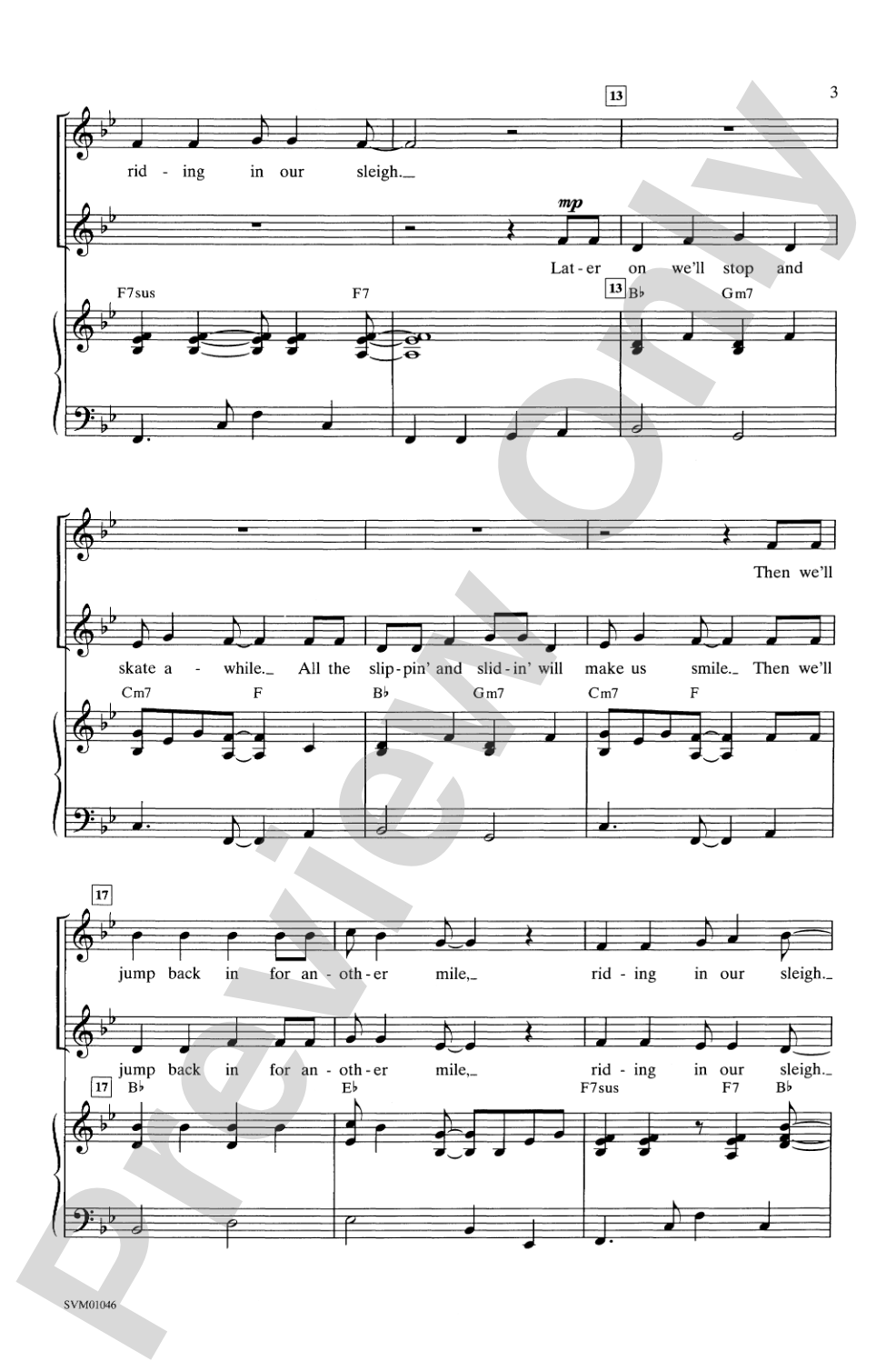
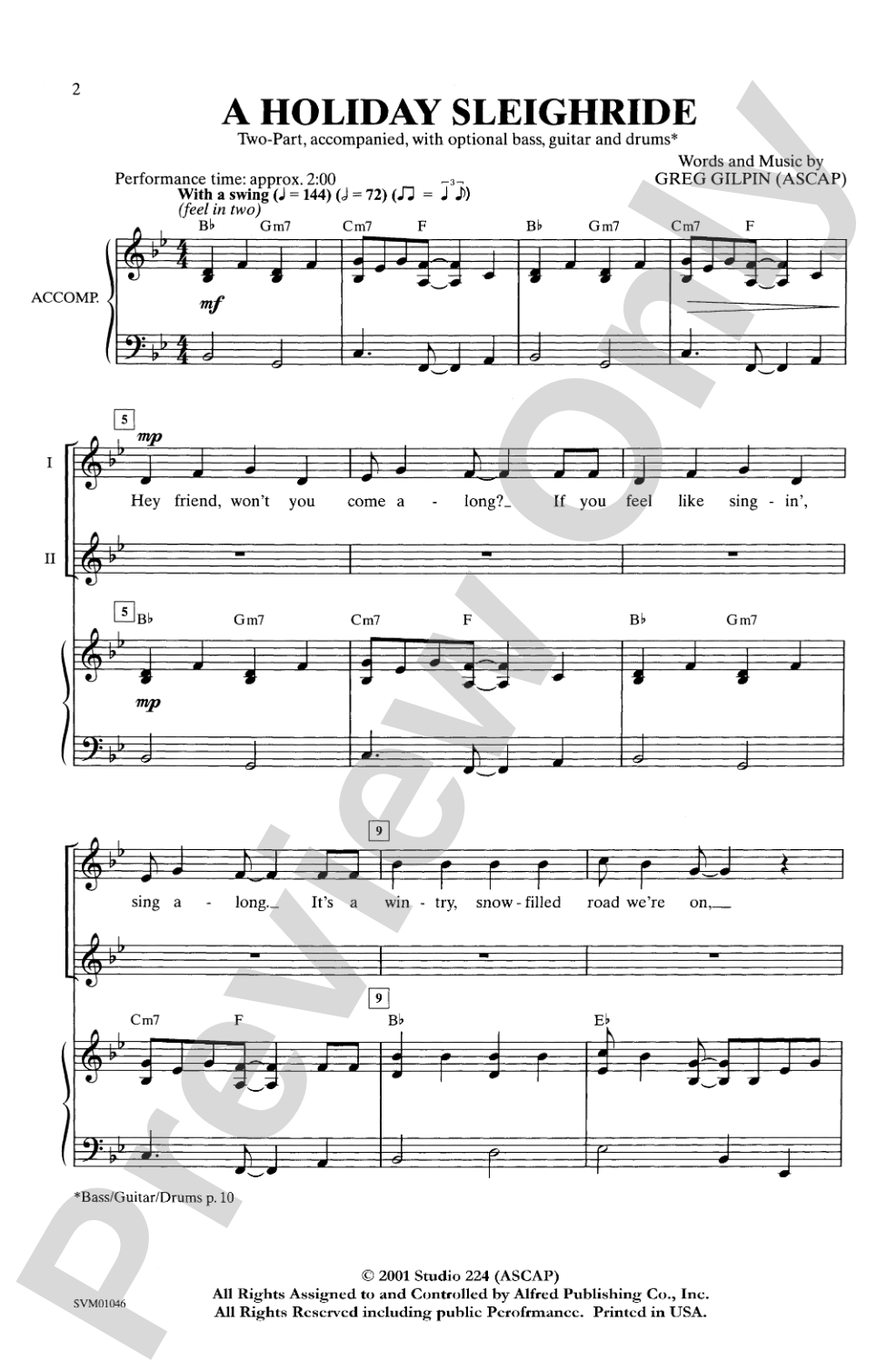
A Holiday Sleighride Sheet Music Preview

A Holiday Sleighride: 2-Part Choral Octavo

Words and music by Greg Gilpin

Level: Moderate

Item: 00-PO-0005339

Digital Download
$2.25

Minimum order quantity: 20 copies

Description
Let this Greg Gilpin original paint the picture of the wonderful wintry season. A nice light addition to any holiday program.

A Holiday Sleighride: 2-Part Choral Octavo isn't in MakeMusic Cloud just yet...but it could be. Let us know you'd like to see it, and you'll help shape what comes next. In the meantime, start a free trial and dive into thousands of interactive titles your students can play along with today.

Sample Audio
No sample audio found.
Sample Video
Additional Details
Series: Alfred Archive Edition: Studio PR Catalog
Publisher: Alfred Music
Page Count: 12
SKU: 00-PO-0005339

More about this title

About the Composer: Greg Gilpin

Greg Gilpin

Greg Gilpin holds recognition from ASCAP for his contributions to choral music and has established himself as both a conductor and composer of significant reach. He has led ensembles at Carnegie Hall, Lincoln Center, and Ryman Auditorium domestically, with international conducting engagements spanning the Sydney Opera House, Royal Festival Hall in London, and Harpa Concert Hall in Reykjavik. As Director of Educational Choral Publications for Shawnee Press, Gilpin shapes resources for choral programs nationwide.

Beyond the concert hall, Gilpin has diversified his creative work across multiple disciplines. He scored the award-winning short film "Rosie's Rescue" in 2021 and collaborated with opera singer Angela Brown on a new arrangement of "What Child is This?" premiered with the Indianapolis Symphonic Choir. Active in professional organizations including ACDA, NAfME, and as a Life Loyal Member of Phi Mu Alpha Sinfonia, Gilpin remains engaged in teaching, composing, and conducting as the music world expands its opportunities.

Why we love this

Gilpin knows how to write holiday music that lands with warmth without overshooting into saccharine territory. A 2-part setting at this grade level opens the piece to mixed ensembles and developing singers, and his lyrical approach to a winter subject gives younger choirs something genuinely musical to sink their teeth into rather than novelty or filler material.

What to expect

The piece evokes the crisp clarity and gentle excitement of winter imagery without overwrought romanticism. Gilpin's melody carries the emotional weight while the 2-part texture remains transparent and singable, creating a musical experience that feels complete even as the voices remain limited in range and complexity.

Who it's for

Directors building a 2-part choral program with singers in grades 3-5 who need accessible yet genuinely well-crafted material. It works equally well for emerging singers in middle school choirs or high school programs working with younger ensemble members. The moderate difficulty sits between introductory pieces and more technically demanding repertoire.

How to get the most out of it

  • Balance the melody line clearly enough that the harmonic underpinning supports rather than competes; the moderate level means some singers may still be finding their independence.
  • Let the imagery of winter guide your interpretation; Gilpin's original writing should suggest the mood without needing heavy dynamic swings.
  • Use the recorded accompaniment strategically during rehearsal to lock tempos and entrances, then gradually reduce reliance on it so singers develop ensemble awareness.

How to use it

This works beautifully as a second or third selection in a holiday concert, providing variety after heavier or more traditional repertoire while the program's emotional temperature is still light and accessible. Pair it with other Gilpin originals or settings if you're building a thematic arc, or use it as a confident opener for a 2-part choir that needs to establish presence without overreaching technically.

Skills your students will build

  • 2-part harmonic independence
  • Sustaining longer musical phrases with control
  • Clear diction in character-driven text
  • Responding to descriptive language in a score to shape musical interpretation

You May Also Like