
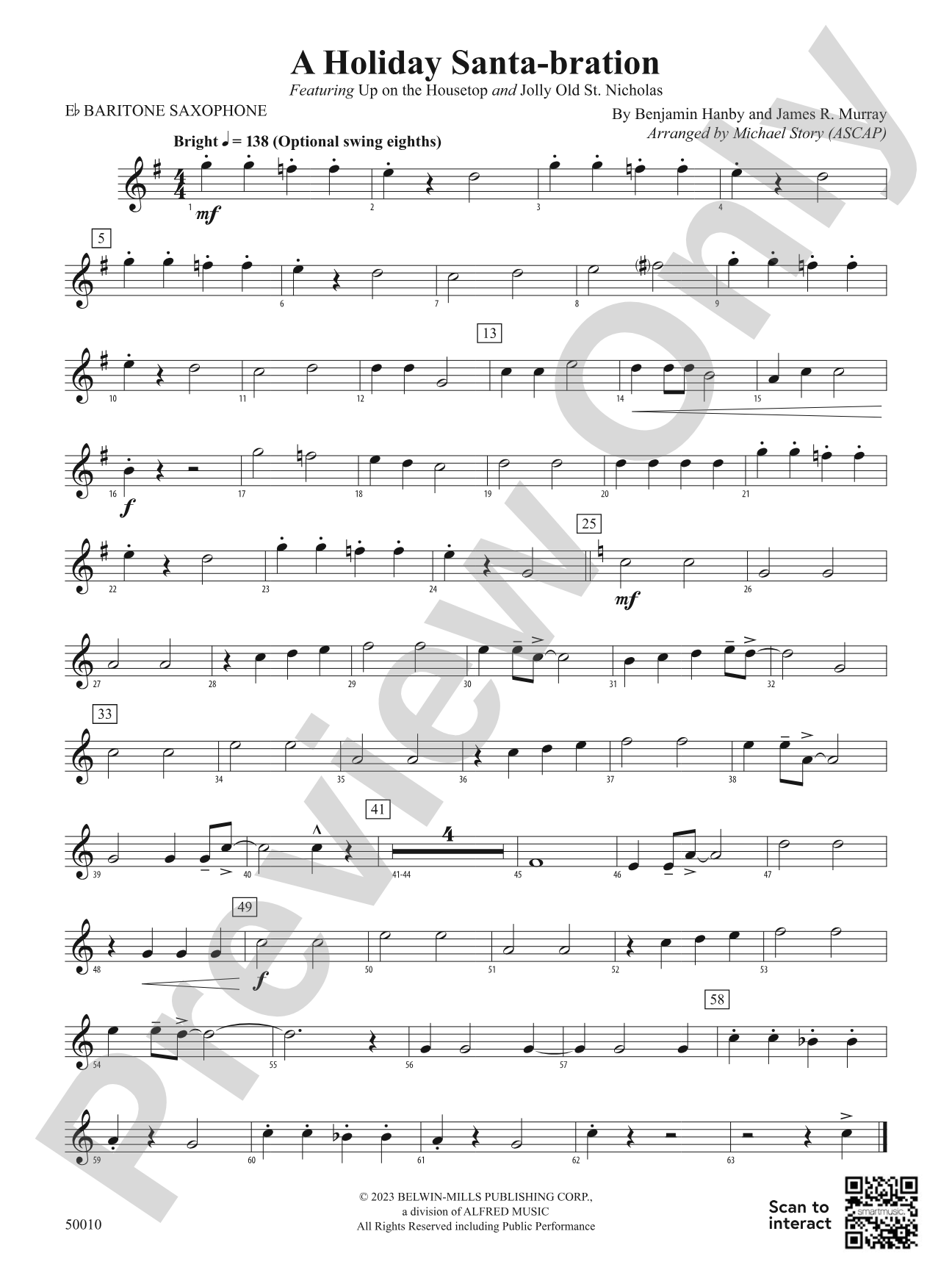

A Holiday Santa-bration: E-flat Baritone Saxophone
Featuring: Up on the Housetop / Jolly Old St. Nicholas
By Benjamin Hanby and James R. Murray / arr. Michael Story
Grade: 1
Item: 00-PC-0018977_BTX
$5.99
Pickup currently not available
Description
A Holiday Santa-bration, arranged by Michael Story, is the perfect holiday selection for your beginning band. It includes two popular Christmas songs---"Up on the Housetop" and "Jolly Old St. Nicholas." This arrangement can be performed with even or swinging eighth notes---it is equally effective! (1:50)


Don't just read it, hear it, play along with it, and watch your students grow with it. In MakeMusic Cloud, A Holiday Santa-bration: E-flat Baritone Saxophone comes alive with professional accompaniment, adjustable tempo, and built-in practice tools that turn solo practice into real progress.
Open in the Player
Jump straight in and assign it today.
Start Your Free Trial
Open this title and explore the full library in minutes.
Sample Audio
1
Audio File
--:--
0:00
0:00
Sample Video
Additional Details
Series:
Belwin Beginning Band
Publisher:
Alfred Music
SKU:
00-PC-0018977_BTX
More about this title
About the Composer: Benjamin Hanby
Benjamin Hanby (1833-1867) composed "Up on the Housetop" in 1865, creating one of the most enduring Christmas melodies in American popular music. Though his life was cut short by illness, Hanby left behind a legacy of songs that captured the spirit of 19th-century American life and holiday tradition. His melodies remain accessible and memorable, making them ideal foundations for educational arrangements.
James R. Murray (1841-1905) composed "Jolly Old St. Nicholas," another staple of holiday celebration that has been passed through generations of singers and musicians. Murray's gift for crafting singable, straightforward melodies made his work particularly suited to community music-making and educational settings. Both composers understood how to write music that brings people together, a quality that shines through in this beginning band arrangement.
Why we love this
Michael Story's arrangement pairs two beloved Christmas melodies with writing that respects the capabilities of beginning players while maintaining genuine musicality. The option to perform with either straight or swinging eighth notes gives your band flexibility and lets students explore how rhythmic interpretation changes character. At just under two minutes, this piece delivers maximum festive impact with minimal rehearsal overhead, making it an ideal holiday concert opener or closer that audiences genuinely enjoy.
What to expect
Bright, cheerful, and unpretentious. These melodies sparkle with the innocent joy of childhood Christmas memories, and Story's orchestration lets each section contribute without overwhelming younger players. Whether you swing the eighths or play them straight, the piece bounces with infectious holiday spirit that gets audiences smiling immediately.
Who it's for
Beginning band directors who need a crowd-pleasing holiday selection that won't derail rehearsal progress. This Grade 1 arrangement works equally well for elementary and middle school bands just getting their footing. Students get to play recognizable music that builds confidence while strengthening fundamentals like ensemble blend and rhythmic accuracy.
How to get the most out of it
- Decide on your eighth-note interpretation early and communicate it clearly to the ensemble. If you choose swing, have players practice the feel in isolation before adding it to the full arrangement.
- Keep the tempo steady and dance-like. These melodies thrive with a light touch and forward motion rather than stiffness.
- Balance the melody between sections. When the tune passes between woodwinds and lower instruments, ensure the receiving section enters with the same phrase shape and energy as the departing section.
- Use dynamics to shape the familiar phrases. Since students already know these melodies, subtle crescendos and diminuendos help the arrangement feel fresh rather than automatic.
How to use it
Open your holiday concert with this piece to set an upbeat, accessible tone that puts the audience at ease. Pair it with one more contemplative or sophisticated holiday selection to give your concert shape and contrast. At under two minutes, it's also perfect for a holiday pops set that includes several short pieces, letting you program more variety without exhausting your ensemble.
Skills your students will build
- Steady tempo maintenance in a dance-like style
- Phrase shaping using dynamic contrast
- Melodic independence and awareness (tracking where the main tune sits in the ensemble)
- Rhythmic flexibility between straight and swung eighth notes
- Balance and blend when melody passes between sections