
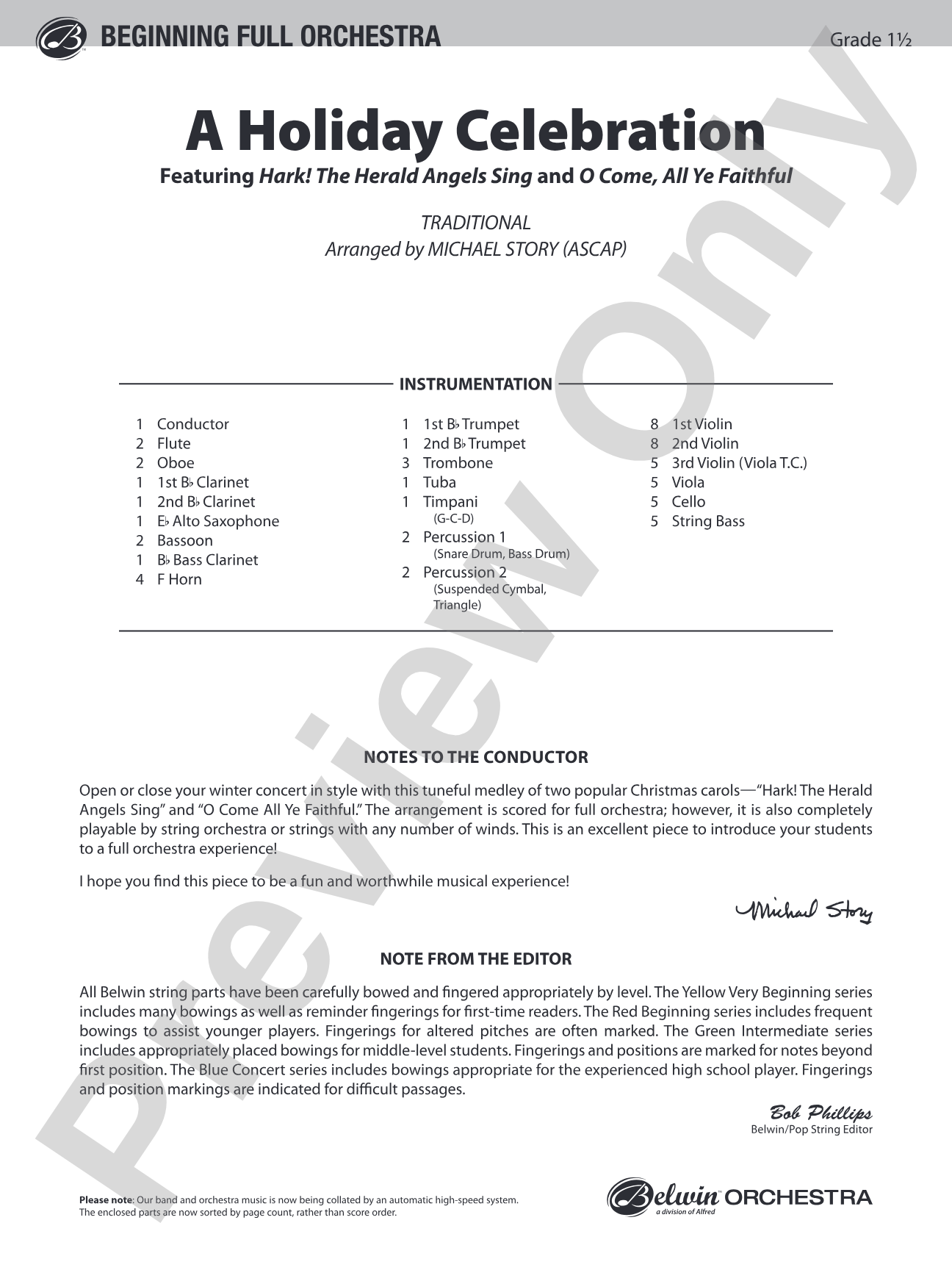
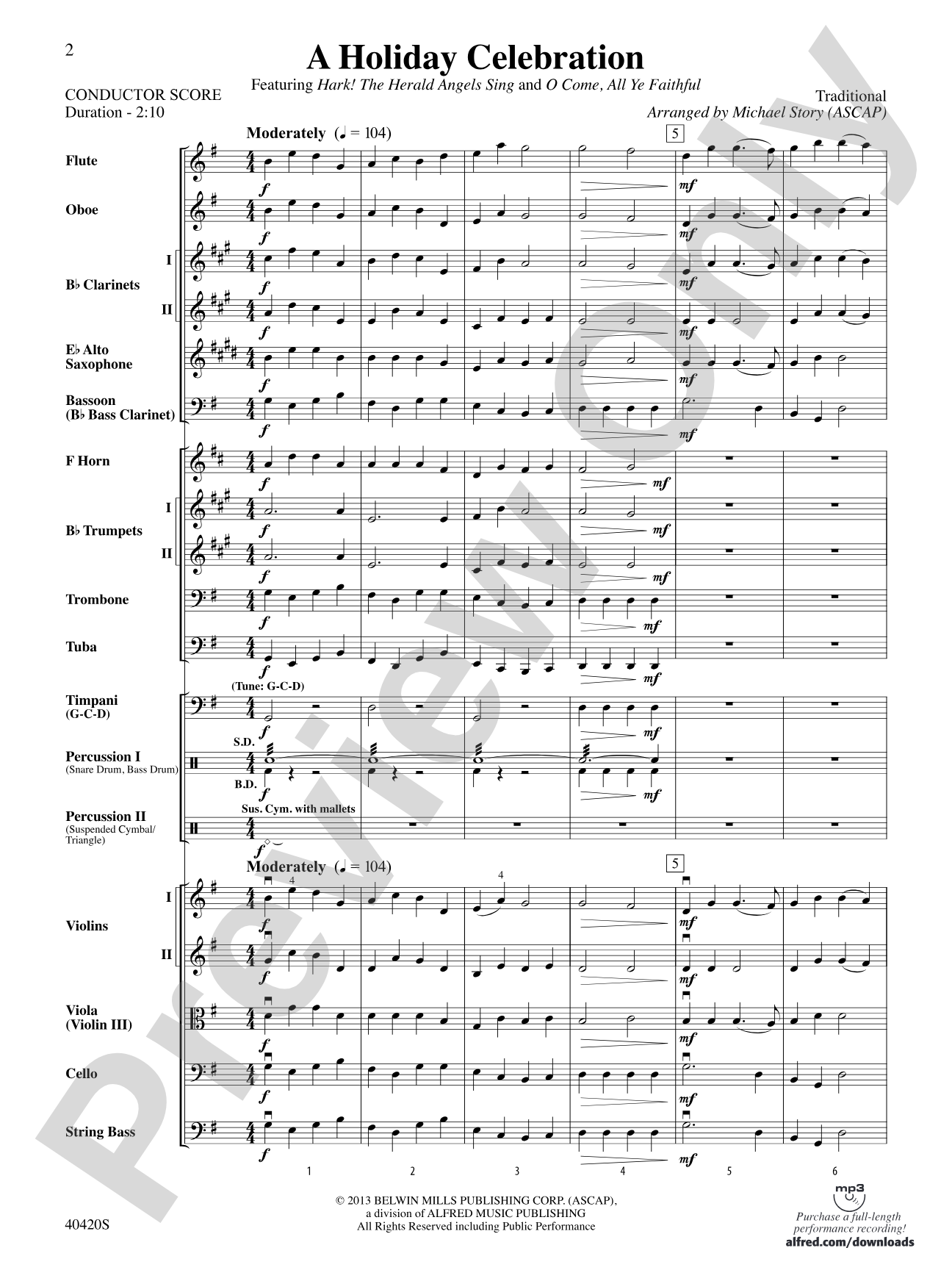
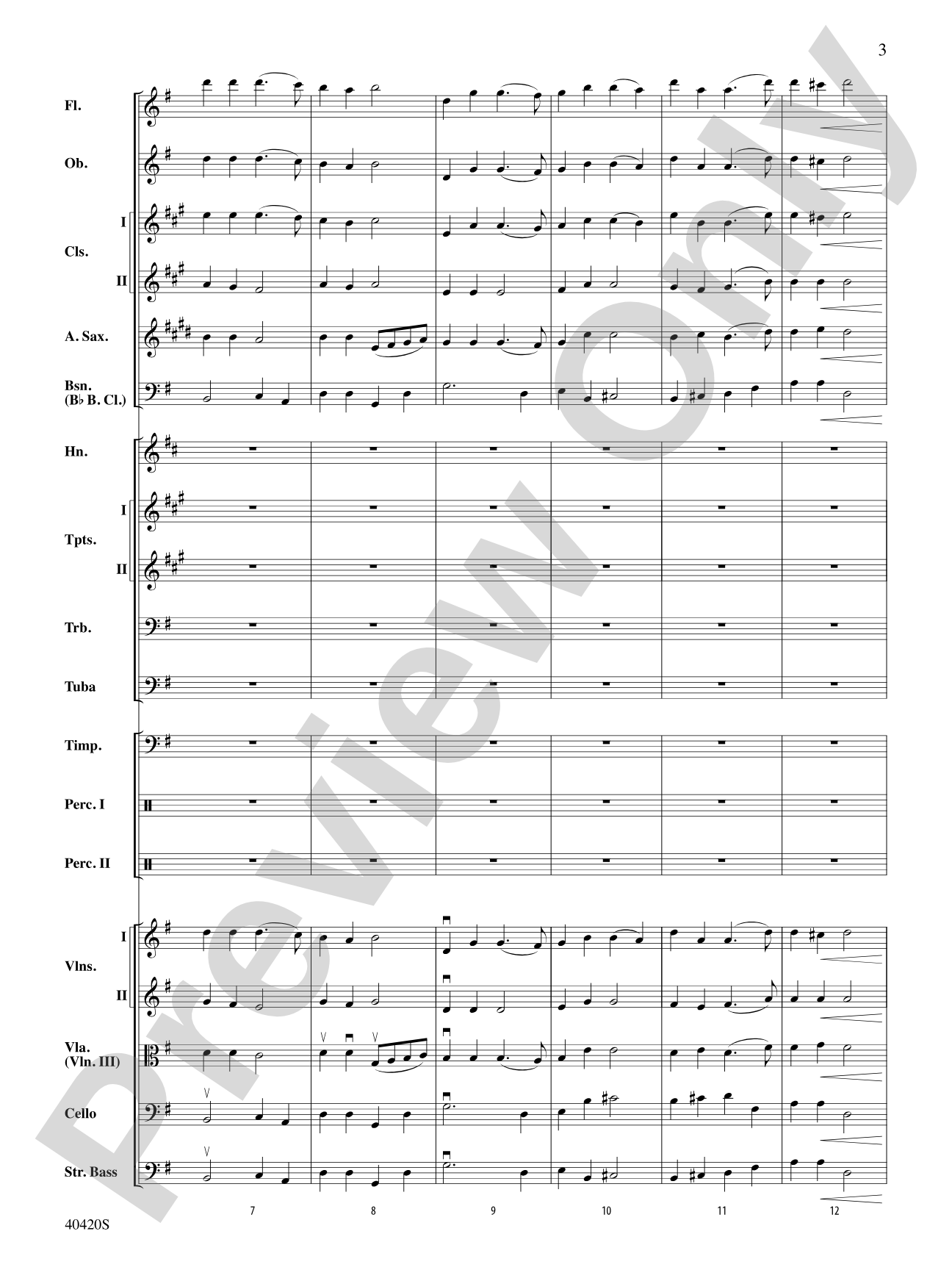
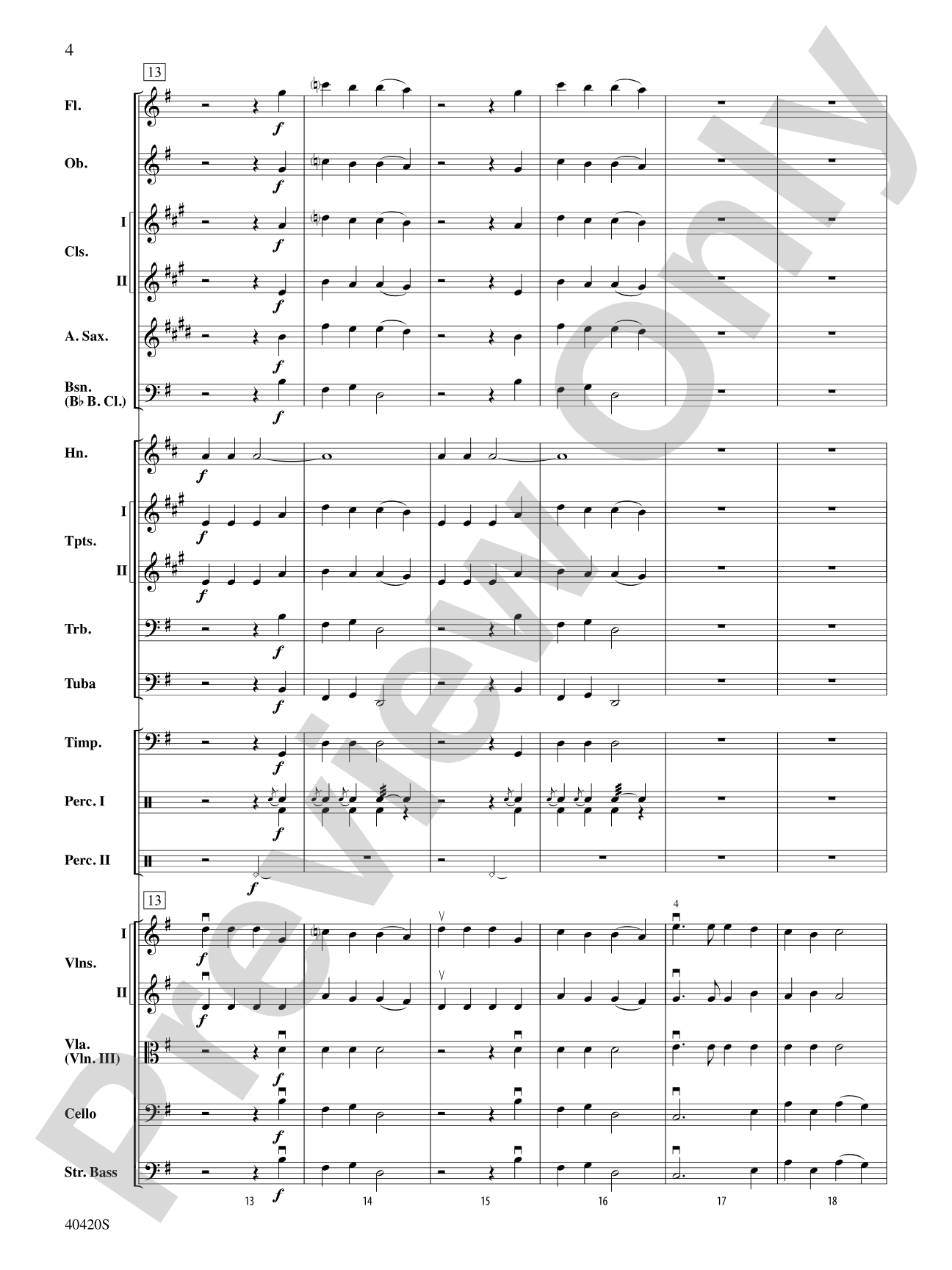
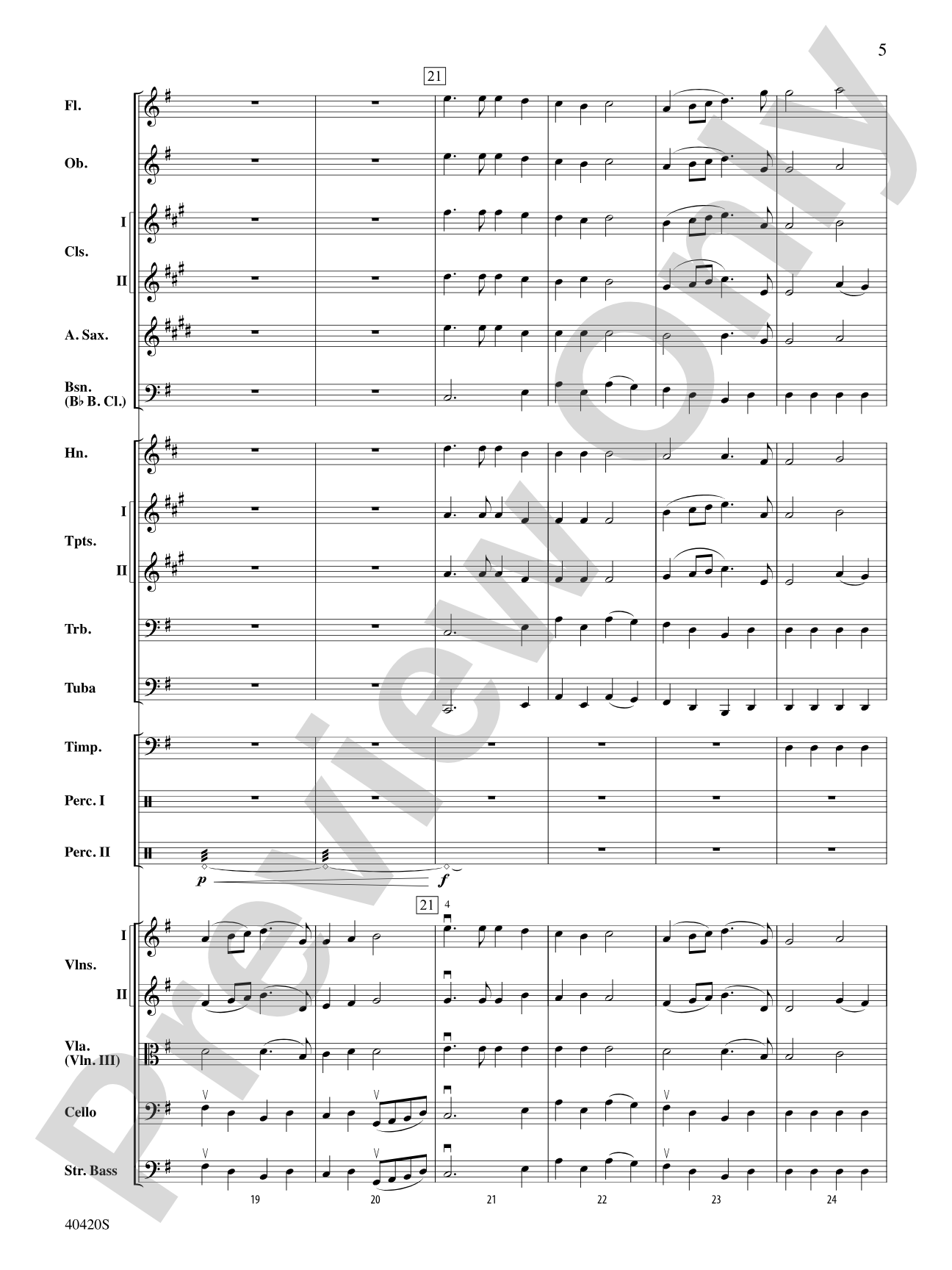
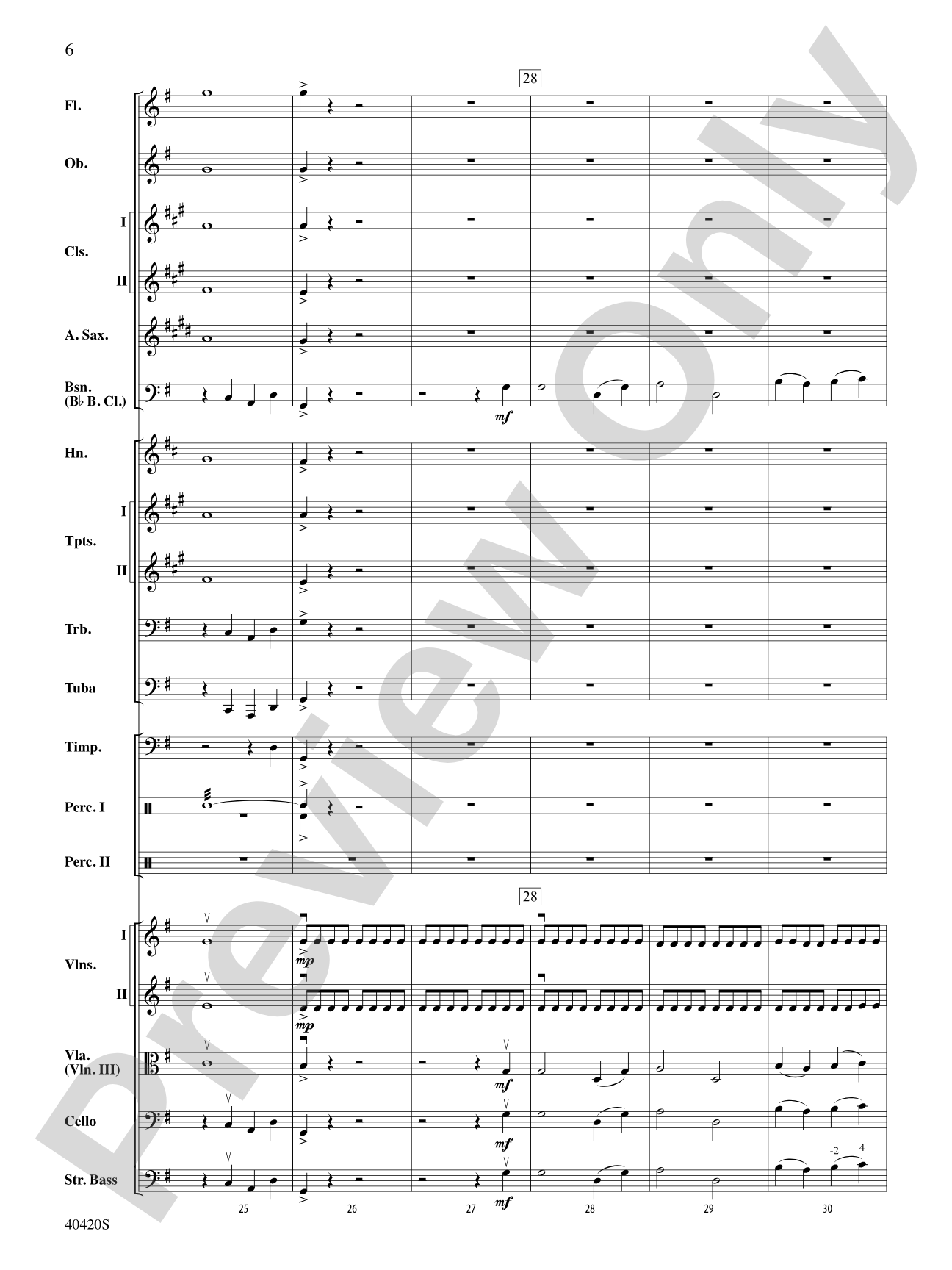
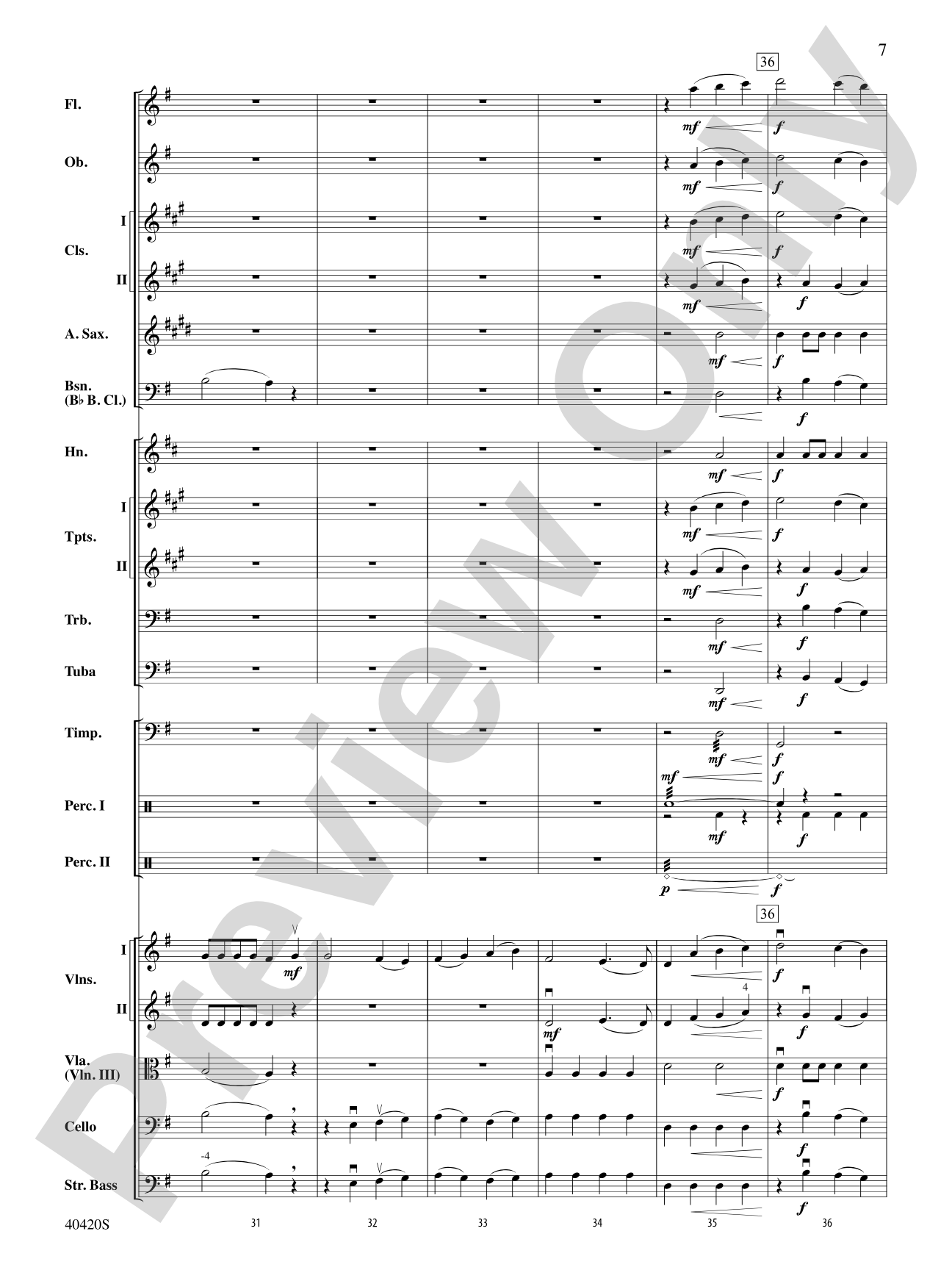
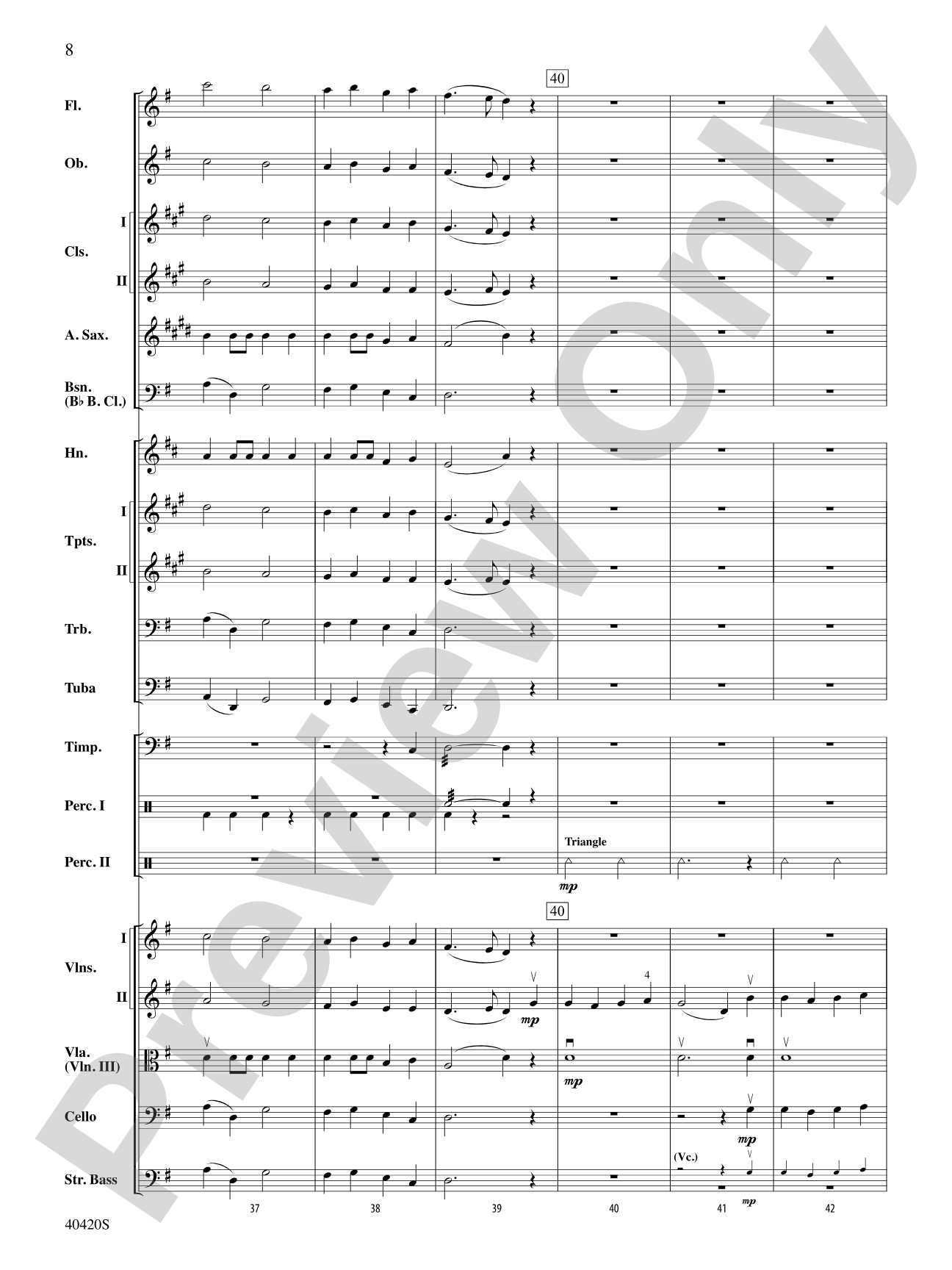
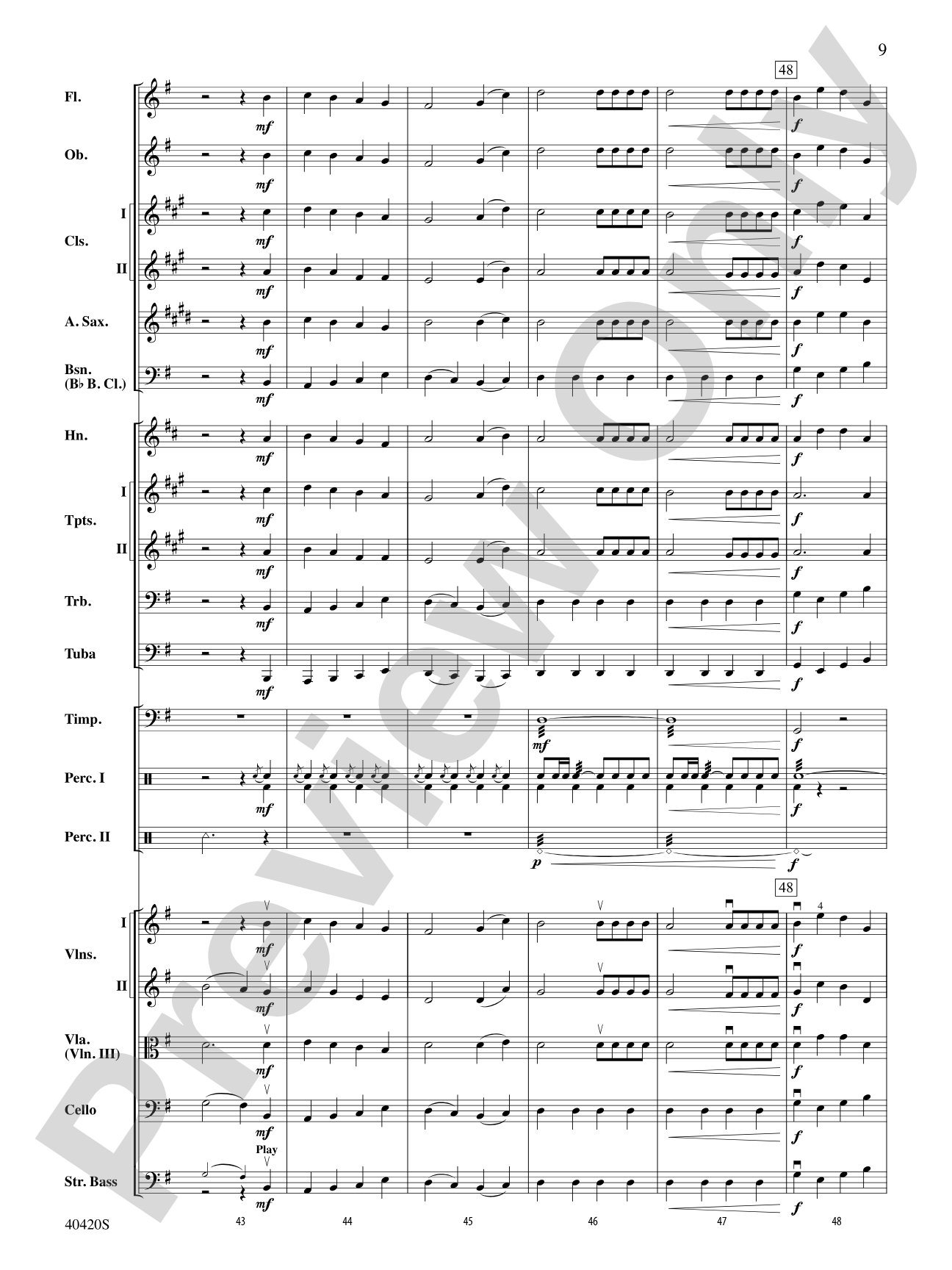
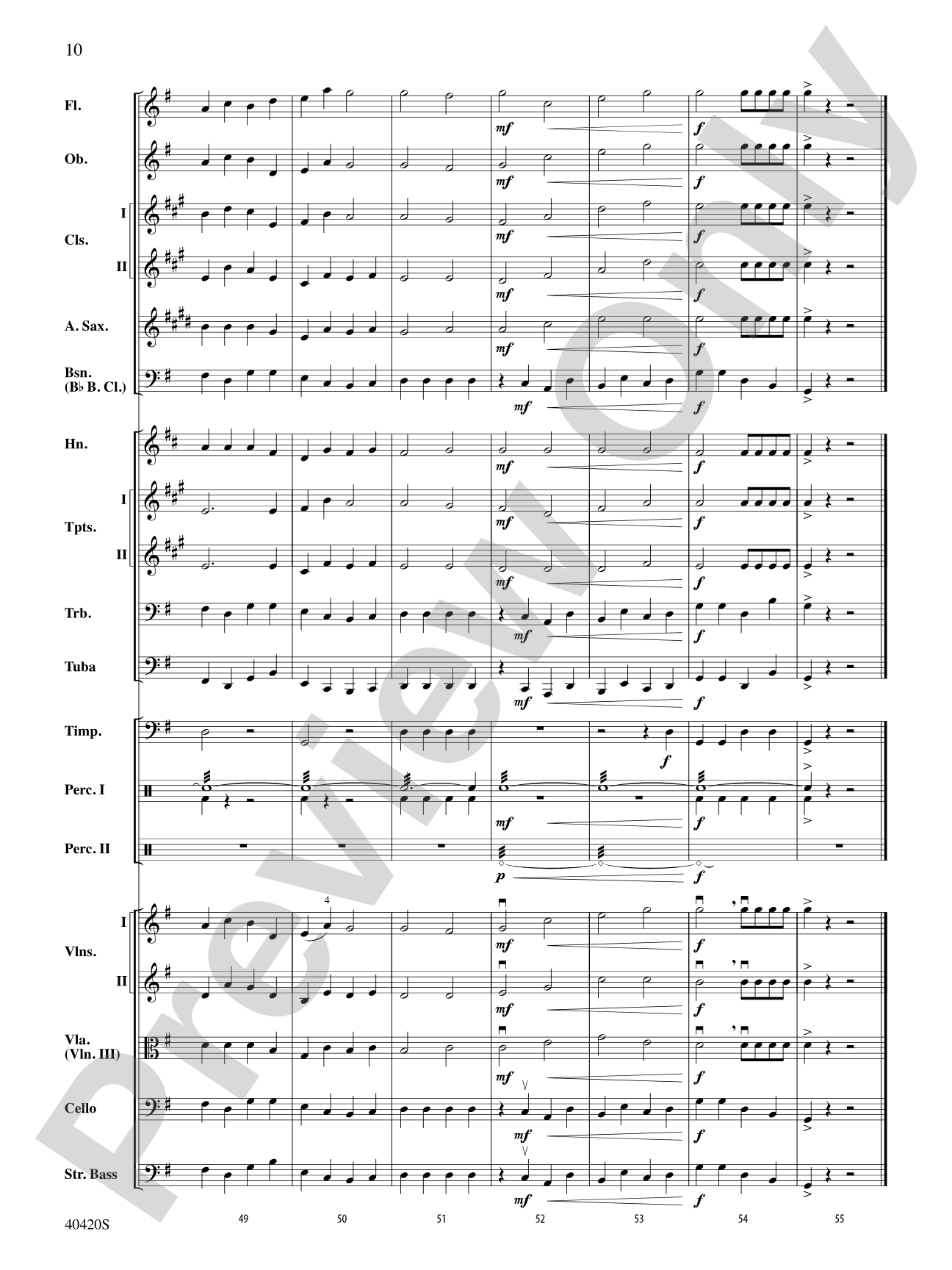



A Holiday Celebration: Full Orchestra Conductor Score & Parts
Featuring: Hark! The Herald Angels Sing / O Come All Ye Faithful
Traditional / arr. Michael Story
Grade: 1.5
Item: 00-PK-0005703

$60.00
Pickup currently not available
Buy Extra Parts (Digital PDF Download)
Parts Added to Cart!
Description
Open or close your winter concert in style with this tuneful medley of two popular Christmas carols, "Hark! The Herald Angels Sing" and "O Come All Ye Faithful." The arrangement is scored for full orchestra; however, it is also completely playable by string orchestra or strings with any number of winds. This is an excellent piece to introduce your students to a full orchestra experience! An alto sax part is included, so this piece may also be played by combined band and orchestra.


Don't just read it, hear it, play along with it, and watch your students grow with it. In MakeMusic Cloud, A Holiday Celebration: Full Orchestra Conductor Score & Parts comes alive with professional accompaniment, adjustable tempo, and built-in practice tools that turn solo practice into real progress.
Open in the Player
Jump straight in and assign it today.
Start Your Free Trial
Open this title and explore the full library in minutes.
Sample Audio
1
Audio File
--:--
0:00
0:00
Sample Video
No sample videos found.
Additional Details
Series:
Belwin Beginning String/Full Orchestra
Publisher:
Alfred Music
Page Count:
122
SKU:
00-PK-0005703
More about this title
About the Arranger: Michael Story
Michael Story has established himself as a prolific composer and arranger for school music programs, with a particular gift for making standard repertoire accessible to young ensembles. His arrangements honor the integrity of familiar melodies while crafting parts that allow developing musicians to experience genuine orchestral textures without overwhelming technical demands.
Why we love this
Story's medley respects both carols equally, giving each one genuine musical space rather than reducing them to snippets. The instrumentation flexibility is genuine: you can field this with a full orchestra, strings alone, or strings plus selective winds, and it sounds intentional every way. For programs featuring younger orchestras or mixed ensembles, this piece delivers the sound and scope of a full orchestral experience without requiring specialized instrumentation or advanced technique.
What to expect
Two beloved carols unfold with warmth and clarity, each gaining new dimension through orchestral color. The arrangement breathes like a genuine concert piece; it never feels rushed or abbreviated, allowing the singers and instrumentalists in your audience to reconnect with these melodies through a fresh orchestral lens.
Who it's for
Conductors building full orchestras for the first time will find this medley both achievable and genuinely rewarding. It works equally well for programs that combine strings with band students, and it's substantial enough to anchor a winter concert program without requiring your musicians to tackle advanced rhythmic or harmonic challenges.
How to get the most out of it
- Balance the melodic lines between sections as you transition between the two carols; the shift should feel like a natural phrase ending, not a jarring restart.
- If you're using the optional alto sax part alongside your orchestra, seat that player where the sound blends with your woodwind section rather than standing apart.
- Take time during sectional rehearsals to let strings and winds rehearse independently first, then bring them together gradually to build confidence in blend.
- Keep the harmonic support voices (inner strings, lower winds) steady and warm; they anchor the melodic beauty rather than compete with it.
How to use it
Open your winter concert with this medley to set a joyful, accessible tone before moving into more challenging repertoire. Alternatively, close with it as a rousing finale that leaves audiences smiling. The 122-page score includes all parts, making it straightforward to distribute and manage in the weeks leading up to performance.
Skills your students will build
- Balancing melody and harmonic support within a full orchestral texture
- Reading and playing independent parts while listening to surrounding sections
- Maintaining steady accompaniment figures under a sustained melodic line
- Transitioning smoothly between two different harmonic centers
- Coordinating bowing or articulation across string and wind sections