
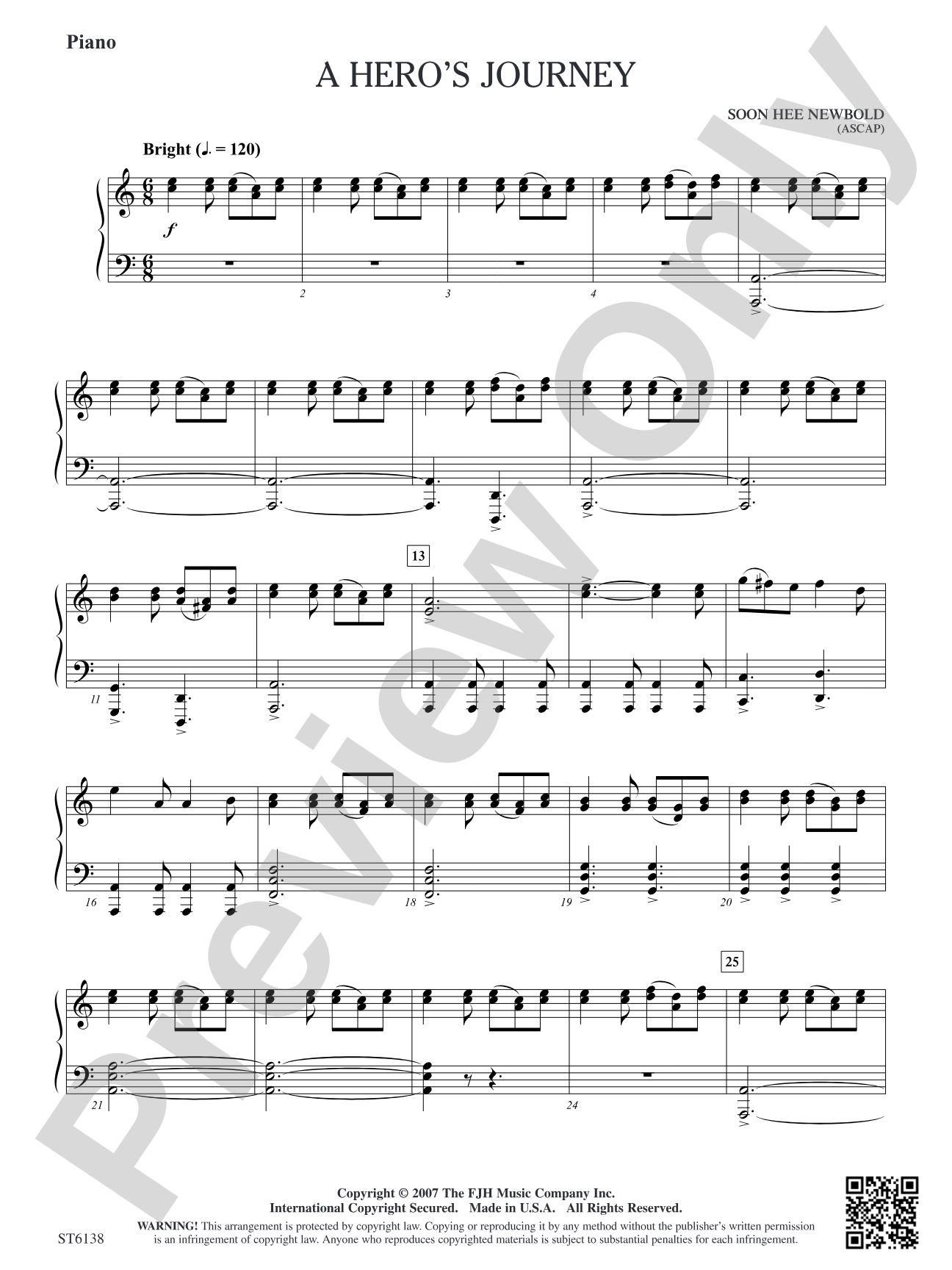
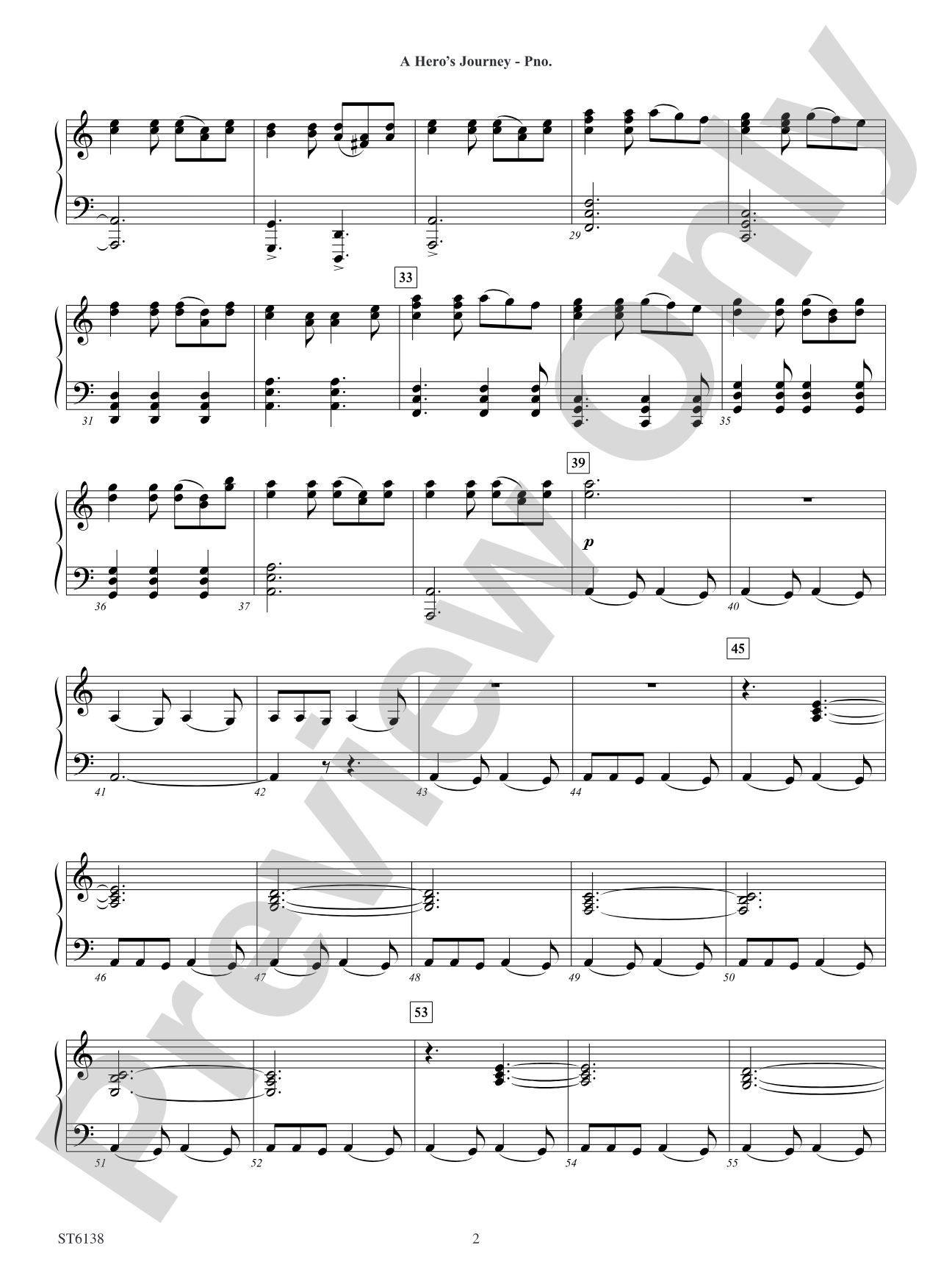

A Hero's Journey: Piano
By Soon Hee Newbold
Grade: 3
Item: 98-PC-DST6138_K
$7.00
Pickup currently not available
Description
Whether fictional, mythical, or real role models, heroes have inspired, saved, sacrificed, and conquered. In literature, movies, entertainment, or even everyday life, heroes teach us important lessons, but mostly challenge us to be better.


A Hero's Journey: Piano isn't in MakeMusic Cloud just yet...but it could be. Let us know you'd like to see it, and you'll help shape what comes next. In the meantime, start a free trial and dive into thousands of interactive titles your students can play along with today.
Request This Title
Tell us you want it.
Start Your Free Trial
Explore everything that's ready to play right now.
Sample Audio
1
Audio File
--:--
0:00
0:00
Sample Video
No sample videos found.
Additional Details
Series:
FJH String Orchestra
Publisher:
The FJH Music Company, Inc.
SKU:
98-PC-DST6138_K
More about this title
About the Composer: Soon Hee Newbold

Soon Hee Newbold began her musical education at five on piano, adding violin at seven, and eventually performed as a concert artist across professional ensembles worldwide. Her compositional voice draws richly from cultural and ethnic styles shaped by her extensive travel and lived experience.
Newbold's works span all ability levels, from beginning elementary groups to professional symphonies, and have been heard at Carnegie Hall, the Kennedy Center, Lincoln Center, Disney Hall, and the Midwest Band and Orchestra Clinic. Beyond concert music, she has worked as a filmmaker and composer in Hollywood, conducted orchestras and bands across the U.S. and internationally (including The Netherlands, Belgium, Australia, Indonesia, Singapore, and China), and serves as a sought-after guest clinician and keynote speaker.
Why we love this
Newbold captures the emotional arc of heroism without resorting to bombast, making this accessible for Grade 3 orchestras while honoring the weight of the subject matter. The programmatic narrative unfolds naturally through the string writing, giving young musicians a story to play rather than abstract notes, which deepens their investment in the music. It's the kind of piece that reminds students why they came to orchestra in the first place.
What to expect
The music carries the weight of challenge and courage without overwhelming younger players; it feels purposeful and genuine, honoring what heroes represent (sacrifice, growth, overcoming obstacles) through accessible melodic writing and transparent orchestration. Performers emerge from the piece feeling they've accomplished something meaningful rather than simply completed an exercise.
Who it's for
String orchestra directors working with Grade 3 ensembles who want meaningful, programmatic repertoire that engages young musicians beyond technique. Students benefit from playing music grounded in narrative and universal themes, and the mixed-ability composition of string orchestras (some advanced, some developing) finds balance here without patronizing or overwhelming.
How to get the most out of it
- Shape the melodic lines with purposeful dynamic growth and release; let the heroic themes breathe rather than pushing continuously forward.
- Balance the divisi writing carefully so inner voices support rather than overshadow the primary line, especially in passages where violas and lower strings carry thematic material.
- Attend to rhythmic clarity in any syncopated passages by locking the bow changes and articulation across the entire section, not just first violins.
- Use the conductor score's phrasing and accents as signposts for the emotional journey; young players respond powerfully when they understand they're telling a story arc rather than executing patterns.
How to use it
Program this as the centerpiece of a concert exploring heroism across cultures, or pair it with a thematic concert addressing courage and challenge that spans multiple genres. It works particularly well mid-season when students have technical foundations in place but still need the emotional resonance of programmatic music to sustain their engagement with daily rehearsal.
Skills your students will build
- Phrasing longer melodic lines across multiple measures
- Balancing divisi parts while maintaining clarity of individual voices
- Responding to programmatic and emotional content in music
- Ensemble cohesion across mixed ability levels in string orchestra
- Dynamic control and expressive playing at Grade 3 difficulty