
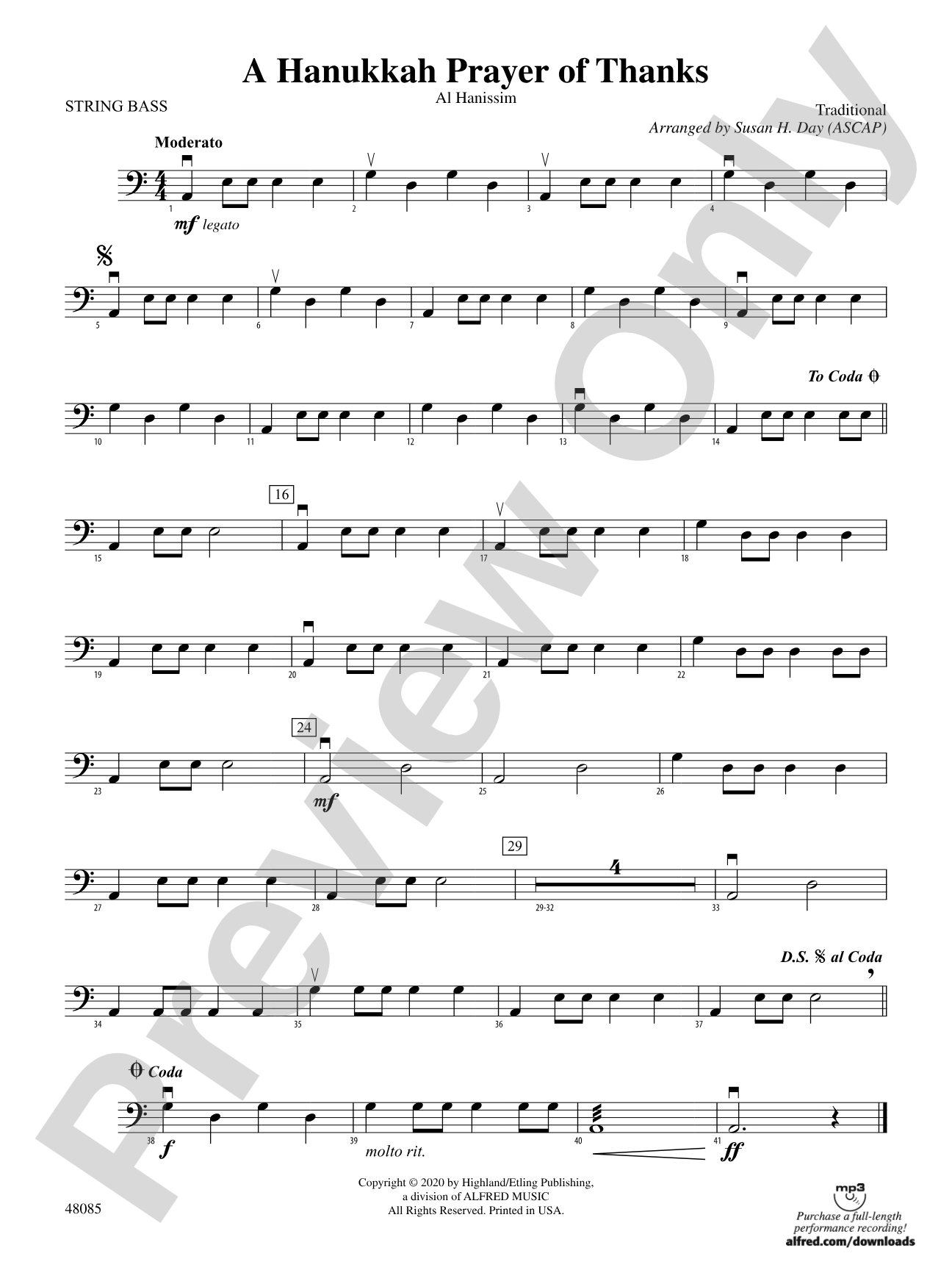

A Hanukkah Prayer of Thanks: String Bass
Al Hanissim
Traditional / arr. Susan H. Day
Grade: 1.5
Item: 00-PC-0018457_SB
$5.99
Pickup currently not available
Description
This title features Alfred Music's String Orchestra FLEX options. That means that every part in this set is now transposed into every other part, so you can play this title with any combination of like- or mixed-string ensemble. After purchasing this set, decide what additional parts you need to meet the unique needs of your ensemble, then download and print them for free at alfred.com/supplemental---free of charge.
A unique Hanukkah selection, this piece embodies traditional Jewish music with its haunting melodies. In 4/4 time throughout, using easy rhythms, lifts, tremolo, a few two-note slurs, and ties, along with some cello divisi. The viola part doubles the 2nd violin and the cello doubles the bass. This is an excellent teaching piece for dotted-quarter-note rhythms.
The prayer "Al Hanissim" is sung or read at Hanukkah, expressing thanks for the miracles that have been bestowed upon the people's ancestors. A Hanukkah Prayer of Thanks by Susan H. Day will convey a sense of the season. (1:50) This title is available in MakeMusic Cloud.


A unique Hanukkah selection, this piece embodies traditional Jewish music with its haunting melodies. In 4/4 time throughout, using easy rhythms, lifts, tremolo, a few two-note slurs, and ties, along with some cello divisi. The viola part doubles the 2nd violin and the cello doubles the bass. This is an excellent teaching piece for dotted-quarter-note rhythms.
The prayer "Al Hanissim" is sung or read at Hanukkah, expressing thanks for the miracles that have been bestowed upon the people's ancestors. A Hanukkah Prayer of Thanks by Susan H. Day will convey a sense of the season. (1:50) This title is available in MakeMusic Cloud.
Don't just read it, hear it, play along with it, and watch your students grow with it. In MakeMusic Cloud, A Hanukkah Prayer of Thanks: String Bass comes alive with professional accompaniment, adjustable tempo, and built-in practice tools that turn solo practice into real progress.
Open in the Player
Jump straight in and assign it today.
Start Your Free Trial
Open this title and explore the full library in minutes.
Sample Audio
1
Audio File
--:--
0:00
0:00
Sample Video
Additional Details
Series:
Highland/Etling String Orchestra
Publisher:
Alfred Music
Page Count:
62
SKU:
00-PC-0018457_SB
More about this title
Why we love this
Susan H. Day's arrangement captures the spiritual weight of "Al Hanissim" without overwhelming developing orchestras. The flexible instrumentation system means you can run this piece with whatever combination of strings you have on any given rehearsal day, making it genuinely practical for schools with inconsistent attendance or mixed-level ensembles.
What to expect
The arrangement evokes quiet reverence and gratitude. Tremolo textures and simple, haunting melodies create an introspective sound that honors the spiritual roots of the prayer while remaining accessible and honest in its expression.
Who it's for
Beginning to early intermediate string orchestras looking to expand their seasonal repertoire with culturally meaningful material. This piece serves ensembles of any size thanks to its flexible instrumentation, making it accessible whether you have a full complement of strings or just a handful of players.
How to get the most out of it
- Shape the tremolo sections to breathe rather than buzz continuously; a slight swell and release at natural musical phrases will highlight the haunting quality of the melody.
- Isolate the dotted-quarter rhythms in early rehearsals by having students count aloud while watching the conductor, since this figure is central to the piece's character and timing.
- Balance the cello divisi carefully so both lines remain audible; this creates harmonic depth that reinforces the traditional Jewish sound without obscuring the main voices.
- Coordinate the two-note slurs across parts to ensure consistency in bow direction and weight, which will unify the ensemble's phrasing across the entire work.
How to use it
Program this during winter concerts alongside secular holiday selections to provide cultural balance and depth. The 1:50 duration makes it suitable as a shorter opening or closing piece, allowing you to build a thematically coherent concert that acknowledges diverse winter celebrations.
Skills your students will build
- Reading and executing dotted-quarter-note rhythms in traditional Jewish melodic context
- Tremolo technique with dynamic control and musical phrasing
- Intonation in divisi passages, particularly the cello part
- Two-note slur articulation with consistent bow weight across an ensemble
- Part independence when viola doubles 2nd violin and cello doubles bass
- Musical interpretation of traditional Jewish musical idioms and prayer melody