A Gypsy's Life: Viola Sheet Music Preview

A Gypsy's Life: Viola

By Susan H. Day

Grade: 1.5

Item: 00-PC-0017686_VA1

Digital Download
$5.99
Description
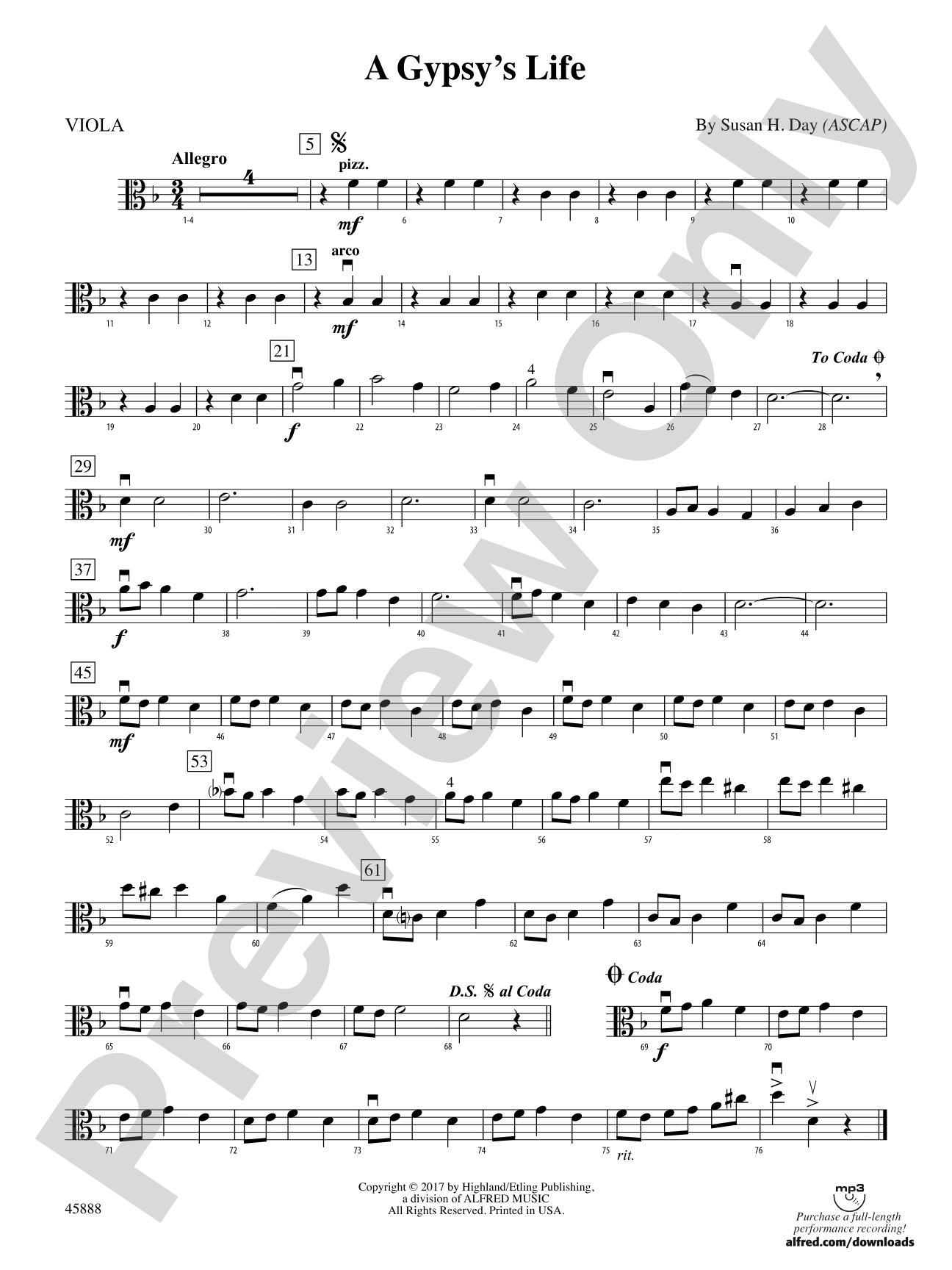
In 3/4, with some pizzicato and a few slurs, the minor melodies and gypsy-like quality make this a very appealing selection composed by Susan Day. The perfect piece to introduce B-flat to all sections of the orchestra, program it in conjunction with teaching the F scale. Each section gets the melody, allowing them to easily recognize the B-flats and F-naturals. The viola doubles the 2nd violin. A Gypsy's Life is an excellent and musical teaching piece! (2:10)

Don't just read it, hear it, play along with it, and watch your students grow with it. In MakeMusic Cloud, A Gypsy's Life: Viola comes alive with professional accompaniment, adjustable tempo, and built-in practice tools that turn solo practice into real progress.

Sample Audio
0:00
0:00
Sample Video
Additional Details
Series: Highland/Etling String Orchestra
Publisher: Alfred Music
Page Count: 62
SKU: 00-PC-0017686_VA1

More about this title

About the Composer: Susan H. Day

Susan H. Day has built a reputation as a composer of accessible, musically intelligent works for young ensembles. Her pieces consistently balance pedagogical clarity with genuine artistic appeal, refusing the false choice between teaching tool and concert repertoire. Day understands how to place technical challenges exactly where they serve the music, making her scores valuable resources for directors who want their students learning something real.

Why we love this

Susan Day writes with real understanding of what early string orchestras can accomplish musically. She hands the melody to every section, which means every player gets a moment to shine and hears themselves in the leading voice. That pedagogical generosity, combined with actual musicality, makes this feel like a real piece rather than an exercise.

What to expect

A minor-key journey with an accessible gypsy flavor. The pizzicato moments and gentle slurs create lightness and movement, while the minor melodies give the piece character and depth without requiring advanced technical demands. The overall effect is engaging and slightly exotic without feeling foreign to young players.

Who it's for

String orchestras in their first or second year of playing together, particularly those ready to explore minor keys and expand their vocabulary beyond unison melodies. Directors teaching the F scale and B-flat intonation will find this piece directly supports that curriculum.

How to get the most out of it

  • Lean into the minor key and gypsy character by encouraging players to shape phrases with slight rubato in their phrasing, even while maintaining ensemble rhythm. The pizzicato sections give you natural breathing room to establish this expressive quality.
  • Isolate the B-flat passages in sectional rehearsals so students hear the flat consistently. When first violins and violas play them together, second violins can listen and tune their own B-flats against that reference.
  • Use the viola doubling on second violin as an opportunity to balance the inner voices. Make sure those two parts carry equal weight when they move in unison.
  • Mark the slurs clearly in parts before rehearsal. At this level, consistent slur placement across similar passages helps younger players see the shape of the melody and builds confidence with bowing patterns.

How to use it

Place this alongside a scale-based teaching unit on F major and B-flat major to reinforce accidental reading and intonation in an actual musical context. Its two-minute-plus length and concert-ready quality also make it a solid opener or closer for a young orchestra concert, particularly if you're building a program around pedagogical milestones.

Skills your students will build

  • Reading and playing B-flats and F-naturals in context
  • Playing in minor keys with consistent intonation
  • Articulating pizzicato passages cleanly while maintaining ensemble rhythm
  • Recognizing and executing slurred bowing patterns
  • Playing melody in all four string parts and listening for balance when sections move in unison

You May Also Like