
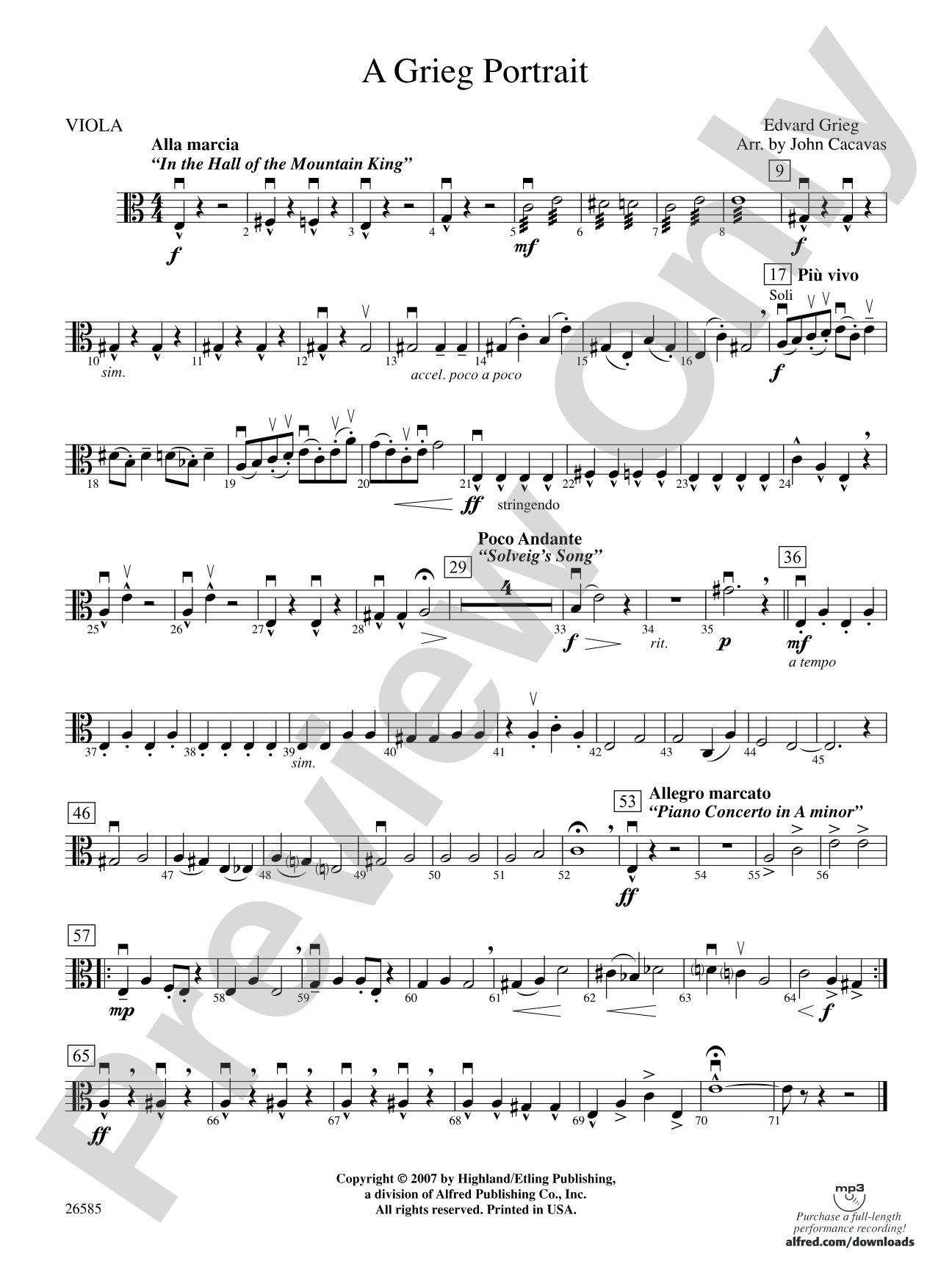

A Grieg Portrait: Viola
By Edvard Grieg / arr. John Cacavas
Grade: 2.5
Item: 00-PC-0001101_VA1
$5.99
Pickup currently not available
Description
The well-known and melodic tunes in this medley include: The Hall of the Mountain King, Solveig's Song and Piano Concerto in A Minor. Explore Romantic music while remaining in first position - satisfying but not difficult! All sections have the melody at times. With a bit of divisi used to enhance the harmonic structure and optional timpani and piano, this is a lush addition to the repertoire! This title is available in MakeMusic Cloud.


Don't just read it, hear it, play along with it, and watch your students grow with it. In MakeMusic Cloud, A Grieg Portrait: Viola comes alive with professional accompaniment, adjustable tempo, and built-in practice tools that turn solo practice into real progress.
Open in the Player
Jump straight in and assign it today.
Start Your Free Trial
Open this title and explore the full library in minutes.
Sample Audio
1
Audio File
--:--
0:00
0:00
Sample Video
No sample videos found.
Additional Details
Series:
Highland/Etling String Orchestra
Publisher:
Alfred Music
Page Count:
42
SKU:
00-PC-0001101_VA1
More about this title
About the Composer: Edvard Grieg
Edvard Grieg (1843-1907) stands as Norway's most celebrated composer, defining the sound of Scandinavian Romanticism through works that blend folk idioms with European harmonic sophistication. His gift for lyrical melody and his ability to evoke landscape and emotion through orchestration made him one of the most performed composers of his era, and his influence on music education has never waned.
Grieg's piano concerto and incidental music remain staples of concert programming and student repertoire worldwide. His melodies are instantly recognizable, his harmonies accessible yet distinctive, and his orchestrations transparent enough for young musicians to hear every voice. For string students, Grieg represents an ideal entry point into the Romantic period: his music rewards careful listening and responds powerfully to interpretive choices, even at modest technical levels.
Why we love this
John Cacavas has crafted an arrangement that honors Grieg's most beloved melodies while respecting the learning needs of young string orchestras. Rather than simplifying to the point of blandness, he preserves the harmonic richness and orchestral color of the originals through strategic divisi and optional augmentation, allowing students to experience genuine Romantic texture without technical overreach. Programming three iconic Grieg pieces in one rehearsal-efficient package gives you substantial musical substance and programming flexibility for concert or festival.
What to expect
Lush without complexity, these three Grieg masterworks unfold with the unhurried elegance of Norwegian landscapes and folk tradition. From the relentless, hypnotic descent of the Mountain King to the tender, almost prayer-like simplicity of Solveig's Song and the sweeping grandeur of the Piano Concerto's opening, the medley offers emotional range and musical substance. Students hear themselves making sounds far larger and more sophisticated than their technical level might suggest.
Who it's for
String directors leading Grade 2.5 ensembles who want to build student confidence and musicianship through recognizable, genuinely beautiful material. This arrangement serves equally well in school orchestra programs, community youth orchestras, and preparatory string departments where players are ready for Romantic-era repertoire but still consolidating fundamental techniques in first position.
How to get the most out of it
- Balance the melody between sections deliberately, especially when passing themes among violins, violas, and cellos. The arrangement distributes musical material generously, so your preparatory work should establish who owns each phrase and ensure clean handoffs.
- Shape Solveig's Song with particular attention to rubato and breath. Though the ensemble stays in first position, this Norwegian folk melody gains immensely from slight tempo flexibility and long-line phrasing that honors its vocal origins.
- Reserve full ensemble sound for The Hall of the Mountain King's climactic moments. The arrangement benefits from dynamic contrast and textural variety, so build gradually and let quieter passages breathe.
- If using the optional timpani and piano parts, rehearse their entrances separately with the strings first. These doublings enhance harmonic depth but should never overwhelm the string melody.
How to use it
Open a concert with this suite to establish an accessible yet artistically serious tone, or place it midway through a program that mixes eras and styles. At festivals or contests, it demonstrates both technical competence and musical maturity without demanding virtuosity. The piece also works beautifully as a capstone for study of the Romantic period or as a standalone celebration of Grieg's genius for melody.
Skills your students will build
- Reading and executing divided violin and viola parts to understand harmonic texture
- Maintaining sustained first-position playing across longer musical phrases
- Balancing ensemble sound when melody moves between sections
- Interpreting Romantic-era phrasing and rubato within a manageable technical range
- Responding to optional augmentation (timpani and piano) without losing string-centered focus