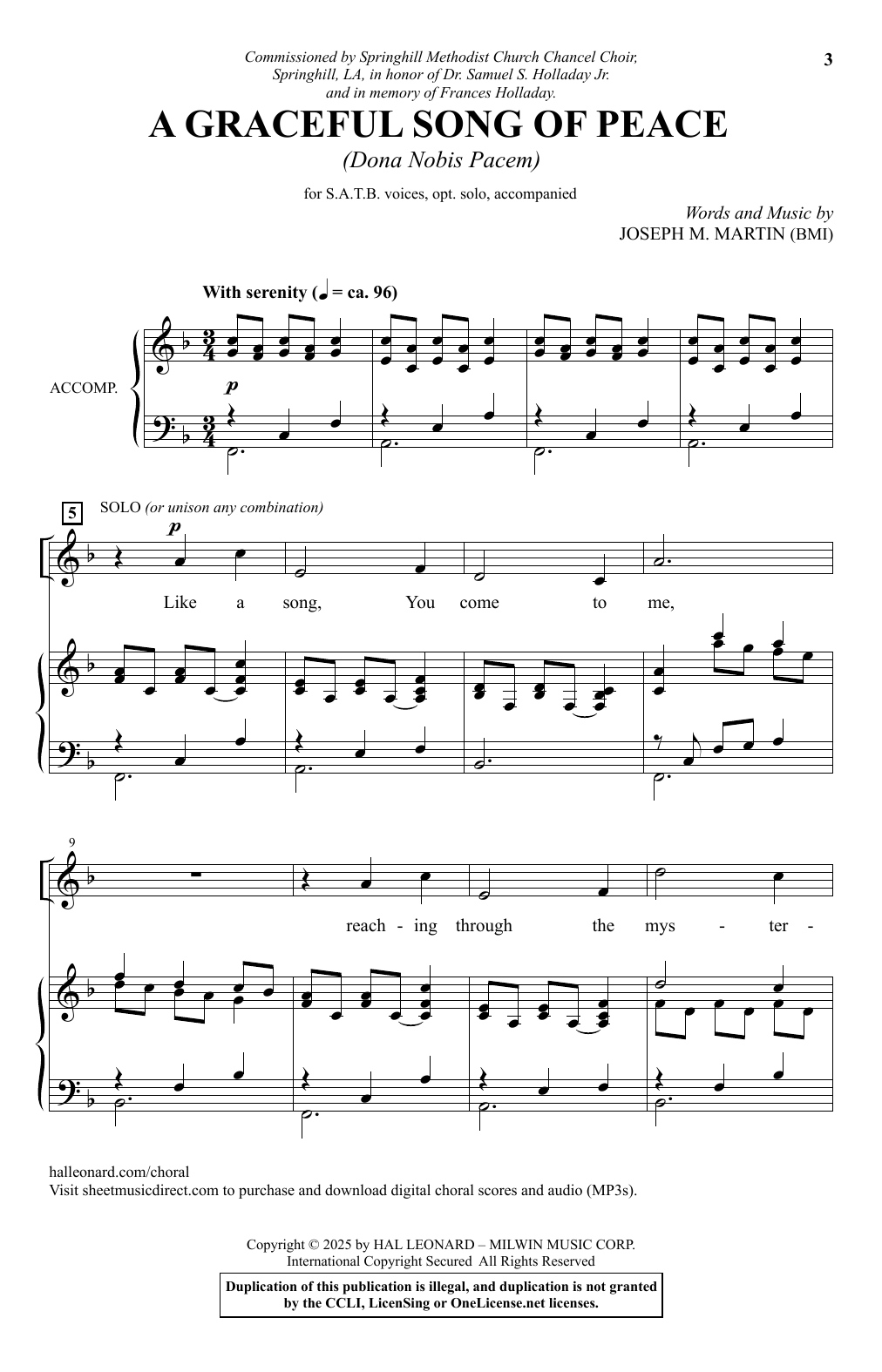
A Graceful Song Of Peace (Dona, Nobis, Pacem) Sheet Music Preview

A Graceful Song Of Peace (Dona, Nobis, Pacem): SATB Choral Octavo

Item: 35-DS01736657

Digital Download
$2.50
Description

A Graceful Song Of Peace (Dona, Nobis, Pacem): SATB Choral Octavo isn't in MakeMusic Cloud just yet...but it could be. Let us know you'd like to see it, and you'll help shape what comes next. In the meantime, start a free trial and dive into thousands of interactive titles your students can play along with today.

Sample Audio
No sample audio found.
Sample Video
Additional Details
Publisher: Hal Leonard
Page Count: 9
SKU: 35-DS01736657

More about this title

Why we love this

This arrangement of the timeless 'Dona Nobis Pacem' canon brings fresh vitality to a piece choirs return to again and again. The SATB voicing opens the work to broader ensemble configurations while preserving the meditative quality that makes this text resonate across centuries.

What to expect

Serene and meditative, this setting invites singers and listeners into a moment of genuine reflection. The overlapping vocal lines create an almost weightless quality, as though the prayer itself is being lifted skyward.

Who it's for

Any SATB choir looking to add a meaningful, accessible sacred work to their repertoire. The piece works equally well for high school choirs, college ensembles, and community groups seeking repertoire that connects singers to liturgical tradition.

How to get the most out of it

  • Balance the four voice parts carefully so that the overlapping entrances remain clear rather than blended into mud. Each voice should sing with distinct articulation.
  • Shape the phrase around the text meaning. 'Dona nobis pacem' is a prayer for peace, not a martial declaration, so allow the harmonic movement to breathe naturally.
  • Work the intonation in small voice sections before bringing the full choir together. The open harmonies will expose any tuning weakness immediately.

How to use it

This works beautifully as a closing piece for a concert program or as part of a sacred music set. Consider programming it after more complex or dramatic works to give the audience a contemplative ending.

Skills your students will build

  • Singing in four-part harmony with clear voice independence
  • Managing overlapping melodic lines and harmonic textures
  • Sustaining focused tone on vowels across longer phrases
  • Responsive phrasing to text and harmonic movement
  • Ensemble balance in a canonic or stacked texture

You May Also Like