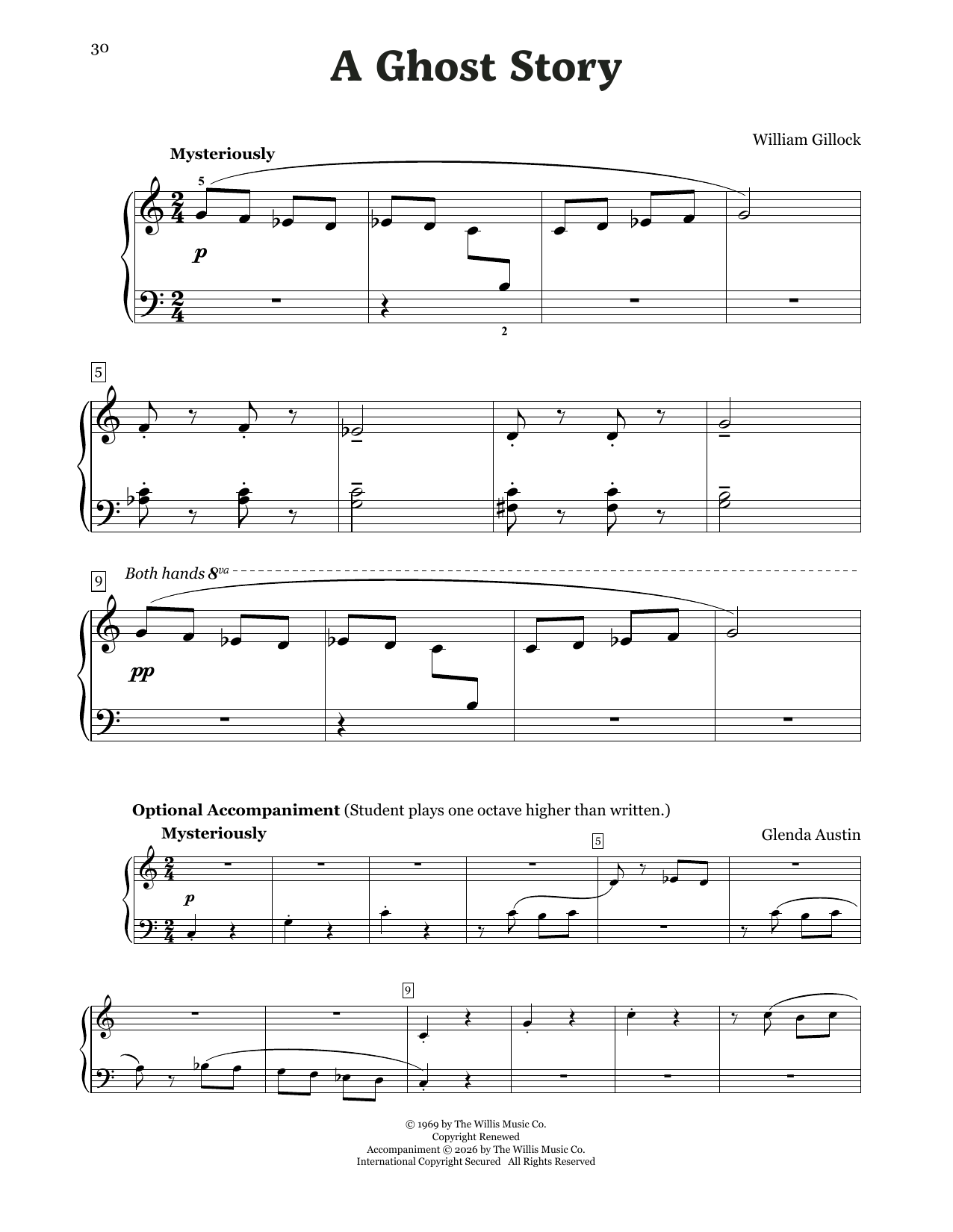
William Gillock (1917–2002) spent his career writing accessible, musically sophisticated repertoire for young pianists. His pedagogical works balance technical instruction with genuine artistry, making him a staple of piano curricula across North America. Gillock understood what intermediate students could accomplish and what would keep them engaged without overwhelming them.
Why we love this
Gillock captures atmosphere without resorting to cheap effects. The piece delivers genuine musical storytelling at a level where students can feel ownership of the narrative rather than struggling through technical barriers to reach it. Two pages means it's substantial enough to matter but concise enough to learn quickly and perform with confidence.
What to expect
Mysterious and slightly unsettling, with moments of intrigue that unfold gradually. The harmonic language suggests something shadowy moving just beyond view, kept in check by the piece's structural clarity and accessibility.
Who it's for
Intermediate pianists ready to work with program music and mood painting. This piece makes sense for students who have solid hand position and basic dynamic control but benefit from pieces that reward musical interpretation alongside technical development.
How to get the most out of it
Shape the melody with sensitivity to the implied harmonic shifts; let the phrasing breathe rather than mechanically following note values.
Explore the dynamic range available to you. The mood deepens considerably if you're willing to play truly soft during the quieter passages.
Allow rubato in moments where the character of the piece invites it; Gillock's phrasing suggests flexibility rather than metronomic regularity.
How to use it
Pair this with other Gillock works or contemporary character pieces on a recital program where you want to shift the mood decisively. It works equally well as a solo performance piece for a student showcase or as part of a thematic program exploring programmatic music at the intermediate level.
Skills your students will build
Pedal control and awareness of harmonic color
Sustaining atmospheric tension across a longer phrase
Interpreting program music without literal storytelling
Balance between technical execution and musical character
You May Also Like
Scan to Complete Your Purchase
Use your phone's camera to scan the code below
You'll log in on your phone and the order will be added to your account