



A French Noel: String Orchestra Conductor Score & Parts
Traditional / arr. Mark Williams
Grade: 1
Item: 00-PK-0000938

$46.00
Pickup currently not available
Buy Extra Parts (Digital PDF Download)
| Product | Price | Quantity |
|---|---|---|
| A French Noel: Score | $6.00 | |
| A French Noel: 1st Violin | $7.99 | |
| A French Noel: 2nd Violin | $7.99 | |
| A French Noel: 3rd Violin (Viola [TC]) | $7.99 | |
| A French Noel: Viola | $7.99 | |
| A French Noel: Cello | $7.99 | |
| A French Noel: String Bass | $7.99 | |
| A French Noel: Piano Accompaniment | $7.99 |
Parts Added to Cart!
Description
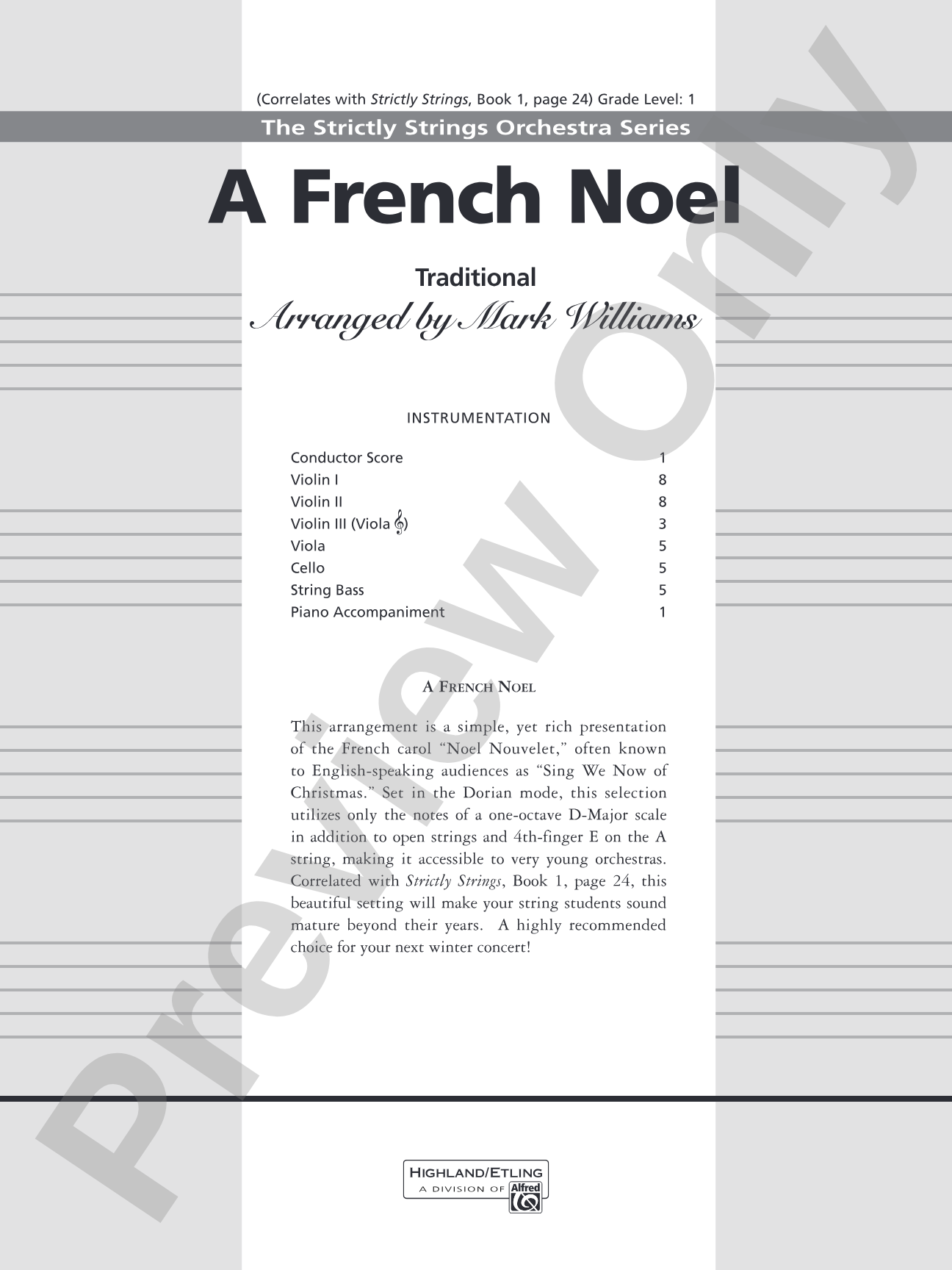
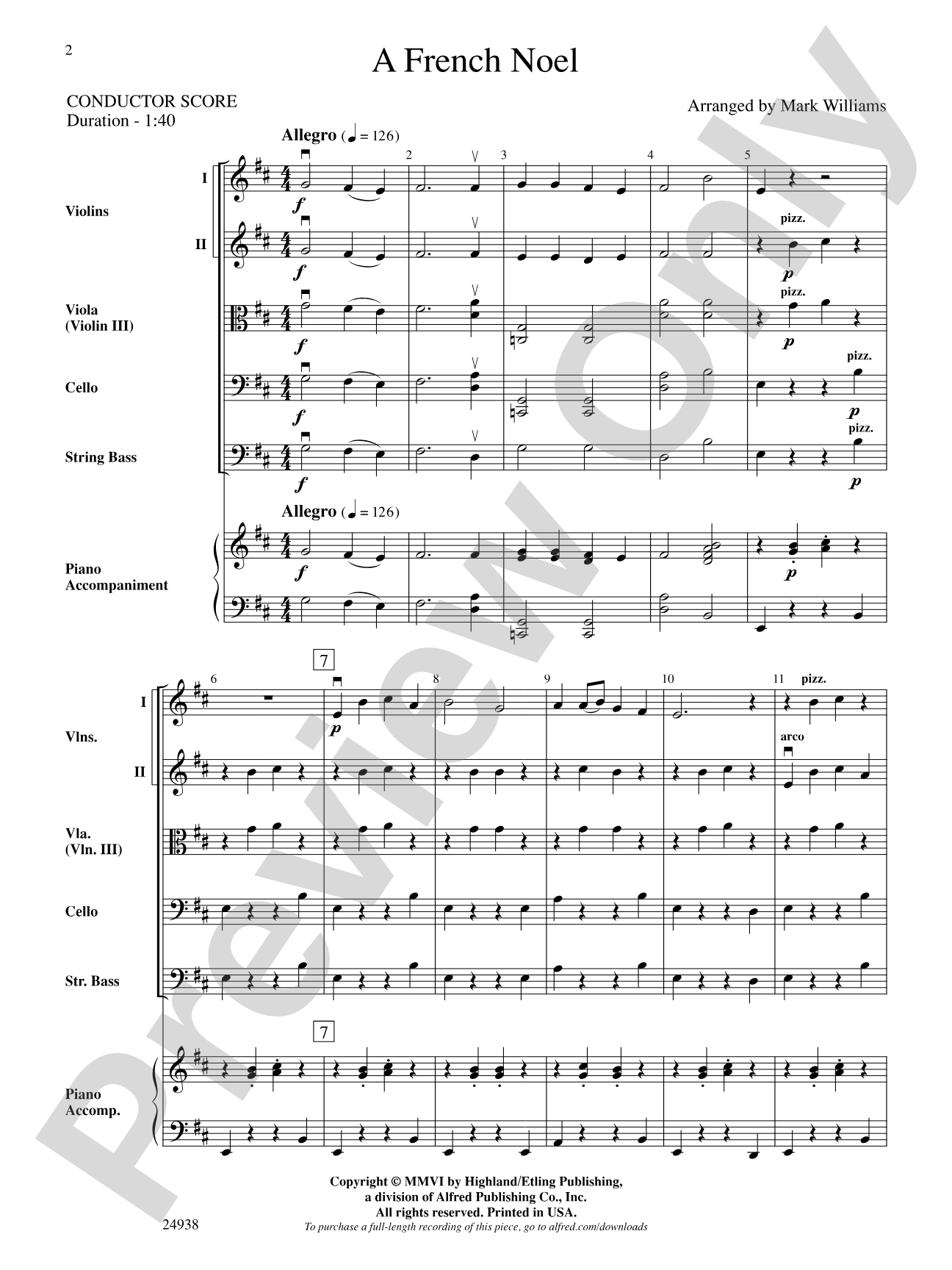
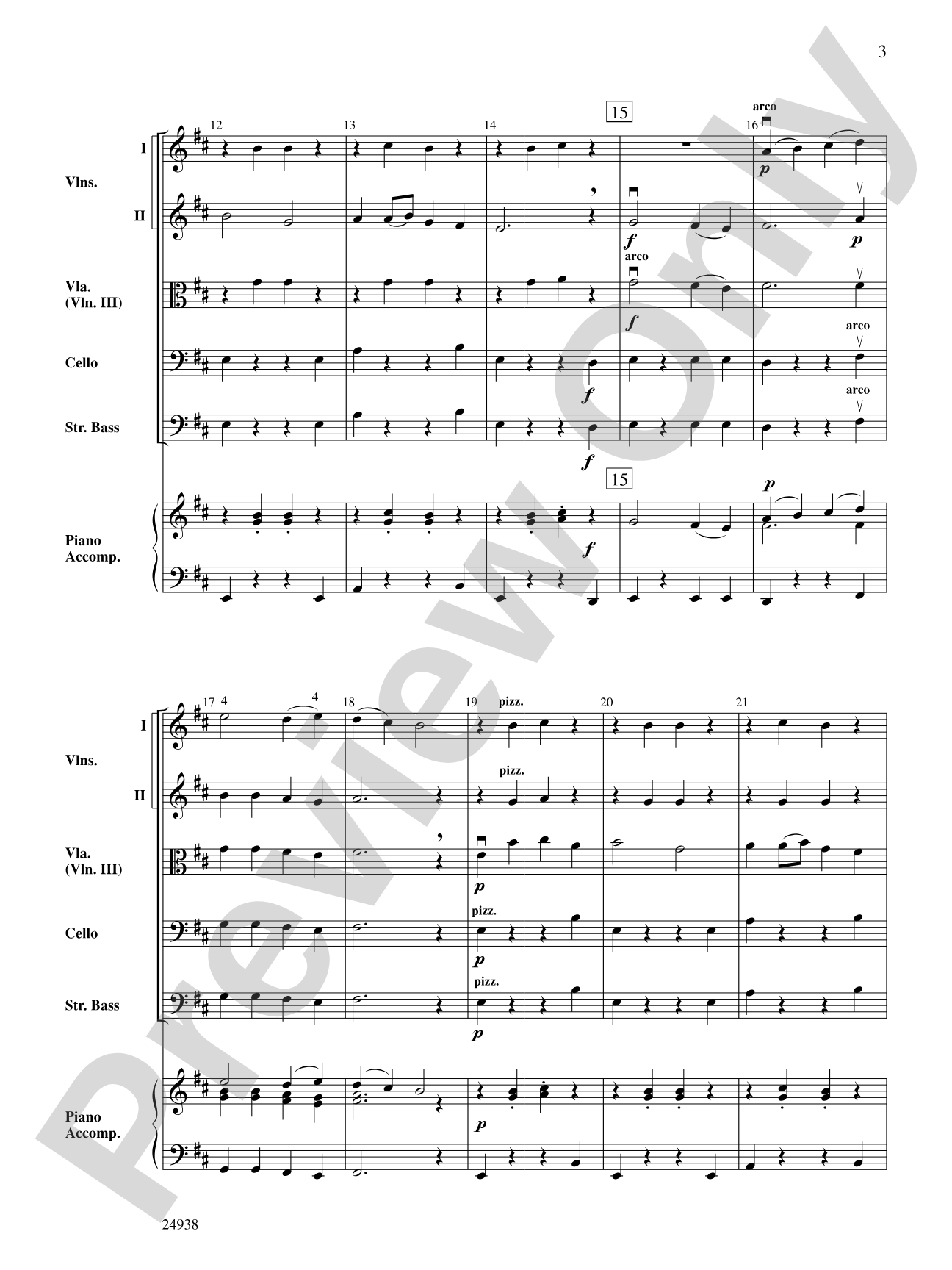
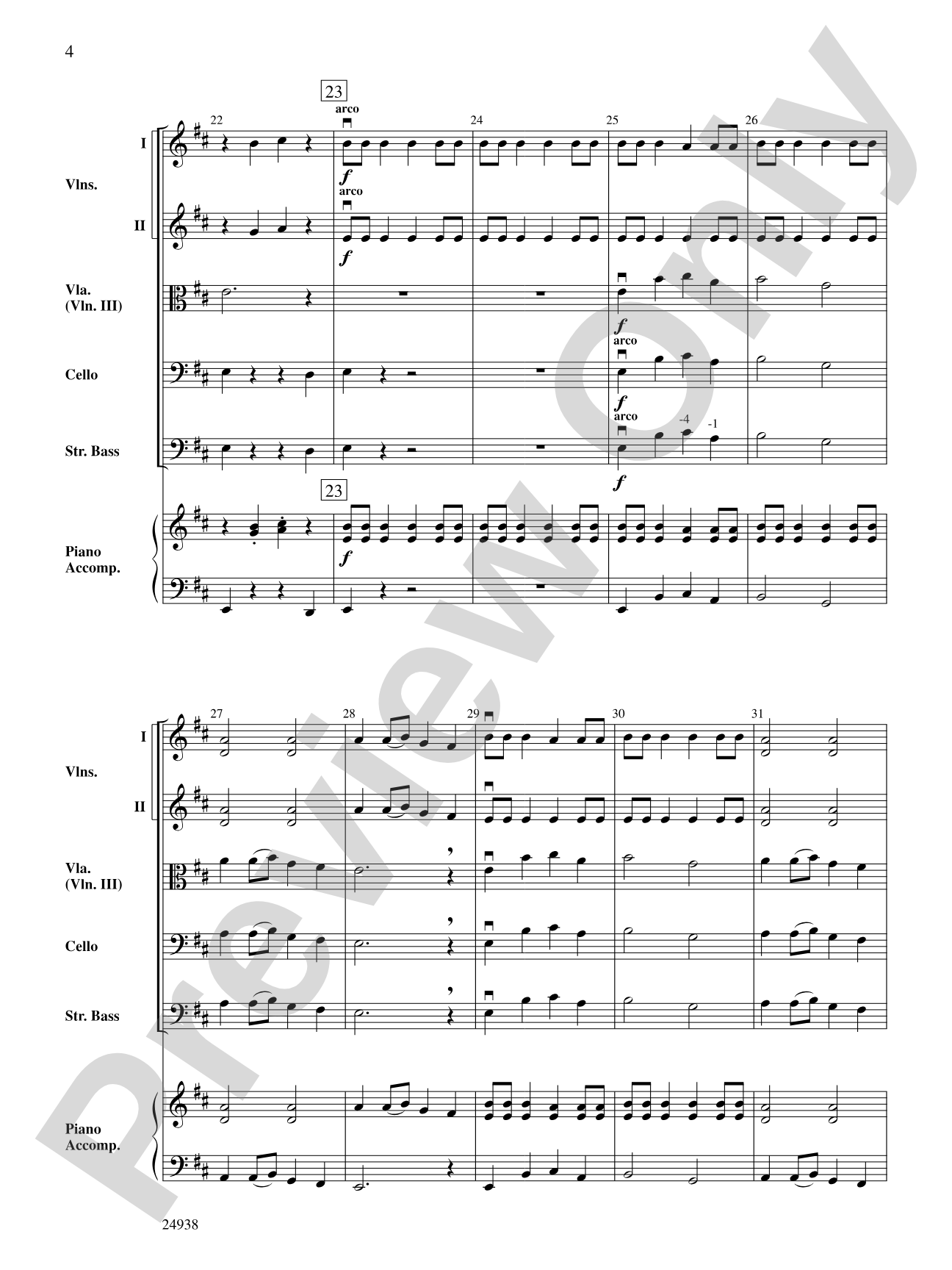
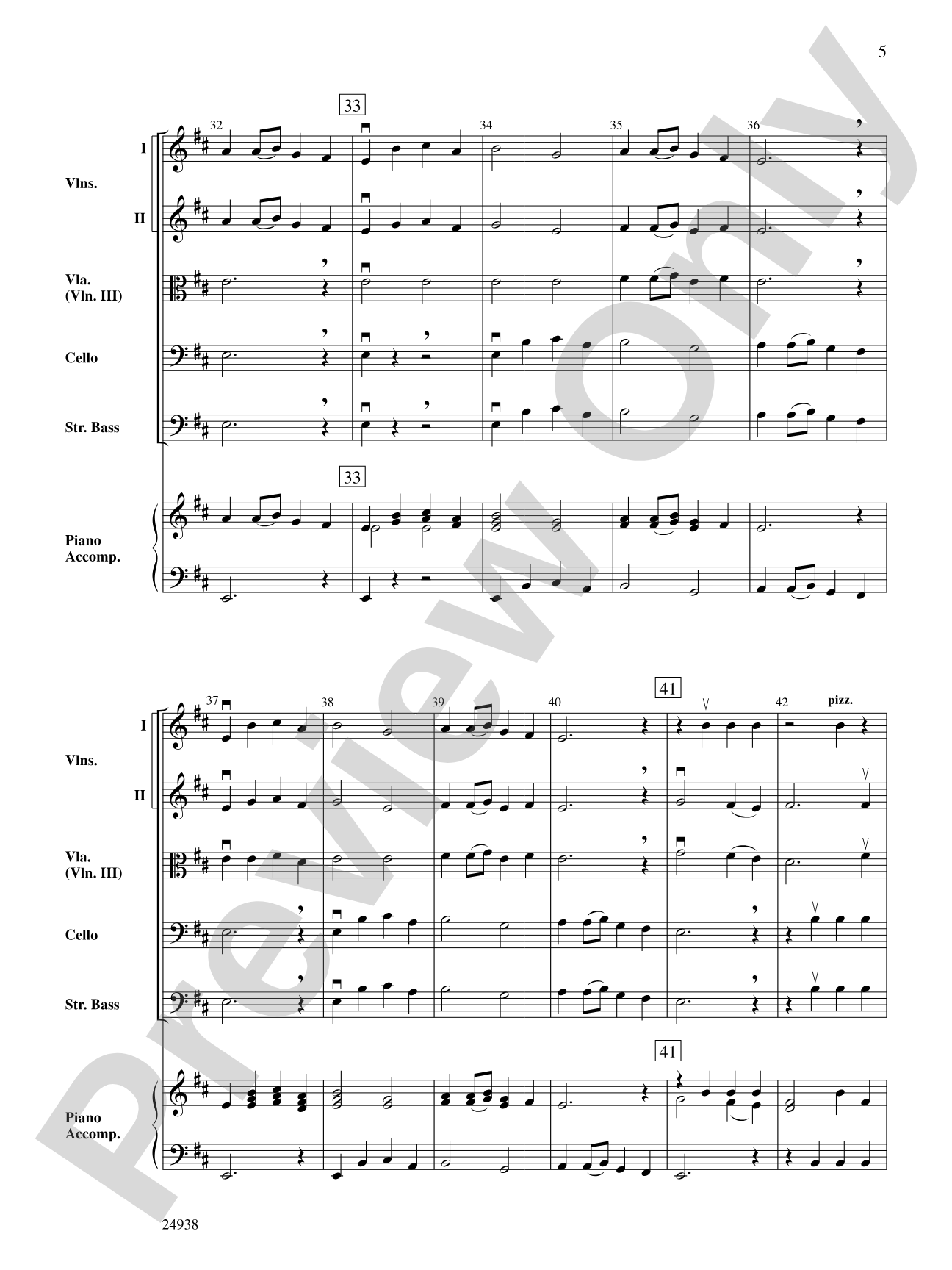
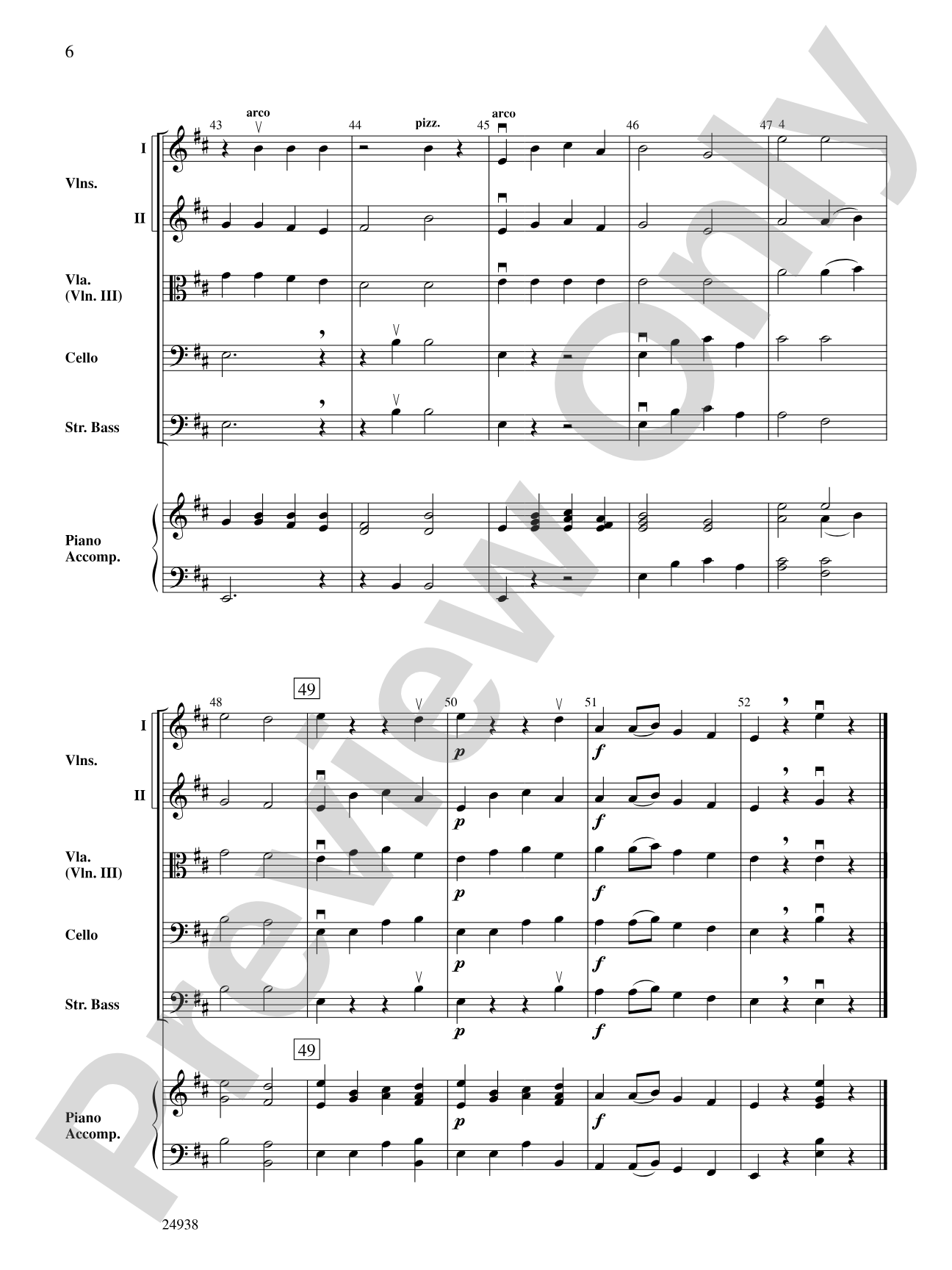
This arrangement is a simple, yet rich presentation of the French carol "Noel Nouvelet," often known to English-speaking audiences as "Sing We Now of Christmas." Utilizing only the notes of a one-octave D major scale plus open strings and 4th-finger E on the A string, this beautiful selection is accessible to very young orchestras. Correlated with Strictly Strings, Book 1, page 24, this beautiful carol in the Dorian mode will make your young string students sound mature beyond their years! A highly recommended choice for your next winter concert.


Don't just read it, hear it, play along with it, and watch your students grow with it. In MakeMusic Cloud, A French Noel: String Orchestra Conductor Score & Parts comes alive with professional accompaniment, adjustable tempo, and built-in practice tools that turn solo practice into real progress.
Open in the Player
Jump straight in and assign it today.
Start Your Free Trial
Open this title and explore the full library in minutes.
Sample Audio
1
Audio File
--:--
0:00
0:00
Sample Video
No sample videos found.
Additional Details
Series:
Highland/Etling Strictly Strings
Publisher:
Alfred Music
Page Count:
72
SKU:
00-PK-0000938
More about this title
About the Arranger: Mark Williams

Mark Williams built his reputation as a composer and arranger for young musicians across multiple ensembles. His output of more than 200 published works reflects decades of direct experience teaching elementary band in Washington schools, giving him a keen understanding of what students at different levels can achieve.
Beyond composition, Williams was active as a clinician and guest conductor throughout North America and Australia, bringing his pedagogical insights to music programs across 34 states, five Canadian provinces, and internationally. He held degrees from Eastern Washington University and contributed arrangements to the 560th Air Force Band while also performing bassoon and conducting the Spokane British Brass Band. His work earned recognition including the Gralia Competition award and multiple ASCAP Special Awards.
Why we love this
Williams understands what makes young orchestras sound polished, and this arrangement proves it. By confining the material to notes already in students' hands from Book 1 while still demanding musical maturity, he removes technical barriers without compromising the dignity of the carol. The result feels like a genuine performance opportunity rather than a study piece.
What to expect
The Dorian mode gives this carol an unexpected depth, neither purely major nor minor, lending it a timeless quality that suits both the Renaissance origins of the melody and the contemporary string sound. Young players will discover that simple notes, played with care and attention to ensemble, create something resonant and mature.
Who it's for
This arrangement serves Grade 1 orchestras ready to program a carol that sounds far more advanced than their current technical level. Young string students will feel the satisfaction of performing a recognizable melody with genuine musical weight, making it ideal for winter concerts where audiences expect seasonal offerings.
How to get the most out of it
- Balance the D major scale warmup before rehearsal begins; students who anchor these pitches cleanly will execute the melody with confidence.
- Shape the phrasing by lifting slightly between phrases rather than cutting off abruptly, which allows the Dorian character to emerge naturally.
- Mark the open strings and 4th-finger E positions clearly in parts ahead of time so students focus on tone and ensemble blend during rehearsal.
How to use it
Program this as the centerpiece of your winter concert's first half, where its accessibility and universal familiarity will anchor the program before moving to more demanding repertoire. It also works well as an opening number that sets an elegant tone while allowing your youngest orchestra members to contribute meaningfully to the evening's concert.
Skills your students will build
- Reading and executing the Dorian mode on open strings and within first position
- Maintaining consistent tone across open strings and stopped pitches
- Balancing melody and accompaniment within a simple harmonic framework
- Shaping musical phrases and controlling articulation without printed dynamic markings