A Foggy Day: Vocal Solo Sheet Music Preview

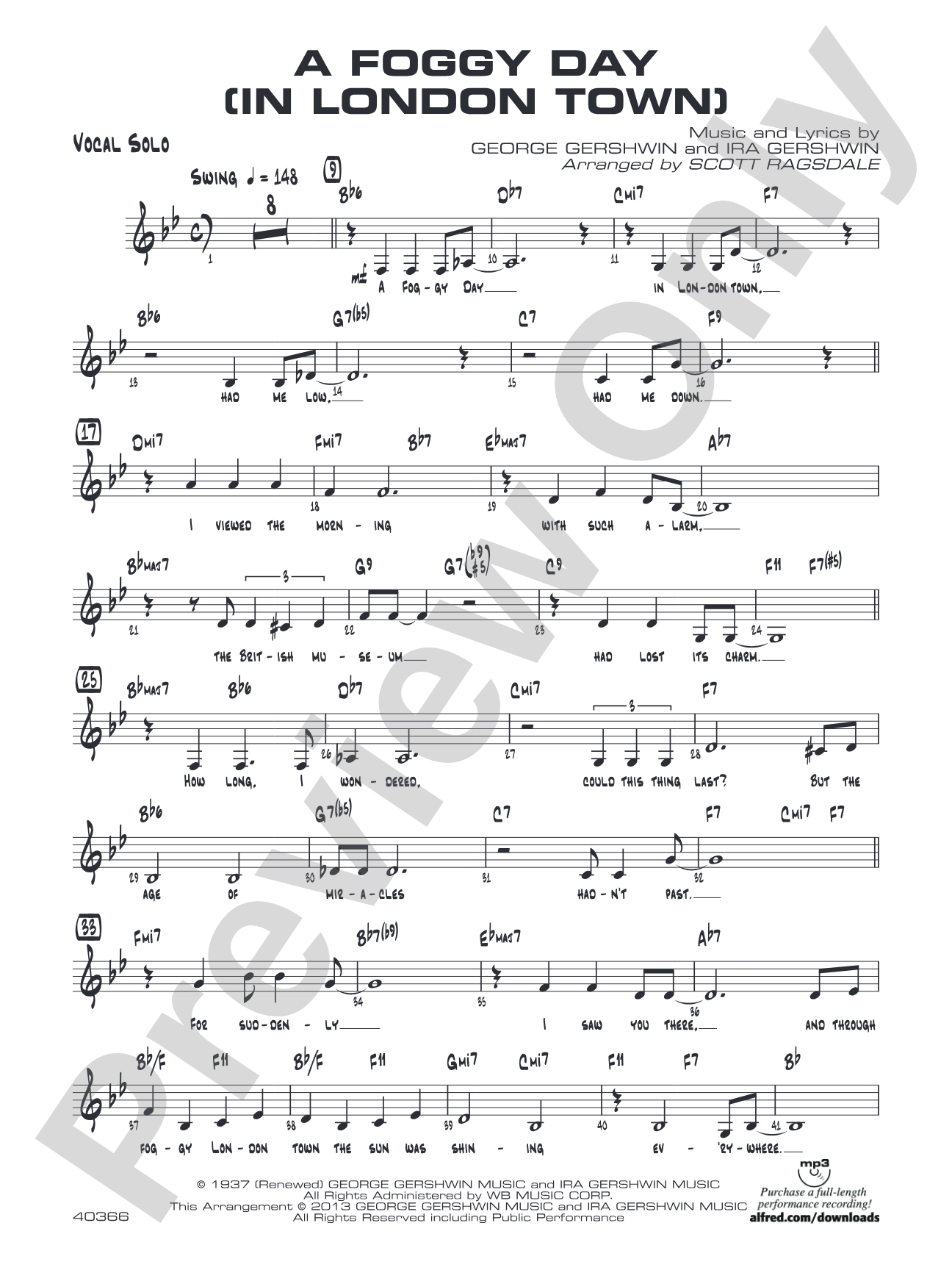
A Foggy Day: Vocal Solo

Music and lyrics by George Gershwin and Ira Gershwin / arr. Scott Ragsdale

Grade: 3 (Medium)

Item: 00-PC-0017260_VS

Digital Download
$3.00
Description
A swing chart styled after the Michael Bublé version, arranger Scott Ragsdale nailed it. At 148 BPM, in the key of B-flat modulating to C, the vocal range is from F below middle C to 3rd space C, treble clef. Lead trumpet range is to written A above the staff and there are optional solos instrumental parts for B-flat, E-flat and bass clef instrument in lieu of the vocal. Excellent chart. This title is available in MakeMusic Cloud.

Don't just read it, hear it, play along with it, and watch your students grow with it. In MakeMusic Cloud, A Foggy Day: Vocal Solo comes alive with professional accompaniment, adjustable tempo, and built-in practice tools that turn solo practice into real progress.

Sample Audio
0:00
0:00
Sample Video
Additional Details
Series: Jazz Vocal Series
Publisher: Alfred Music
Page Count: 90
SKU: 00-PC-0017260_VS

More about this title

About the Composer: George Gershwin

George Gershwin (1898-1937) revolutionized American music by synthesizing classical composition with jazz idioms at a time when the two worlds rarely intersected. His integration of blues harmonies, syncopated rhythms, and sophisticated orchestration created a distinctly American sound that elevated jazz from entertainment to concert hall legitimacy.

Why we love this

Ragsdale's arrangement captures the urbane sophistication of the Bublé recording while remaining accessible for Grade 3 ensembles. The optional instrumental solos transform this from a vocal feature into a full ensemble showcase, and the modulation from B-flat to C gives the chart momentum without overcomplicating the harmonic palette.

What to expect

A contemplative walk through urban fog, rendered in warm minor tonality and sophisticated jazz harmonies. The swing feel evokes intimate nightclub ambiance, with the modulation to C arriving like clearing skies and sharpening focus.

Who it's for

Jazz ensembles with a strong vocalist and advanced lead trumpet section will find this chart immediately playable. It suits programs needing a sophisticated standard that bridges vocal and instrumental features without demanding virtuosic soloists.

How to get the most out of it

  • Set the swing feel early in rehearsal by having the rhythm section lock in first. The 148 BPM tempo is brisk enough that rushed rhythms will derail the groove immediately.
  • Balance the vocal range strategically: the leap from low F to upper register passages requires a soloist with solid breath control and pitch security across more than two octaves.
  • If using instrumental solos in place of the vocal, ensure the lead trumpet player has facility above the staff. The written A requires clean articulation and consistent tone quality.
  • Protect the lyrical phrasing underneath the swing rhythms. This standard rewards singers who can deliver conversational melodic lines rather than formal operatic delivery.

How to use it

Program this as a first-set closer or concert centerpiece where you want to demonstrate the ensemble's comfort with swing repertoire and vocal artistry. It pairs well alongside other standards or serves as a palate cleanser between more energetic rock-influenced jazz charts.

Skills your students will build

  • Swing eighth-note subdivision and comping rhythms in a jazz context
  • Vocal improvisation and phrasing over jazz changes
  • Reading and executing key modulations (B-flat major to C major)
  • Lead trumpet range extension and endurance above the staff
  • Ensemble balance when featuring a vocal soloist against full instrumentation

You May Also Like