A Foggy Day (In London Town) Sheet Music Preview

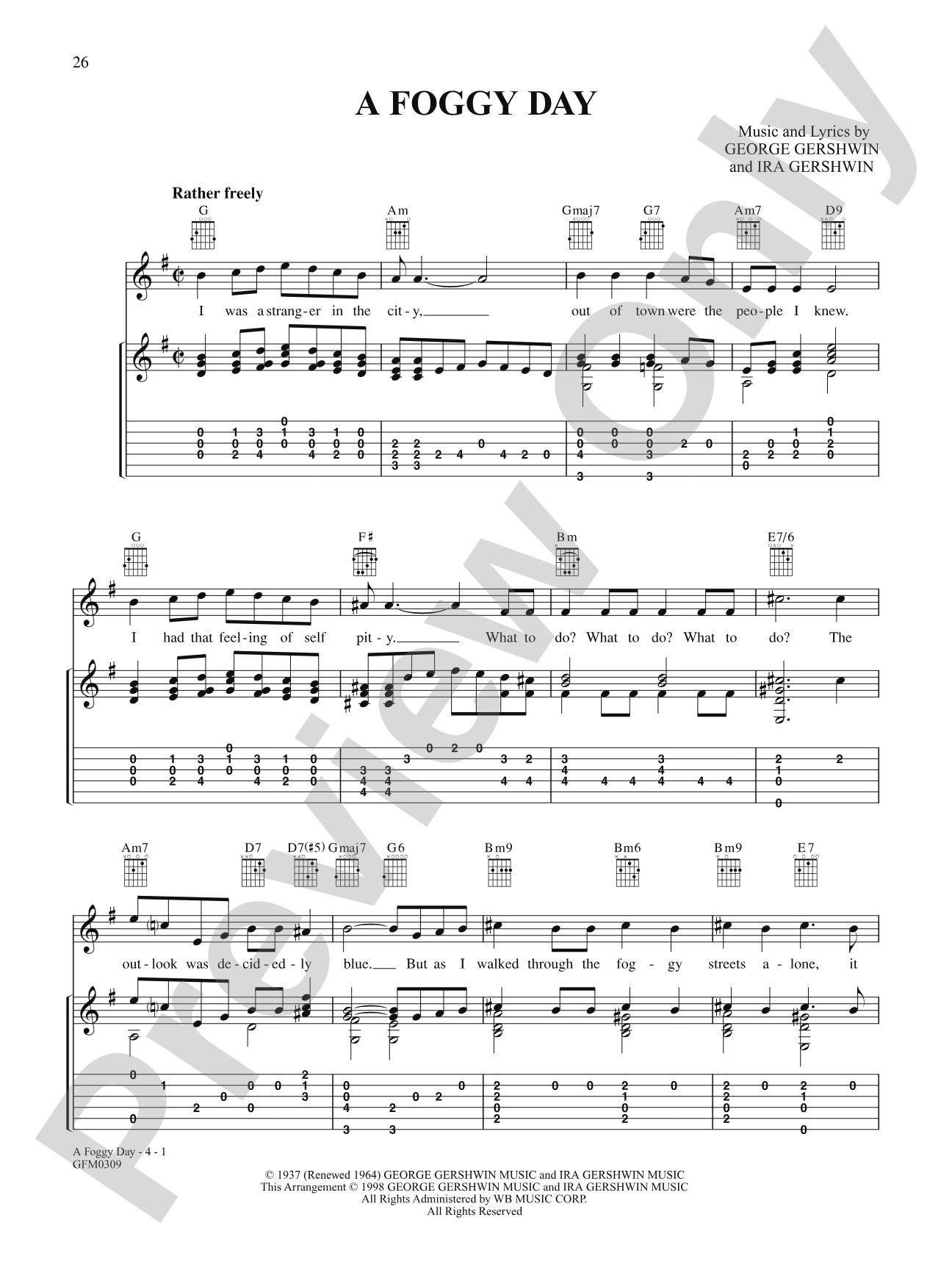
A Foggy Day (In London Town): Solo Guitar

Item: 00-PSG-000447

Digital Download
$4.99

One moment…

Description
Designed to be a complete home reference source for novice, intermediate, and pro musicians, each book in The Essential Guitar Library provides dozens of the greatest songs ever written in easy-to-use arrangements.

This book features over 40 easy guitar TAB arrangements of widely popular songs, from classic rock and familiar classical pieces to jazz standards, movie themes, and holiday favorites. It's an indispensable reference for any guitar player. Titles: American Idiot * Classical Gas * Hotel California * Old Time Rock & Roll * Smooth * More Than a Feeling * Take Five * Silent Night * The Pink Panther Theme * It Had to Be You * Clair de Lune * and others.

A Foggy Day (In London Town): Solo Guitar isn't in MakeMusic Cloud just yet...but it could be. Let us know you'd like to see it, and you'll help shape what comes next. In the meantime, start a free trial and dive into thousands of interactive titles your students can play along with today.

Sample Audio
No sample audio found.
Sample Video
Additional Details
Series: Essential Home Library Series
Publisher: Alfred Music
Page Count: 152
SKU: 00-PSG-000447

More about this title

About the Composer: Geroge & Ira Gershwin

George Gershwin (1898-1937) was an American composer who bridged popular song, jazz, and concert music with remarkable fluency. His melodies became the sound of American optimism in the 1920s and 1930s, from Broadway shows to symphonic works. His brother Ira Gershwin (1896-1983) was a lyricist of equal sophistication, crafting witty, rhythmically inventive lyrics that matched George's musical imagination. Together they created some of the most performed standards in American music, songs that remain central to jazz repertoire and popular culture.

Why we love this

This collection captures one of the most enduring jazz standards at a guitar-friendly level. "A Foggy Day" sits perfectly in the intermediate guitarist's hands, offering enough harmonic interest to keep the ear engaged without requiring advanced technique. The tune's elegant melody and accessible chord progression make it an ideal bridge between folk-style arrangements and real jazz language.

What to expect

The piece carries the wistful elegance of a London fogscape, with a gentle melancholy that never tips into sadness. The harmonic movement creates a sense of quiet sophistication and introspection, the kind of mood that makes you lean in and listen.

Who it's for

Guitar players at the early-intermediate level who are ready to explore jazz and American standards beyond basic folk and pop songs. This arrangement works for self-directed learners building a personal repertoire or for studio instructors seeking teachable pieces that introduce harmonic sophistication without overwhelming the player.

How to get the most out of it

  • Pay attention to the groove's underlying swing feel even though the notation is straight. Let the eighth notes breathe rather than clipping them short.
  • Shape the melody line with slight dynamic variation; the opening phrase needs room to float before the harmony enters.
  • Use the TAB as a guide but listen to how your fingerpicking or strumming pattern serves the phrasing. The notation suggests options, not rigid rules.
  • Practice the chord transitions cleanly and deliberately. This standard's charm depends on smooth voice leading, not speed.

How to use it

Feature this in a casual recital or open mic setting where jazz standards feel at home. It pairs naturally with other Great American Songbook selections and offers a distinct color from standard rock and pop repertoire. Solo guitarists benefit from having this in their permanent working library as an evergreen standard.

Skills your students will build

  • Reading TAB notation with standard notation as reference
  • Executing jazz chord voicings on fretboard (seventh chords, extensions)
  • Phrasing a simple melody over changing harmony
  • Translating swing feel into fingerpicking or strumming patterns
  • Understanding harmonic movement in a 32-bar jazz standard form

You May Also Like