
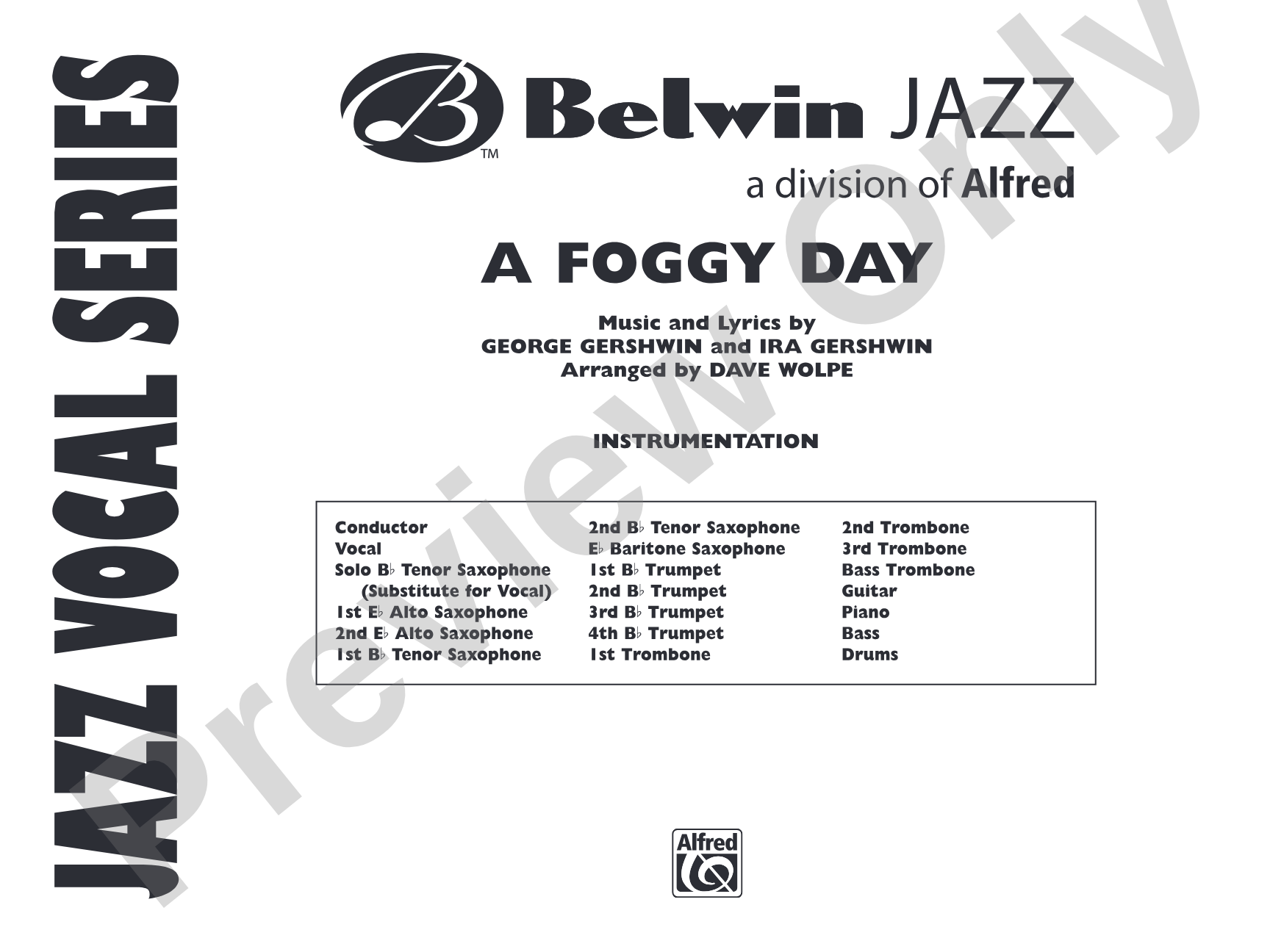
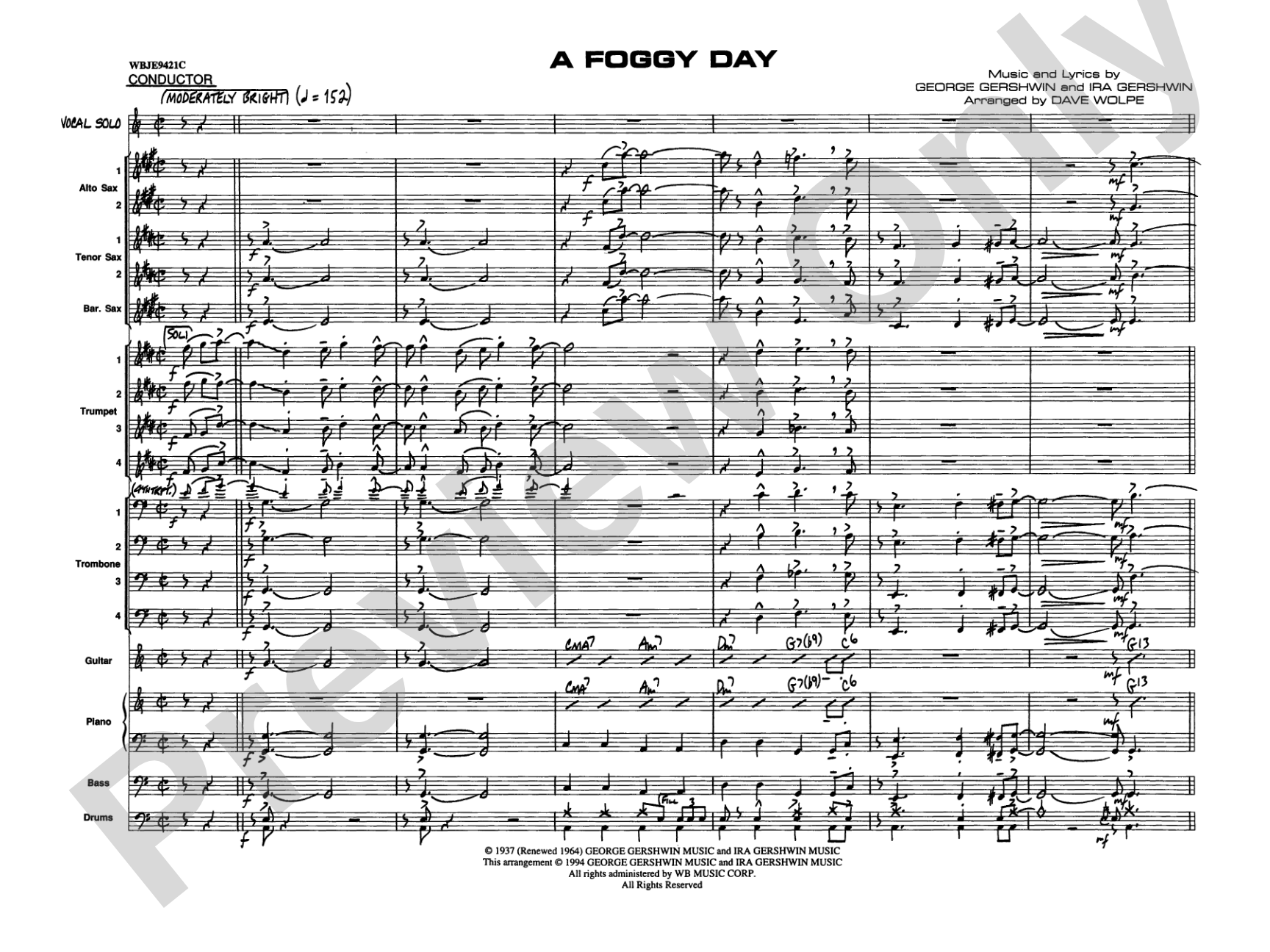
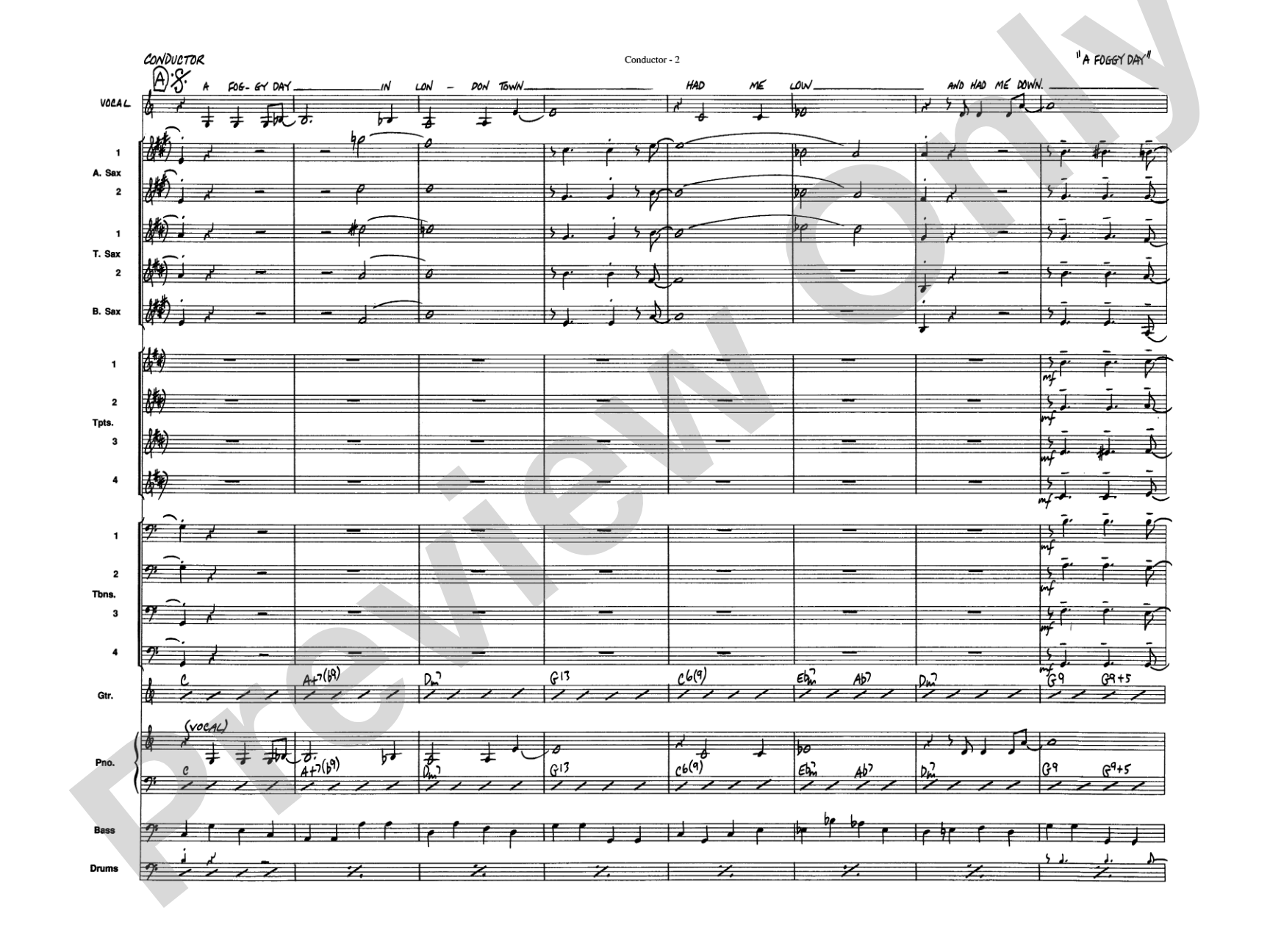
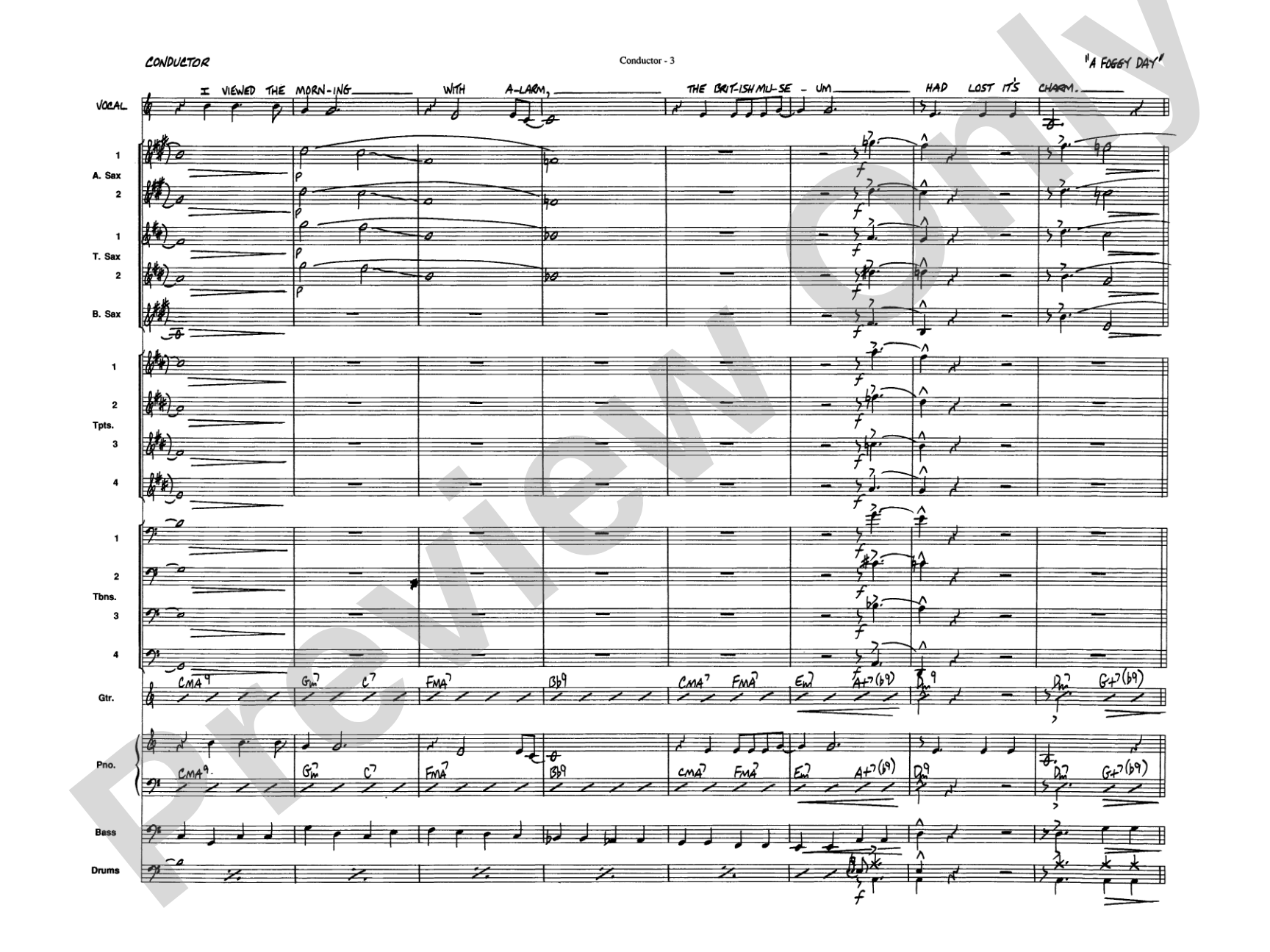
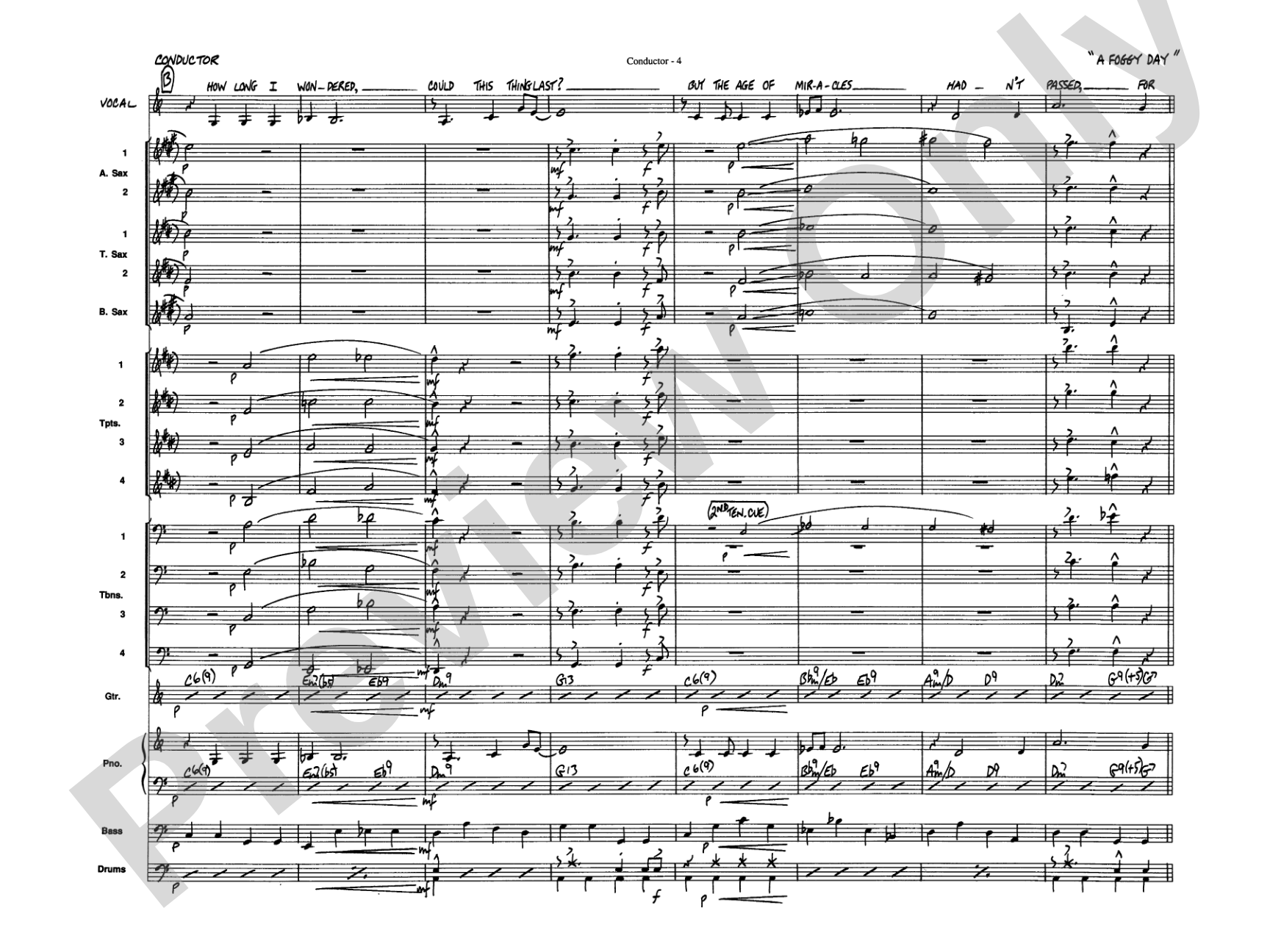
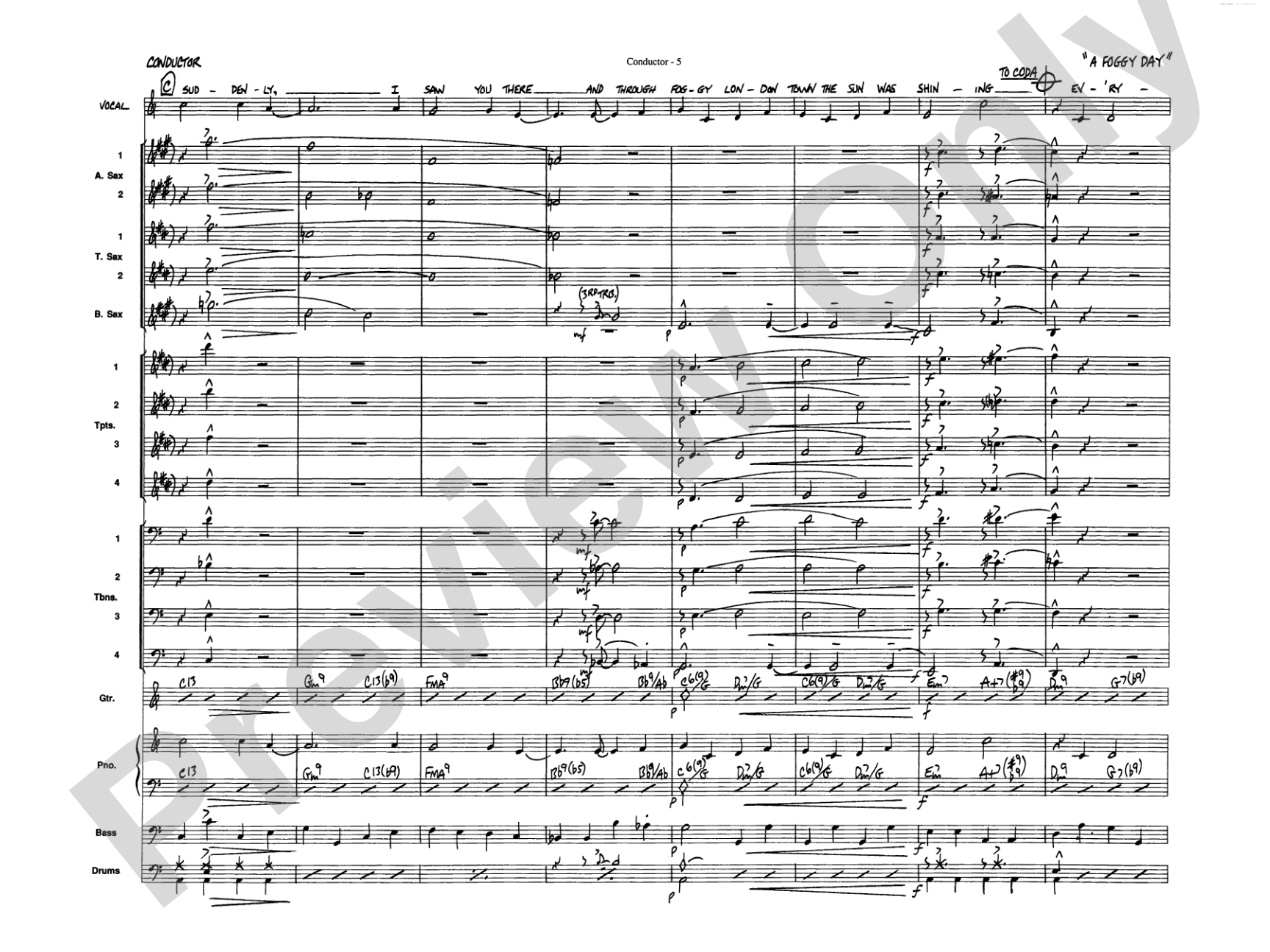
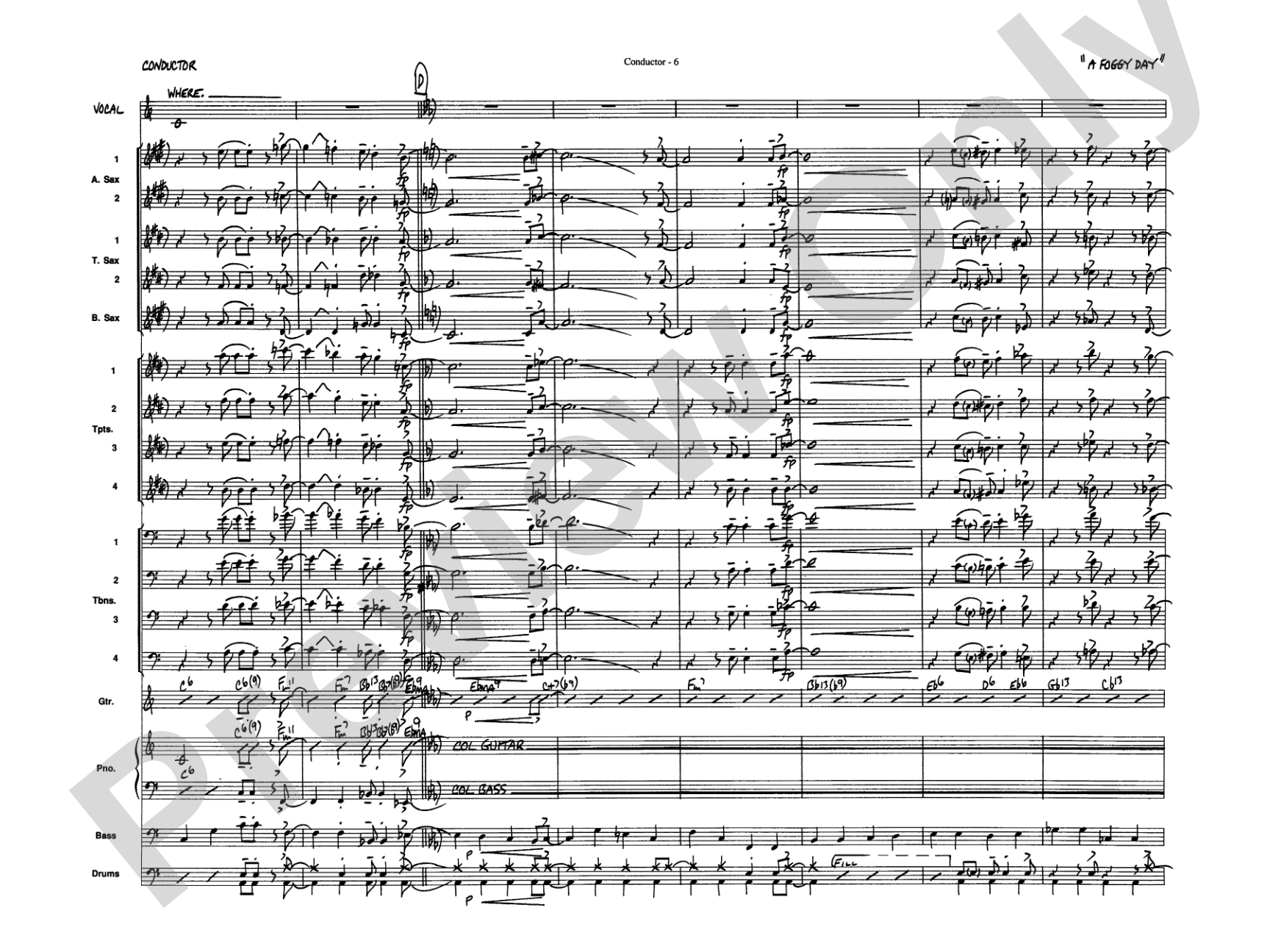
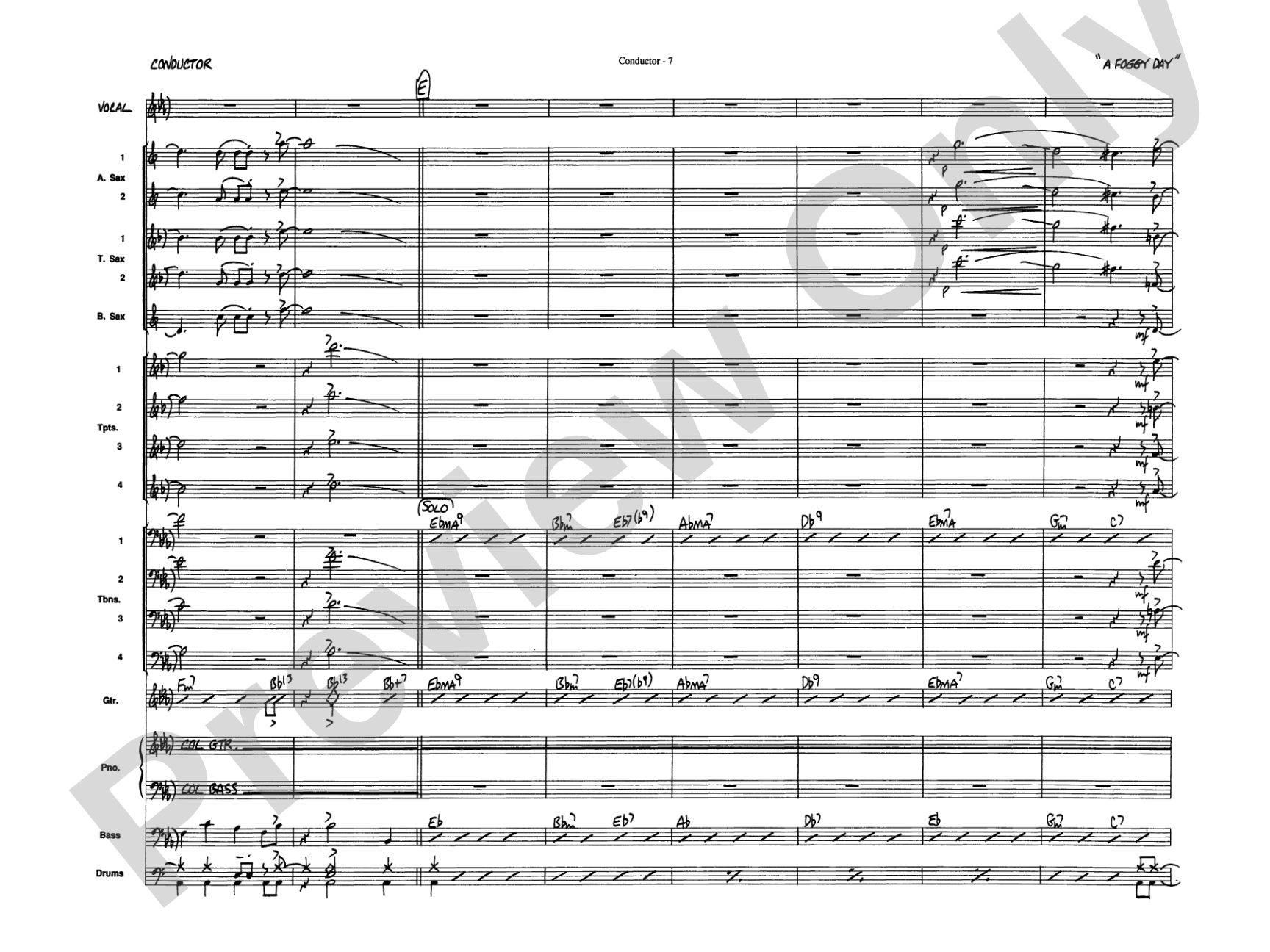
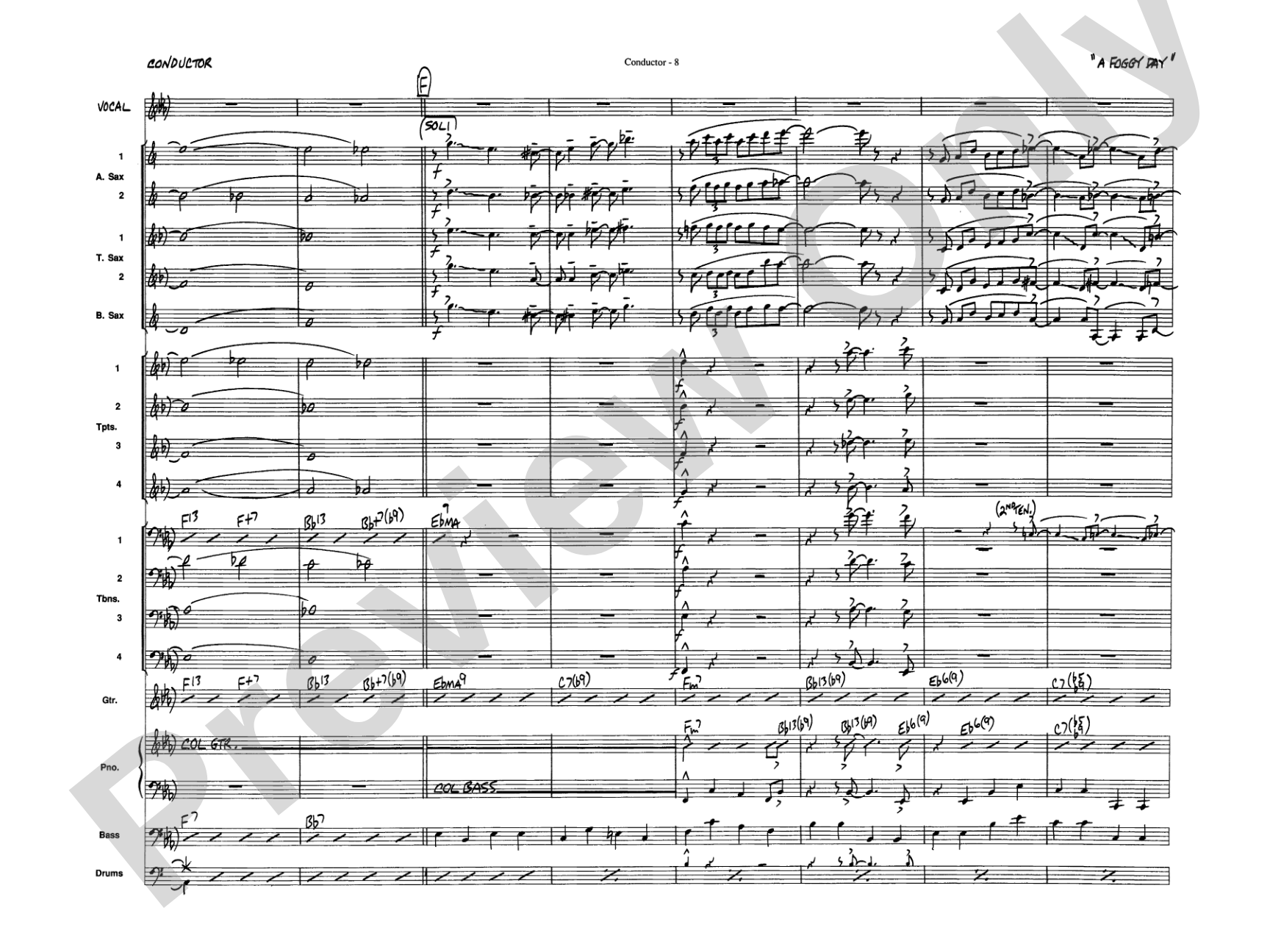
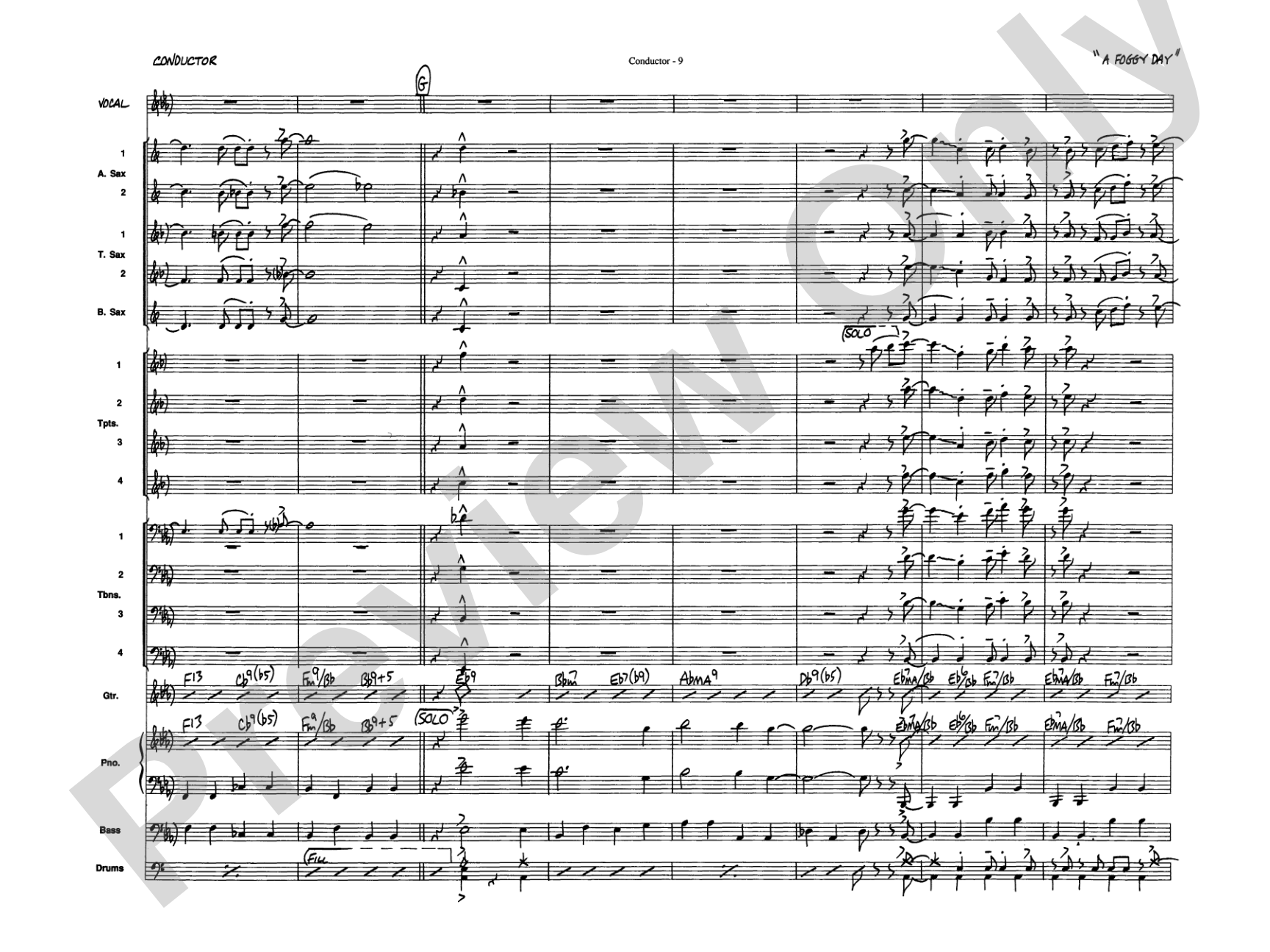
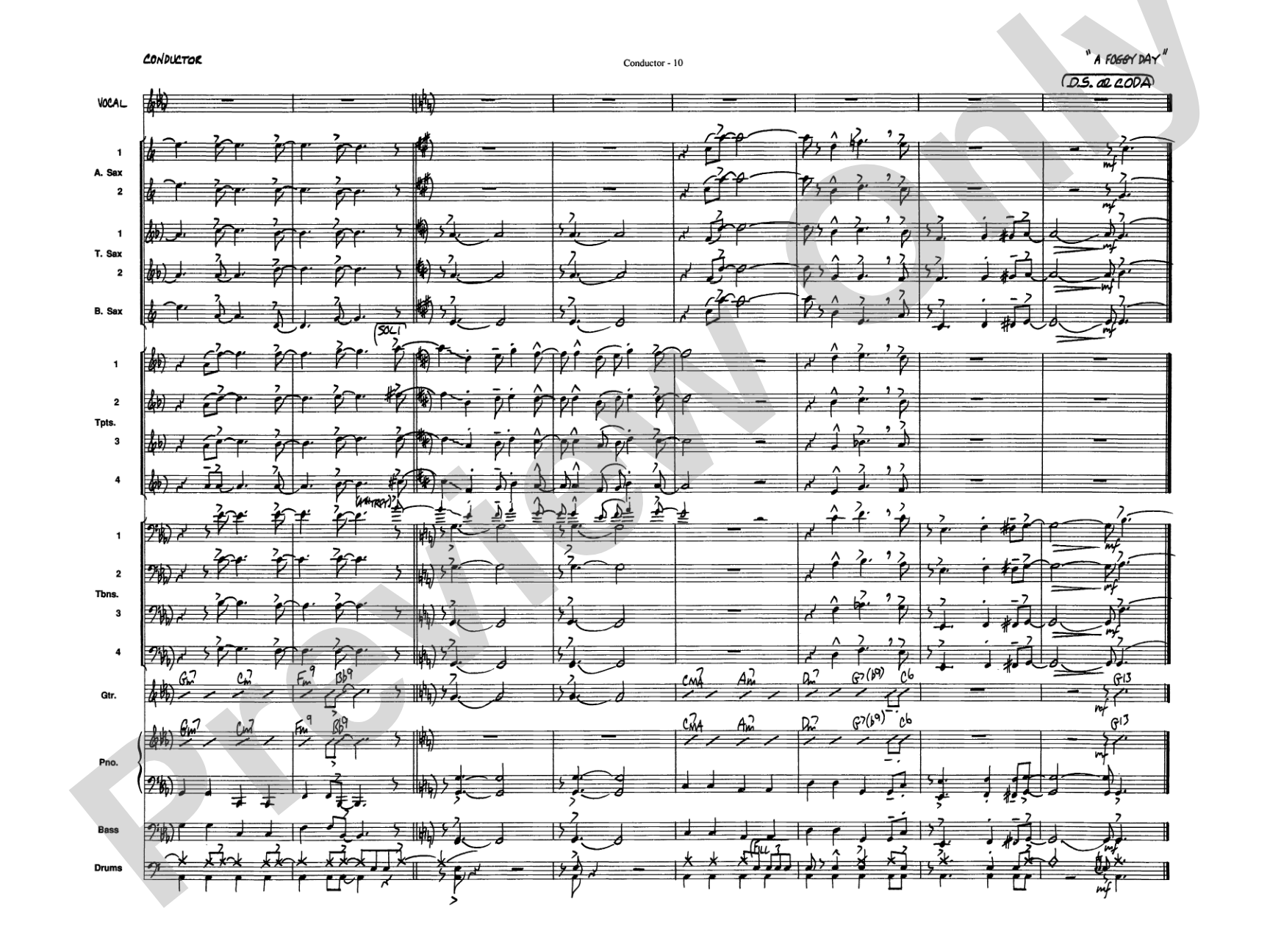
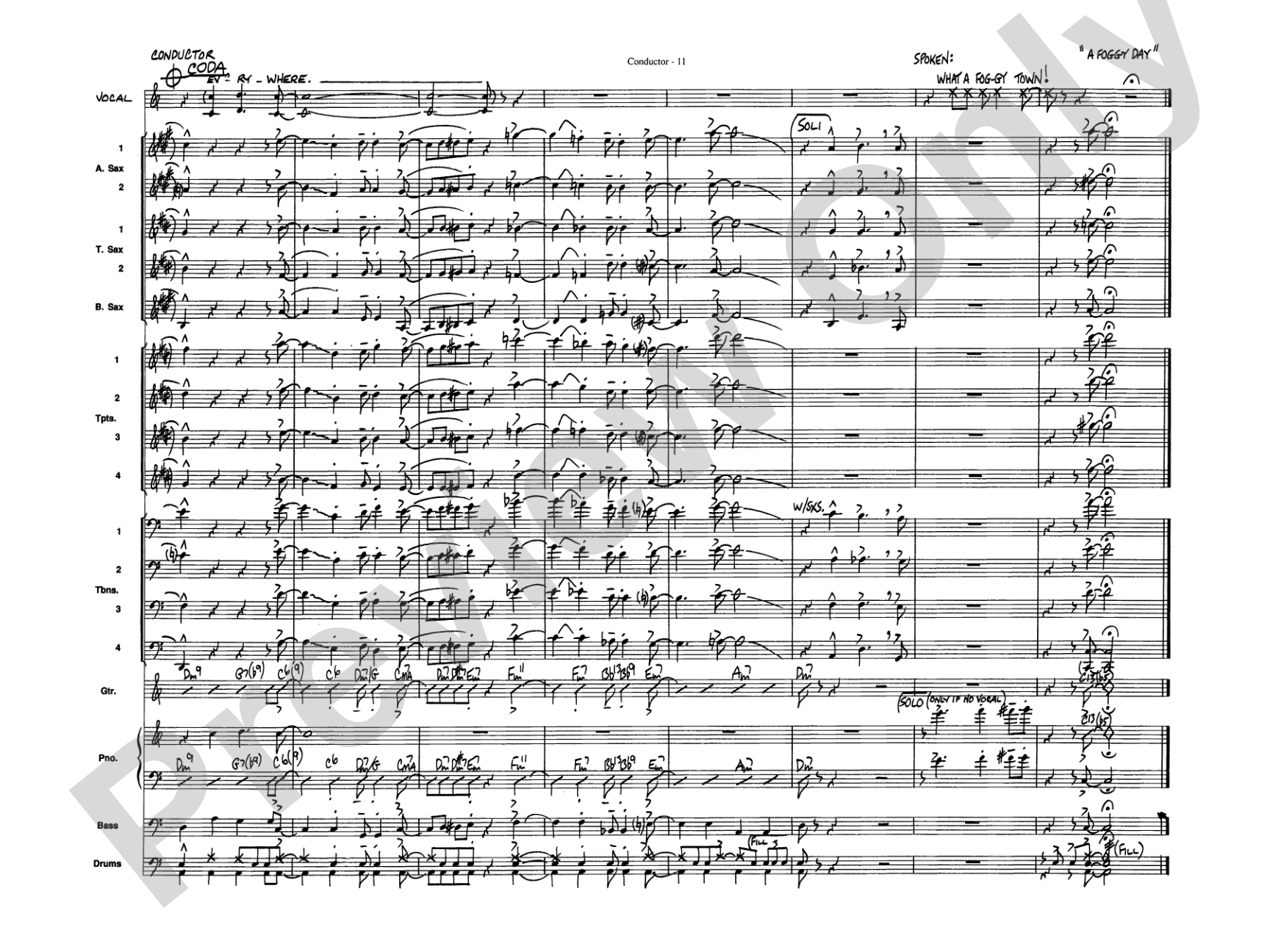

A Foggy Day: Vocal Solo with Jazz Ensemble Conductor Score & Parts
Vocal Feature - Key of C
By George Gershwin and Ira Gershwin / arr. Dave Wolpe
Grade: 4 (Medium Advanced / Difficult)
Item: 00-PK-0002671

$52.00
One moment…
Description
A FOGGY DAY in London town . . . and off it goes! This is a perfect song for your vocalist. The backgrounds are non-intrusive and support the singer with great musical lines. The band gets a chance to 'blow' also, and then it's back to the vocalist for the remainder of the song. Perfect for any concert!


Don't just read it, hear it, play along with it, and watch your students grow with it. In MakeMusic Cloud, A Foggy Day: Vocal Solo with Jazz Ensemble Conductor Score & Parts comes alive with professional accompaniment, adjustable tempo, and built-in practice tools that turn solo practice into real progress.
Open in the Player
Jump straight in and assign it today.
Start Your Free Trial
Open this title and explore the full library in minutes.
Sample Audio
No sample audio found.
Sample Video
No sample videos found.
Additional Details
Series:
Jazz Vocal Series
Publisher:
Alfred Music
Page Count:
76
SKU:
00-PK-0002671
More about this title
About the Composer: George Gershwin
George Gershwin (1898–1937) bridged classical composition and popular song with an ease few composers have matched. His ability to write melodies that stick in the ear while embedding them in sophisticated harmonic language made him a defining voice of American music in the early twentieth century. For music educators, Gershwin's output offers a gateway to teaching jazz vocabulary, American vernacular, and compositional craft all at once.
Why we love this
Dave Wolpe's arrangement respects the song's essential charm while giving your jazz ensemble real work to do. The band's interludes are musical and purposeful rather than mere filler, and the vocalist gets a genuine partner rather than background noise. This is the kind of arrangement that makes both soloist and ensemble sound better than they are.
What to expect
Rainy London streets dissolve into warm, witty conversation between voice and ensemble. The melody has the elegance of a golden-age song standard, but Wolpe's harmonies and band writing give it a contemporary jazz sophistication. There's charm here, but never sentimentality.
Who it's for
Jazz ensemble directors working with a strong vocalist who needs a feature that showcases both classical song interpretation and jazz sensibility. This works equally well for high school jazz programs with ensemble experience and community college or semi-professional groups seeking a standard that respects the original.
How to get the most out of it
- Have your vocalist listen closely to the band's comping during verses. The piano and guitar lines are written to anticipate and complement the phrasing, not fight against it.
- Balance the ensemble passages carefully. When the band 'blows,' they should feel relaxed and conversational, not like they're overpowering the tune's inherent sophistication.
- Rehearse the band's written parts as melodic lines with intention, not as background texture. Every instrument has a voice in this arrangement.
- Shape the vocalist's entrance after the band's solo section. This is a moment to reclaim intimacy and focus in the room.
How to use it
Pair this with other Gershwin or Rodgers and Hart standards to build a concert around American songbook classics. It works beautifully in the second half of a concert after more up-tempo ensemble feature tunes, or as the anchor of a vocal showcase program. The 76-page package suggests substantial ensemble participation, making it ideal for a full concert feature rather than a short novelty number.
Skills your students will build
- Balancing soloist and ensemble blend in jazz contexts
- Reading and performing jazz articulation and phrasing conventions
- Accompanying a vocalist with sensitivity and musical initiative
- Interpreting a standard arrangement while maintaining flexibility for improvisation
- Conducting coordination between written sections and solo passages