A Fiddler's Fancy: Viola Sheet Music Preview

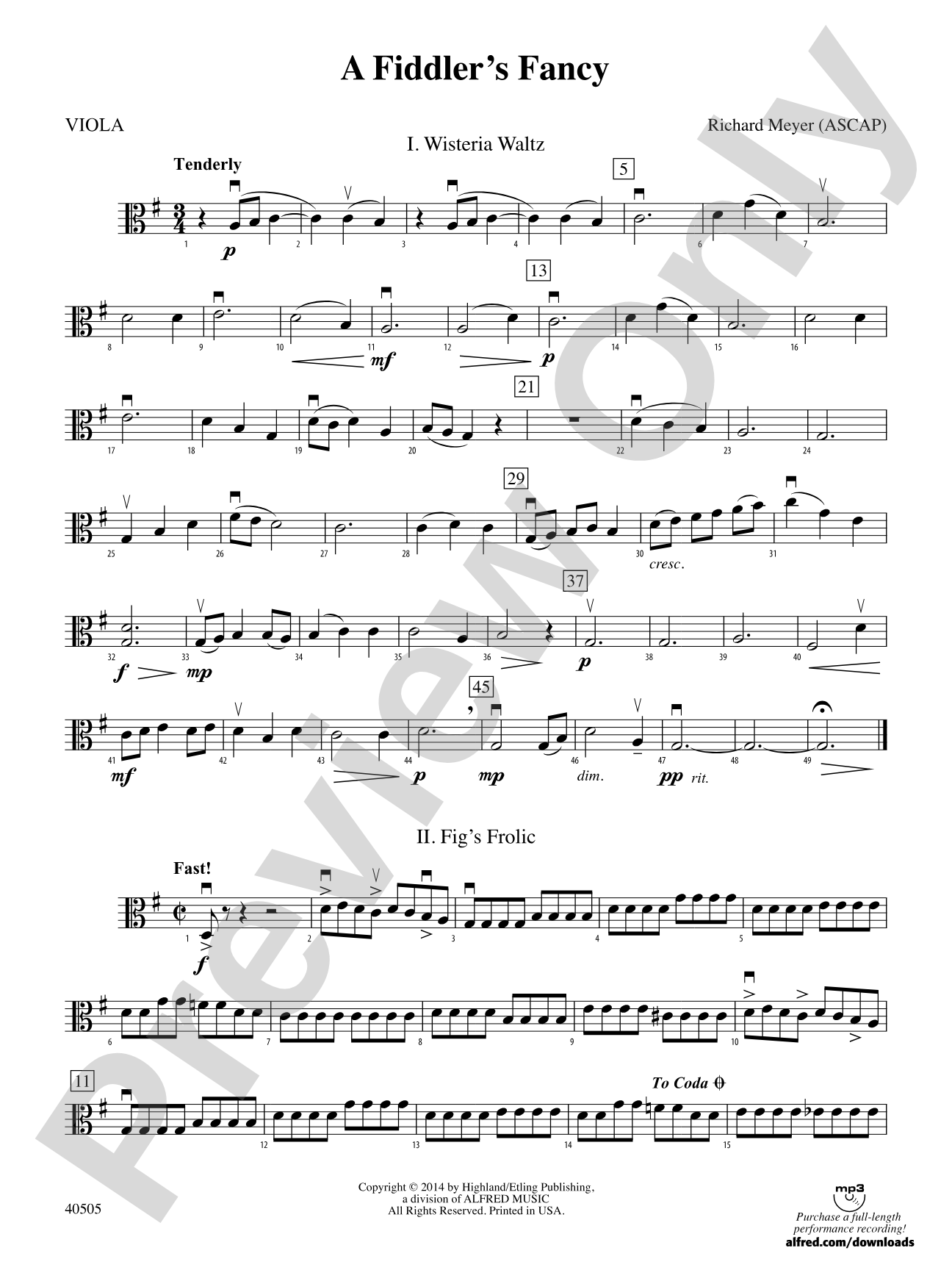
A Fiddler's Fancy: Viola

By Richard Meyer

Grade: 2.5

Item: 00-PC-0016240_VA1

Digital Download
$5.99
Description
Full of educational opportunities for every section, this two-movement work has an old-fashioned folk music sound. "Wisteria Waltz" is lush and legato while "Fig's Frolic" is patterned after the energy of cute but hungry little dog. Two contrasting gems! (3:30) This title is available in MakeMusic Cloud.

Don't just read it, hear it, play along with it, and watch your students grow with it. In MakeMusic Cloud, A Fiddler's Fancy: Viola comes alive with professional accompaniment, adjustable tempo, and built-in practice tools that turn solo practice into real progress.

Sample Audio
0:00
0:00
Sample Video
Additional Details
Series: Highland/Etling String Orchestra
Publisher: Alfred Music
Page Count: 124
SKU: 00-PC-0016240_VA1

More about this title

About the Composer: Richard Meyer

Richard Meyer

Richard Meyer built his reputation over 35 years as a string educator at the elementary, middle, and high school levels in California public schools. At Oak Avenue Intermediate School in Temple City, he grew the orchestra program from 29 students to 200 while simultaneously directing the city's elementary string initiative. His "Giving Bach" program, launched in 2009, became nationally recognized for using interactive concerts to reach special needs and underserved students across Southern California.

Beyond the classroom, Meyer has guest-conducted All-State and Honor Orchestras across multiple states and led the Pasadena Youth Symphony for 16 years, taking them on international performances to Vienna, Australia, and Canada. As a composer and arranger, he has published over 190 works and spent 16 years as string editor for Alfred Publishing Company. He co-authored the String Explorer Series and Sight-read It for Strings, establishing himself as both a clinician and educational content creator.

Why we love this

Meyer writes with deep understanding of what intermediate string orchestras need to sound polished and feel rewarded. The two movements offer genuine contrasts without abandoning musicality; "Wisteria Waltz" gives players room to sing through sustained lines while "Fig's Frolic" channels playful energy in a way that builds ensemble confidence rather than technical anxiety.

What to expect

"Wisteria Waltz" wraps you in warm, nostalgic harmony reminiscent of a slower folk waltz, with rich legato writing that lets every section contribute to a lush sound. "Fig's Frolic" shifts gears into bright, bouncing energy that captures the spirit of a playful creature with genuine charm rather than cloying cuteness.

Who it's for

String orchestras at the intermediate level (grades 5-8 or early high school) will find both movements within secure reach while still offering genuine musical payoff. Directors programming light concert repertoire, festival performances, or pops concerts benefit from a work that sounds approachable but maintains artistic integrity.

How to get the most out of it

  • Shape the legato passages in "Wisteria Waltz" with gentle dynamic swells rather than rigid, unchanging volume; let the lush harmony breathing lift the lines naturally.
  • In "Fig's Frolic," lock the articulation pattern across all sections so the playful character stays unified; inconsistent tonguing will muddy the energy rather than sharpen it.
  • Use the contrasting tempos between movements to reset both the players' mindset and the audience's attention; allow genuine silence between them.
  • Balance the inner voices carefully in the waltz to let the folk melody shine without drowning the harmonic foundation.

How to use it

This two-movement work pairs naturally with other folk-inspired or Americana selections on a concert, offering tonal and stylistic relief between heavier works. The modest performance duration (3:30) makes it ideal for festival programs or the lighter half of a mixed concert where you need both substance and approachability.

Skills your students will build

  • Sustained legato playing with consistent vibrato
  • Folk-style articulation and phrasing conventions
  • Balance and blend across multiple voice parts
  • Sectional coordination at tempo changes and movement transitions
  • Dynamic shaping and control in slower passages

You May Also Like