
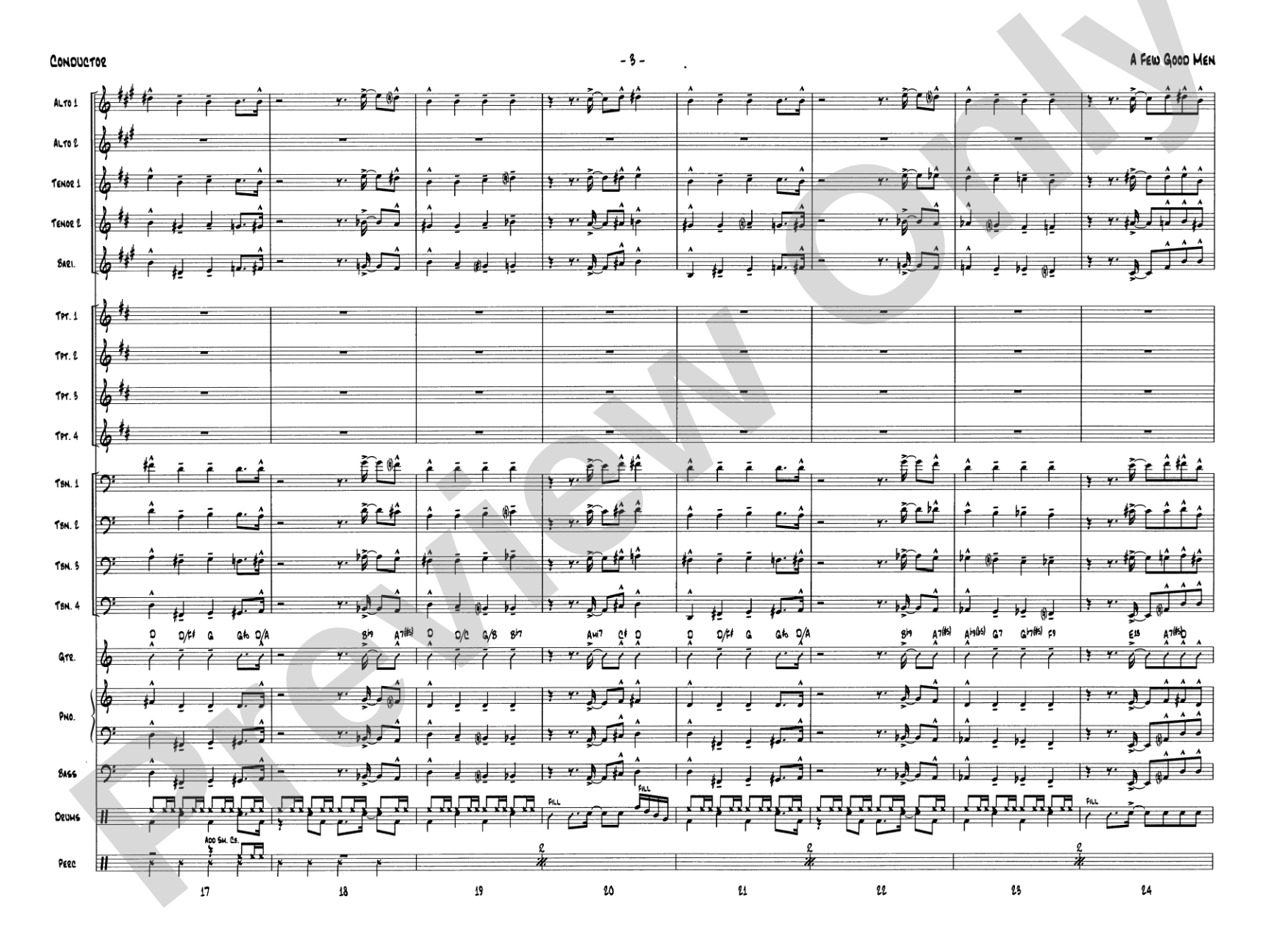
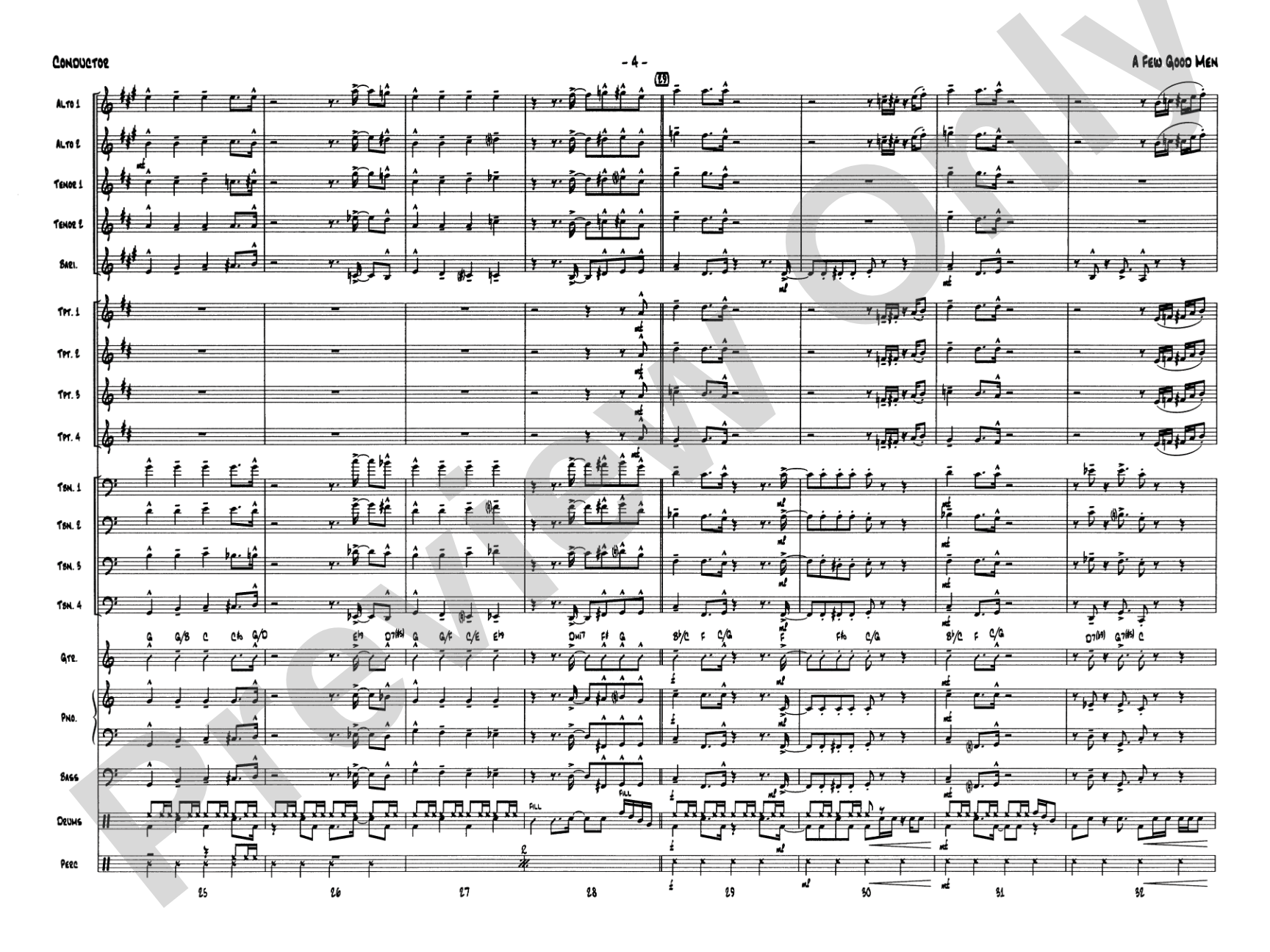
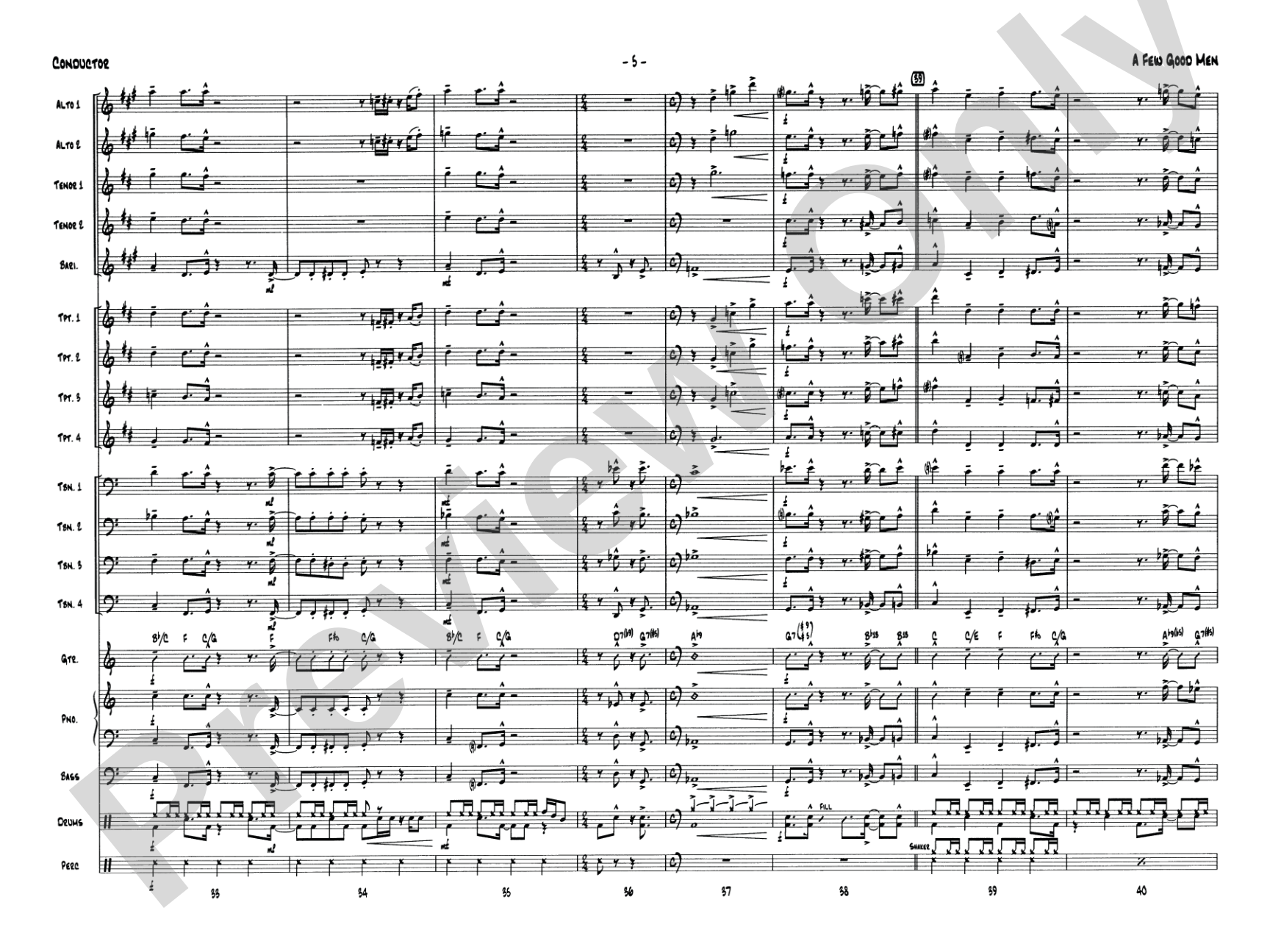
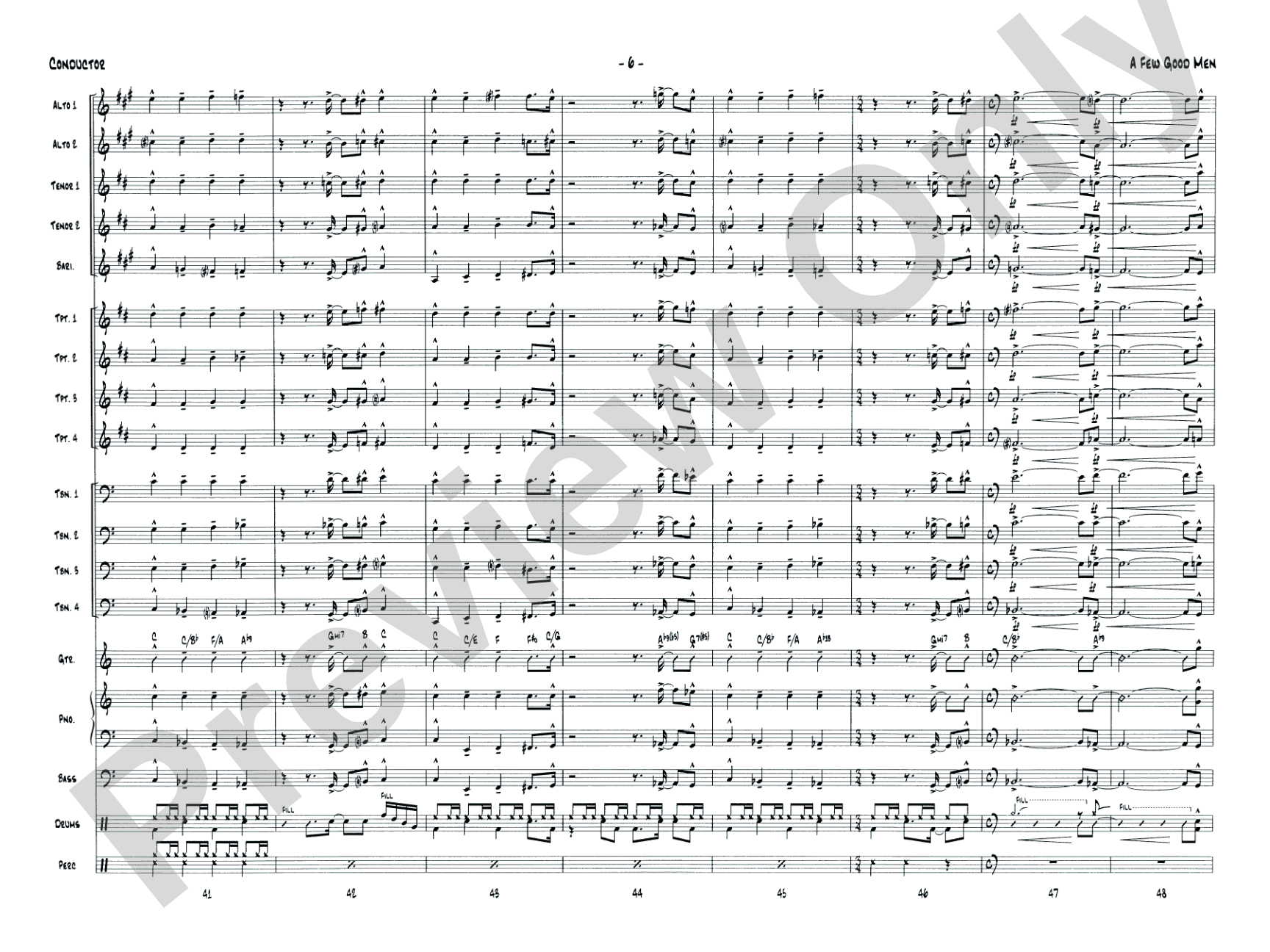
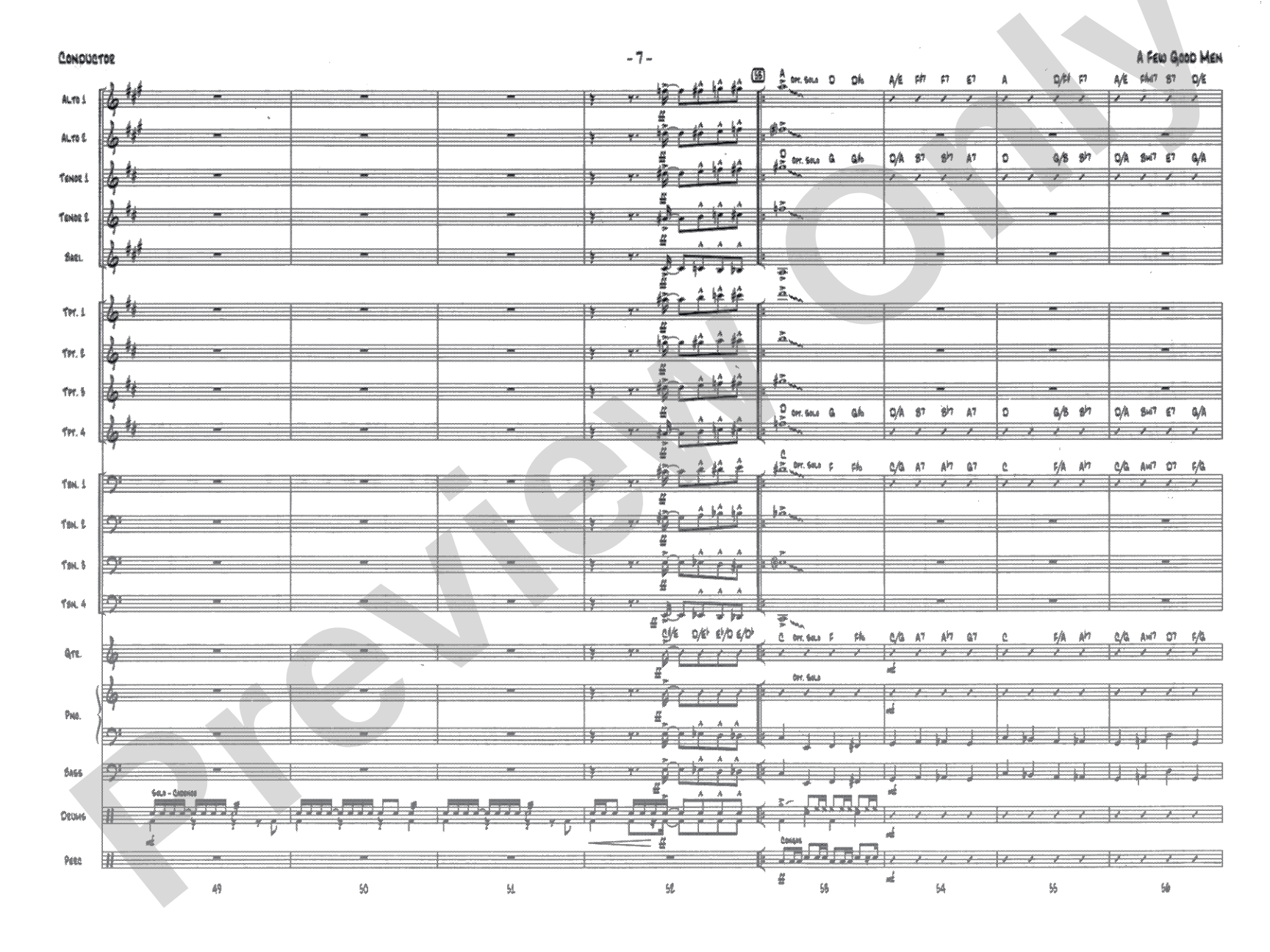
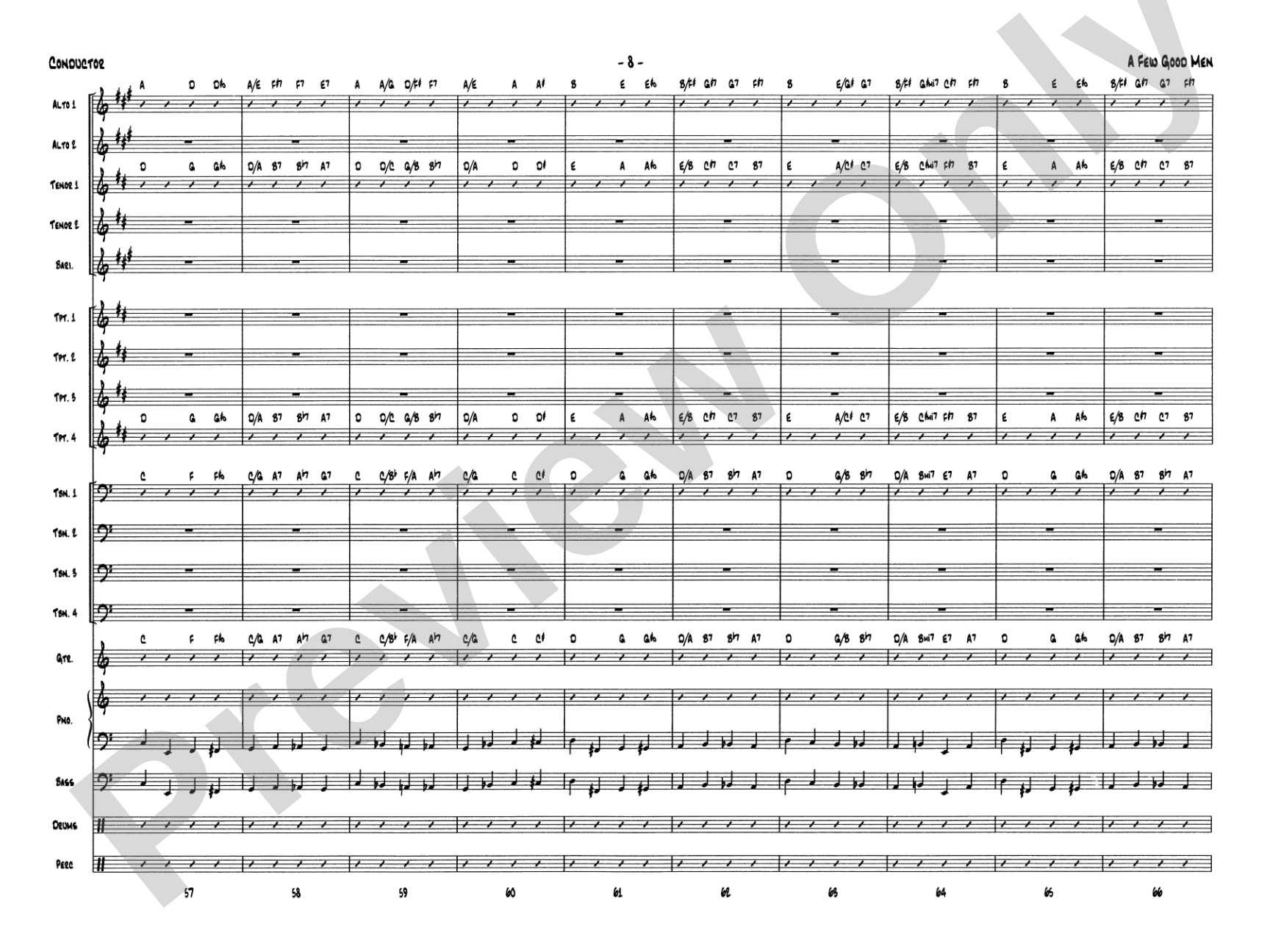
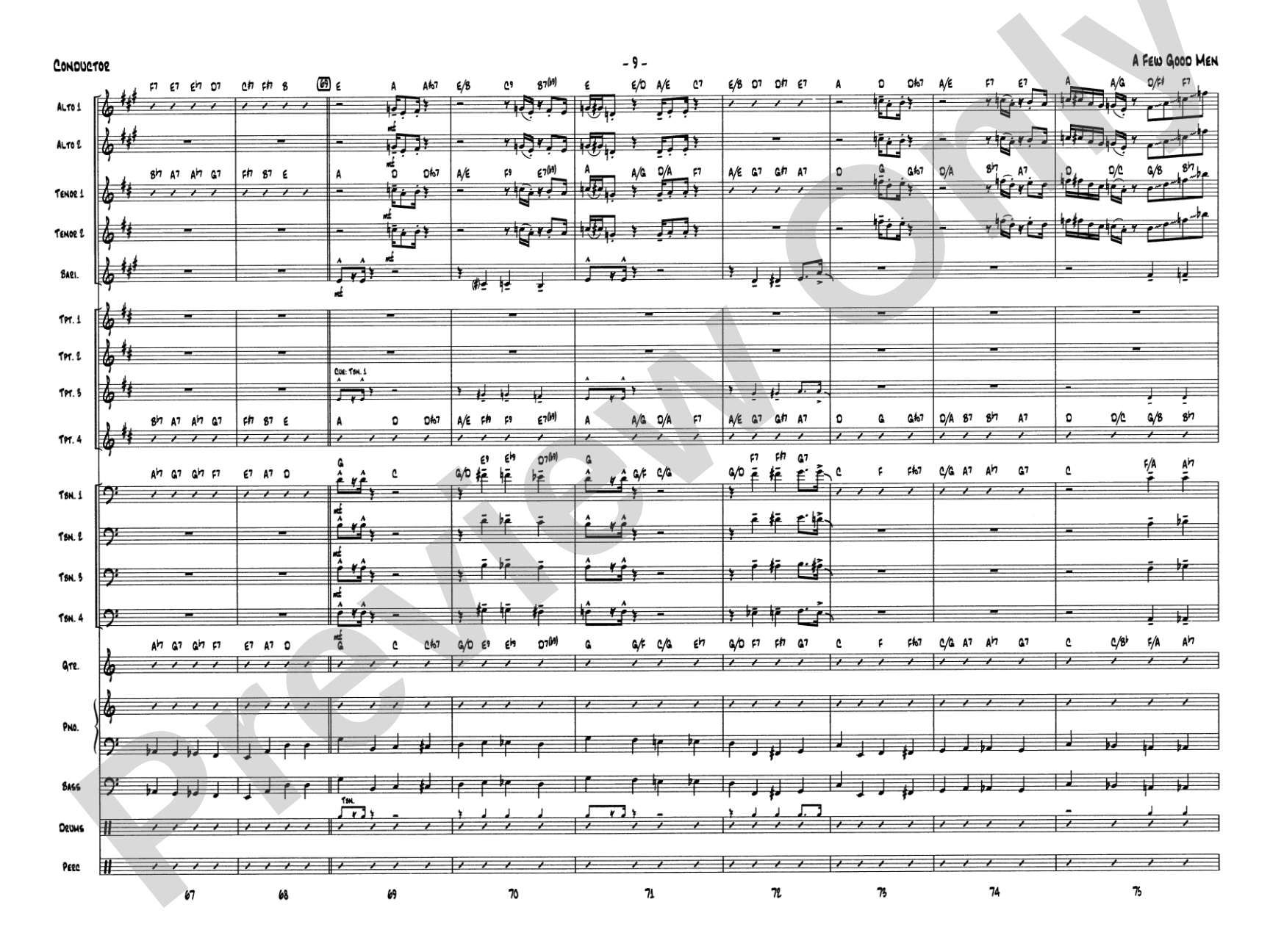
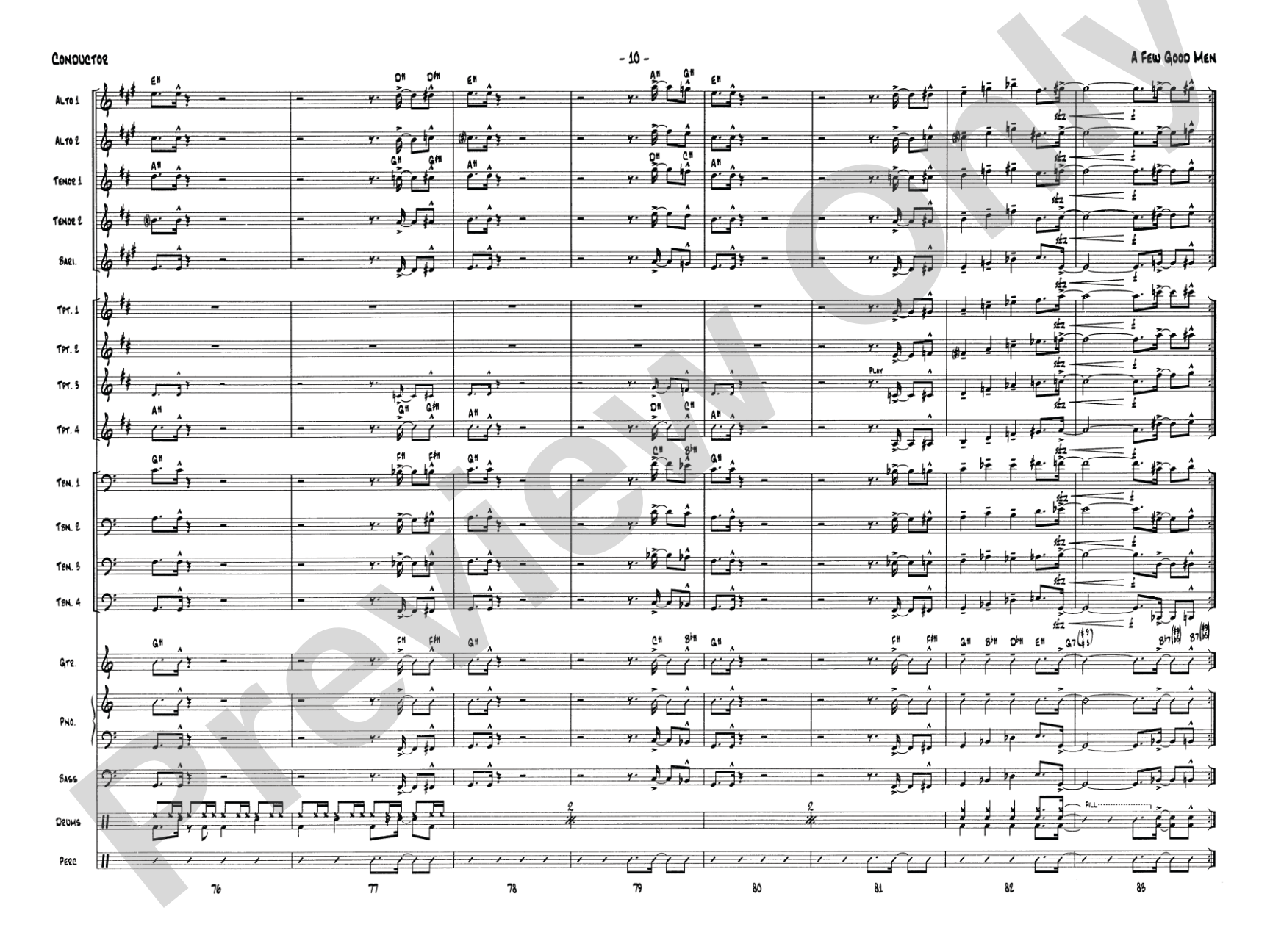
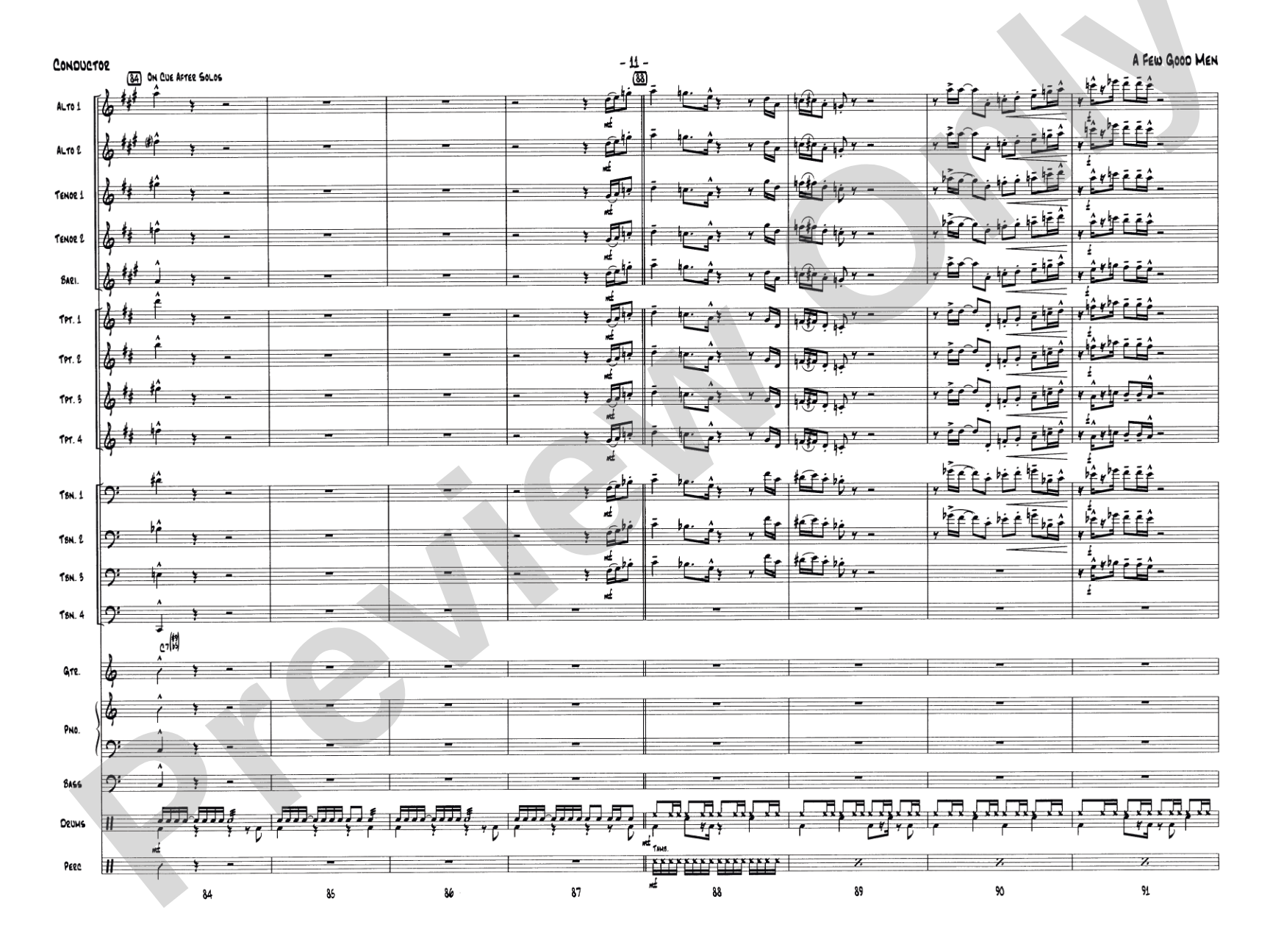
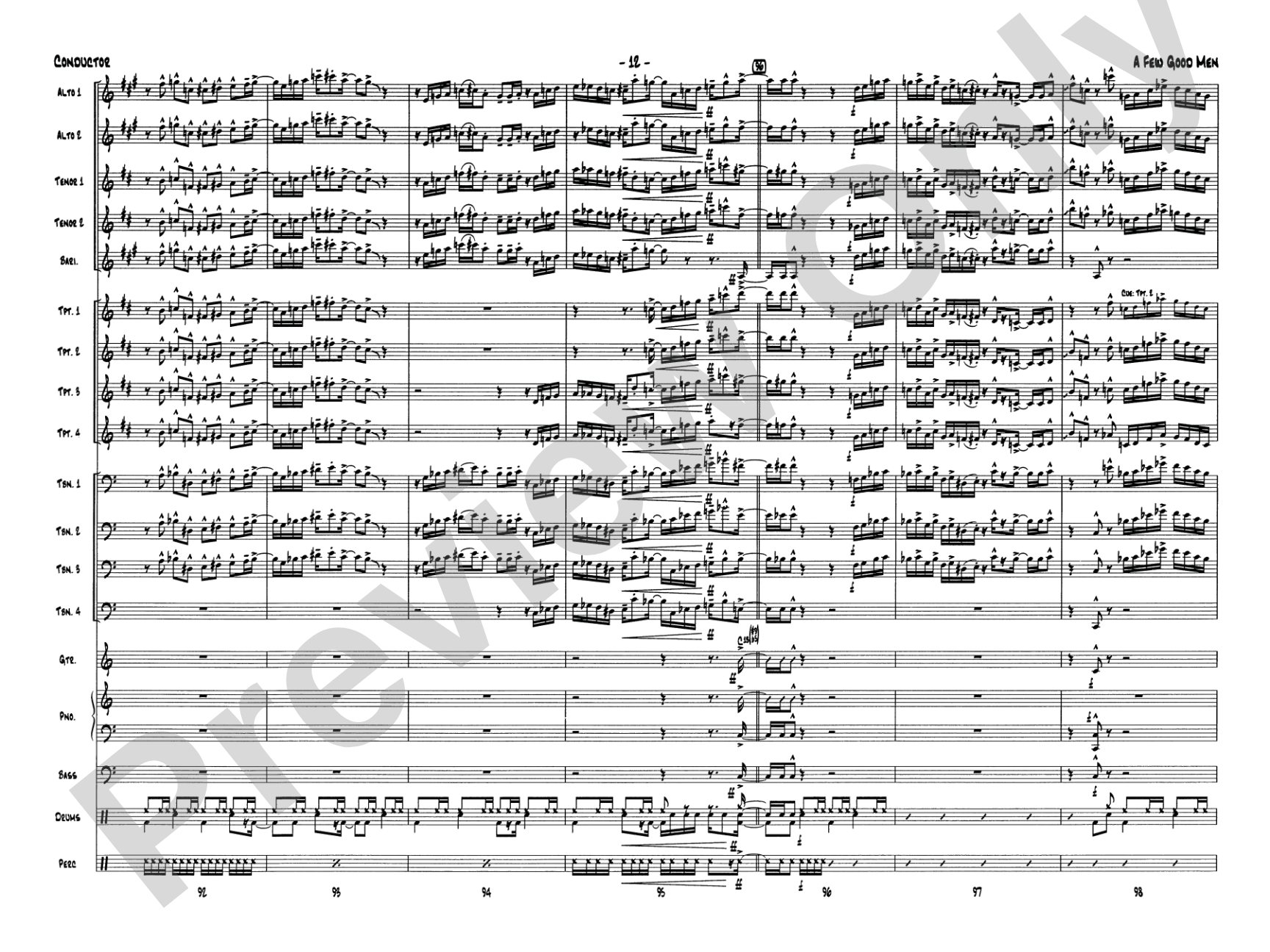
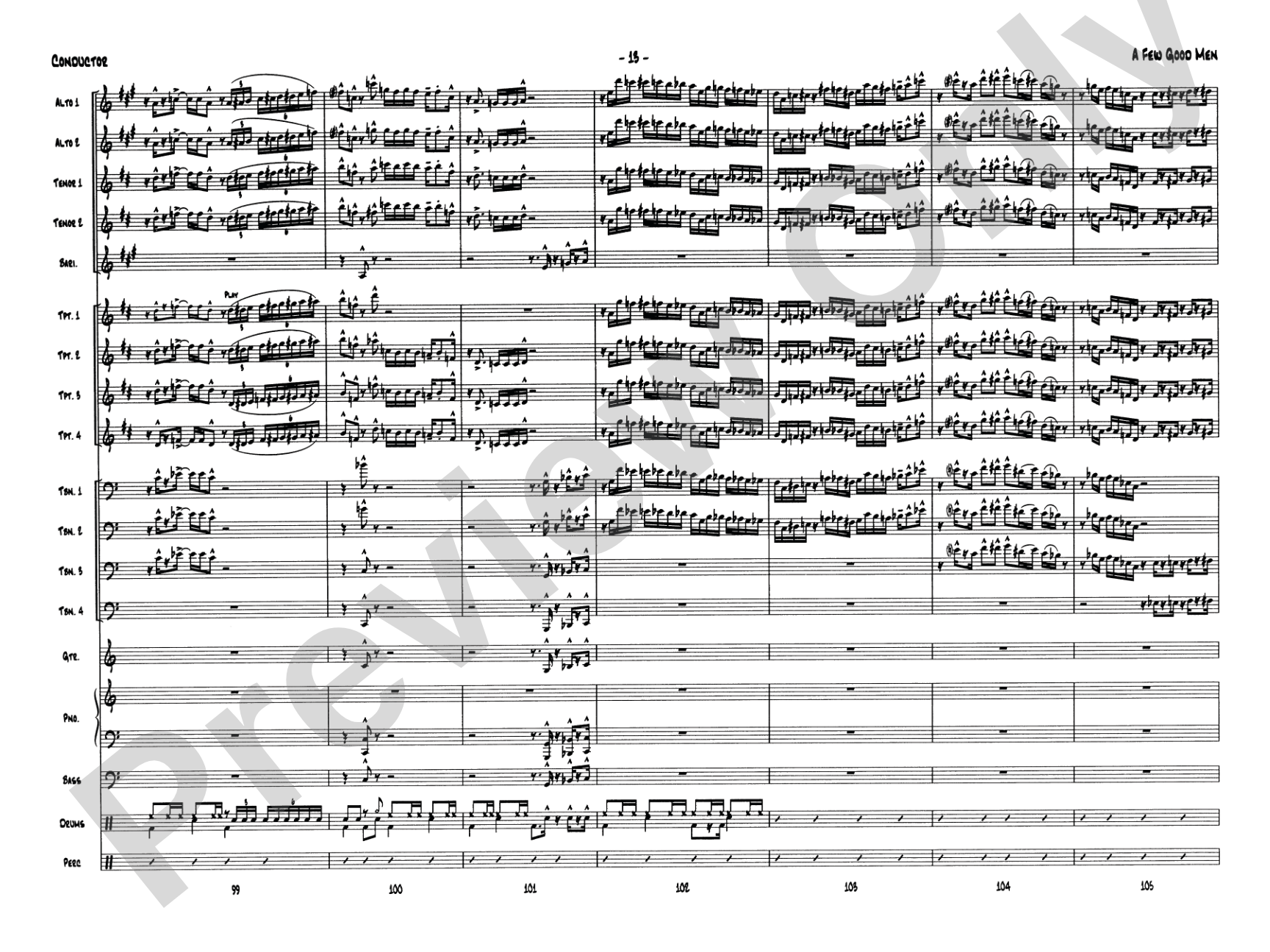
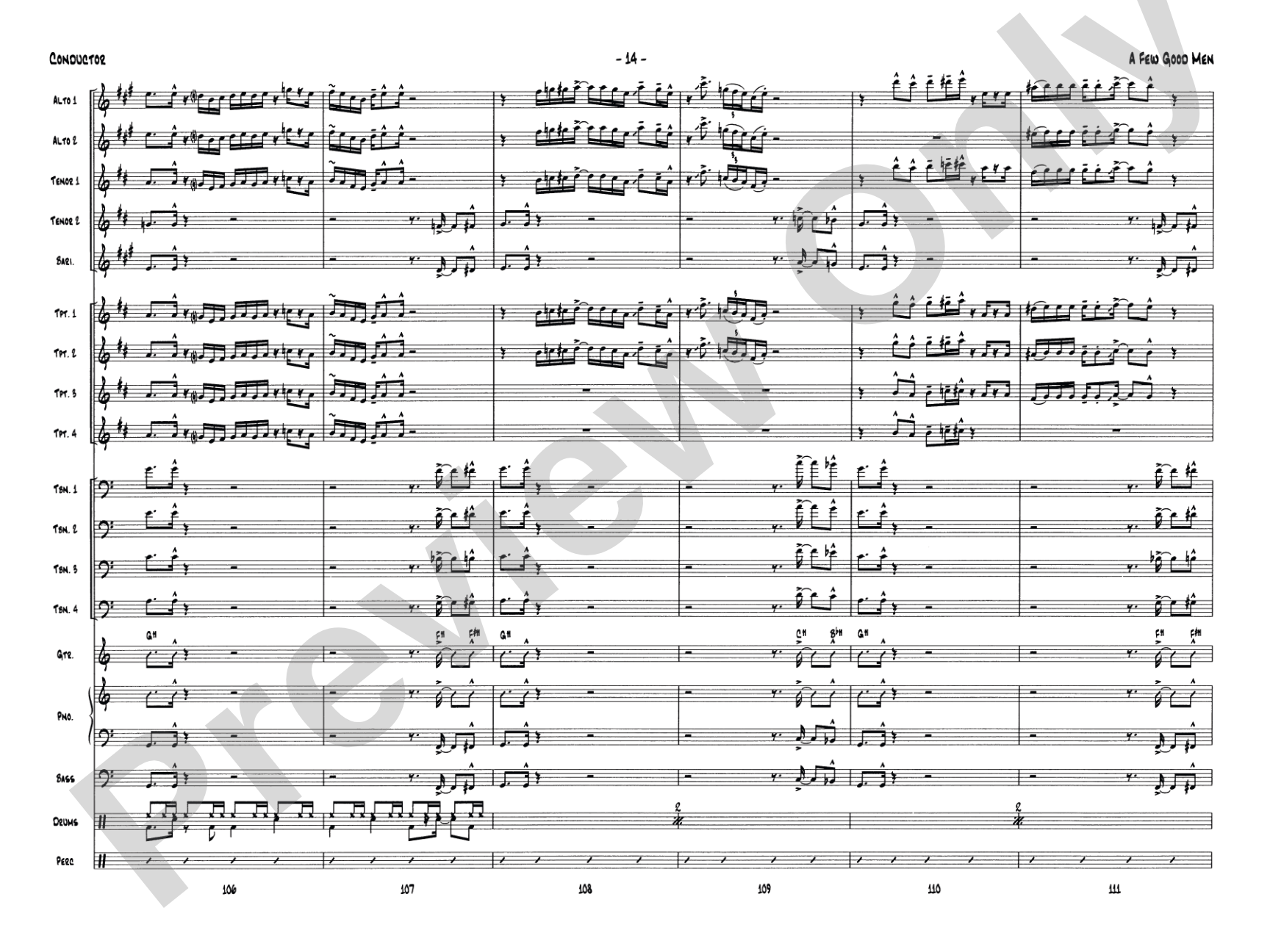
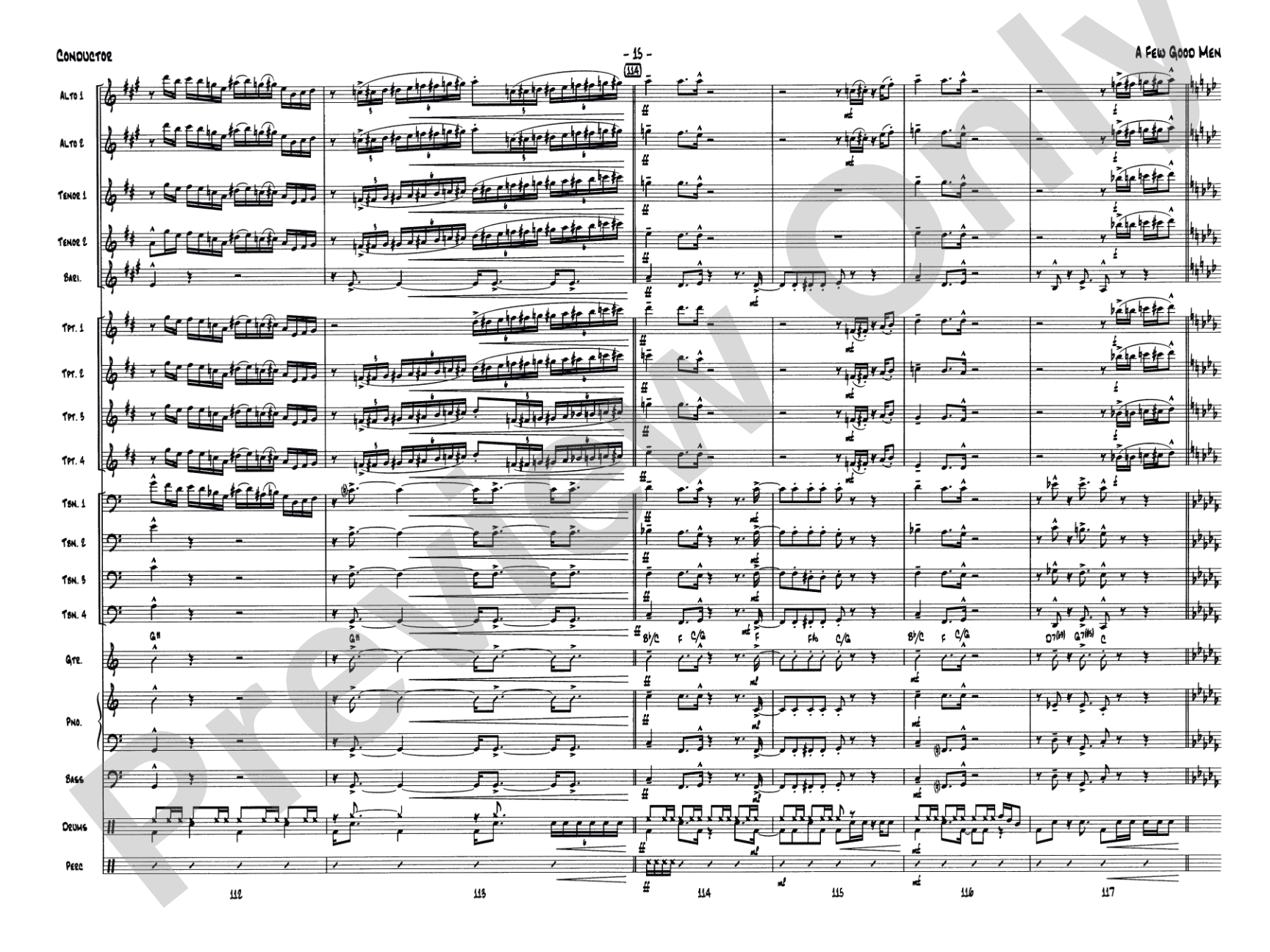
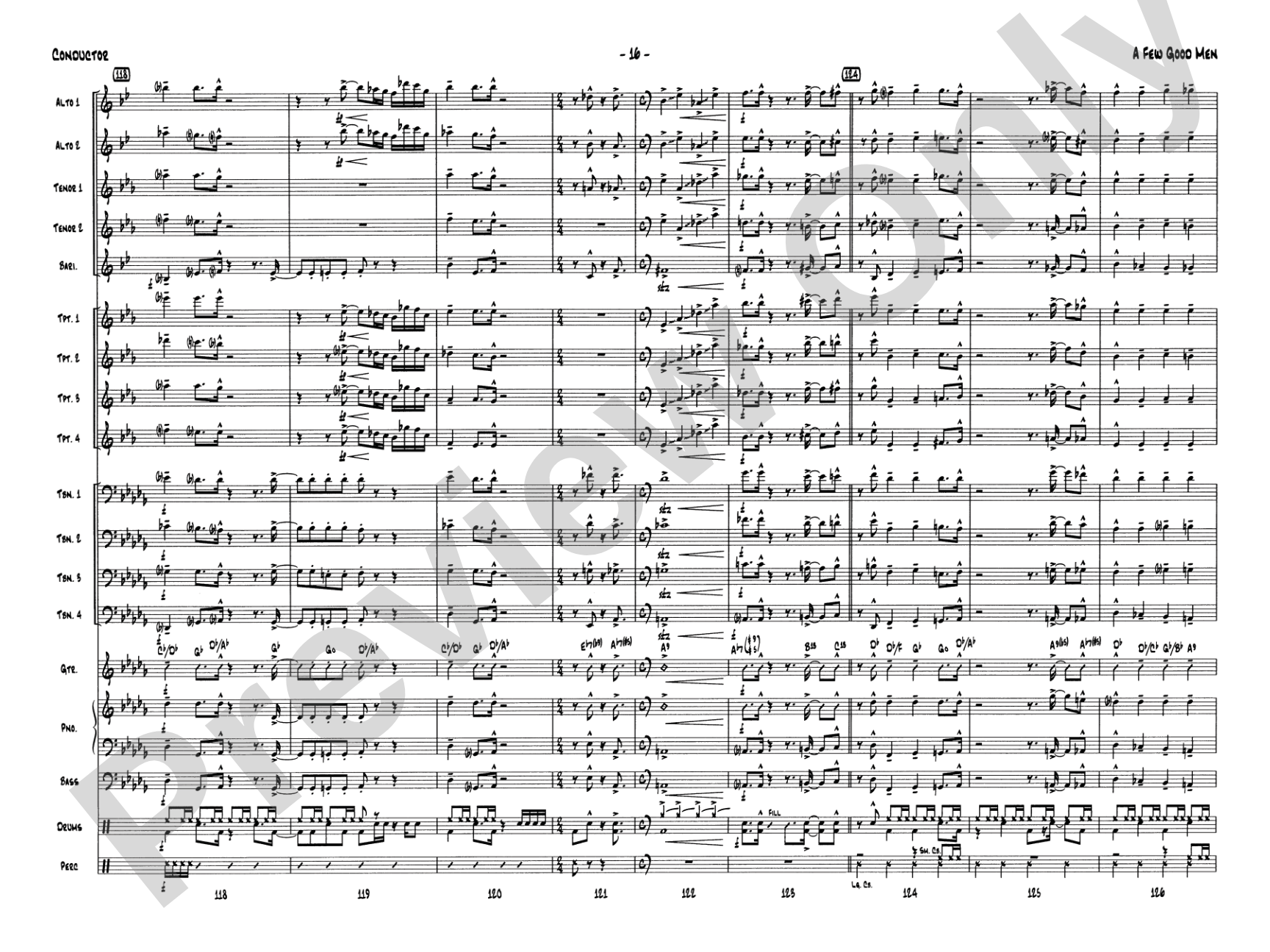
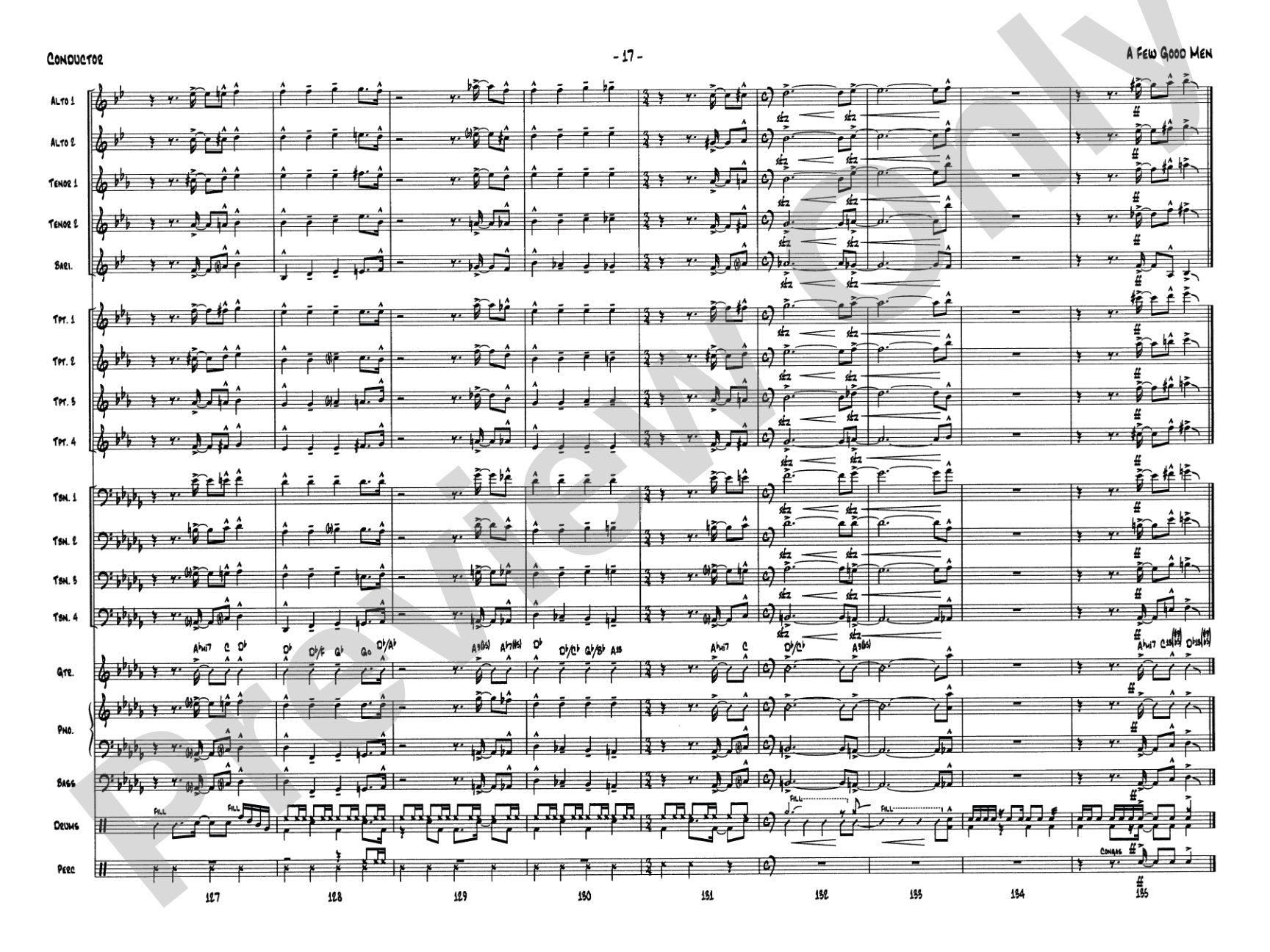


A Few Good Men: Score
By Gordon Goodwin
Grade: 5.5 (Advanced / Difficult)
Item: 00-PR-0002429
$10.00
Pickup currently not available
Description
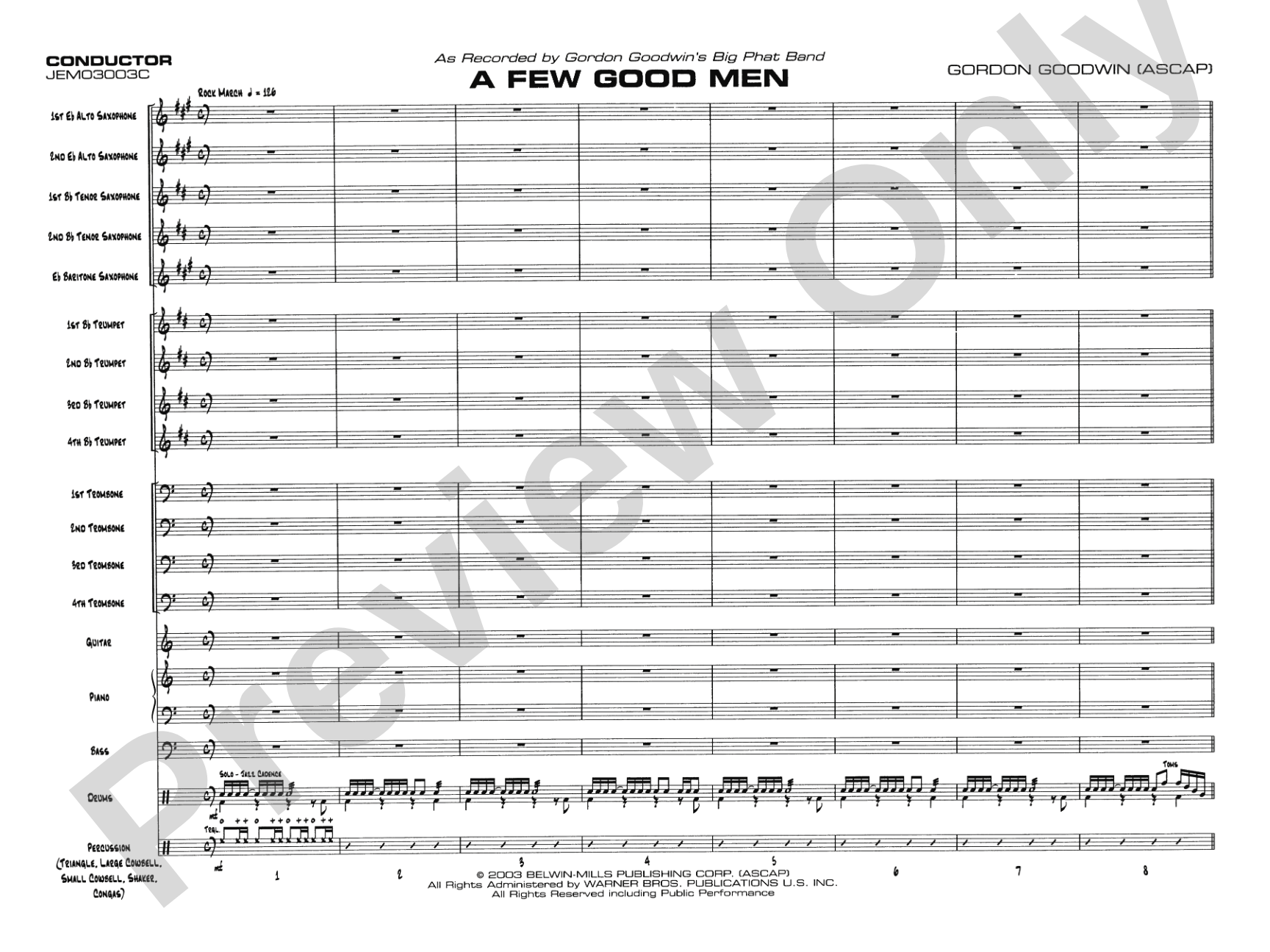
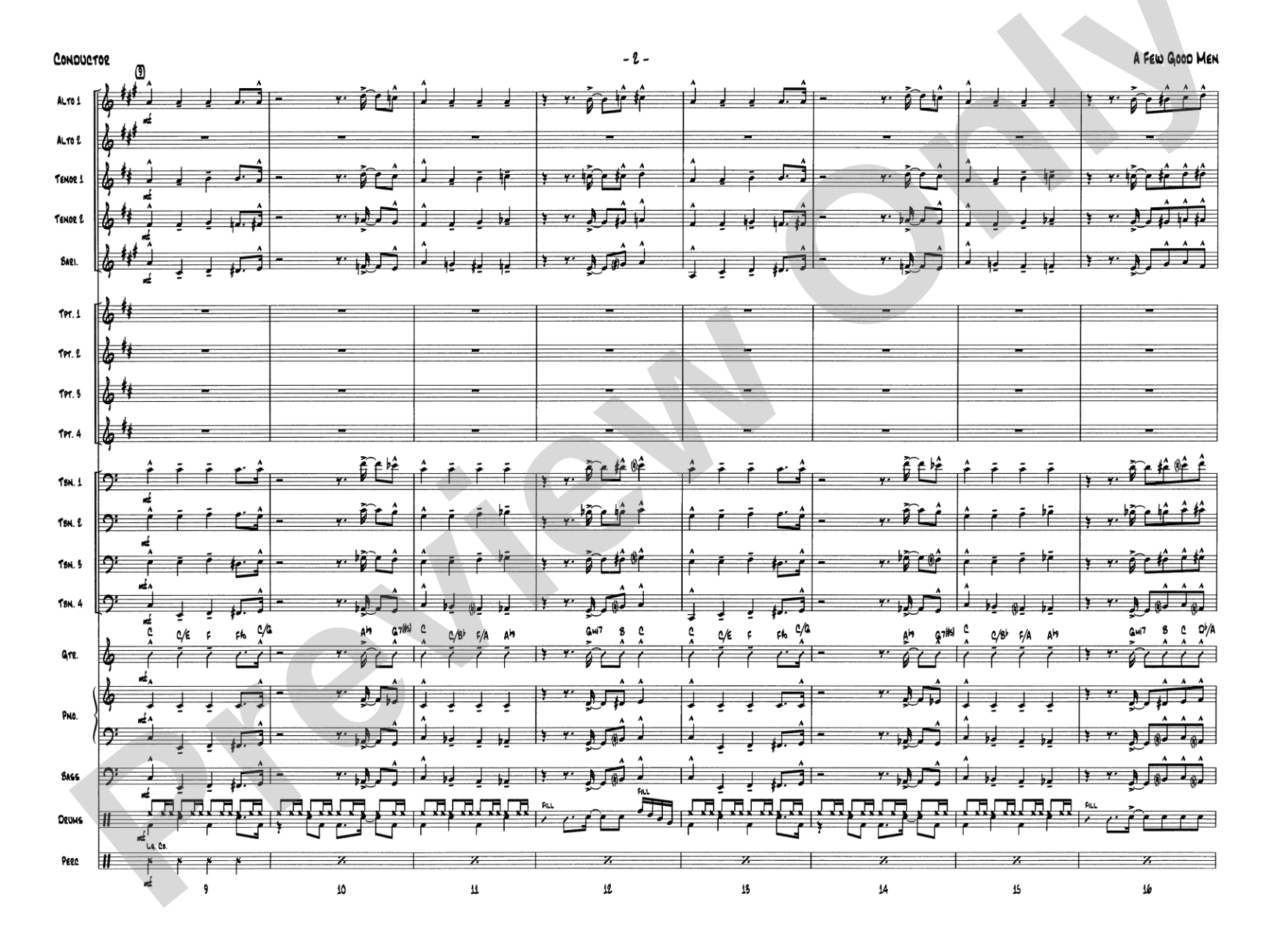
Today's hottest writer, Gordon Goodwin delivers again. In a clever rock-march style, the melody of this big band chart develops thoroughly then leads into a solo section for alto, tenor, trumpet, trombone, or guitar. After the solos, the rhythm section backs off for a wild and wooly ensemble chorus that will challenge all the players in the band. A percussion part is included. You'll recognize this chart from the fabulous CD Gordon Goodwin's Big Phat Band: Swingin' For the Fences. This title is available in MakeMusic Cloud. (5:35)


Don't just read it, hear it, play along with it, and watch your students grow with it. In MakeMusic Cloud, A Few Good Men: Score comes alive with professional accompaniment, adjustable tempo, and built-in practice tools that turn solo practice into real progress.
Open in the Player
Jump straight in and assign it today.
Start Your Free Trial
Open this title and explore the full library in minutes.
Sample Audio
1
Audio File
--:--
0:00
0:00
Sample Video
No sample videos found.
Additional Details
Series:
Gordon Goodwin Series
Publisher:
Alfred Music
Page Count:
64
SKU:
00-PR-0002429
More about this title
About the Composer: Gordon Goodwin

Gordon Goodwin heard complete compositions in his head from childhood and began notating them at age five. By thirteen, he had already written his first big band chart, Hang Loose, signaling the arrival of a major compositional voice. His work in television and film has earned him three Emmy Awards and multiple Grammy nominations, with orchestrations featured in blockbuster films including Bad Boys II, Con Air, Gone in 60 Seconds, and Remember the Titans.
Beyond Hollywood, Goodwin has collaborated with an extraordinary range of artists spanning generations: Quincy Jones, Ray Charles, Christina Aguilera, and Johnny Mathis among them. Since 2000, he has led Gordon Goodwin's Big Phat Band, LA's premier big band ensemble, which debuted with the Grammy-nominated album Swingin' for the Fences. His subsequent releases have continued to garner Grammy recognition, cementing his status as one of today's most accomplished big band composers and arrangers.
Why we love this
Goodwin writes with the seasoned orchestrator's hand but never loses the infectious energy of a working big band. The chart's architecture is beautifully balanced: a rock-march melody that unfolds methodically, a solo section flexible enough for your strongest reed or brass voice, and an ensemble finale that demands precision and musicality from every section simultaneously. Your advanced ensemble will feel the confidence of professional-level writing here.
What to expect
Propulsive yet swinging, with the polish of a major label recording but the energy of a live jam session. The rock-march foundation keeps everything grounded and accessible while the harmonic language and orchestration choices reveal sophisticated jazz thinking on repeated hearings.
Who it's for
Advanced jazz ensembles ready for Grade 5.5 difficulty and professional-caliber big band writing. Conductors programming concerts that showcase their ensemble's technical command and musicianship.
How to get the most out of it
- Lock the ensemble chorus into one unified rhythmic pocket; the wild arrangement only lands when the full band breathes as a single unit.
- Give each featured soloist ample rehearsal time to develop their interpretation; Goodwin's backdrop is sophisticated enough to support real melodic choices.
- Balance the melody statement in the opening section carefully across your reed and brass voicings so the development arc stays audible through the texture.
How to use it
Feature this as a centerpiece of a jazz or big band concert, especially in spring when your ensemble has seasoned together. The track length (5:35) fits naturally into a mixed program and the infectious groove makes it an excellent audience-engagement piece that doesn't compromise artistic credibility.
Skills your students will build
- Reading and executing sophisticated big band voicings and section writing
- Sustaining tight rhythmic ensemble playing through complex meter and syncopation
- Interpreting solo opportunities with stylistic confidence within a composed framework
- Balancing and blending across reed and brass sections at advanced dynamic and tonal levels
- Understanding rock-march rhythmic elements and how they integrate with jazz harmony