
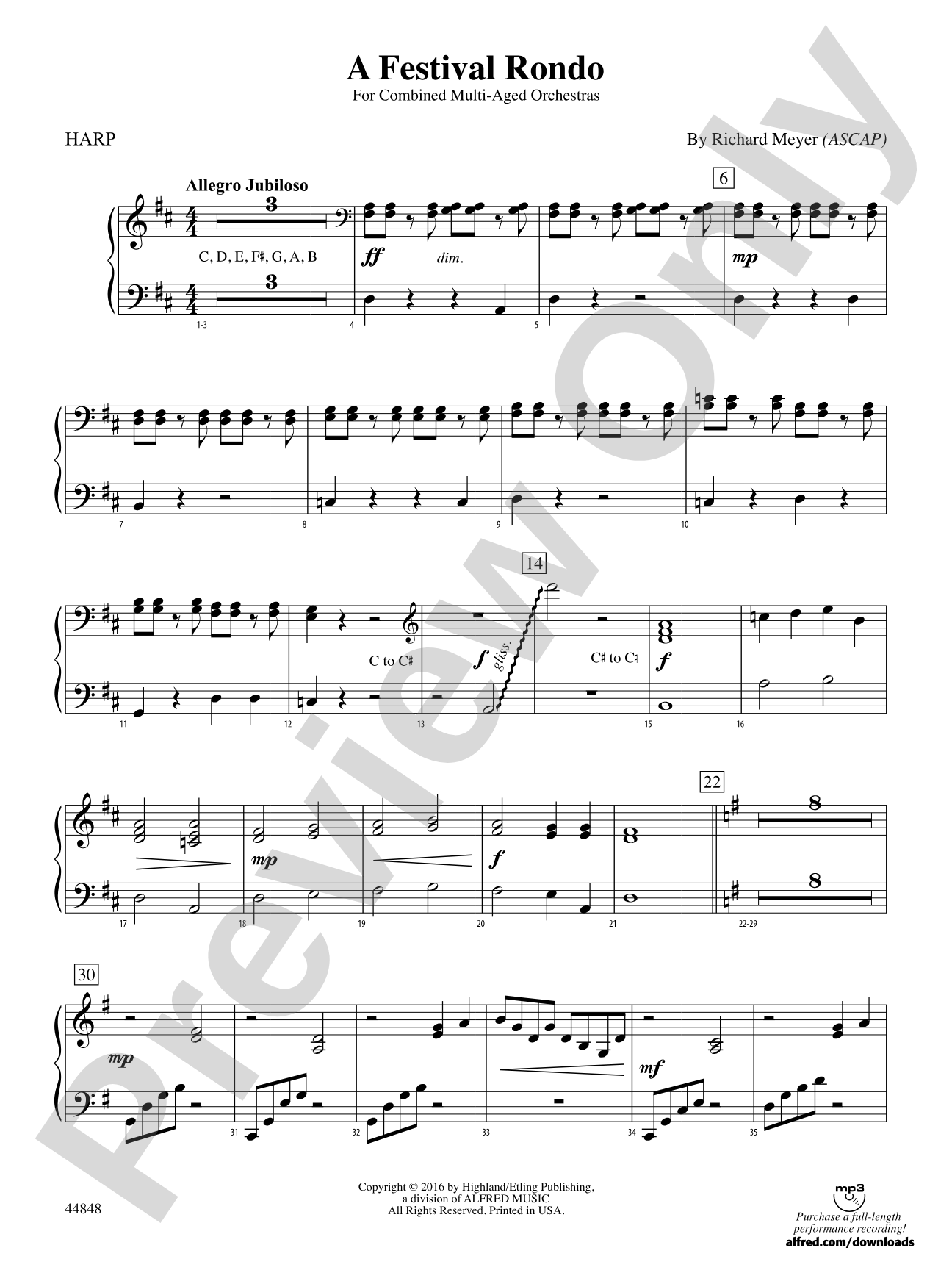

A Festival Rondo: Harp
For Combined Multi-Aged Orchestras
By Richard Meyer
Grade: 1.5-3.5
Item: 00-PC-0017365_H
$5.99
Pickup currently not available
Description
This work features all of your school district's string orchestras at once and was written to celebrate the 150th anniversary of the Freeport, Illinois orchestra program. The piece combines elementary, middle school, and high school string orchestras each playing age-appropriate material, making for the perfect closer to an "All-City," multi-level concert. During the course of this energetic rondo, each group is featured on their own melody. As the piece unfolds, the melodies are creatively combined, keeping all the players "on their toes" and active at all times. Grade levels for the three groups are: Elementary - Grade 1.5; Middle school - Grade 2.5; High school - Grade 3.5. (4:45)


Don't just read it, hear it, play along with it, and watch your students grow with it. In MakeMusic Cloud, A Festival Rondo: Harp comes alive with professional accompaniment, adjustable tempo, and built-in practice tools that turn solo practice into real progress.
Open in the Player
Jump straight in and assign it today.
Start Your Free Trial
Open this title and explore the full library in minutes.
Sample Audio
1
Audio File
--:--
0:00
0:00
Sample Video
Additional Details
Series:
Highland/Etling String Orchestra
Publisher:
Alfred Music
Page Count:
348
SKU:
00-PC-0017365_H
More about this title
About the Composer: Richard Meyer
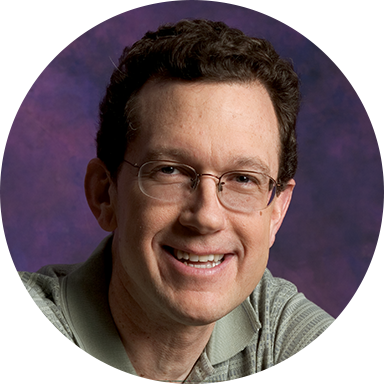
Richard Meyer has shaped string education across three decades as a classroom teacher, orchestra director, and guest conductor. He built the orchestral program at Oak Avenue Intermediate School in Temple City, California from 29 students to 200, then expanded his reach as music director of the Pasadena Youth Symphony Orchestra for 16 years, leading ensembles on international tours to Vienna, Australia, and Canada. His "Giving Bach" program, launched in 2009, pioneered interactive concert models that bring orchestral music to special needs and underserved students throughout Southern California.
As a composer, Meyer has become one of the most performed string music writers in American schools, with nearly 200 works and arrangements published. He served for 16 years as string editor at Alfred Publishing and co-authored the String Explorer Series and Sight-read It for Strings method materials. His work as a featured clinician at the A.S.T.A. National Conference, Texas Orchestra Directors' Association, and Ohio State University String Teachers' Workshop reflects his deep investment in elevating instruction at every level.
Why we love this
Meyer understands the specific challenge of multi-level concerts: how to honor advancing students while keeping elementary players engaged, and how to build toward a genuine ensemble moment rather than a simple medley. The rondo form gives each orchestra ownership of its own material while the creative layering of melodies ensures no section ever fades into accompaniment. This is the rare piece that feels celebratory for everyone on stage.
What to expect
Energetic and celebratory, with the hallmark of a rondo's returning themes providing scaffolding and recognition as new material arrives. The piece moves with confident momentum, giving younger players moments to shine on their own melodies before sophisticated combinations reward the listening skills and rhythmic maturity of more advanced orchestras.
Who it's for
This is essential programming for directors who oversee multiple string orchestras across a school district or community music program and want to create a meaningful finale that lets all students experience ensemble music together. The graduated difficulty allows elementary, middle, and high school orchestras to maintain their own integrity while contributing to a unified concert moment.
How to get the most out of it
- Schedule adequate sectional time for each level before attempting the combined sections; the elementary and middle school parts must be secure before the high school orchestra adds its layer, or rhythmic precision will suffer.
- Use the conductor score to map exactly where transitions occur between groups and where parts overlap; rehearse these moments with all three ensembles present to establish clear visual cues and ensemble contact.
- Keep the energy consistent across all three groups during transitions; a tempo drop or hesitation between sections breaks the rondo momentum and signals unevenness rather than celebration.
- Balance the combined sections by asking the higher-level orchestras to listen actively to the younger students' melodies; this prevents the advanced players from drowning out the elementary material.
How to use it
Program this as the closing number of an all-city or all-district string concert, where it can serve as both a technical showcase and a statement about the continuum of string education. The four-and-a-half minute duration and uplifting character make it an ideal way to unify audiences and students across grade levels.
Skills your students will build
- Playing within grade-appropriate melodic and rhythmic material while maintaining individual part security
- Ensemble balance and blend when combined with different skill levels
- Following conductor cues during transitions between orchestral groups
- Listening actively to independent melodic lines being performed simultaneously
- Sustaining rhythmic precision in rondo form with recurring themes and varied combinations