
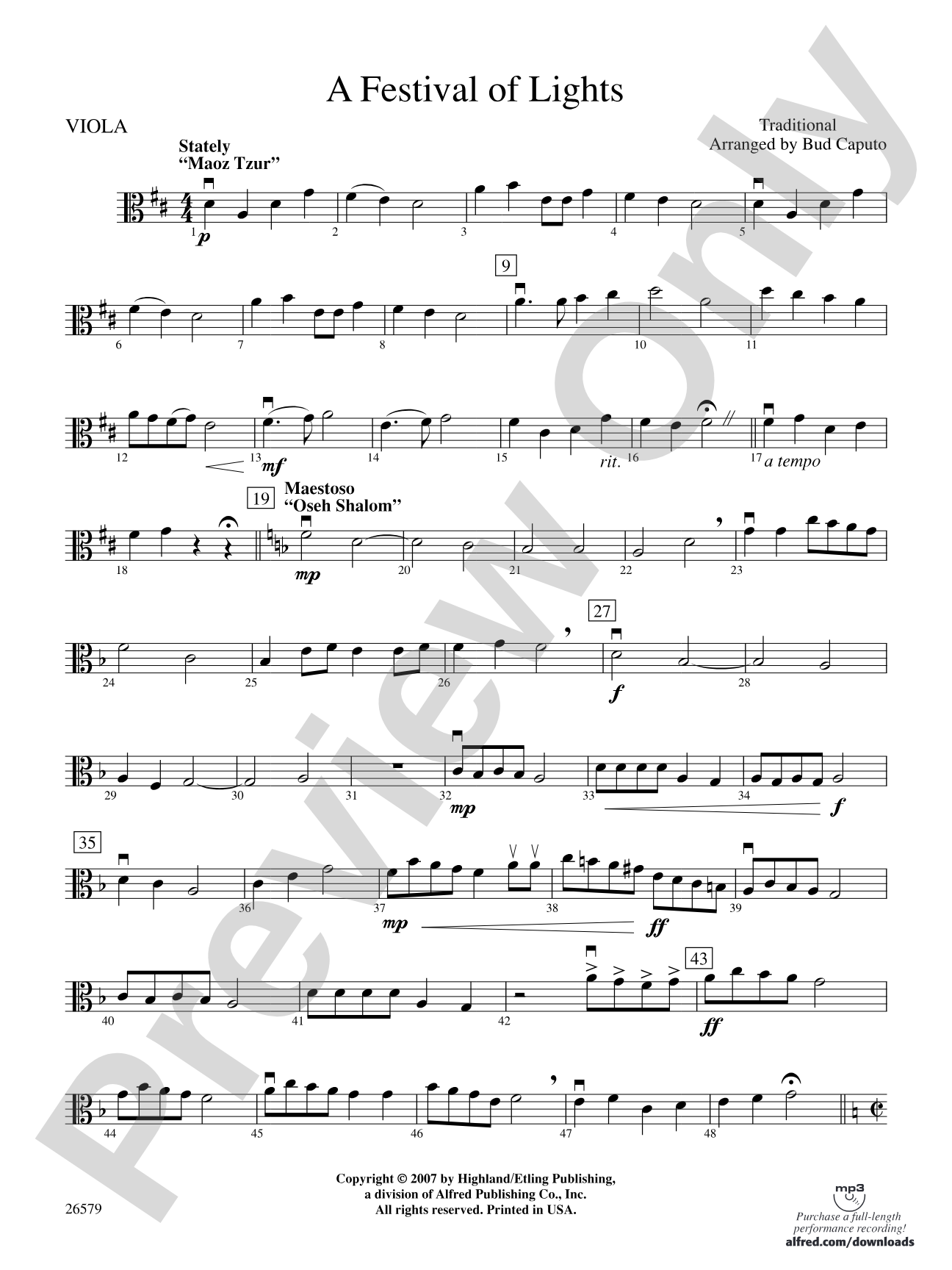

A Festival of Lights: Viola
Traditional / arr. Bud Caputo
Grade: 2.5
Item: 00-PC-0001095_VA1
$5.99
Pickup currently not available
Description
This arrangement of six authentic Chanukah songs will be a welcomed addition to the string repertoire as teachers continue to create multi-cultural learning experience for students. “Maoz Tsur,” “Oseh Shalom,” “S'vivon,” “Mi Yamaiel,” “Chanukah” and “My Dreydl,” are Hebrew folk songs that reflect the spirit of this diverse holiday. While suitable for advanced ensembles, the piece is well within the reach of younger groups as well. This title is available in MakeMusic Cloud.


Don't just read it, hear it, play along with it, and watch your students grow with it. In MakeMusic Cloud, A Festival of Lights: Viola comes alive with professional accompaniment, adjustable tempo, and built-in practice tools that turn solo practice into real progress.
Open in the Player
Jump straight in and assign it today.
Start Your Free Trial
Open this title and explore the full library in minutes.
Sample Audio
1
Audio File
--:--
0:00
0:00
Sample Video
Additional Details
Series:
Highland/Etling String Orchestra
Publisher:
Alfred Music
Page Count:
124
SKU:
00-PC-0001095_VA1
More about this title
About the Arranger: Bud Caputo
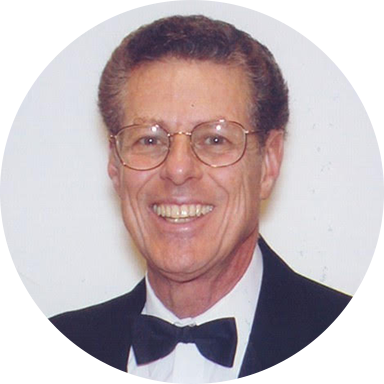
Bud Caputo has shaped music education across multiple states and institutions. A trombonist and educator, he served as Coordinator for Instrumental Music in the Montgomery County Public Schools in Maryland, taught strings for Fairfax County Public Schools in Northern Virginia, and held adjunct positions at Florida Atlantic University, Palm Beach State University, and The Catholic University of America. His performance experience spans U.S. Army Band service (1967-1970), Broadway theater engagements at the National Theater and Wolf Trap, and touring orchestras; he has also adjudicated festival competitions throughout Maryland and on the East Coast.
Caputo holds degrees from The Catholic University of America, the Manhattan School of Music, and State University College at Potsdam. His arranging studies were with Hank Levy at Towson State University. His extensive catalog of publications appears with major publishers including Carl Fischer, Alfred, Ludwig, and FJH Music, establishing him as a prolific voice in school music literature.
Why we love this
Caputo's arrangement honors the authentic character of these Hebrew folk songs while keeping the string writing accessible enough for younger ensembles to execute with musicality. The collection itself serves a genuine pedagogical purpose: it gives orchestras the tools to meaningfully represent Chanukah in concert, moving beyond generic winter programming into intentional cultural celebration.
What to expect
These arrangements radiate warmth and contemplative joy. The melodies carry the weight of tradition while the string textures unfold with clarity and directness, creating moments of genuine tenderness alongside celebratory energy. Each song feels grounded in its folk origins, never overwrought or sentimentalized.
Who it's for
This collection serves orchestras at Grade 2.5 and above, from emerging young ensembles through advanced high school groups. String directors seeking culturally responsive concert programming will find six ready-to-perform arrangements that allow students to engage authentically with Jewish musical tradition.
How to get the most out of it
- Balance the melody across your first violins and lower strings; these folk songs need clear, singing lines to tell their story. Keep accompaniment figures supporting rather than competing.
- Let the harmonic language breathe. The traditional modal and diatonic qualities of these songs shine when you avoid over-interpreting the score with excessive dynamic shaping.
- Use the conductor score's performance notes carefully; they guide phrasing and expression for each folk melody. These are learned traditions, not abstract compositions.
- Consider the rehearsal order strategically. Begin with the more straightforward arrangements (like the familiar melodies) to build ensemble confidence before tackling the more complex textures.
How to use it
Program this collection as a thematic winter concert block, or distribute individual arrangements across the season to honor Chanukah observance with integrity. The variety of character and tempo among the six songs also makes them valuable for pre-concert rehearsal discipline: directors can teach each piece's distinct mood while building technical facility.
Skills your students will build
- reading in multiple key signatures and scalar contexts
- singing folk melodies with historical awareness of their origins
- balance and ensemble blend across multi-part string arrangements
- interpretation of diatonic and modal harmonic language
- cultural literacy in Jewish musical heritage
- sustained, lyrical tone production