
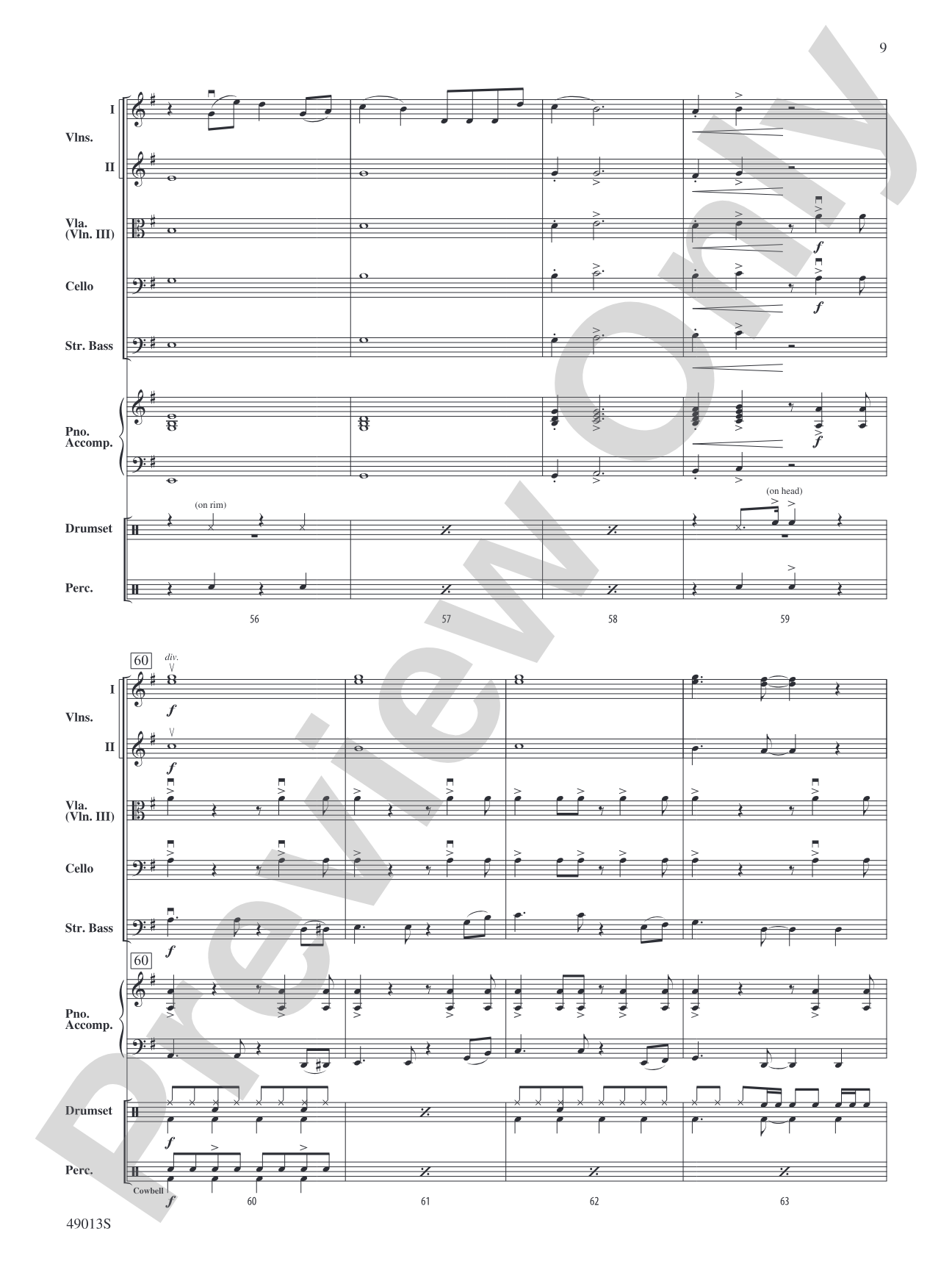
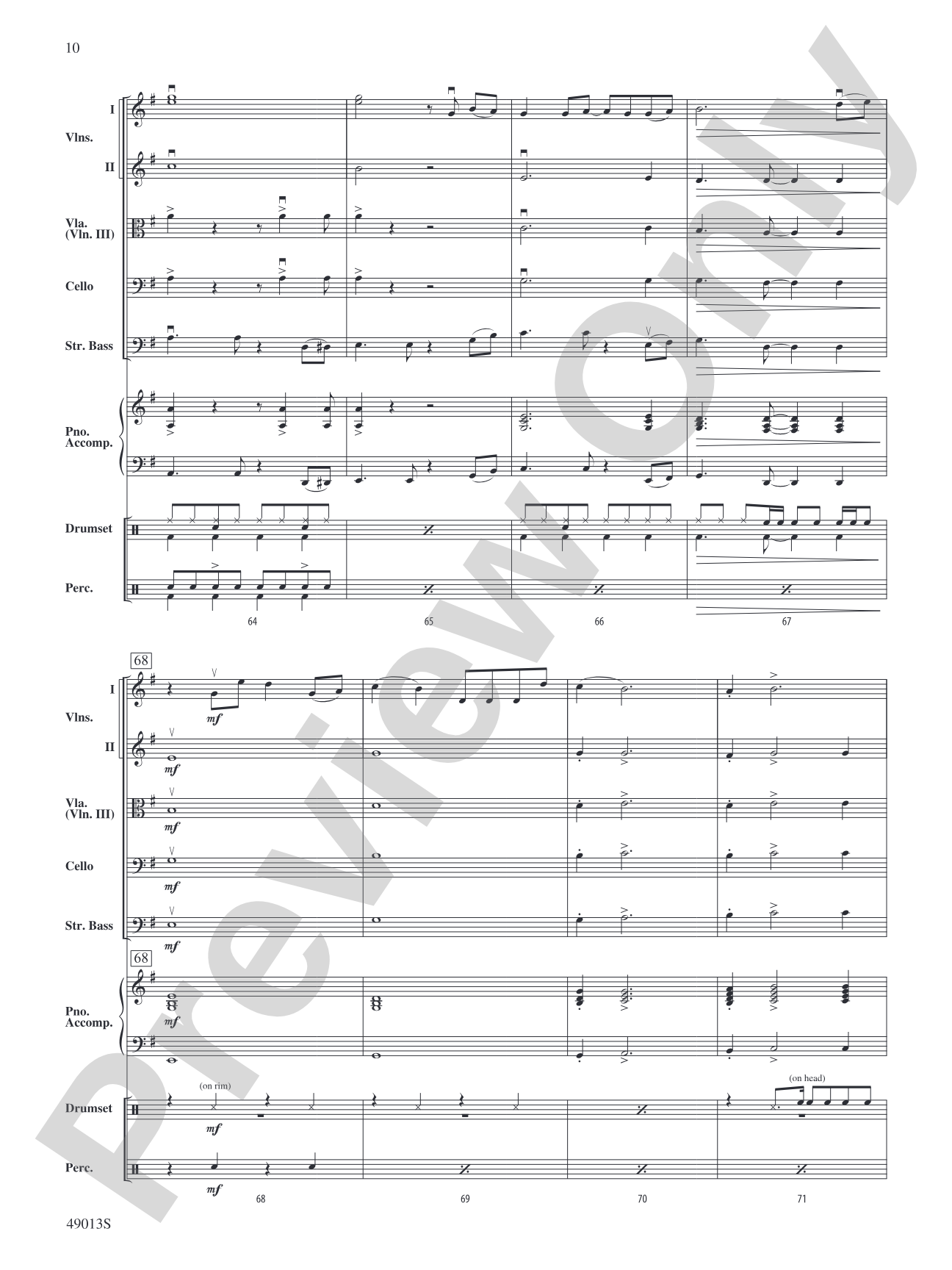
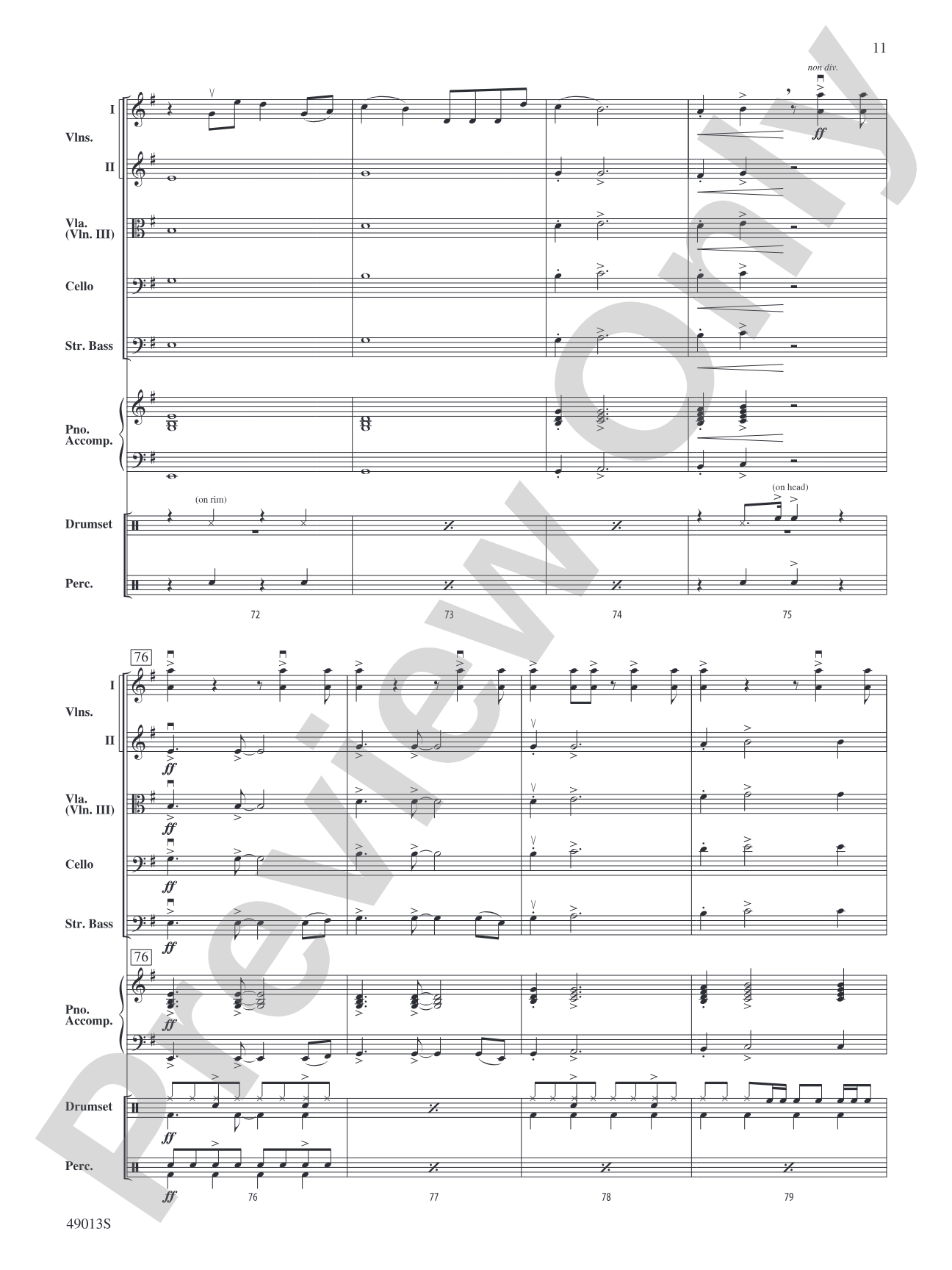
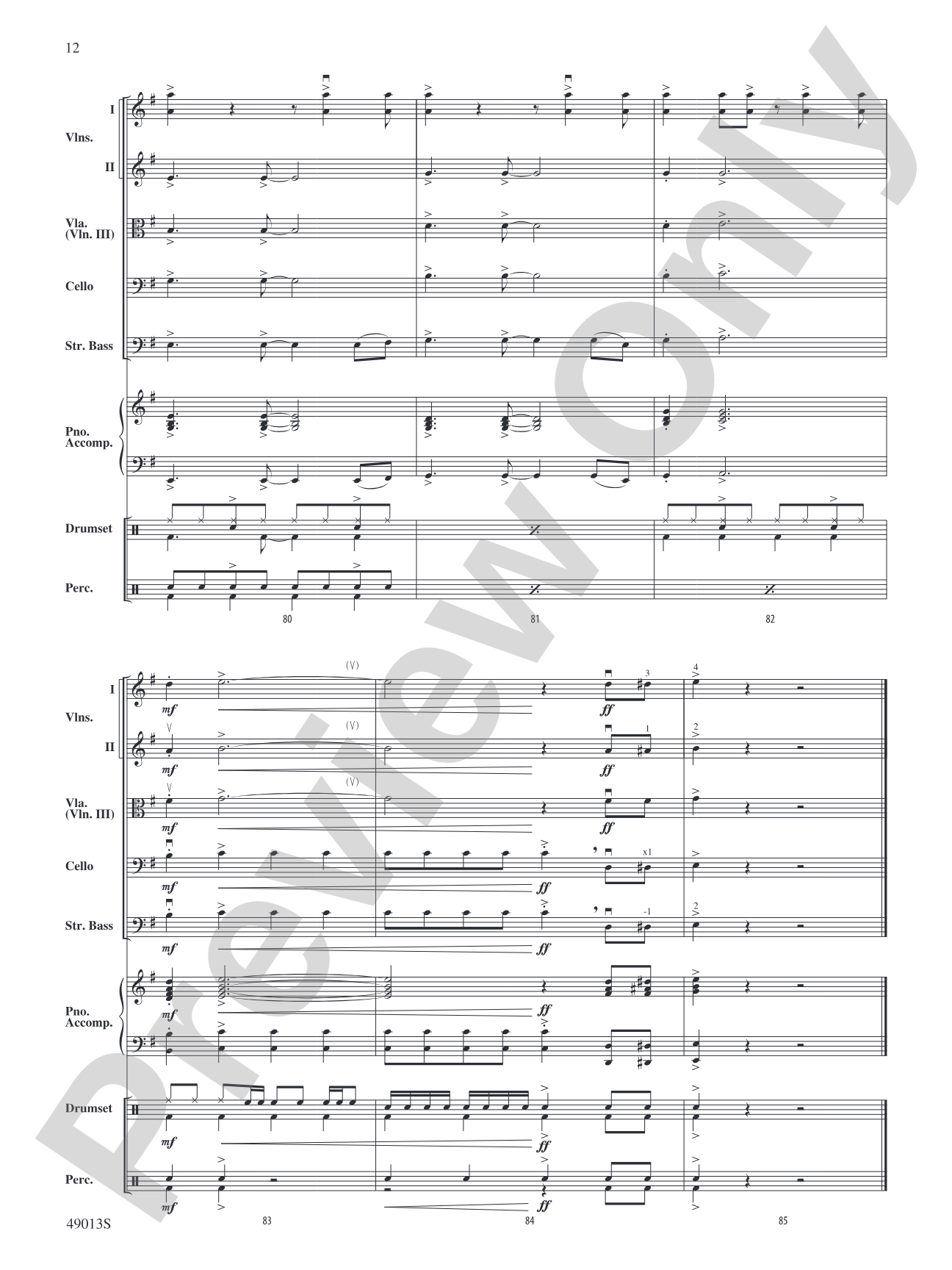

A Dua Lipa Duo: Flexible String Ensemble Conductor Score & Parts
Featuring: Break My Heart / Don't Start Now
Various / arr. Michael Story
Grade: 2.5
Item: 00-PK-0008341

$65.00
One moment…
Related Items
A Dua Lipa Duo: Concert Band Conductor Score & Parts |
$68.00
|
View | |
A Dua Lipa Duo: Concert Band Conductor Score & Parts |
$68.00
|
View | |
A Dua Lipa Duo: Concert Band Conductor Score |
$10.00
|
View | |
A Dua Lipa Duo: Flexible String Ensemble Conductor Score & Parts |
$65.00
|
View | |
A Dua Lipa Duo: Flexible String Ensemble Conductor Score |
$9.00
|
View |
Description
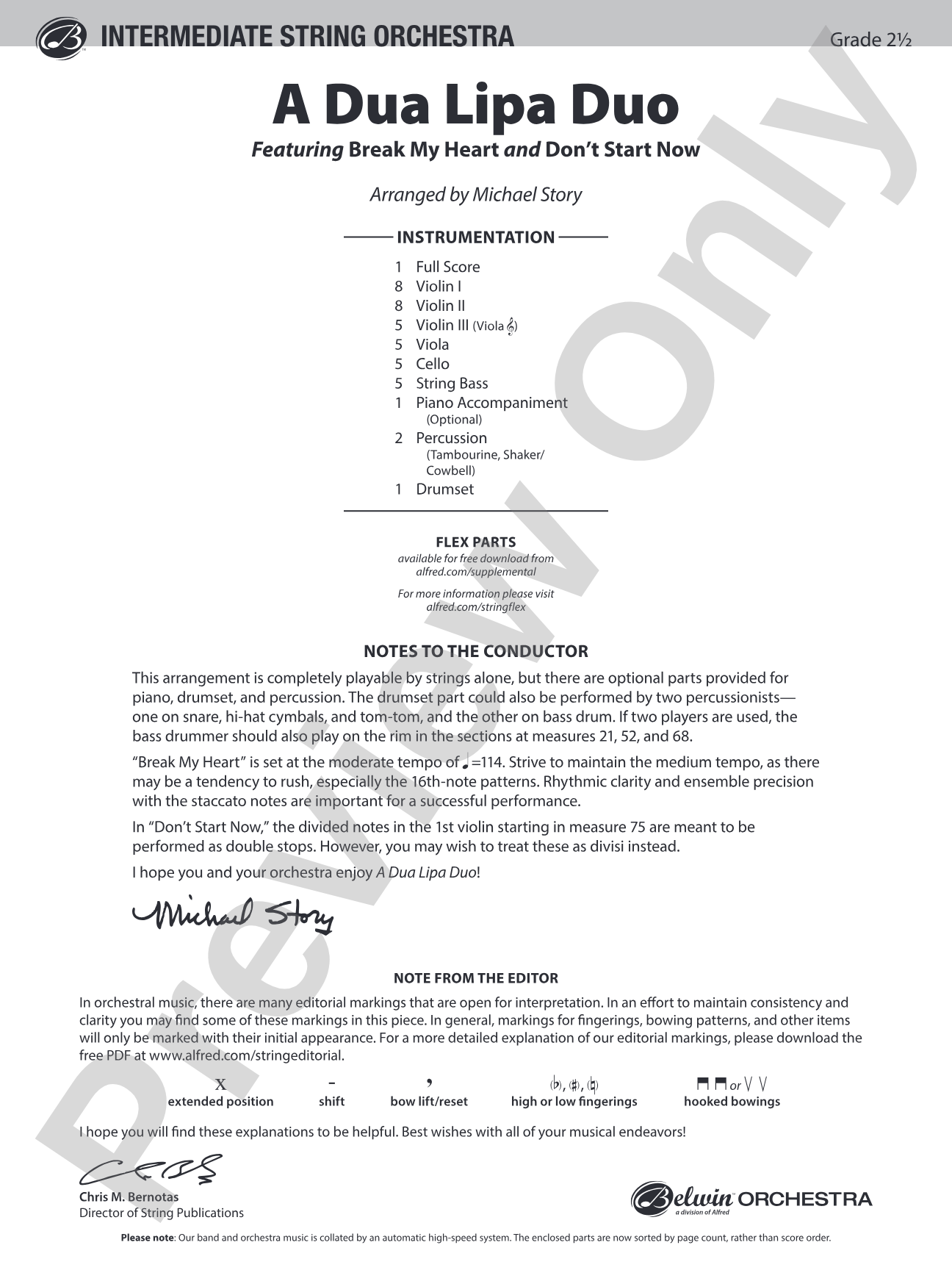
This title features Alfred Music's String Orchestra FLEX options. That means that every part in this set is now transposed into every other part, so you can play this title with any combination of like- or mixed-string ensemble. After purchasing this set, decide what additional parts you need to meet the unique needs of your ensemble, then download and print them for free at alfred.com/supplemental---free of charge.
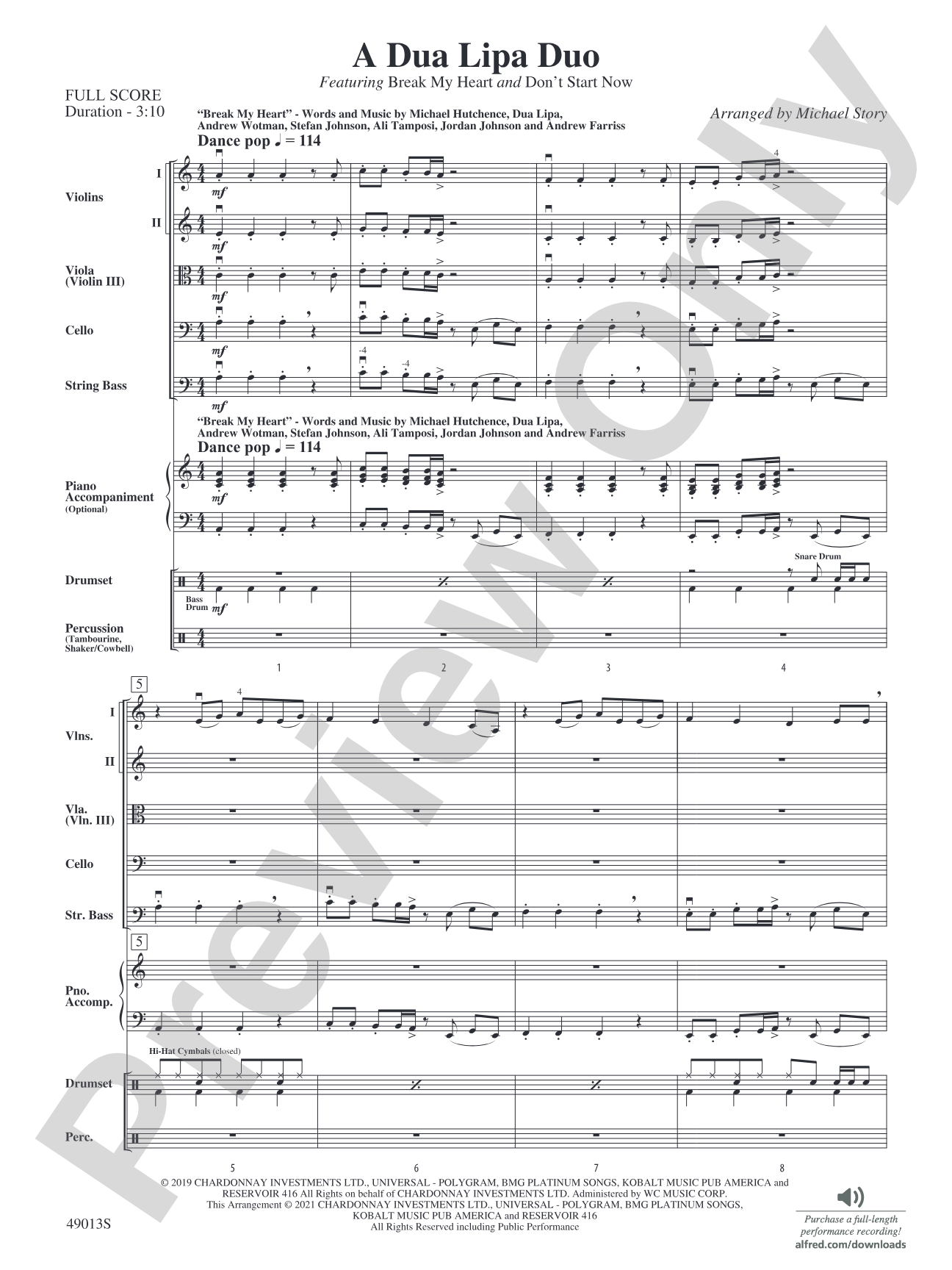
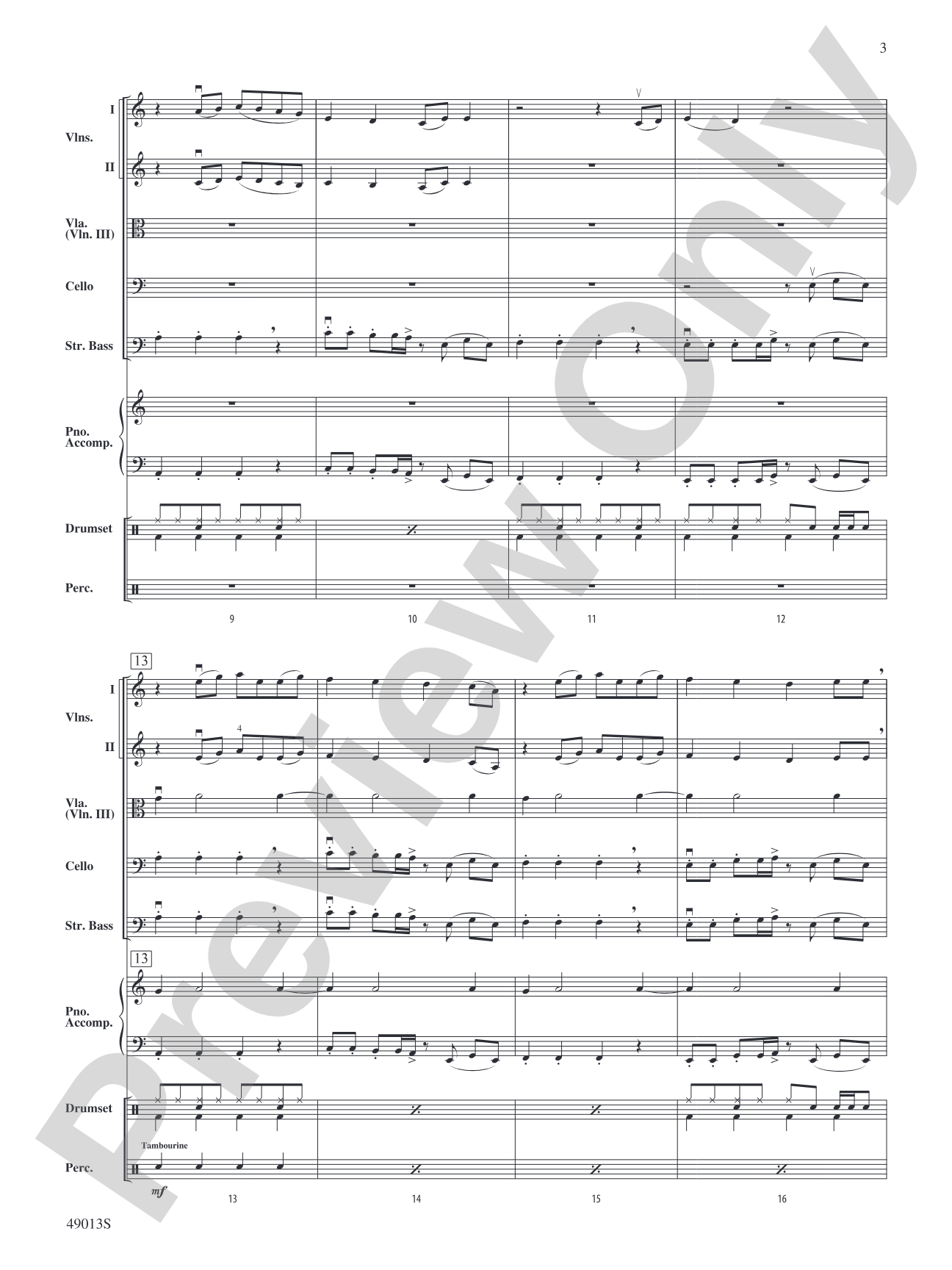
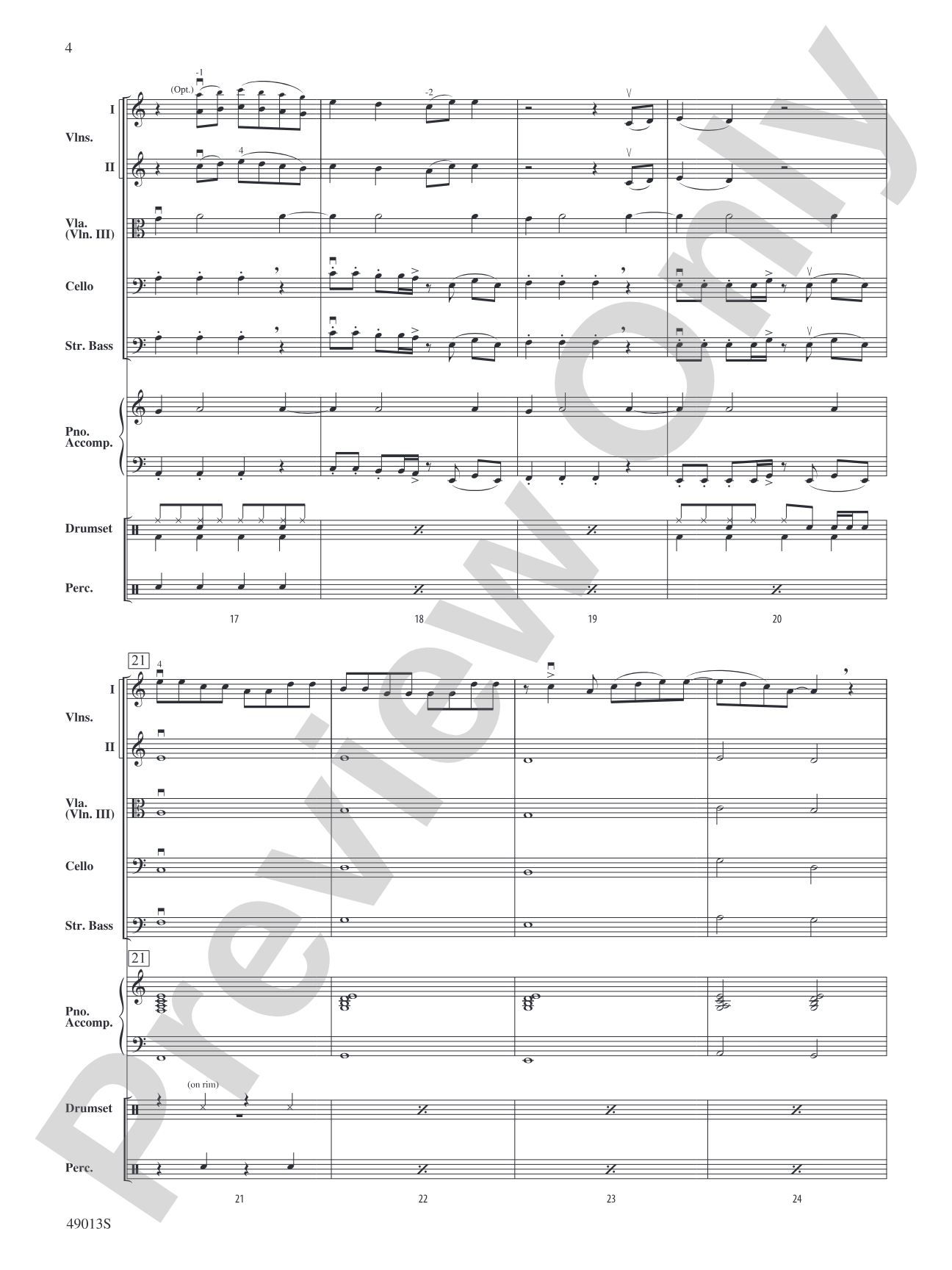
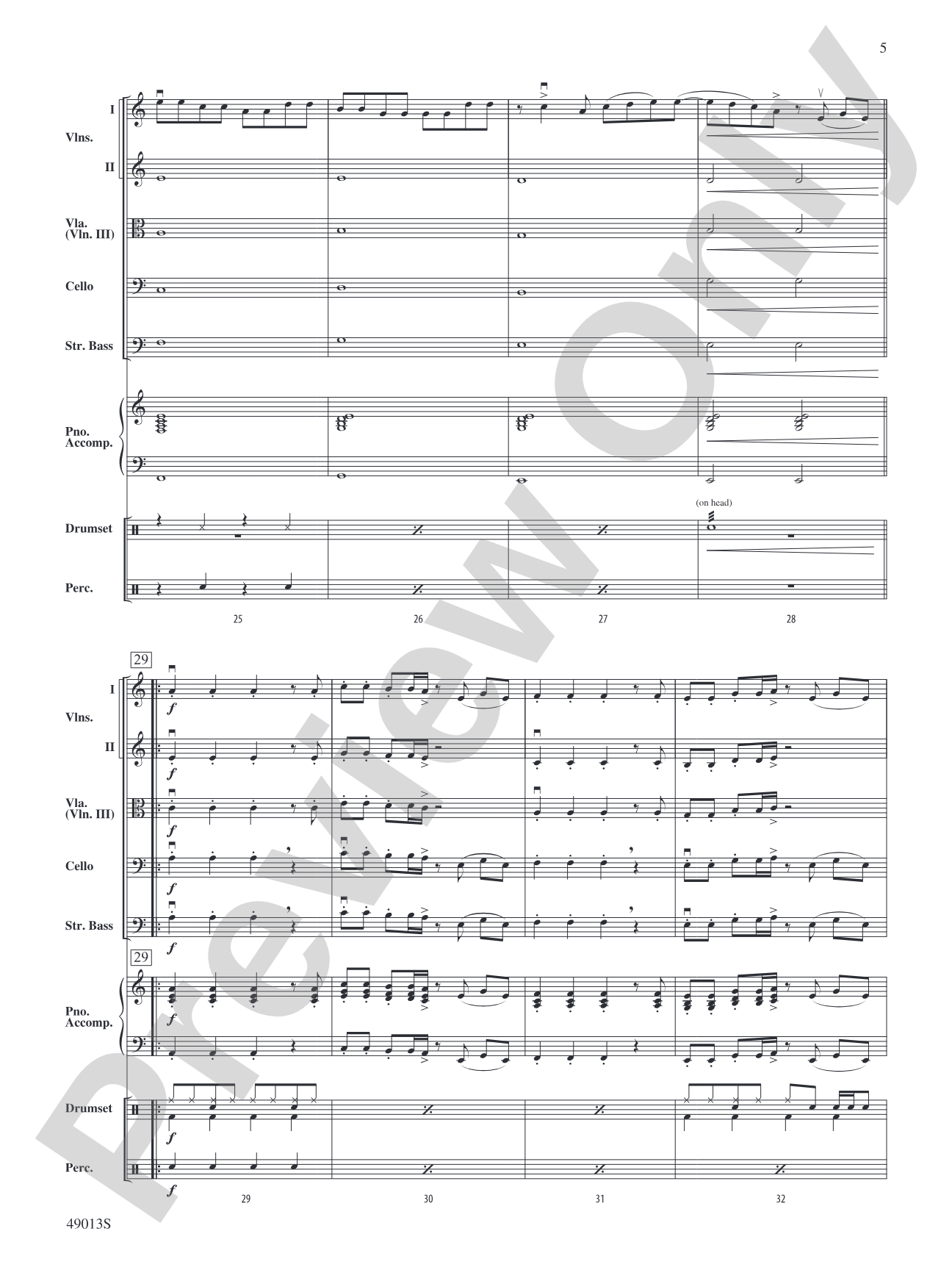
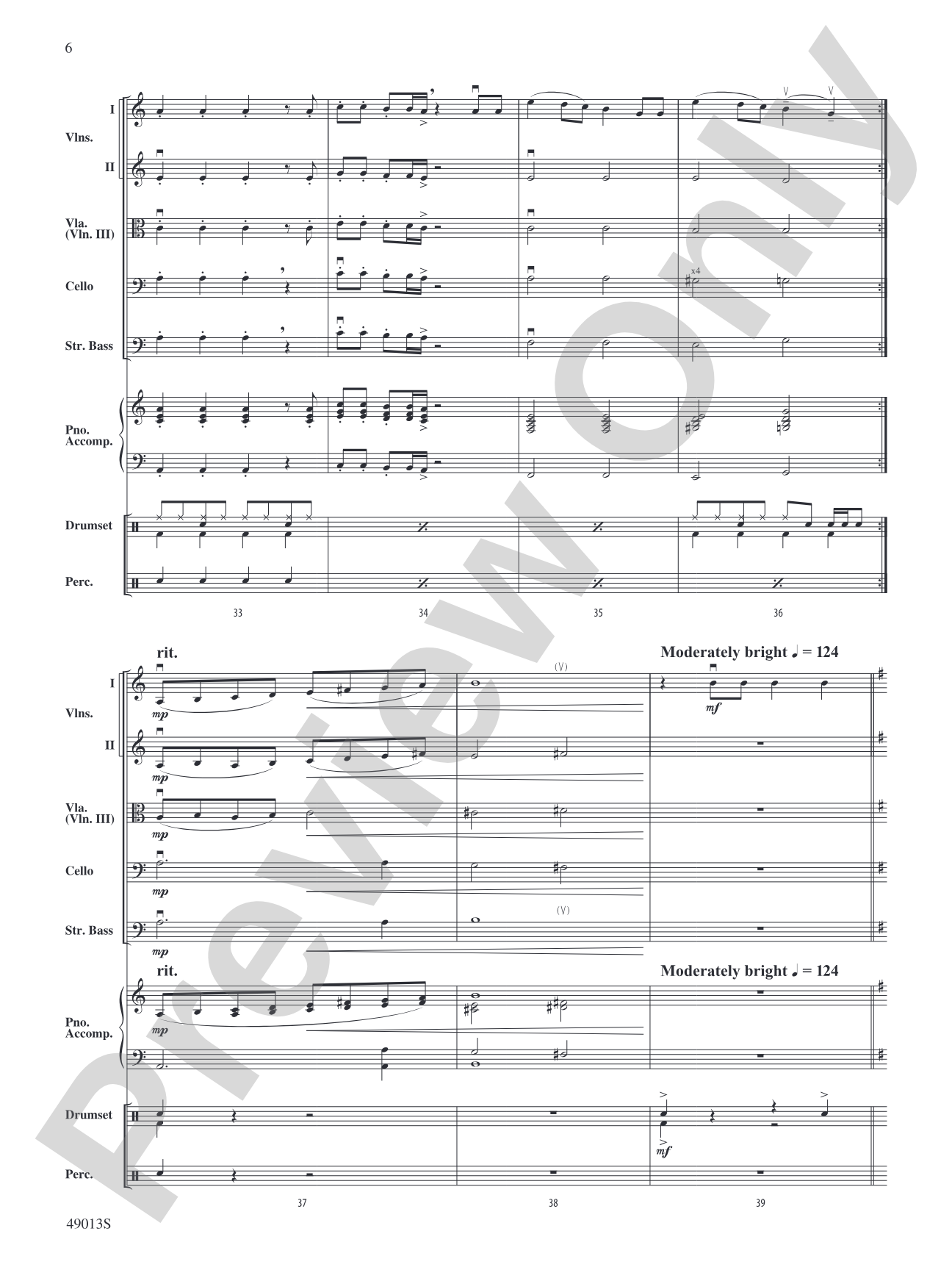
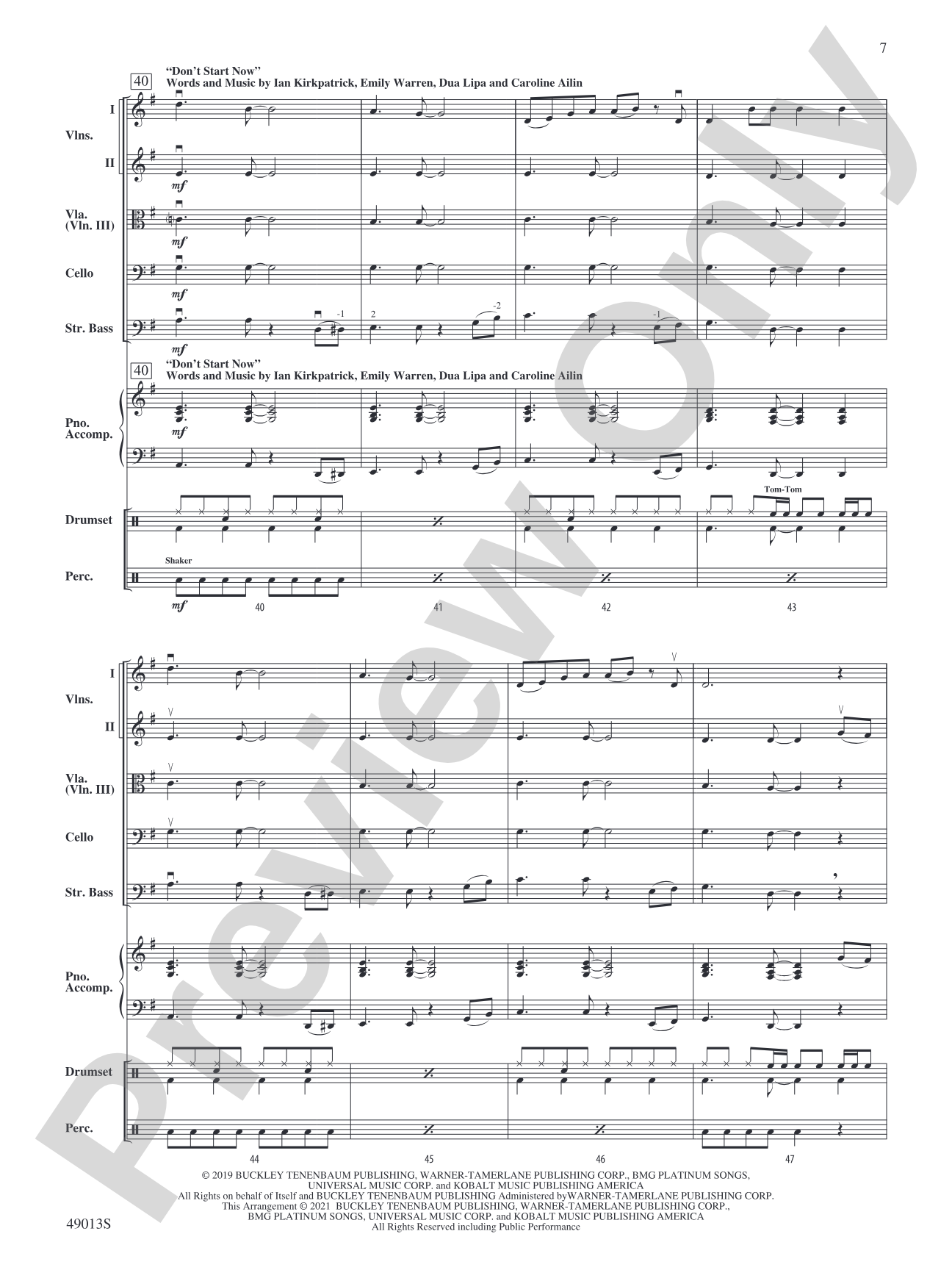
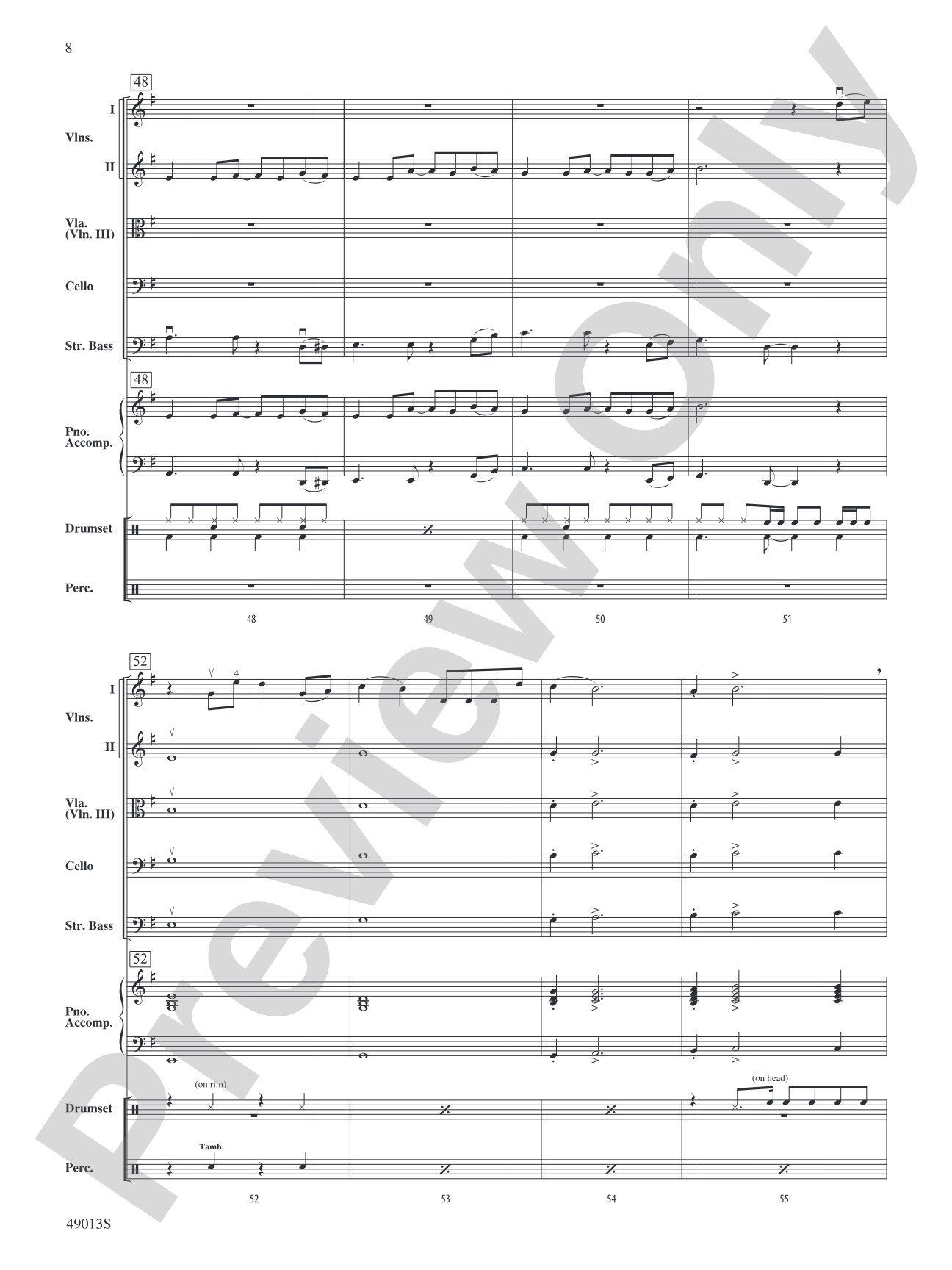
A Dua Lipa Duo, arranged by Michael Story, combines two of the award-winning singer-songwriter's biggest hits. Clear bowings and fingerings will help your students get in the groove. The arrangement is completely playable by strings alone, but there are optional parts provided for piano, drumset, and accessory percussion. (3:10) This title is available in MakeMusic Cloud.


A Dua Lipa Duo, arranged by Michael Story, combines two of the award-winning singer-songwriter's biggest hits. Clear bowings and fingerings will help your students get in the groove. The arrangement is completely playable by strings alone, but there are optional parts provided for piano, drumset, and accessory percussion. (3:10) This title is available in MakeMusic Cloud.
Don't just read it, hear it, play along with it, and watch your students grow with it. In MakeMusic Cloud, A Dua Lipa Duo: Flexible String Ensemble Conductor Score & Parts comes alive with professional accompaniment, adjustable tempo, and built-in practice tools that turn solo practice into real progress.
Open in the Player
Jump straight in and assign it today.
Start Your Free Trial
Open this title and explore the full library in minutes.
Sample Audio
1
Audio File
--:--
0:00
0:00
Sample Video
Additional Details
Series:
Pop Intermediate String Orchestra
Publisher:
Alfred Music
Page Count:
94
SKU:
00-PK-0008341
More about this title
About the Arranger: Michael Story
Michael Story has established himself as a prolific arranger and composer for school ensembles across all instrumental families. His work is known for accessibility without sacrificing musicianship; he has a gift for making contemporary material work effectively for developing musicians while keeping the energy and character of the original.
Why we love this
Story's arrangement captures the infectious groove and melodic appeal of these Dua Lipa hits without overwhelming younger string players. The FLEX instrumentation system means you'll never turn away a violinist, cellist, or bassist because you don't have the right transposition on hand; the flexibility removes a real logistical headache from programming pop repertoire.
What to expect
Energetic and modern, with the melodic hooks and rhythmic drive that made these songs radio staples. The arrangement maintains the pop sensibility while giving string voices satisfying parts that feel rewarding to play rather than purely supportive.
Who it's for
String orchestras at the intermediate level (around Grade 2.5) looking for engaging contemporary repertoire that works for mixed or flexible instrumentation. This is ideal for ensembles where part availability or player numbers fluctuate, or where you want to program recognizable music that energizes both performers and audiences.
How to get the most out of it
- Establish a steady groove during early rehearsals. Mark a consistent tempo and lock the ensemble into the rhythmic pocket before worrying about intonation details.
- Use the optional percussion and keyboard parts strategically. Early rehearsals work fine with strings alone, but adding drums and piano in final weeks transforms the energy and gives students the full picture of the arrangement.
- Pay close attention to the bowings and fingerings provided. Story's markings guide students into articulation and phrasing that serve the pop style; these aren't generic marks to ignore.
- Balance the melody between sections so the pop hooks stay clear. In contemporary music, tuning and blend matter less than making sure listeners hear what makes the song memorable.
How to use it
Program this as a spring or end-of-year concert closer when you want to send audiences home smiling and students feeling accomplished. Pair it with a more classical selection earlier in the concert to showcase your ensemble's range, or use it as a lighter complement to a virtuosic solo competition or chamber showcase.
Skills your students will build
- Reading and playing contemporary popular music in a classical ensemble setting
- Rhythmic precision in syncopated, groove-based patterns
- Articulation and bow control for pop phrasing
- Adaptability across transposed parts (understanding enharmonic equivalents and fingering alternatives)
- Balance and blend when melody and accompaniment roles shift between sections