
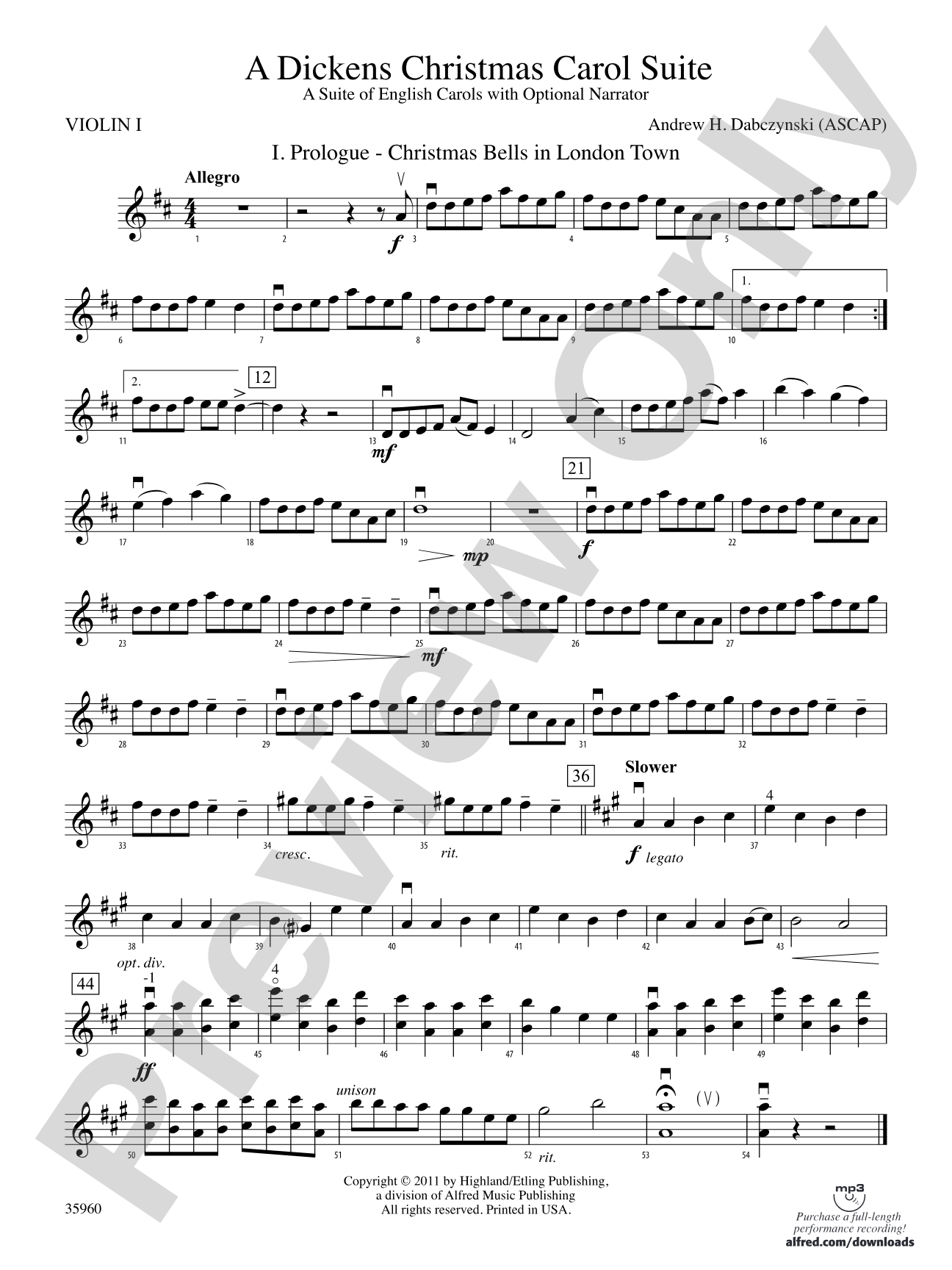
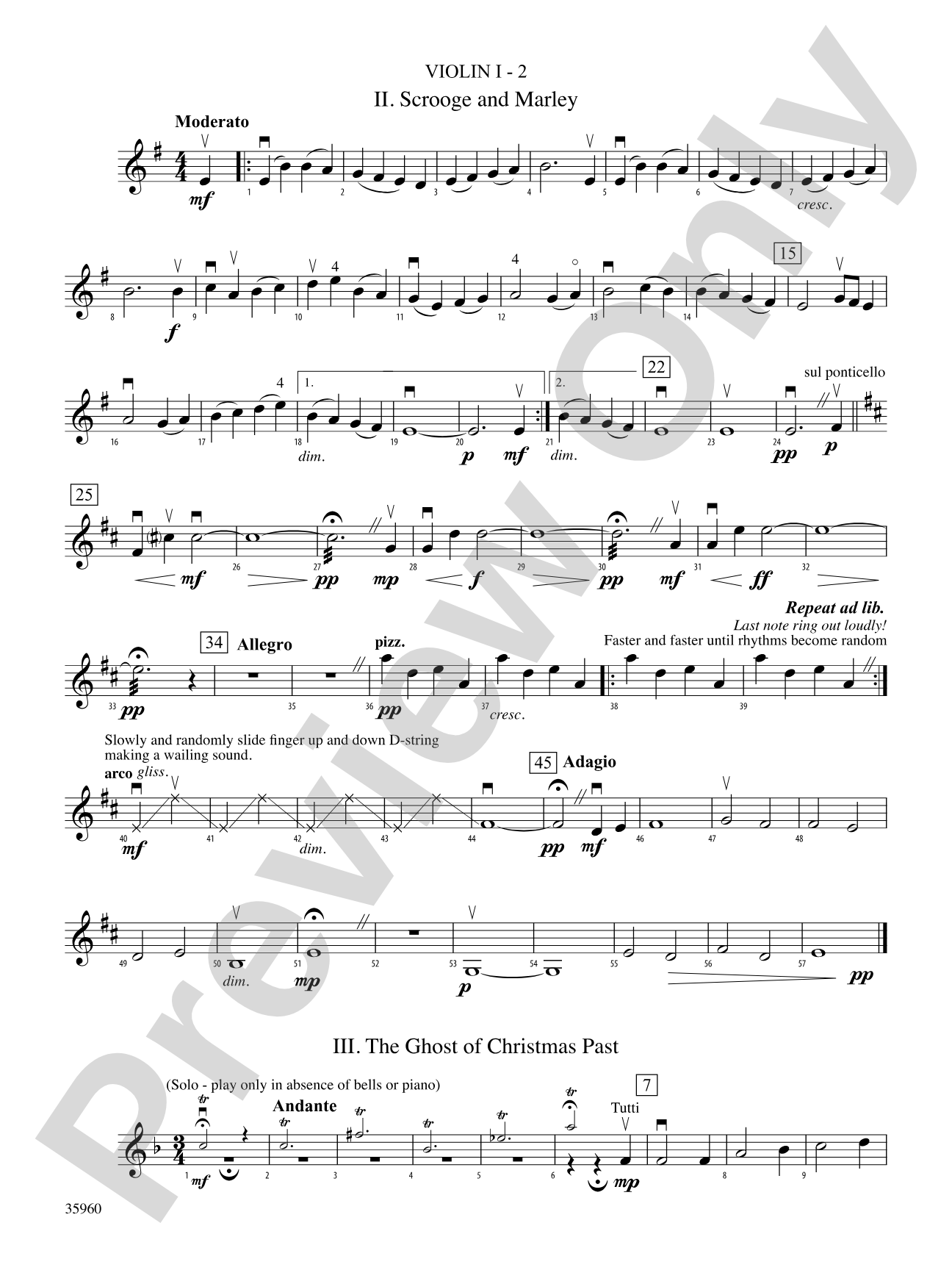

A Dickens Christmas Carol Suite: 1st Violin
A Suite of English Carols with Optional Narrator
By Andrew H. Dabczynski
Grade: 2.5
Item: 00-PC-0015035_VN1
$7.99
Pickup currently not available
Description
The perfect opportunity for string students to experience the wonder of this timeless tale! The suite is a setting of many old English Christmas carols in six movements---each can stand alone for holiday concert programming, or when played together, provide a complete accompaniment to an optional narration of Dickens' text. Optional percussion parts lend color to the drama. Completely accessible for intermediate orchestras, but fully satisfying for advanced groups, this suite promises to become a holiday concert tradition for any orchestra program.


Don't just read it, hear it, play along with it, and watch your students grow with it. In MakeMusic Cloud, A Dickens Christmas Carol Suite: 1st Violin comes alive with professional accompaniment, adjustable tempo, and built-in practice tools that turn solo practice into real progress.
Open in the Player
Jump straight in and assign it today.
Start Your Free Trial
Open this title and explore the full library in minutes.
Sample Audio
1
Audio File
--:--
0:00
0:00
Sample Video
No sample videos found.
Additional Details
Series:
Highland/Etling String Explorer
Publisher:
Alfred Music
Page Count:
312
SKU:
00-PC-0015035_VN1
Instrumentation:
string w/ vln3, pno acc, Bells, optional Chimes, Wind Chimes, Triangle, Suspended Cymbal, Bass Drum or Low Hand Drum, Chains
More about this title
About the Composer: Andrew H. Dabczynski

Andrew H. Dabczynski has shaped string education across multiple roles: as a classroom teacher in New York public schools, as a fine arts administrator in Michigan, and most significantly as a university educator. At Brigham Young University, where he is now Emeritus Professor of Music Education, he founded the New Horizons Orchestra, a program for adult beginners that also serves as a training ground for string teachers. His contributions to the field earned him BYU's Joseph E. White Fellowship for Teaching and Learning, and Utah's ASTA chapter twice honored his work with major awards.
A violist himself with performance experience in regional orchestras including the Rochester Philharmonic and Hartford Symphony, Dabczynski brings both practical musicianship and deep pedagogical knowledge to his compositions and arrangements. His co-authorship of the String Explorer method series reflects his commitment to accessible, thoughtfully scaffolded string instruction. Beyond orchestral music, his research interests in folk traditions and ethnomusicology have informed his approach to repertoire selection and arrangement.
Why we love this
This suite solves the real problem of finding substantial holiday programming that doesn't talk down to intermediate orchestras. Each movement stands complete on its own, giving you flexible concert planning (program one carol or all six), while the optional narration transforms the piece into a theatrical event without requiring special preparation. The optional percussion parts are genuinely useful for adding seasonal color rather than feeling tacked on, and Dabczynski's experience training beginning and adult orchestras means the writing supports rather than frustrates players at this level.
What to expect
The suite captures the warmth and narrative arc of Dickens' tale through familiar English Christmas carols arranged with orchestral care. Each movement unfolds with enough musical integrity to stand alone, yet the collection builds a sense of progression and seasonal joy. The optional percussion brings shimmer and gentle drama when used, evoking both the chill of a Victorian winter and the comfort of fireside gathering.
Who it's for
String orchestras at the intermediate level (Grade 2.5) will find writing that sits comfortably in their range without sacrificing musical substance. Advanced groups can explore deeper interpretive choices and make full use of the percussion colors. Directors looking for a multi-movement suite that yields both a single concert feature and potential performance segments will appreciate the architectural flexibility.
How to get the most out of it
- Balance the optional percussion carefully during rehearsal; these parts add atmosphere best when they don't overwhelm the strings. Use the conductor score to mark when each percussion line enters so section leaders know what to expect.
- If you plan to include narration, rehearse the transition points between movements early. Mark clear cutoffs and rests in the parts so players know exactly when the spoken text begins and ends.
- Let third violins sit with the second violin section rather than isolated from the ensemble. This score assigns them discrete material that supports the harmony, and proximity reinforces their listening and intonation.
- Assign the optional piano accompaniment to a student percussionist or pianist only if they're strong enough to play independently without conductor eye contact; otherwise, the conductor part is complete without it.
How to use it
Program a single movement as a palate cleanser mid-concert, or build an entire second half around the full suite paired with narration for a storytelling event. This works particularly well in late fall or early December before calendars fill completely, and it pairs naturally with lighter works or shorter single-movement pieces that let audiences settle into the Dickens world. Consider using it as a season-opening piece in November that builds anticipation for your December holiday concert.
Skills your students will build
- Reading multiple movements in contrasting tempos and styles
- Balancing orchestral sections when third violin parts add harmonic depth
- Listening and responding to optional narration cues without stopping
- Executing rhythmically independent percussion parts while maintaining ensemble cohesion
- Shaping phrases across longer multi-movement structures