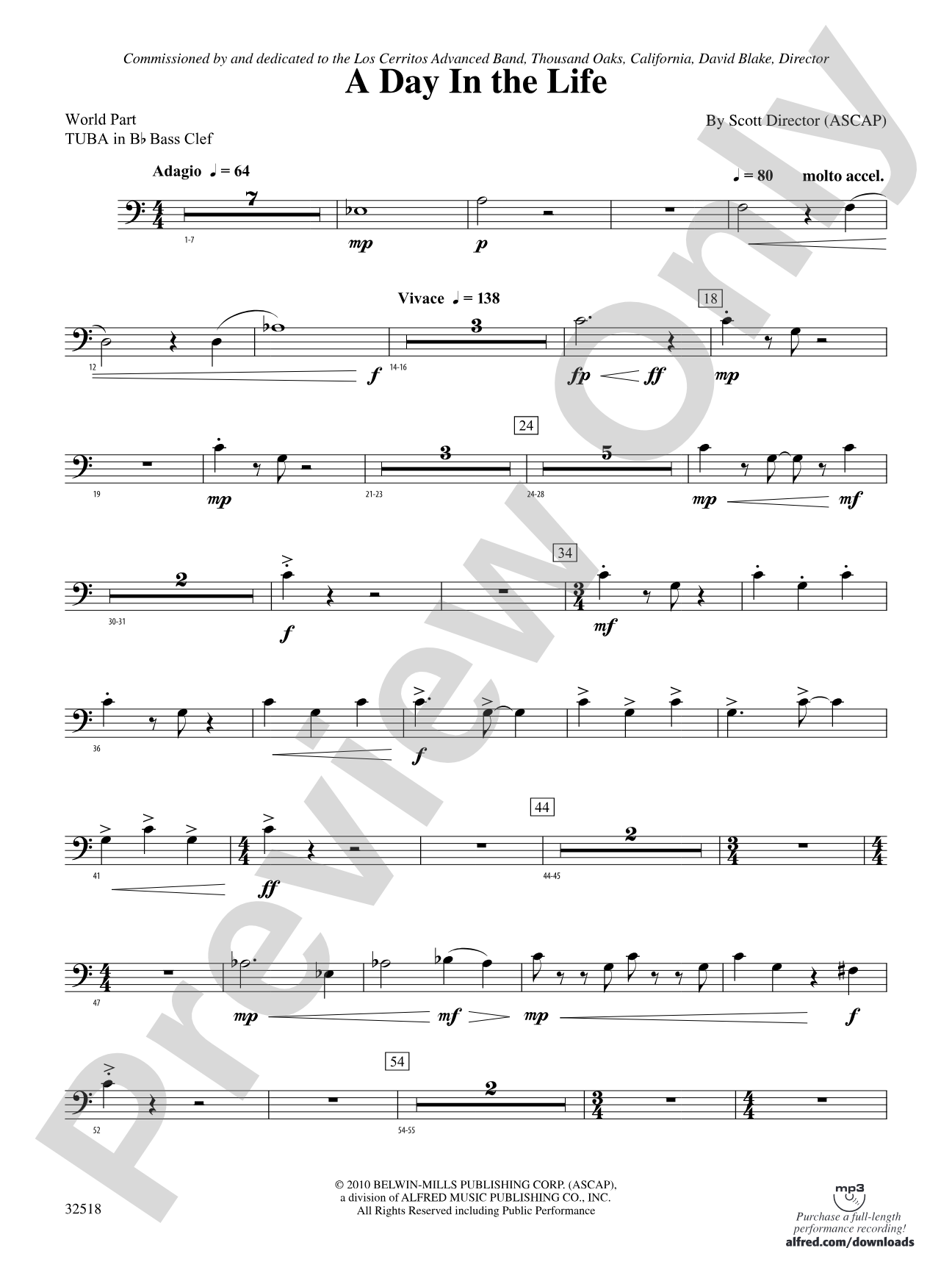
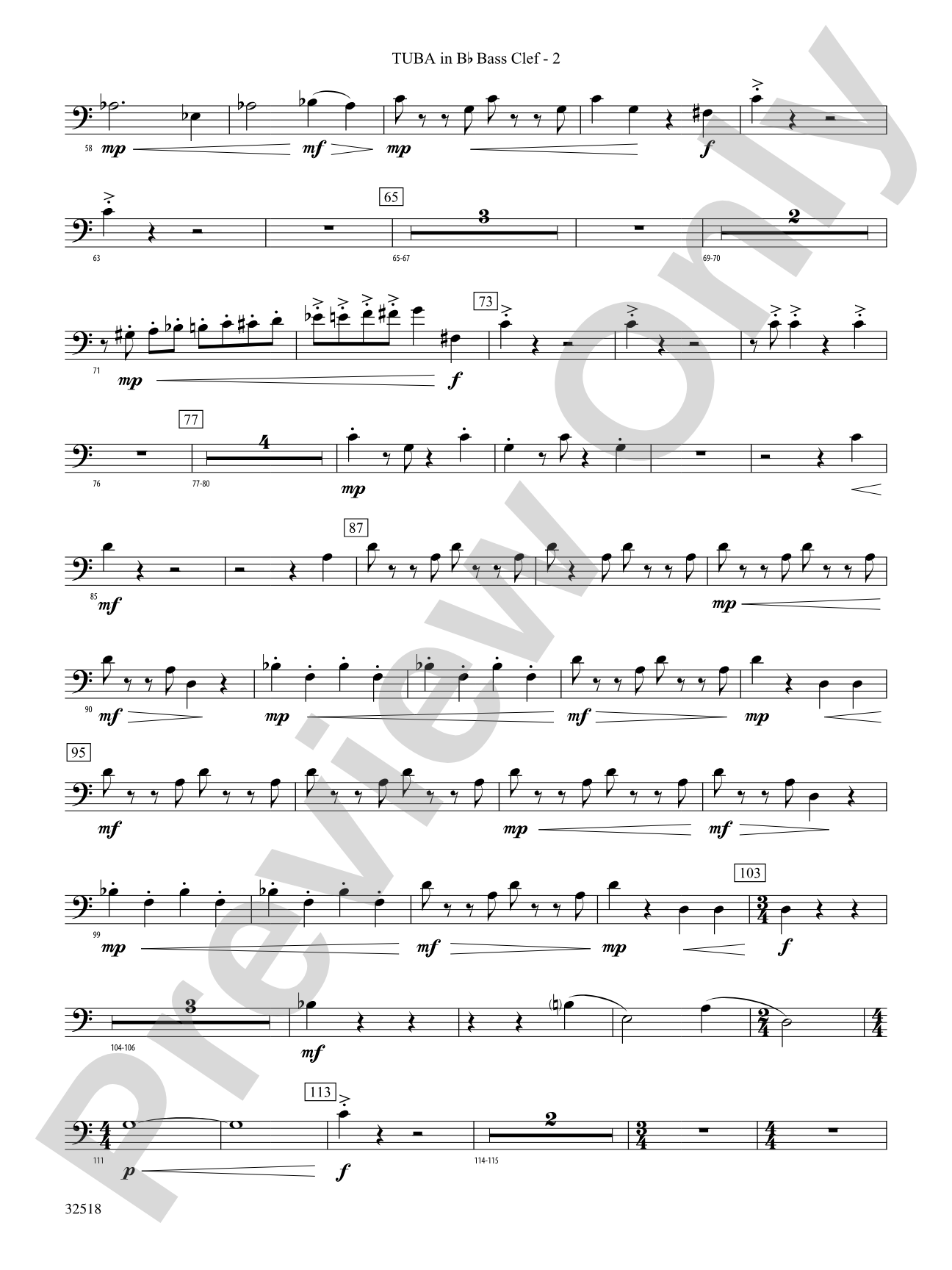
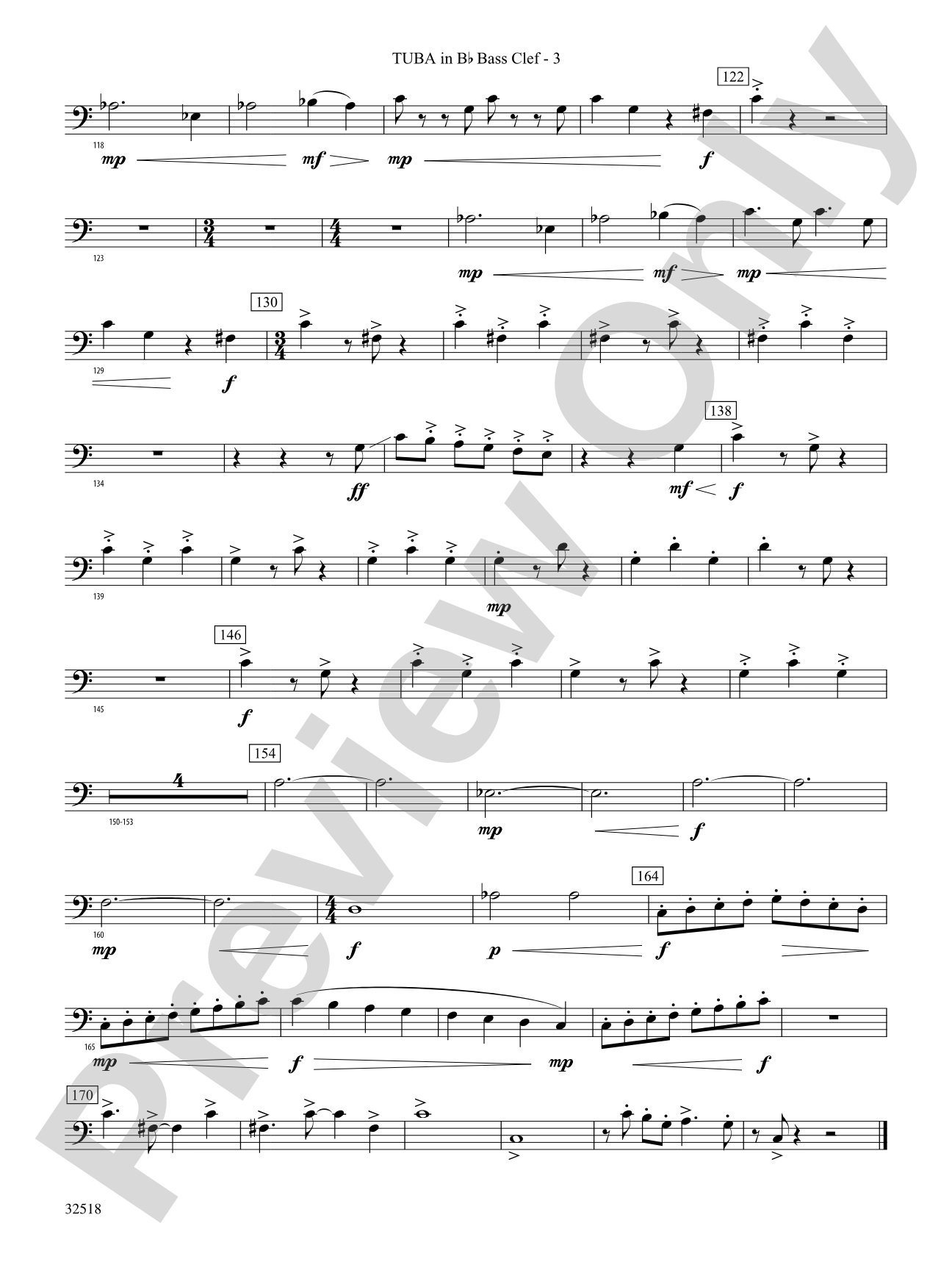
A Day in the Life: (wp) B-flat Tuba B.C.
By Scott Director
Grade: 3.5 (Medium Easy to Medium)
Item: 00-PC-0014395_wpTBBBC
Pickup currently not available
Description
Don't just read it, hear it, play along with it, and watch your students grow with it. In MakeMusic Cloud, A Day in the Life: (wp) B-flat Tuba B.C. comes alive with professional accompaniment, adjustable tempo, and built-in practice tools that turn solo practice into real progress.
Jump straight in and assign it today.
Open this title and explore the full library in minutes.
Sample Audio
Sample Video
Additional Details
More about this title
Why we love this
Scott Director captures the genuine rhythm of a band program's daily life with humor and musical sophistication. Rather than settling for generic "day in the life" clichés, he alternates between student and director perspectives, giving the piece narrative texture and emotional complexity that ensembles find deeply relatable.
What to expect
The music pulses with the controlled chaos of a typical rehearsal day. One moment you're in the contemplative headspace of a musician working through a difficult passage; the next, the piece accelerates into the bright, energetic atmosphere of a sectional running full steam. The constant perspective shifts keep both performers and audiences engaged and smiling.
Who it's for
Concert bands in the Grade 3.5 range who want a piece that speaks to their own daily experience rather than abstract musical concepts. Directors seeking repertoire with narrative appeal and humor will find this especially useful for pep concerts, festival programs, or any concert celebrating the band program itself.
How to get the most out of it
- Establish clear articulation during the faster passages to maintain clarity through the frenzied sections; these moments need precision to land the energy without sounding rushed.
- Balance the reflective moments against the lively ones by resisting the urge to push tempo in the upbeat sections. Let the contrast speak for itself.
- Work with your students to understand whose perspective they're playing at any given moment. Student energy feels different from director energy, and that awareness will shape phrasing and character naturally.
- Mark clear visual cues in the conductor score for the transitions between perspectives so ensemble entrances feel confident and intentional rather than abrupt.
How to use it
Program this as a concert centerpiece or opener that sets a conversational, intimate tone with your audience. It pairs well on a concert featuring other lighter repertoire, and works equally effectively at contest or festival settings where you want adjudicators to see the full personality of your ensemble. The narrative structure also makes it an excellent choice for programs celebrating milestones or season themes.
Skills your students will build
- Reading and executing rapid tempo changes and contrasting articulation styles
- Balancing individual voice clarity in dense, fast-moving sections
- Responding to frequent perspective and character shifts within a single piece
- Maintaining ensemble cohesion through transitions between contrasting musical moods
- Shaping phrasing and dynamics to support musical storytelling