
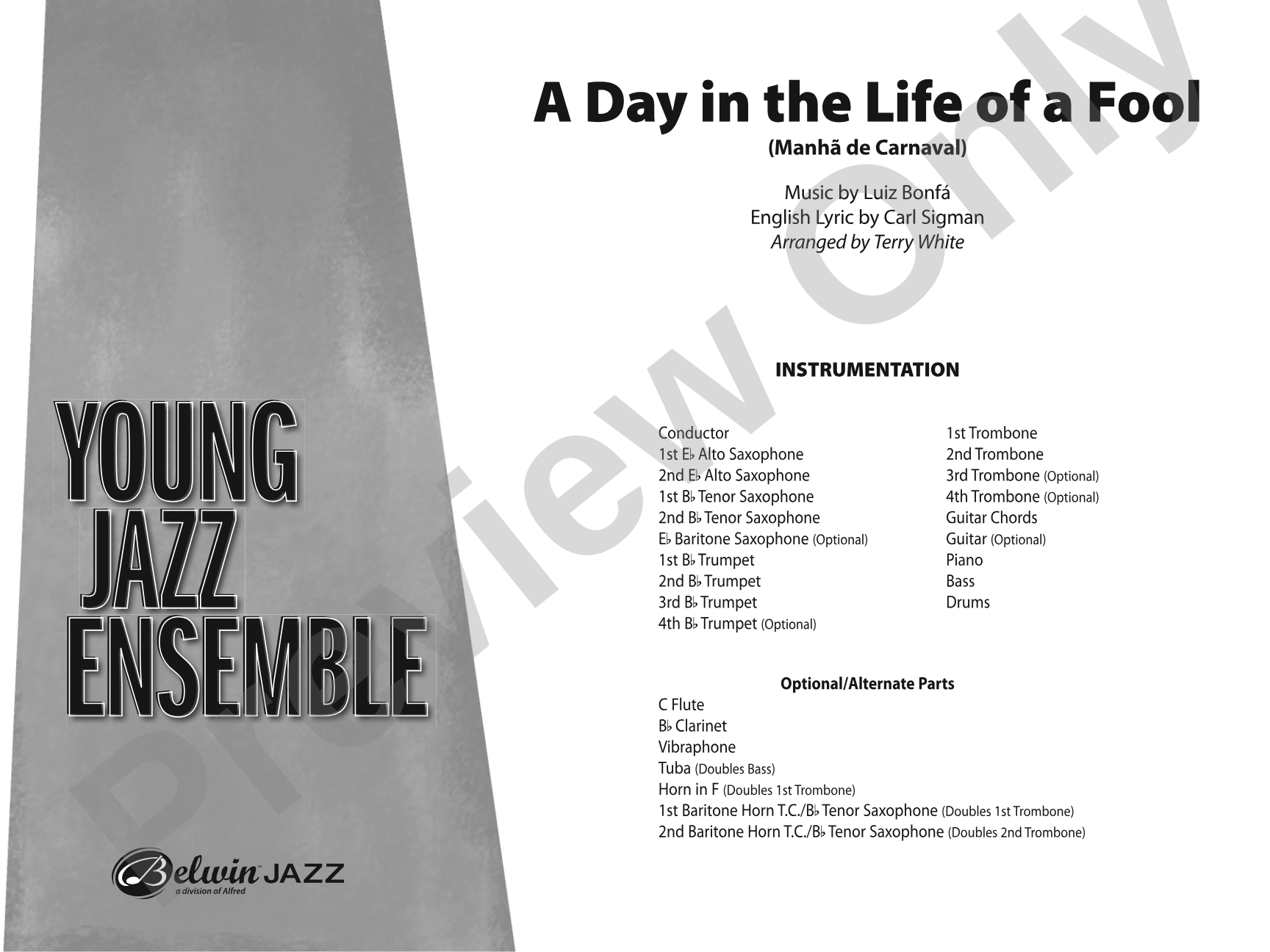
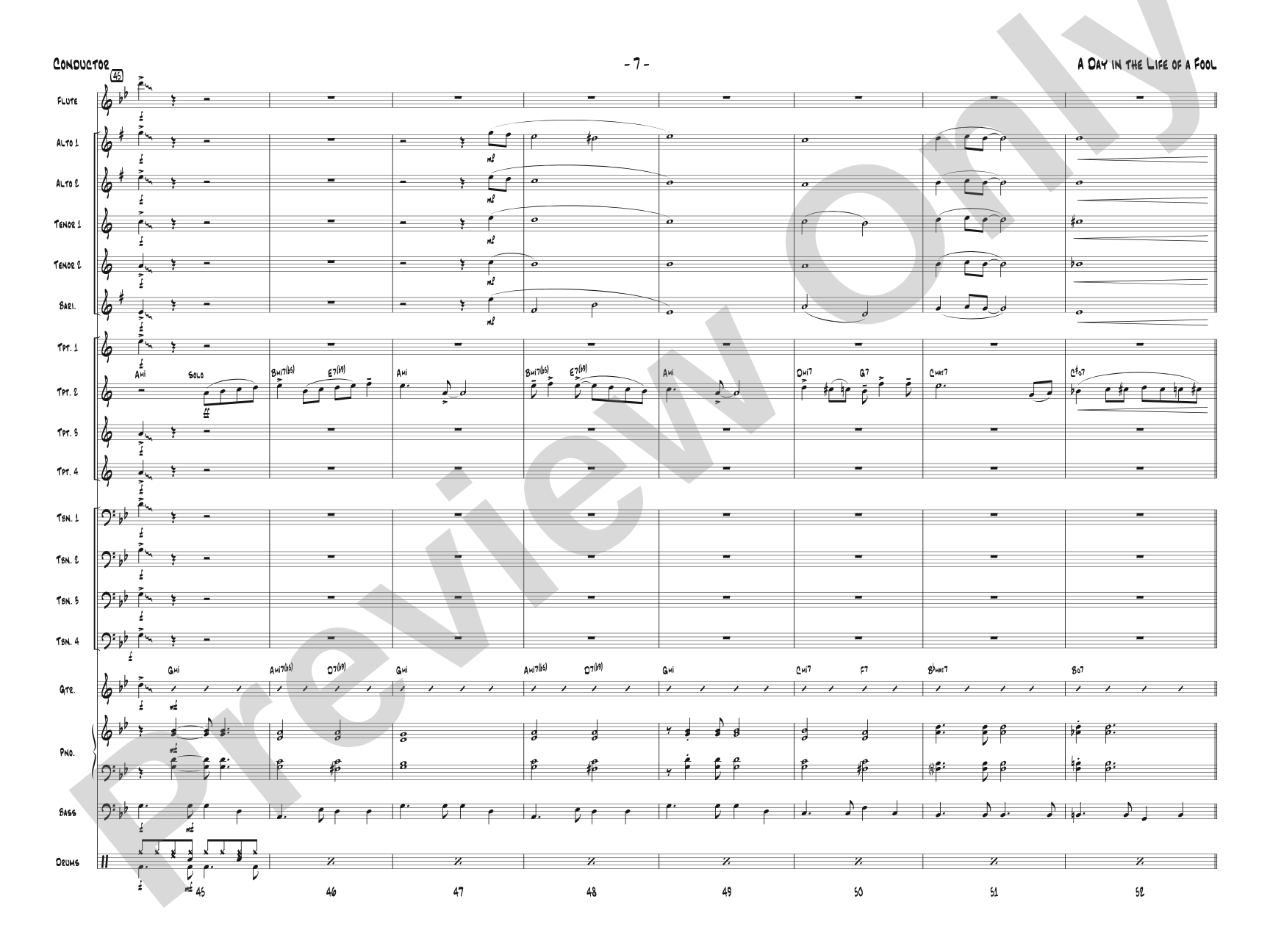
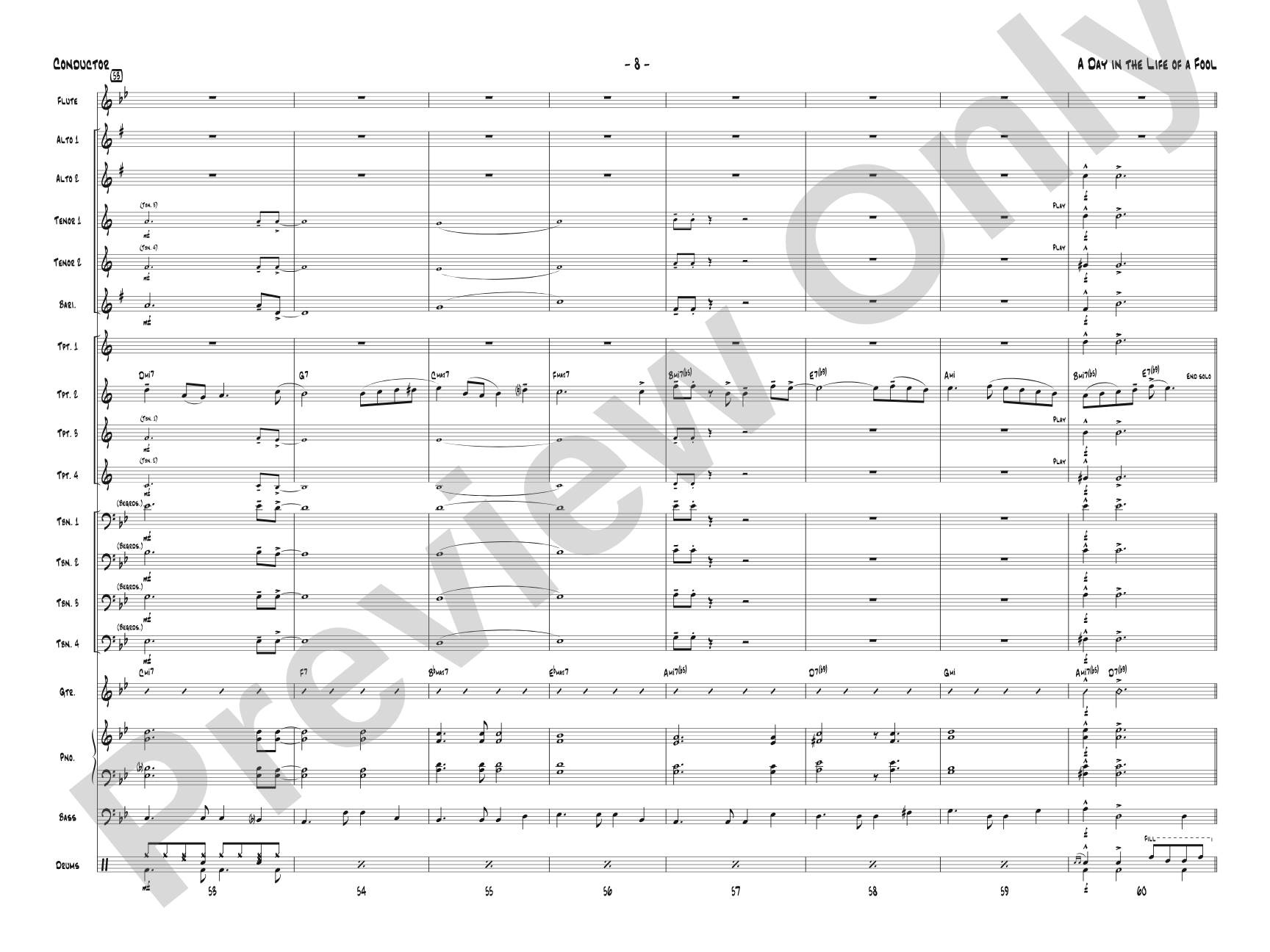
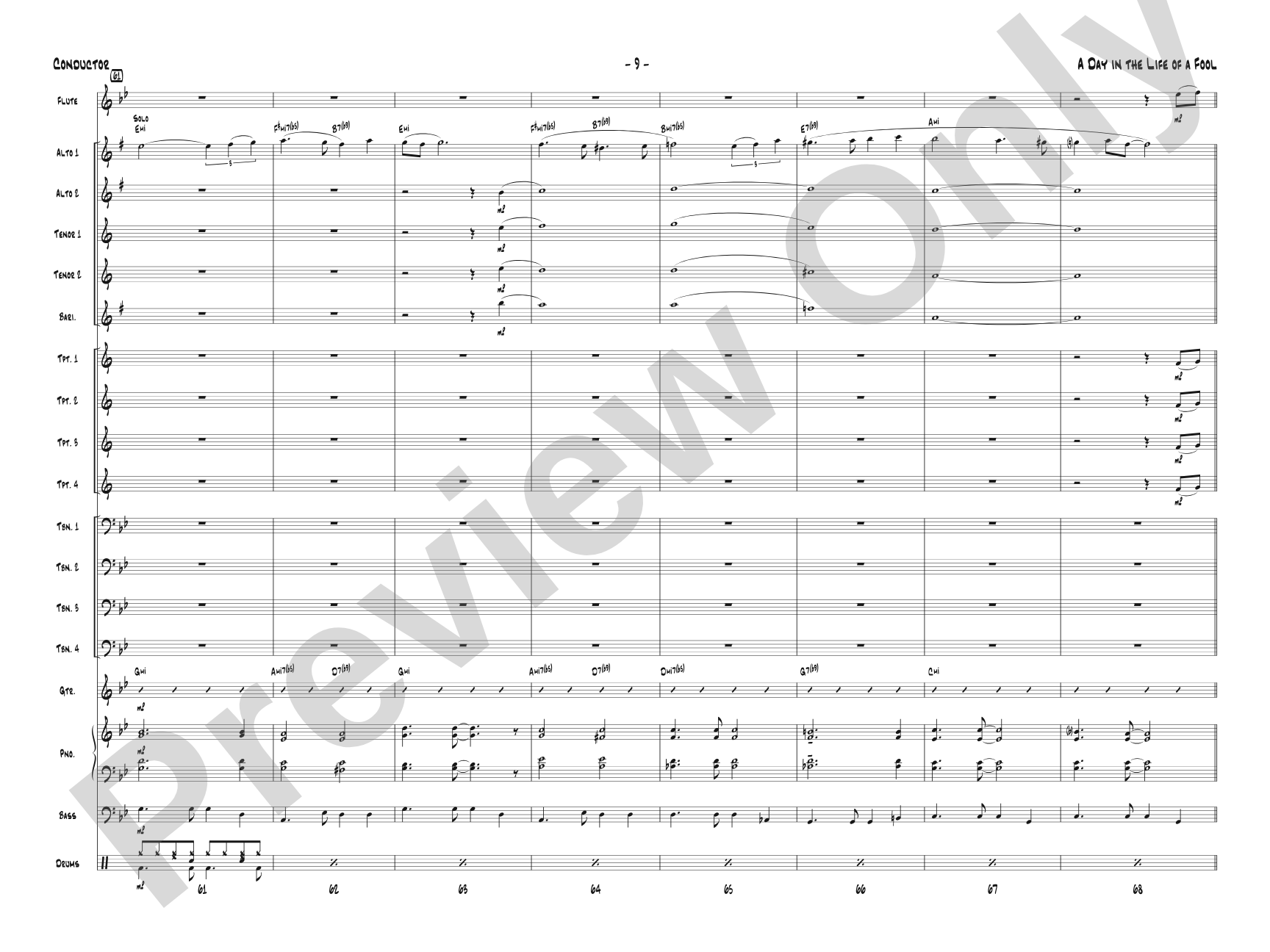
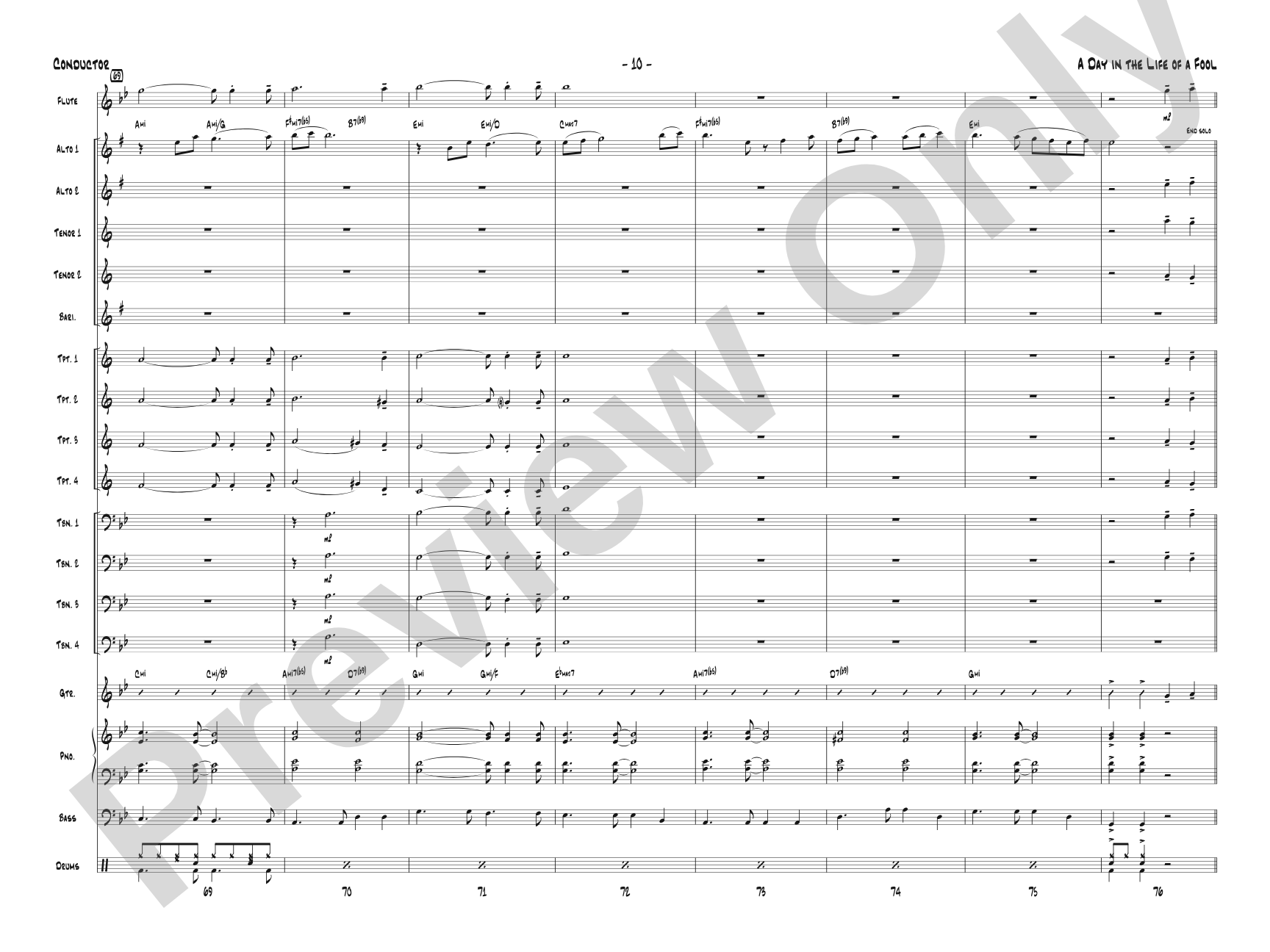
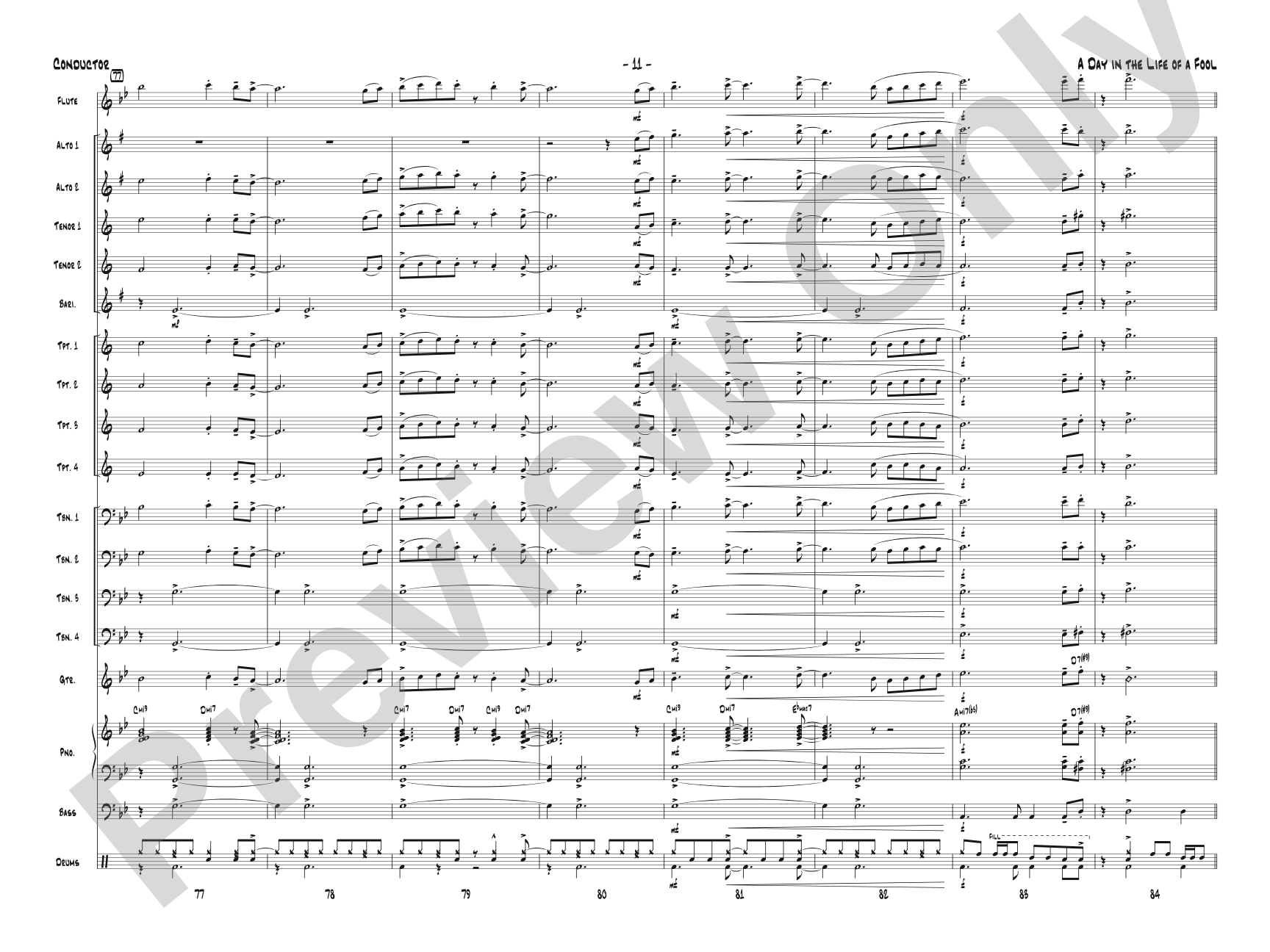
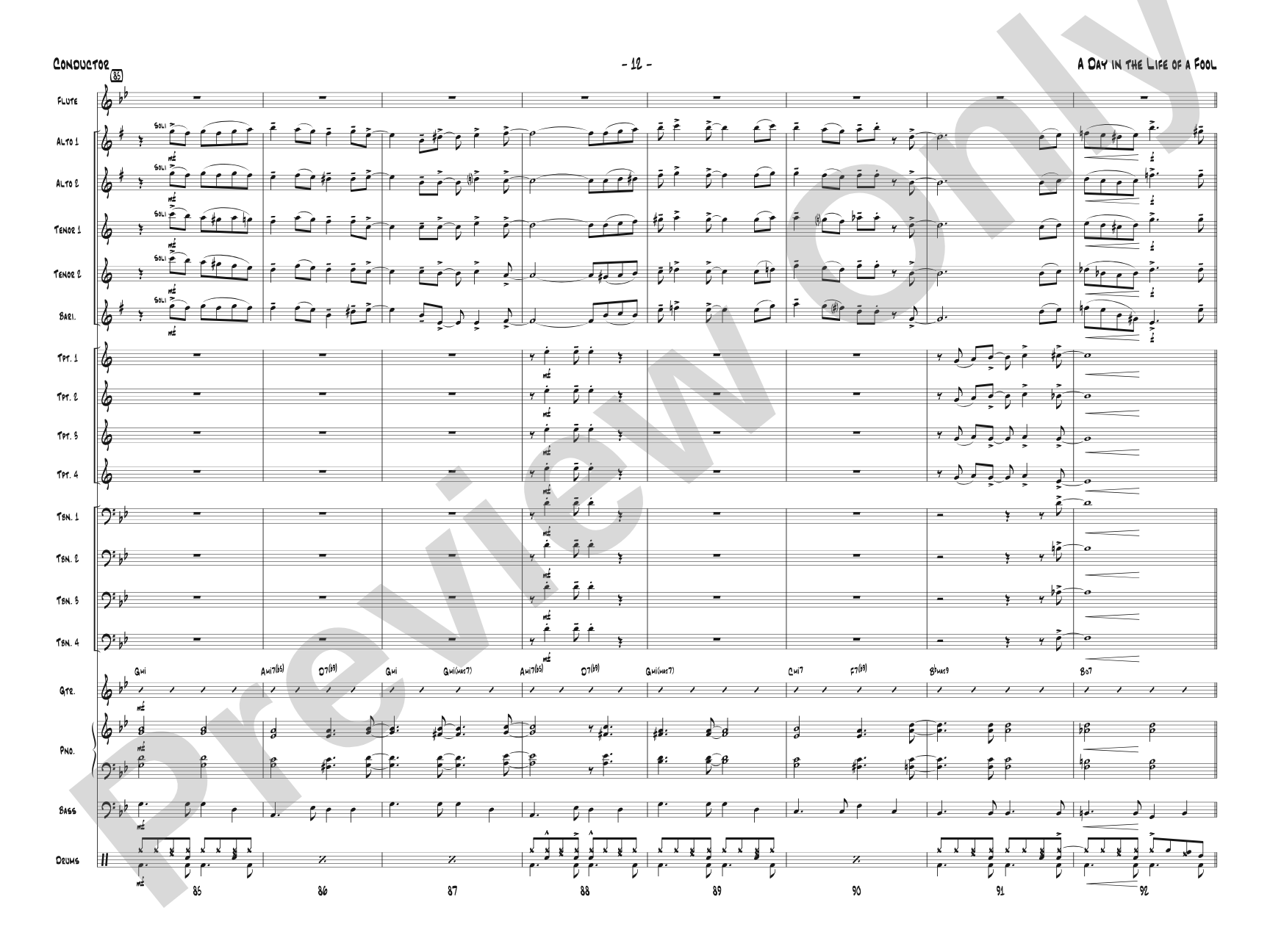
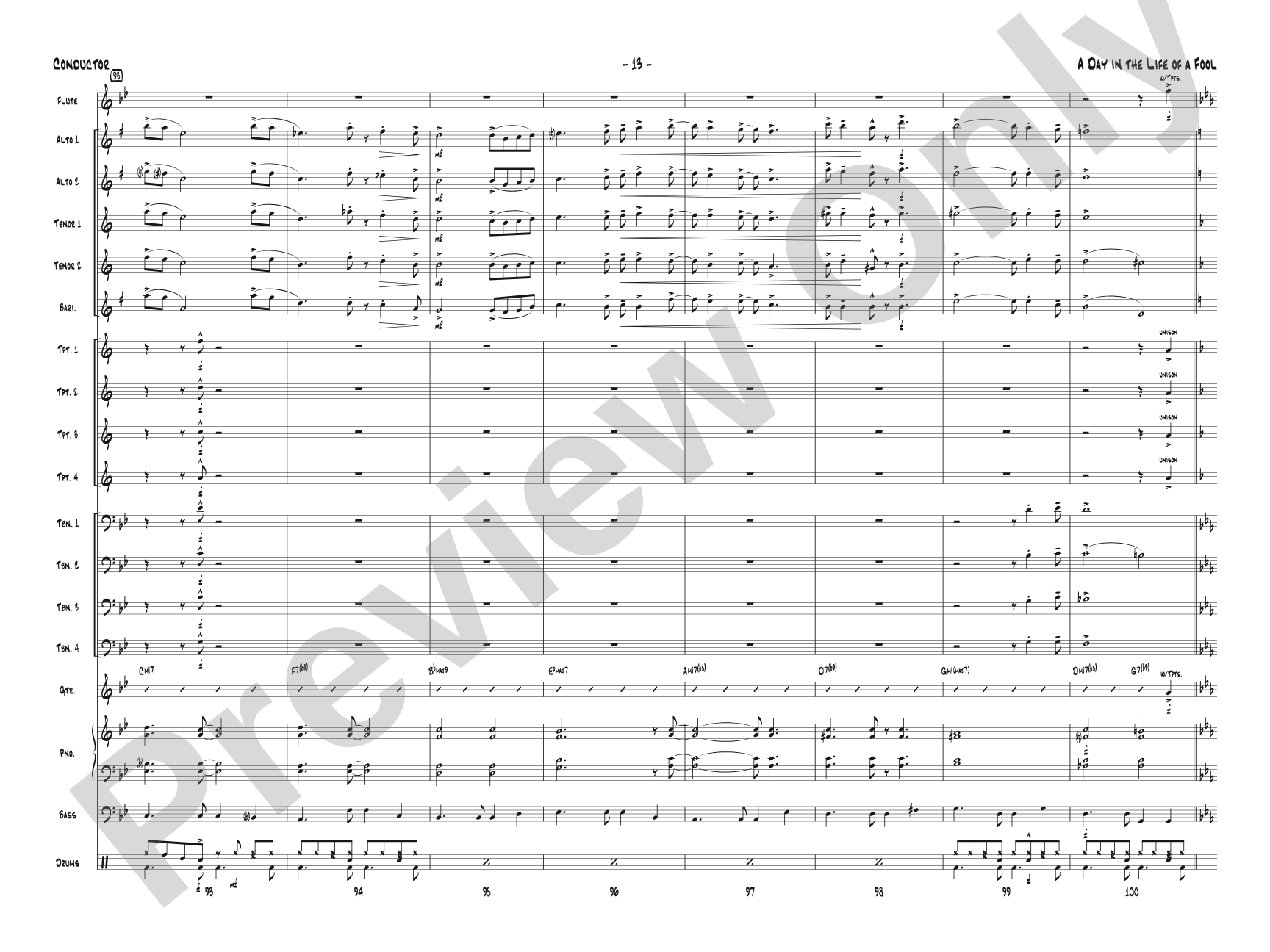
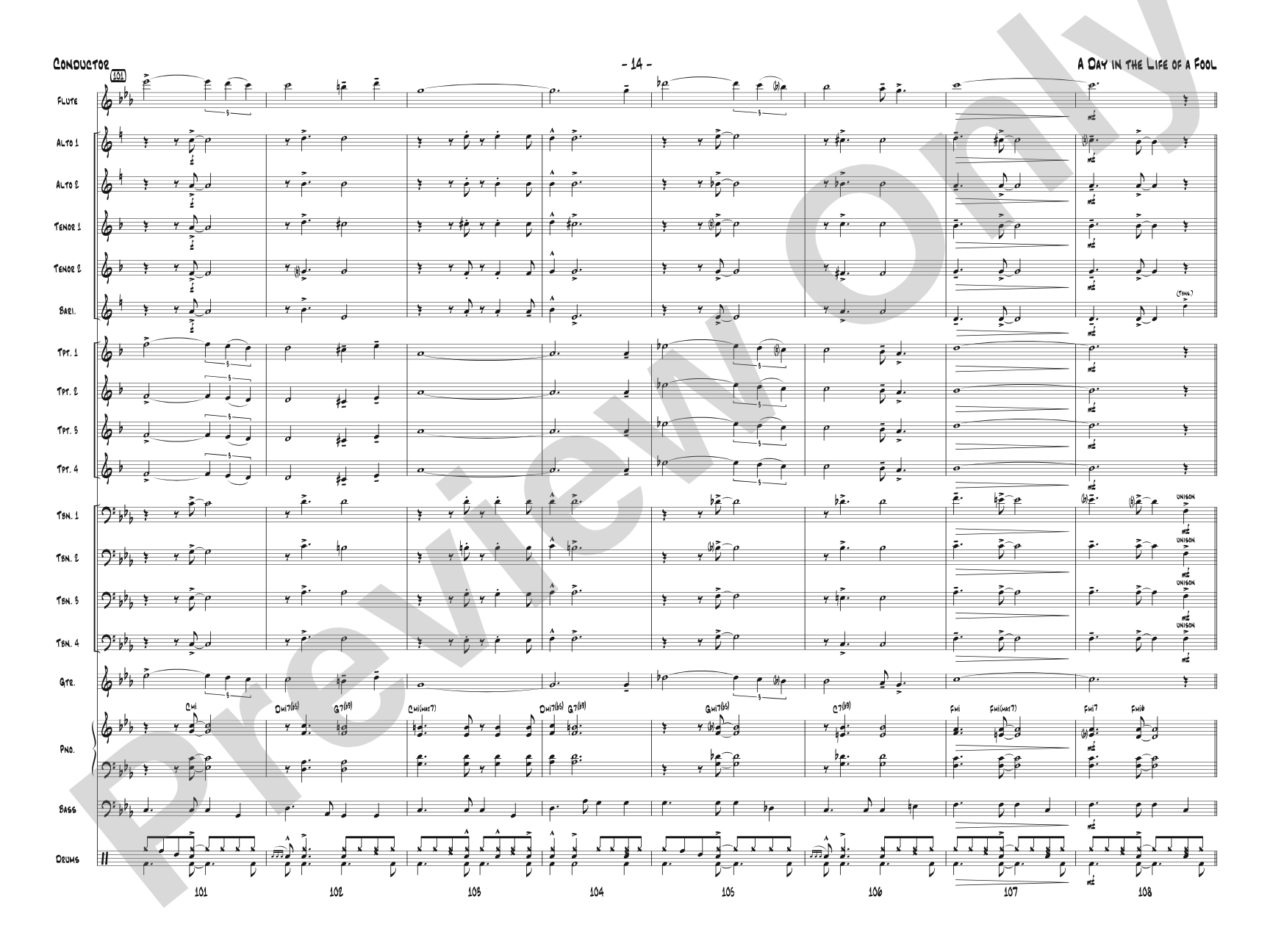
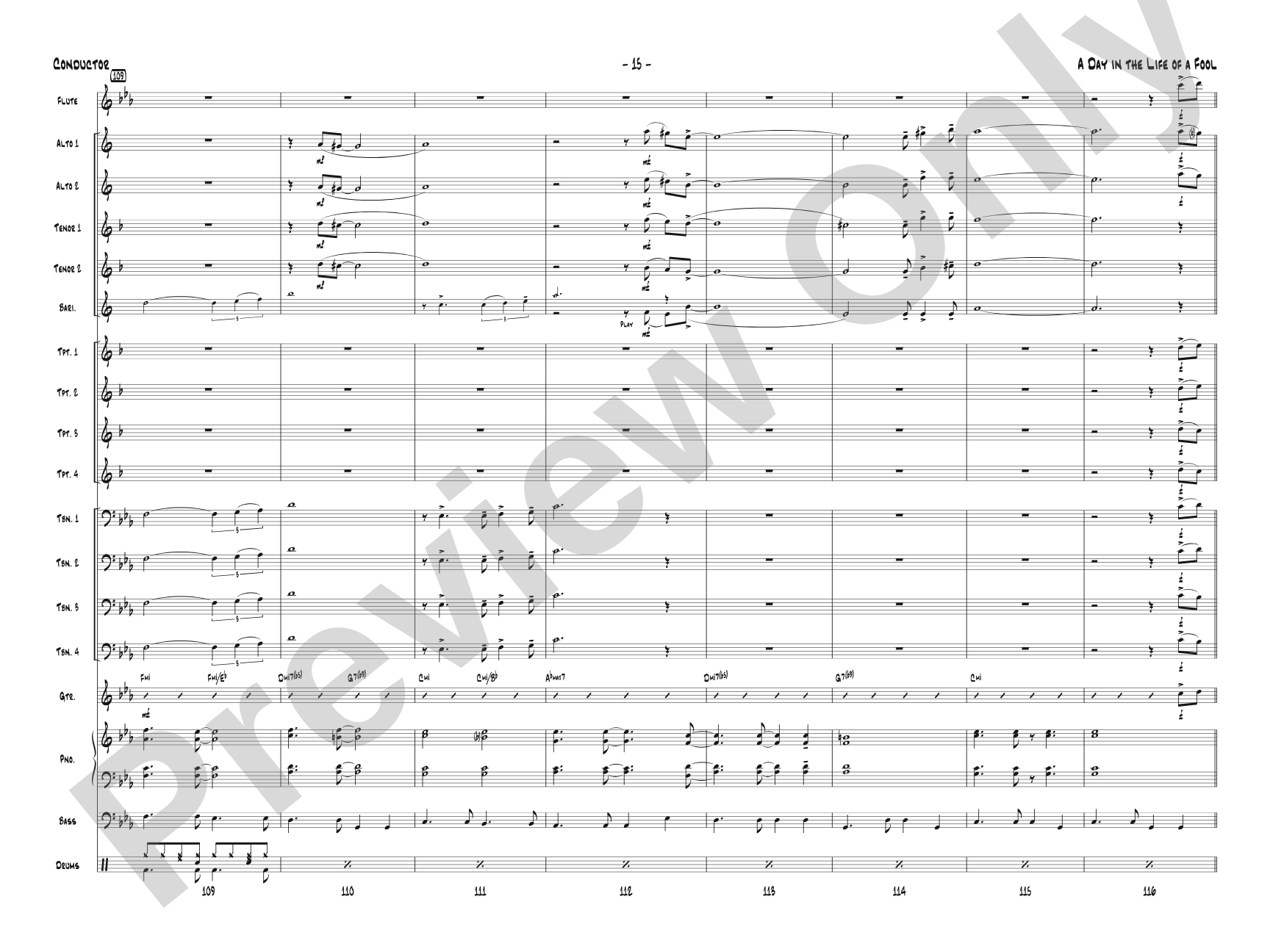
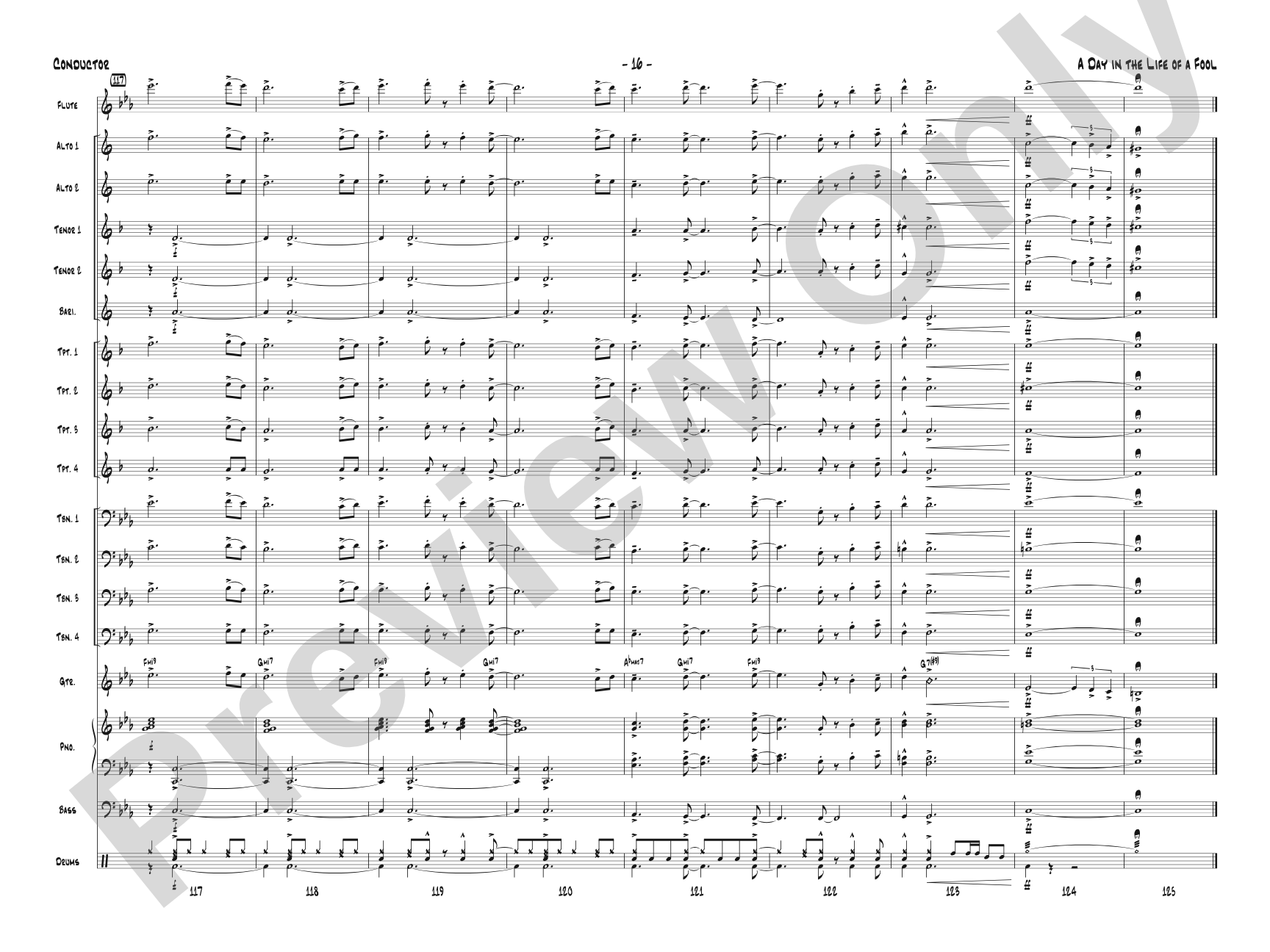

A Day in the Life of a Fool (Manha de Carnaval): Jazz Ensemble Conductor Score & Parts
Music by Luiz Bonfá, English lyric by Carl Sigman / arr. Terry White
Grade: 2 (Medium Easy)
Item: 00-PK-0007232

$48.00
Pickup currently not available
Buy Extra Parts (Digital PDF Download)
Parts Added to Cart!
Description
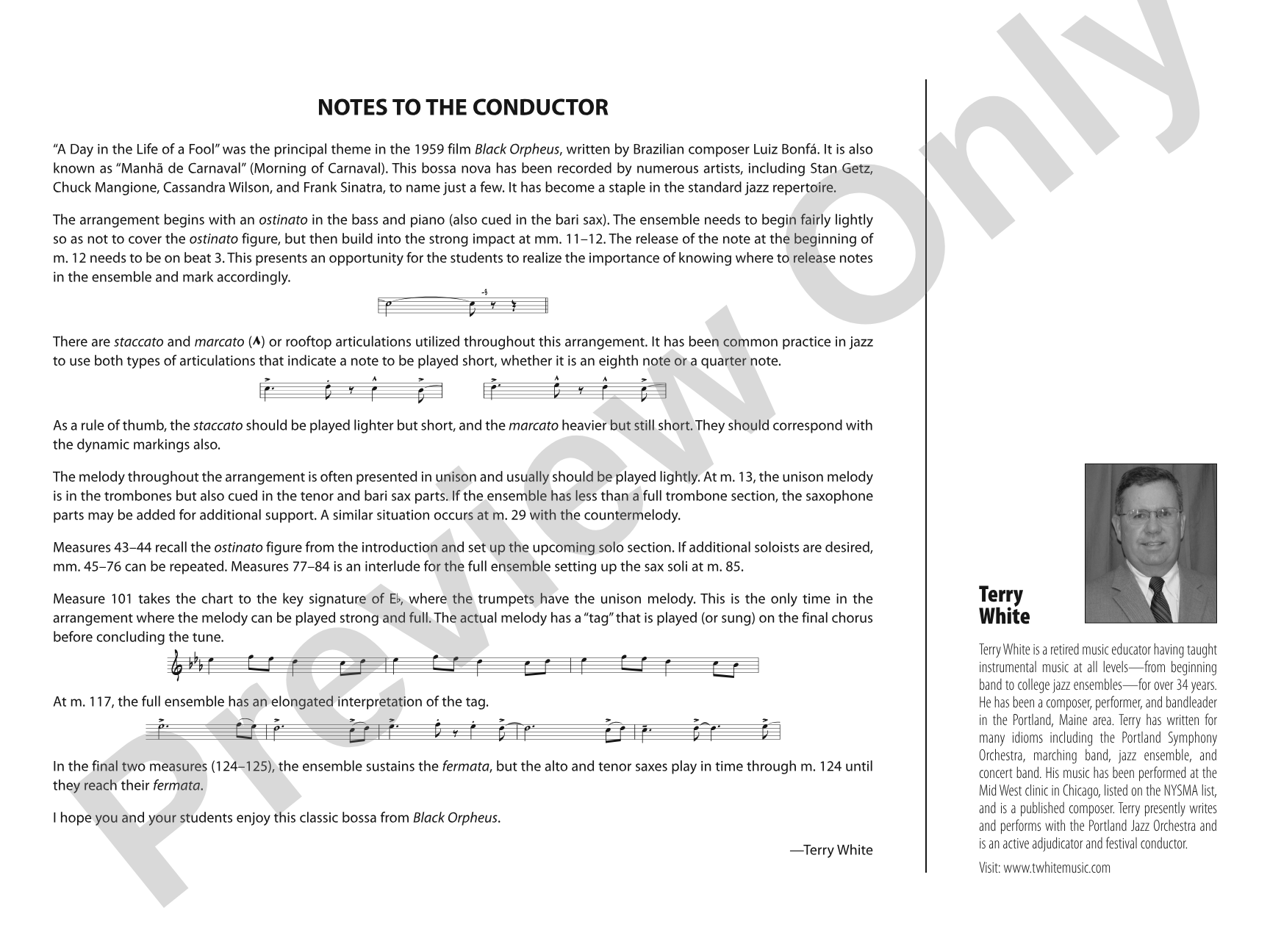
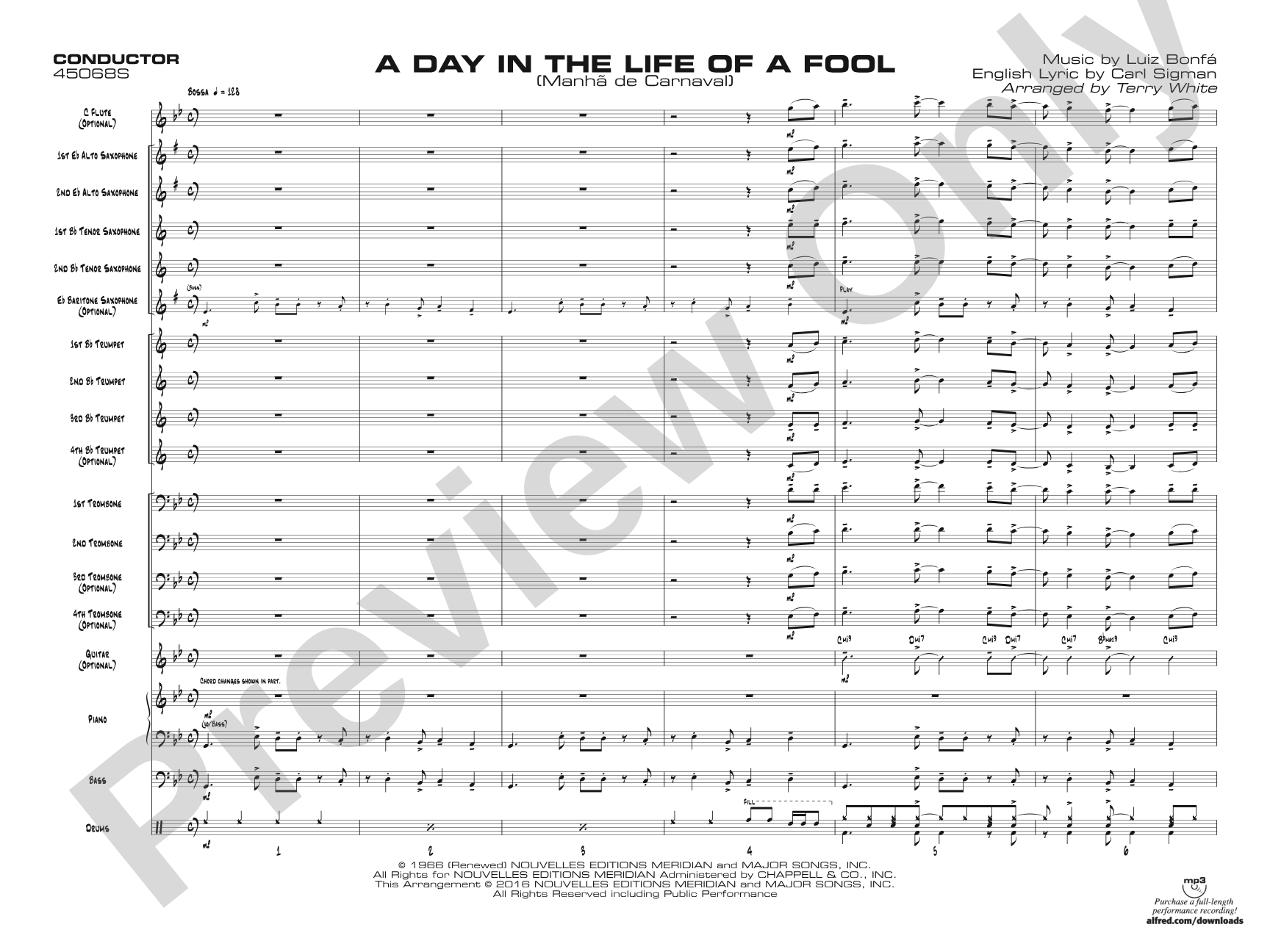
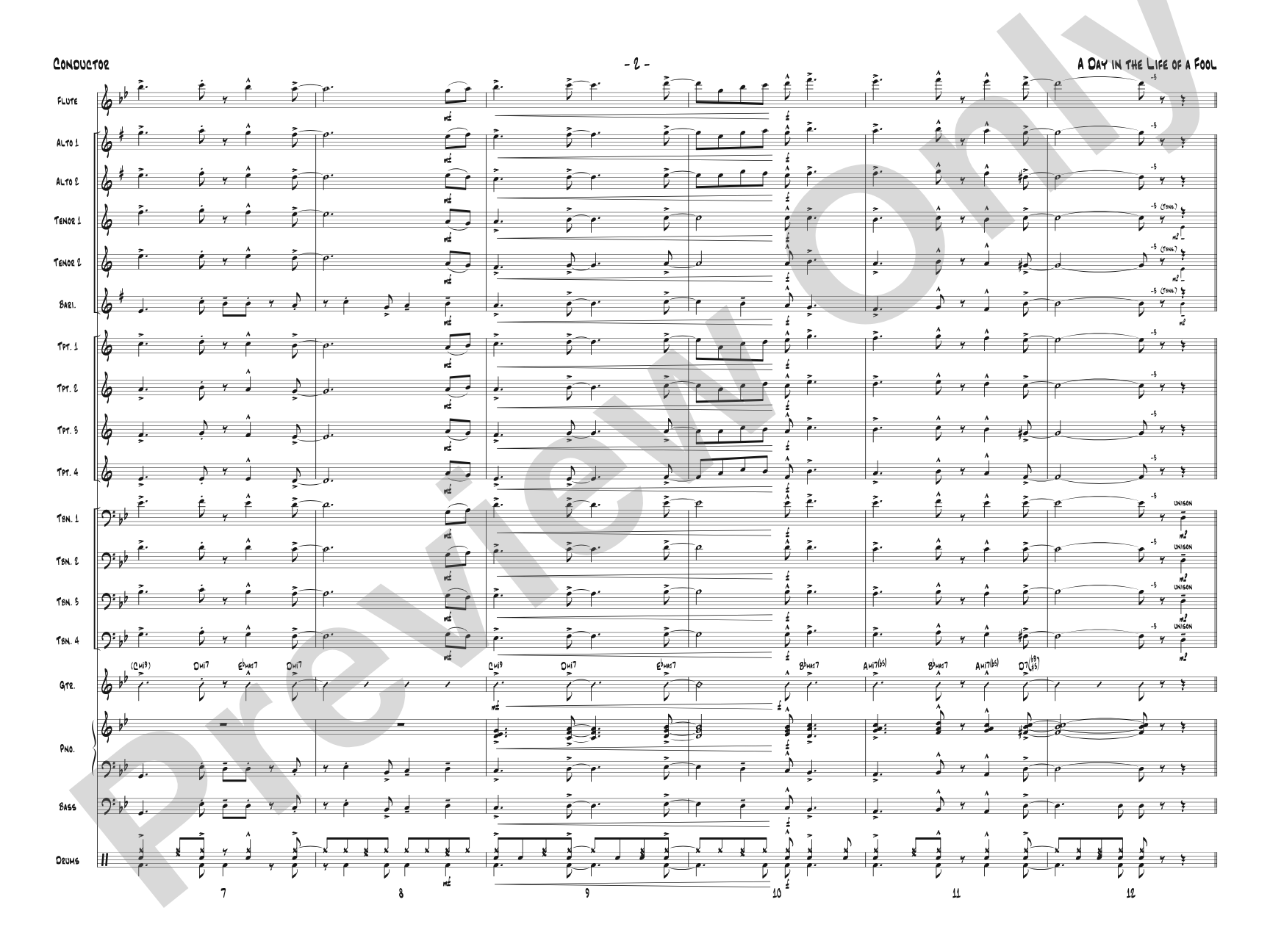
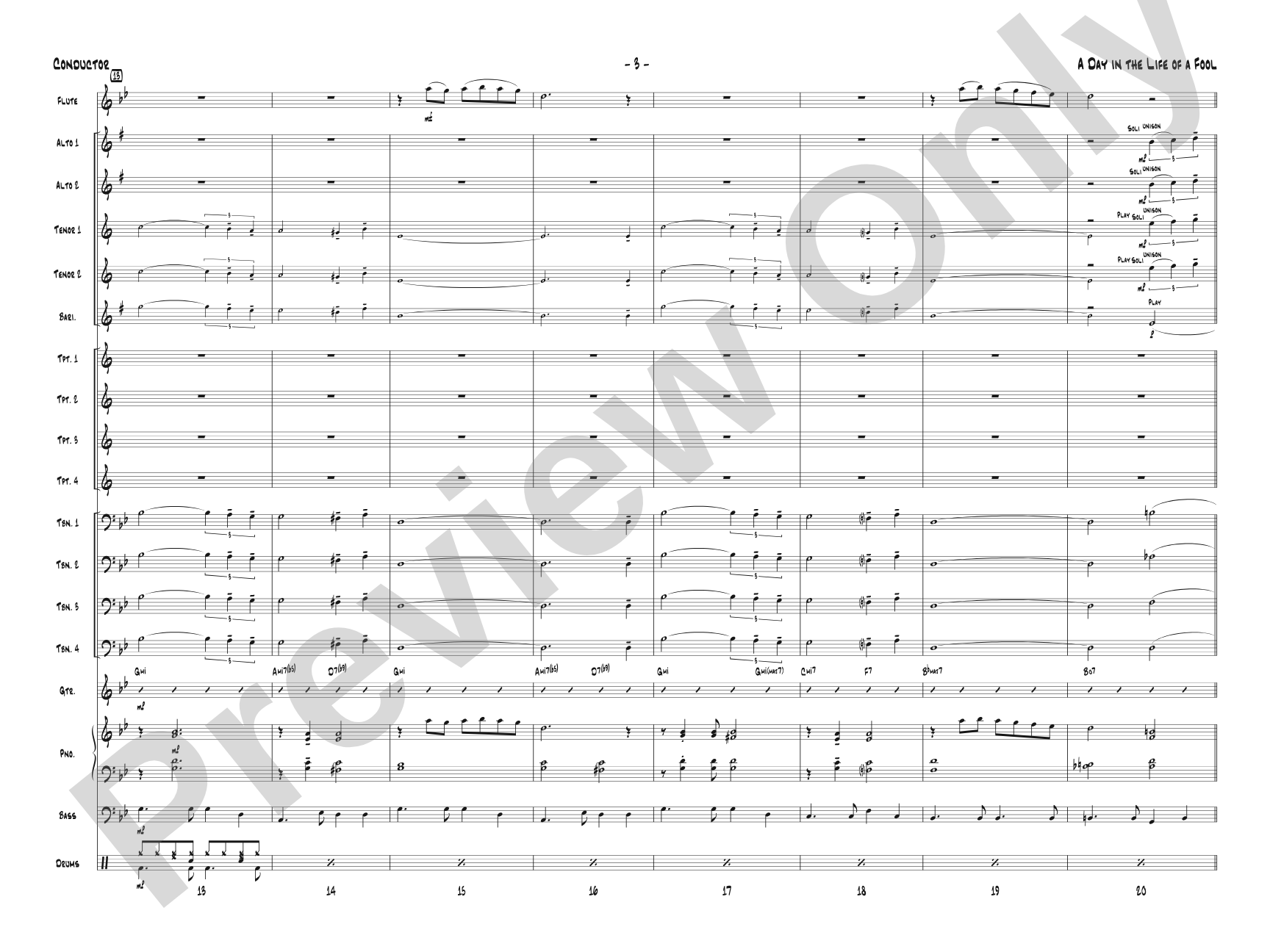
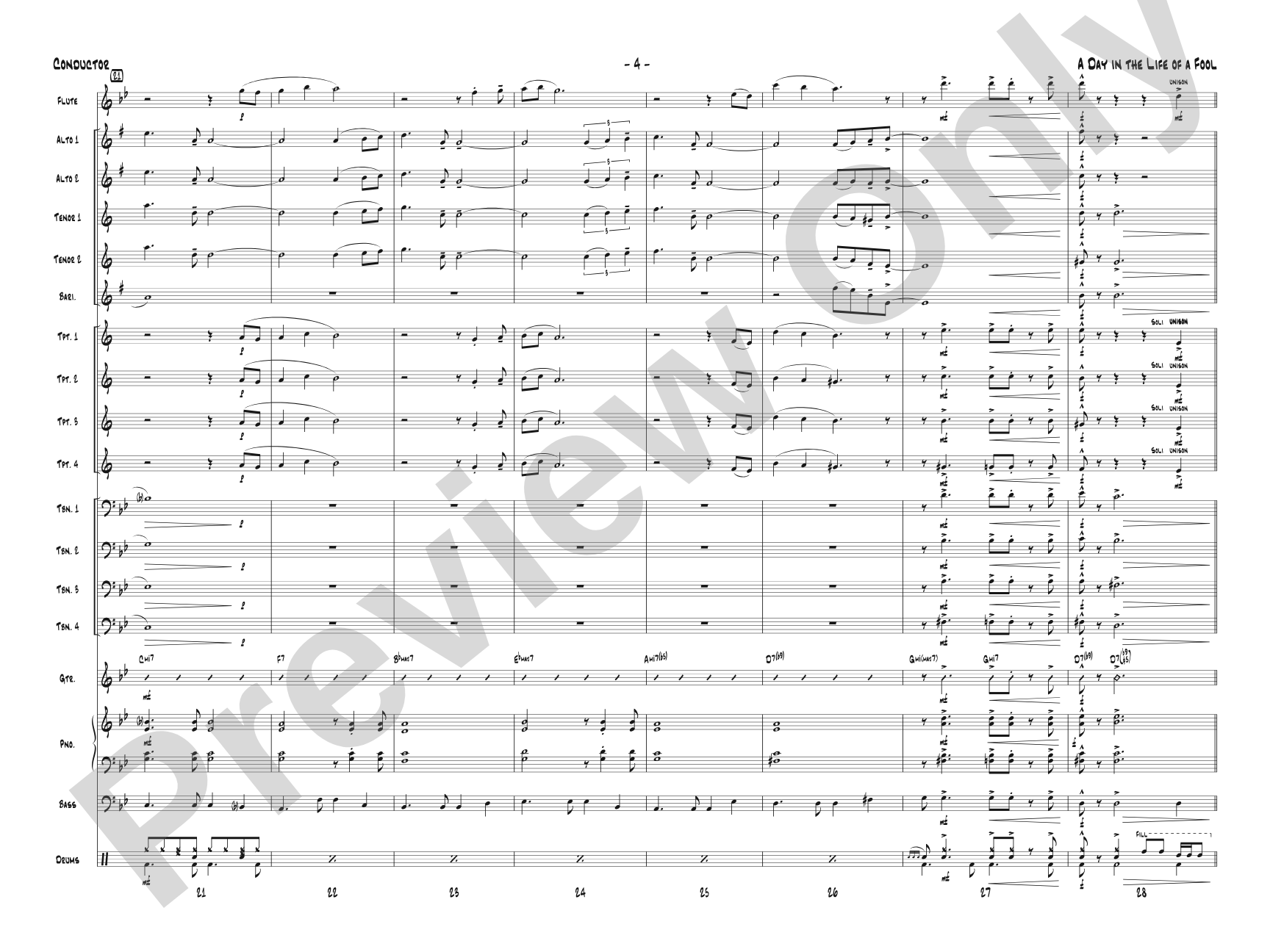
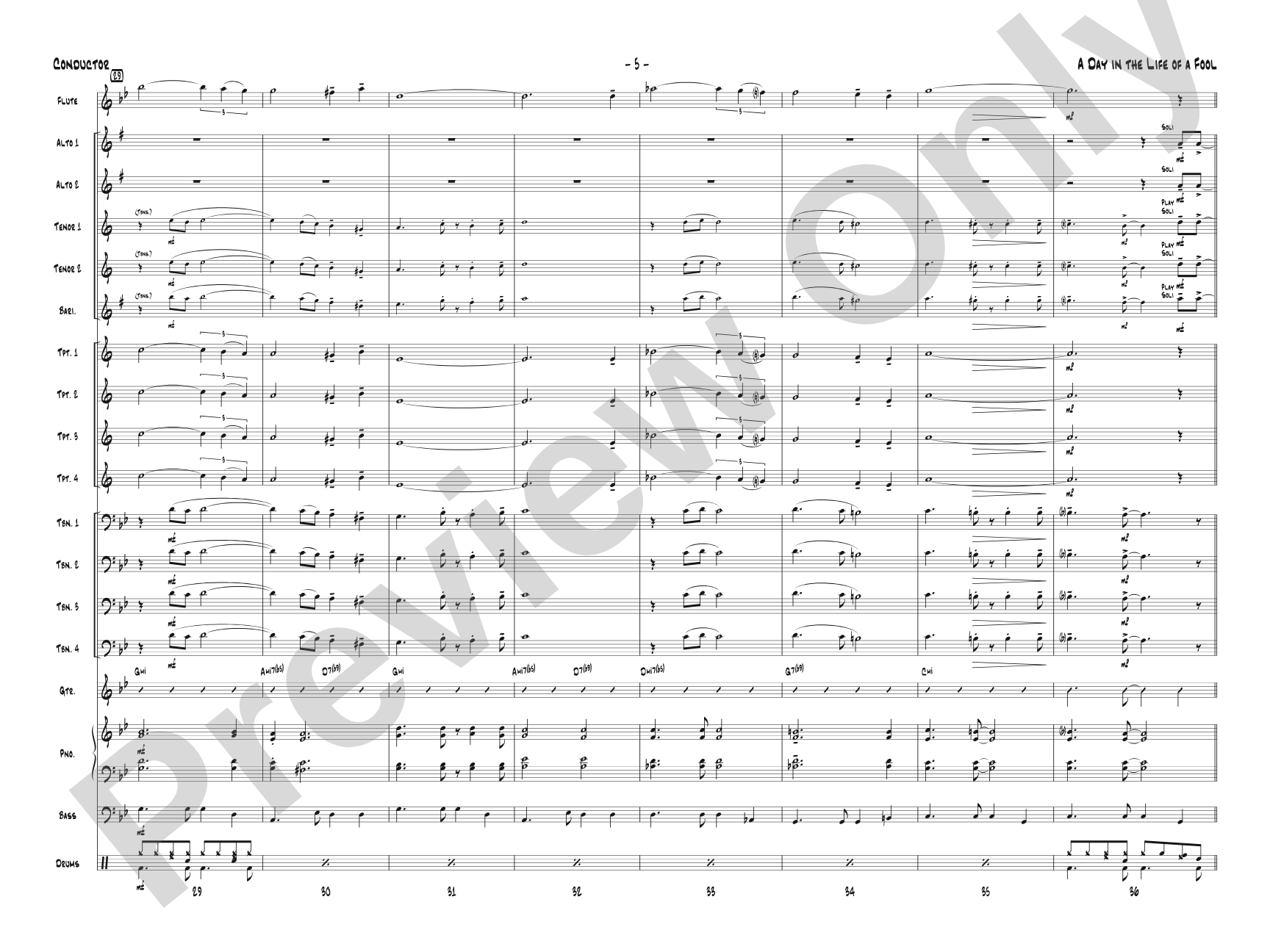
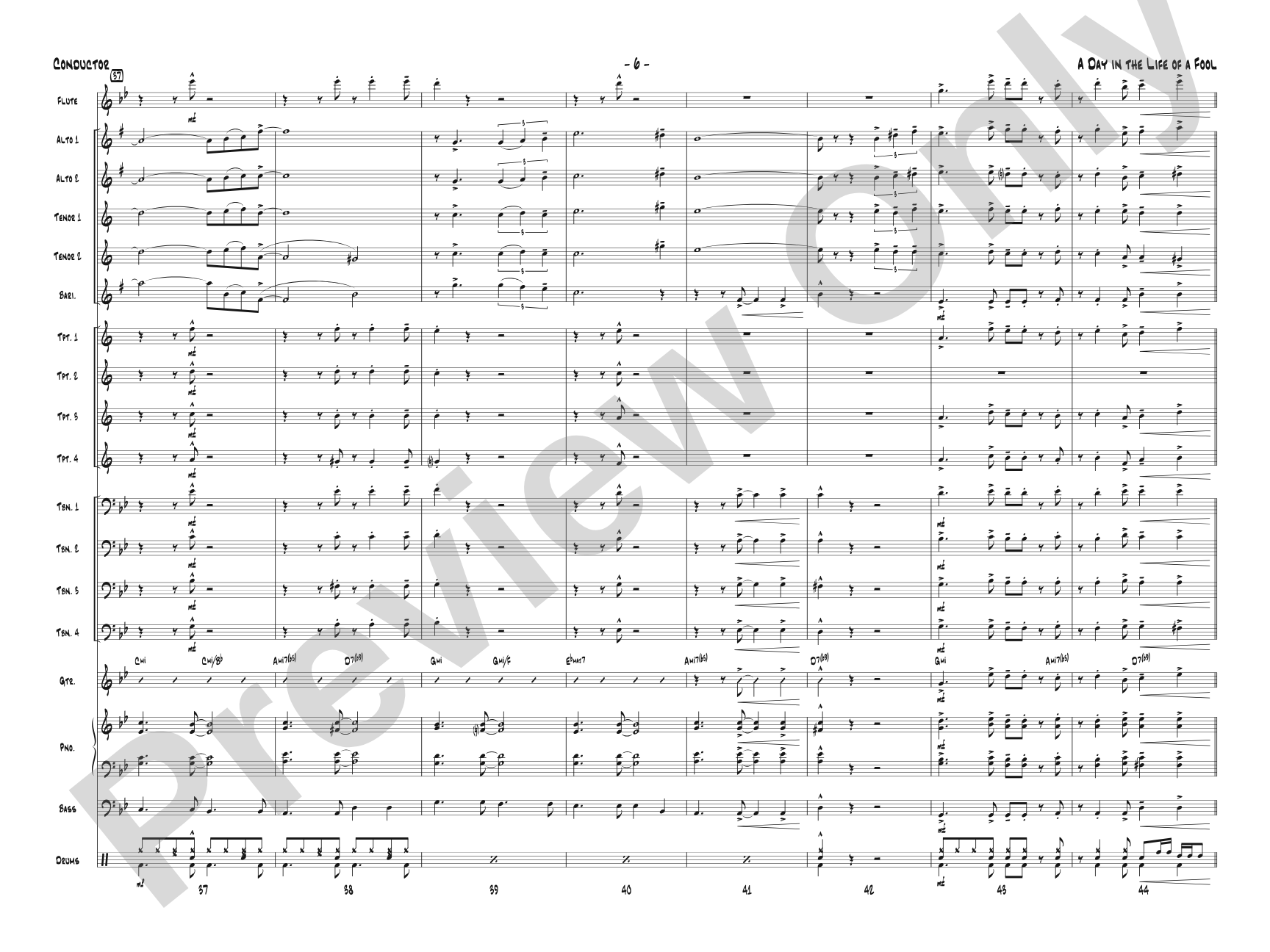
"A Day in the Life of a Fool (Manha de Carnaval)" arranged by Terry White is a bossa nova groove---but not just any bossa---this one stands above the rest. Superb harmonies, nice voicings, a nice sax soli, written solos for alto and trumpet, a big shout chorus, and all very tasty throughout. This chart also includes a variety of optional parts plus flute, clarinet, and vibes. Tempo is 128 BPM. (4:00)


Don't just read it, hear it, play along with it, and watch your students grow with it. In MakeMusic Cloud, A Day in the Life of a Fool (Manha de Carnaval): Jazz Ensemble Conductor Score & Parts comes alive with professional accompaniment, adjustable tempo, and built-in practice tools that turn solo practice into real progress.
Open in the Player
Jump straight in and assign it today.
Start Your Free Trial
Open this title and explore the full library in minutes.
Sample Audio
1
Audio File
--:--
0:00
0:00
Sample Video
Additional Details
Series:
Young Jazz Ensemble
Publisher:
Alfred Music
Page Count:
102
SKU:
00-PK-0007232
More about this title
About the Composer: Luiz Bonfá
Luiz Bonfá (1922-2001) was a Brazilian guitarist, composer, and singer who helped define the bossa nova sound in the late 1950s and early 1960s. His compositions, including "Manha de Carnaval" (A Day in the Life of a Fool), became standards of the genre and influenced generations of jazz musicians worldwide.
Bonfá's gift for melody and harmonic sophistication made his work instantly recognizable. His pieces remain central to the jazz and Latin music repertoire, offering educators rich material for teaching contemporary harmony, rhythmic sophistication, and the deep connection between Brazilian and North American jazz traditions.
Why we love this
Terry White's arrangement captures everything that makes this tune irresistible: the elegant bossa nova groove, the sophisticated harmonies, and genuine solo space for your section leaders. At Grade 2, it's accessible enough for developing ensembles yet sophisticated enough to feel rewarding for players and audiences alike. The addition of optional parts (flute, clarinet, vibes) gives you flexibility to match your instrumentation without sacrificing the arrangement's integrity.
What to expect
Warm, sophisticated, and impossibly cool. The chart breathes with the easy elegance of a Rio sunset, mixing the joyful independence of individual soloists with the unified sophistication of a tightly voiced ensemble sound. You'll feel the swing underneath the bossa nova pulse, creating that magical place where jazz and Latin music become one language.
Who it's for
Jazz ensemble directors working with Grade 2 groups who want to teach bossa nova style, harmonic sophistication, and solo construction without overwhelming their students. Players who are comfortable with jazz swing and basic Latin feels will thrive on this chart; it's ideal for ensembles ready to move beyond simple grooves into more nuanced Brazilian idioms.
How to get the most out of it
- Lock the rhythm section into the laid-back bossa nova pulse at 128 BPM; the groove lives in restraint, not drive. Your piano and bass need to establish and maintain that relaxed pocket for the entire ensemble to float above it convincingly.
- Feature your alto and trumpet soloists generously. White has written these out for a reason: they're the emotional heart of the chart. Give players time in rehearsal to internalize the harmonic movement and make these lines their own.
- Balance the sax section voicings carefully during the ensemble passages. The "nice voicings" mentioned in the chart depend on clean blend and relative dynamics; darker horns should anchor the harmony while higher voices sit lightly on top.
- Bring the big shout chorus to life with energy and precision. After the sophistication of the earlier solos, this moment needs punch and unity without losing the bossa nova character.
How to use it
Program this as a concert centerpiece or festival highlight where you want to showcase your ensemble's maturity and groove pocket. It pairs well alongside straight-ahead jazz standards or other Latin-tinged charts, establishing your group as musicians who understand style and idiom, not just notes on a page. The 4-minute length makes it a natural fit for festival competitions or concert sets where you need a crowd-pleasing, stylistically excellent feature.
Skills your students will build
- Bossa nova rhythm and comping feel
- Jazz solo construction and harmonic navigation
- Sophisticated voicing balance and blend in sections
- Reading and interpreting jazz notation (swing eighths, articulation, dynamics)
- Ensemble cohesion while supporting featured soloists
- Brazilian and Latin jazz idiom and phrasing