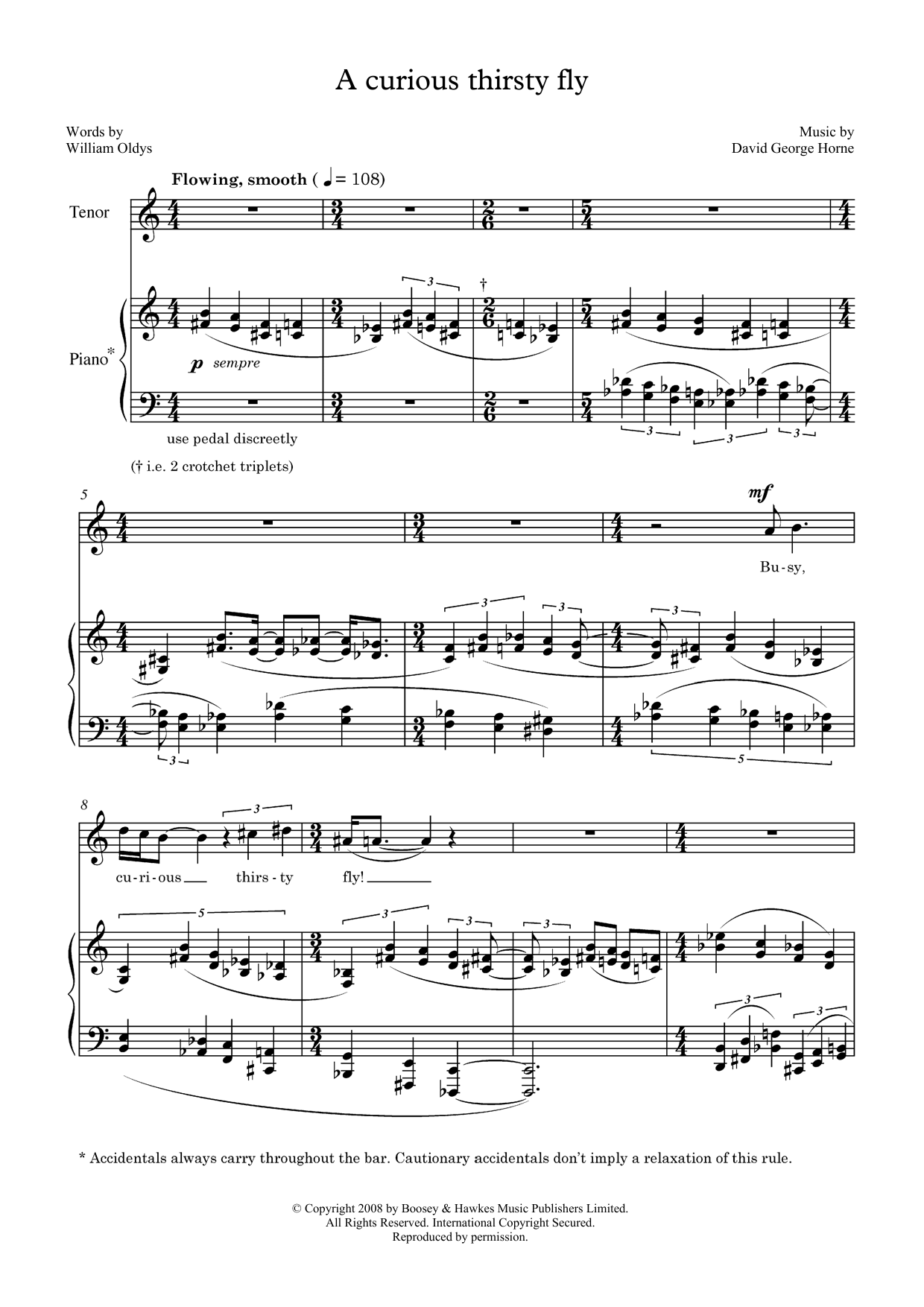
A curious thirsty fly (for tenor and piano) Sheet Music Preview

A curious thirsty fly (for tenor and piano): Piano Vocal

As performed by David Horne

Item: 35-DS00365159

Digital Download
$5.99

One moment…

Description

A curious thirsty fly (for tenor and piano): Piano Vocal isn't in MakeMusic Cloud just yet...but it could be. Let us know you'd like to see it, and you'll help shape what comes next. In the meantime, start a free trial and dive into thousands of interactive titles your students can play along with today.

Sample Audio
No sample audio found.
Sample Video
Additional Details
Publisher: Hal Leonard
Page Count: 5
SKU: 35-DS00365159

More about this title

About the Artist: David Horne

David Horne is a Scottish composer known for his art songs and vocal works that combine lyrical writing with imaginative text settings. His output spans art song, choral, and orchestral music, often drawing on Scottish musical traditions and literary sources.

Why we love this

Horne's setting captures the whimsy of the text through precise musical characterization. The piano part drives the narrative without overwhelming the vocal line, making it a rewarding choice for singers developing interpretive independence.

What to expect

Whimsical yet grounded, with the focused attention of a creature drawn to something specific. The music moves with intent, capturing both the fly's urgency and the poet's observant humor.

Who it's for

Intermediate to advanced tenors looking for character-driven material beyond standard art song repertoire. Teachers seeking vocal literature that engages singers with vivid imagery and musical storytelling.

How to get the most out of it

  • Establish the fly's perspective early by letting the tenor differentiate between descriptive passages and moments of direct action. The piano can help anchor these shifts.
  • Balance the tenor's storytelling against the accompaniment; this isn't a dominating orchestration, so clarity of text delivery matters enormously.
  • Coordinate with your accompanist on the overall pacing. Curiosity and thirst suggest forward momentum, but allow room for the narrative to breathe.

How to use it

This works beautifully on recitals featuring Scottish vocal music or programming built around animal imagery in verse. Its five pages make it suitable for a focused solo spot without dominating a concert's length.

Skills your students will build

  • Character development through vocal delivery
  • Coordination of text clarity with accompaniment texture
  • Interpreting narrative progression in music
  • Sustaining vocal line independence in chamber context

You May Also Like