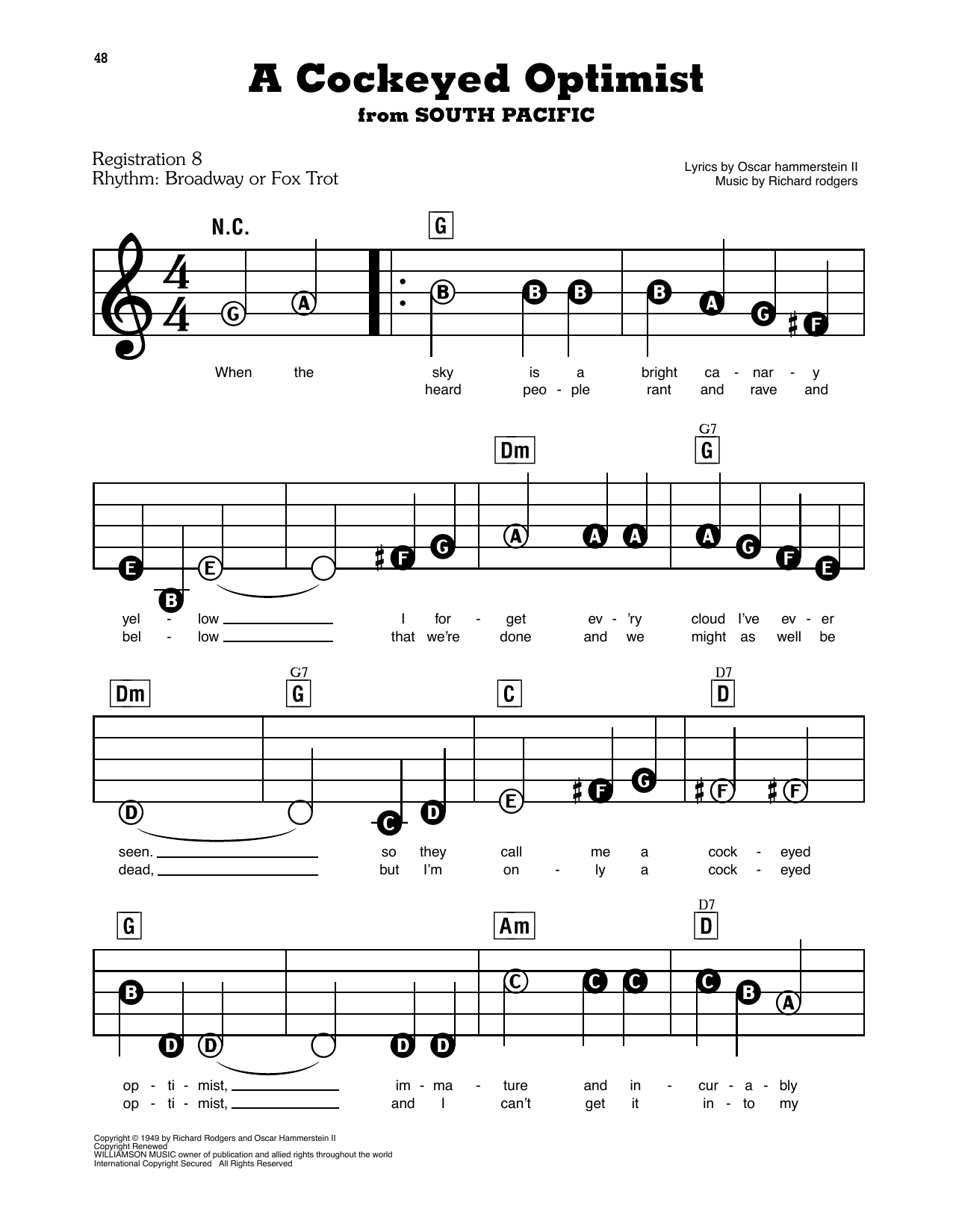
A Cockeyed Optimist (from South Pacific) Sheet Music Preview

A Cockeyed Optimist (from South Pacific): E-Z Play Today

As performed by Marty Martin / As performed by Mitzi Gaynor

Item: 35-DS01827527

Digital Download
$4.99
Description

A Cockeyed Optimist (from South Pacific): E-Z Play Today isn't in MakeMusic Cloud just yet...but it could be. Let us know you'd like to see it, and you'll help shape what comes next. In the meantime, start a free trial and dive into thousands of interactive titles your students can play along with today.

Sample Audio
No sample audio found.
Sample Video
Additional Details
Publisher: Hal Leonard
Page Count: 3
SKU: 35-DS01827527

More about this title

Why we love this

This arrangement captures the sunny optimism of Rodgers and Hammerstein's classic without demanding virtuosic chops. The three-page length makes it accessible for intermediate pianists while keeping the melodic charm and harmonic sophistication intact.

What to expect

Bright, conversational, and earnest. The piece radiates warmth and a kind of wistful hopefulness, inviting listeners into the mind of someone determined to see the good despite circumstances. It's the musical equivalent of a knowing smile.

Who it's for

This suits pianists in the intermediate range who want to accompany singers or perform solos at recitals, student assemblies, or informal concerts. It works equally well for classroom use in a musical theatre unit or as a confidence-building piece for students tackling Broadway repertoire.

How to get the most out of it

  • Lean into the lilting rhythm of the vocal melody. Piano accompaniment should support rather than overshadow the tune, giving singers room to shape their phrasing.
  • Keep the tempo buoyant and light. The character of "Cockeyed Optimist" lives in a gentle, forward motion, not sluggish or rushed.
  • Balance the left hand carefully. Support the harmony without muddying the texture, especially in the quieter sections.

How to use it

Pair this with other Golden Age Broadway standards for a themed concert, or use it as an uplifting encore that leaves audiences smiling. For younger ensembles exploring musical theatre, it demonstrates how melody and harmony work together to create character without requiring complex technical demands.

Skills your students will build

  • Accompanying singers with stylistic awareness
  • Maintaining light, conversational phrasing in melody
  • Balancing accompaniment texture for clarity
  • Interpreting Broadway-era harmony and chord progressions

You May Also Like