
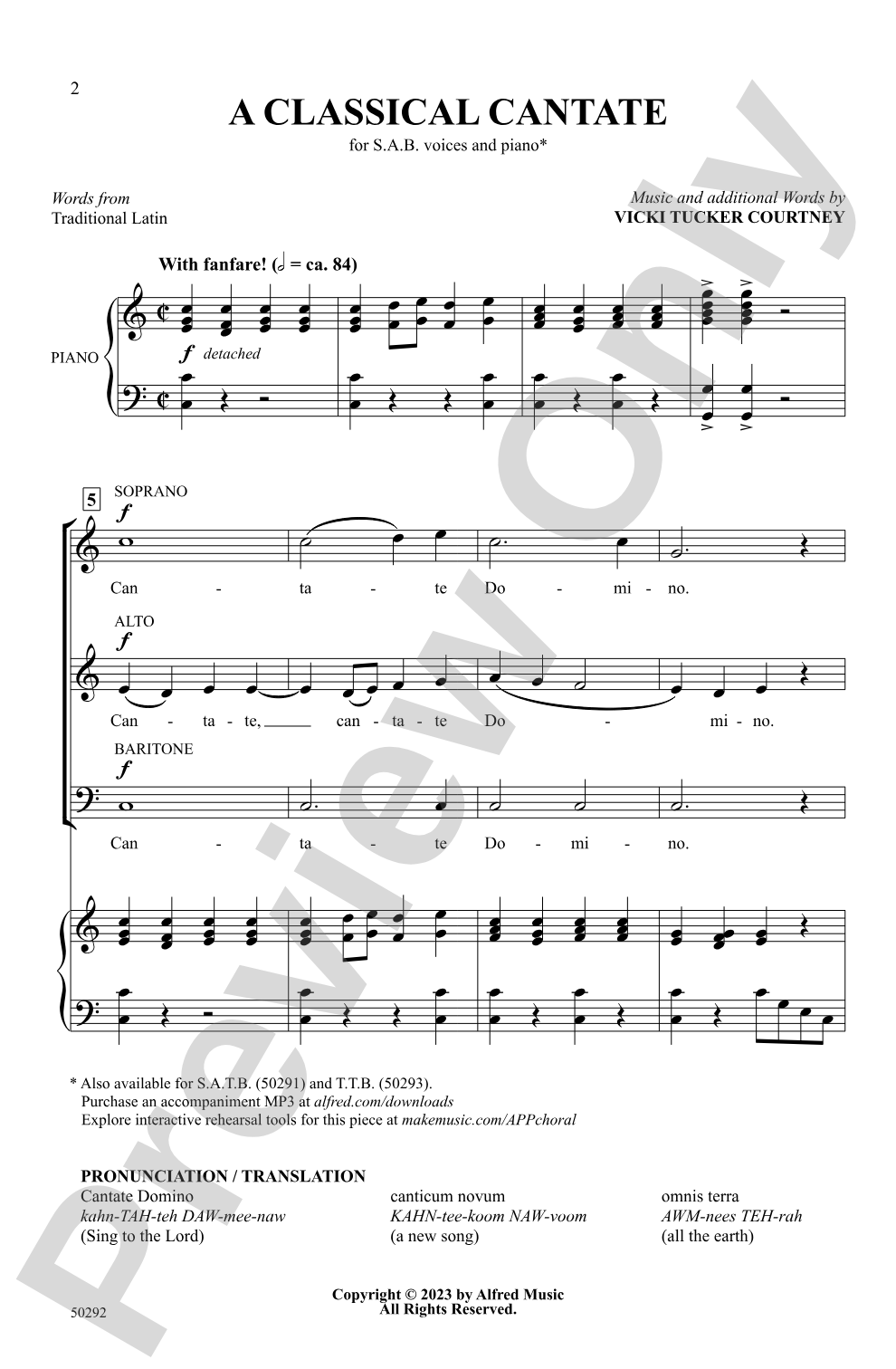

A Classical Cantate
Words from Traditional Latin, music and additional words by Vicki Tucker Courtney
Item: 00-PO-0007140
$2.05
Minimum order quantity: 20 copies
Pickup currently not available
Description
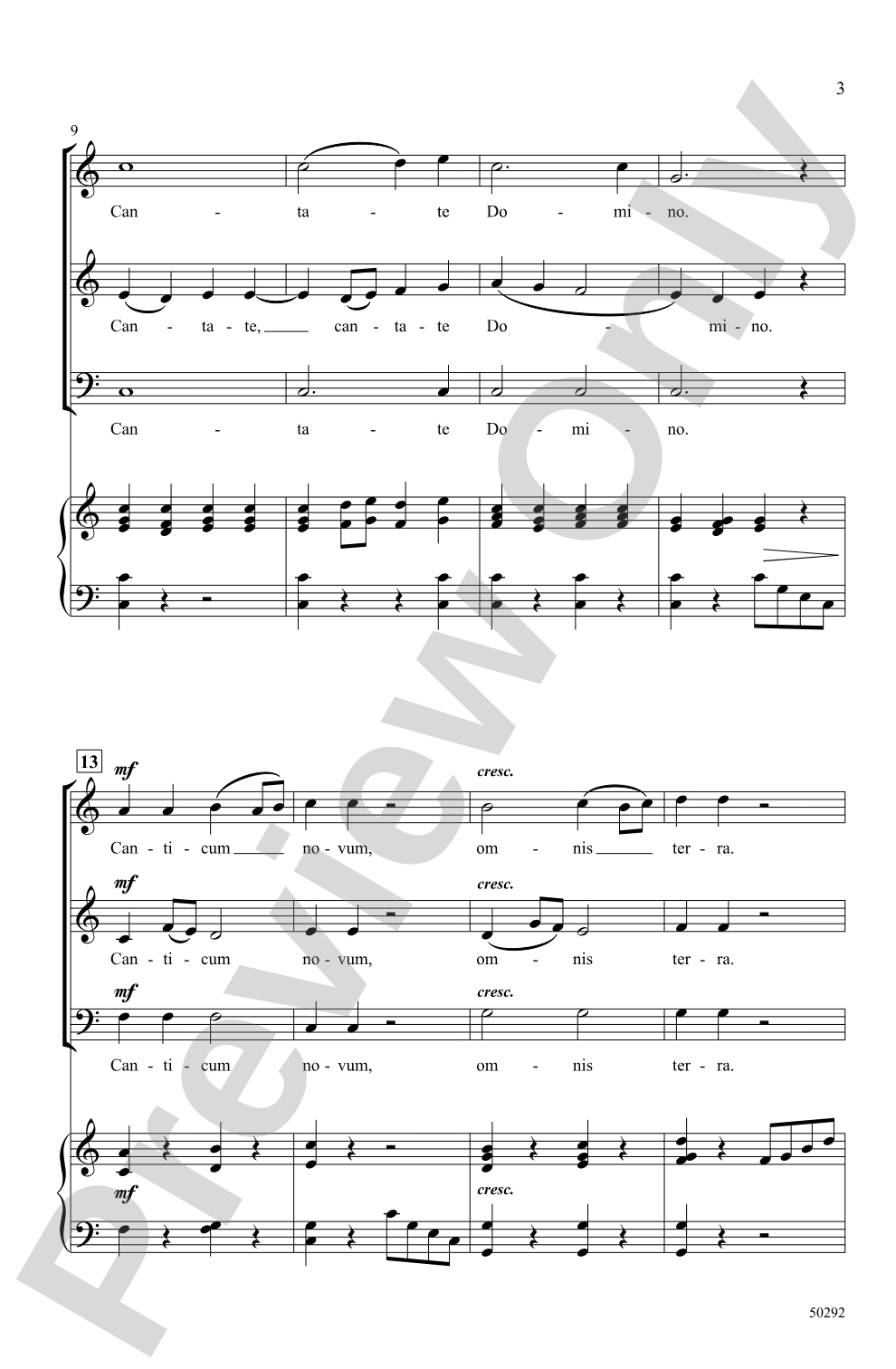
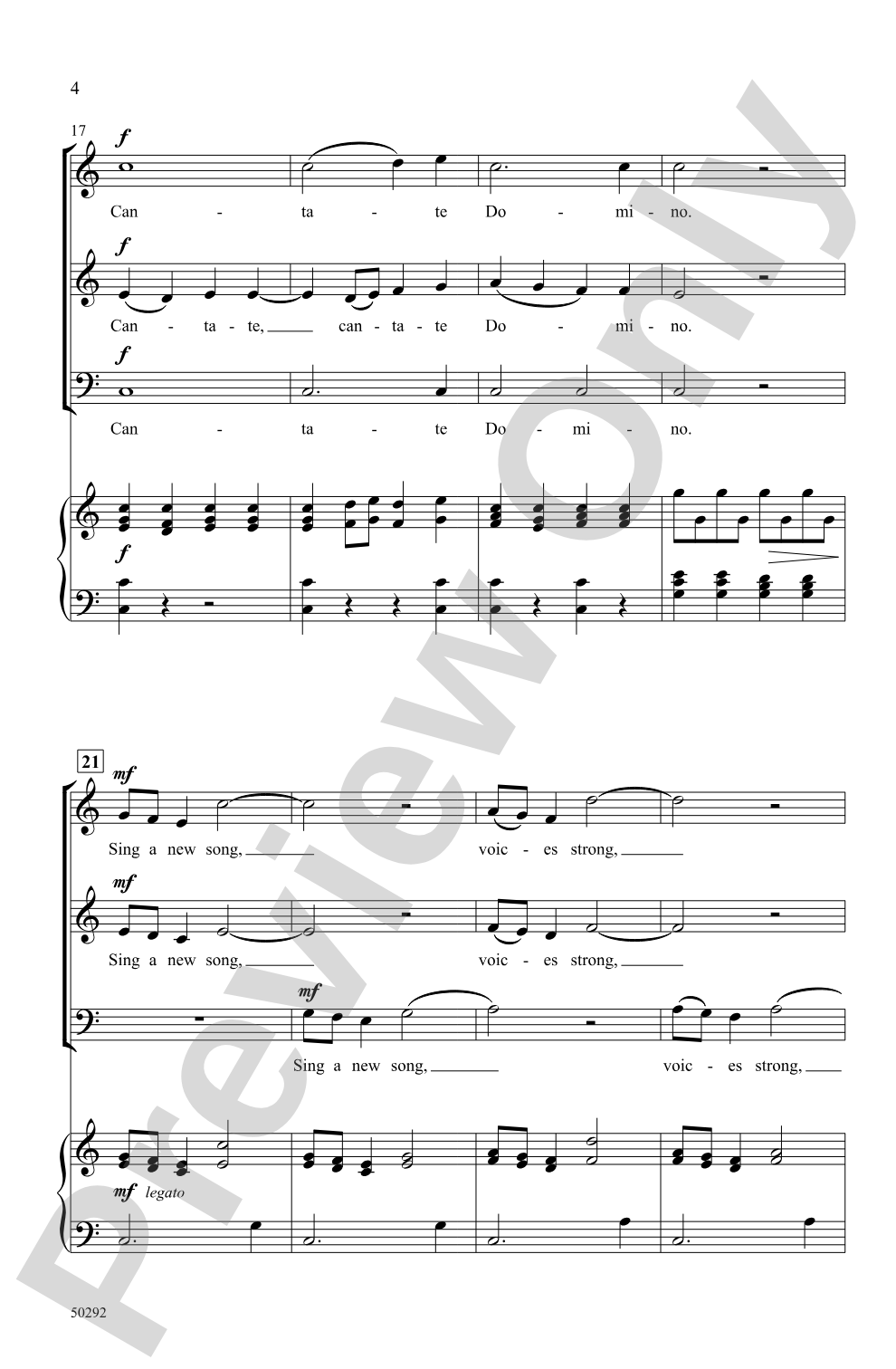
This contemporary original recreates the qualities of a Classical choral work. The resonant A section is accompanied by a staccato piano, while the contrasting legato B section offers buoyant call-and-response in the voices. A combination of English and Latin lyrics delivers a joyful invitation to "sing a new song." A fine choice for festival programs.
The PerformancePlus+ series is an innovative addition to the ever-expanding MakeMusic Cloud interactive library. These engaging selections are presented with educational resources designed to enrich the rehearsal process and create outstanding performances. Including:


The PerformancePlus+ series is an innovative addition to the ever-expanding MakeMusic Cloud interactive library. These engaging selections are presented with educational resources designed to enrich the rehearsal process and create outstanding performances. Including:
- Assignment, recording, and assessment tools within MakeMusic Cloud
- Part-predominant and accompaniment tracks
- Printable sheet music (with a standard MakeMusic Cloud subscription)
- Correlated rehearsal guides and performance notes
- Rights to perform in a live or virtual setting
A Classical Cantate isn't in MakeMusic Cloud just yet...but it could be. Let us know you'd like to see it, and you'll help shape what comes next. In the meantime, start a free trial and dive into thousands of interactive titles your students can play along with today.
Request This Title
Tell us you want it.
Start Your Free Trial
Explore everything that's ready to play right now.
Sample Audio
1
Audio File
--:--
2
Audio File
--:--
Audio File
0:00
0:00
Sample Video
Additional Details
Series:
PerformancePlus+
Page Count:
12
SKU:
00-PO-0007140
More about this title
About the Composer: Vicki Tucker Courtney

Vicki Tucker Courtney started piano lessons at age four and developed deep roots in choral music while studying at North Texas State University, where she accompanied ensembles and absorbed the craft of writing for voices. She has built a prolific career as a composer and arranger across multiple genres and mediums: choral music, piano, handbells, and solo vocal works. Her mentorship with Dove Award winner Mark Hayes in 2002 and 2004 shaped her compositional voice.
Courtney's output speaks to her sustained commitment to the field. She has received numerous ASCAP Plus Awards and crossed the milestone of 350 published titles by 2017. Beyond composing, she maintains an active presence as a pianist, church musician, and composition teacher working with students of all ages. She lives in Columbia, Tennessee.
Why we love this
Courtney writes for three-part mixed voices with genuine harmonic sophistication and a real sense of text-setting intention. The structural contrast between the staccato-driven A section and the lyrical, responsive B section gives singers distinct interpretive challenges and keeps audiences engaged. For festival season, this piece delivers the uplifting character judges and audiences expect from a contemporary sacred work without requiring substantial soprano or tenor depth.
What to expect
This piece radiates invitation and joy. The staccato accompaniment brings a bright, almost dance-like energy to the opening proclamation, while the contrasting B section softens into a warmer dialogue between voice parts. The blend of English and Latin creates a bridge between the familiar and the ceremonial, making the message feel both contemporary and timeless.
Who it's for
SAB choirs with solid rhythmic discipline and a comfort level with text in two languages. The range and independence writing suit intermediate-level high school and adult community choirs as well as younger singers with some ensemble maturity.
How to get the most out of it
- Establish a clear articulation vocabulary early in rehearsals. The staccato piano accompaniment in the A section sets a rhythmic profile that your voices must answer; drill the cut-off precision alongside the accompaniment recording so the ensemble locks into that bounce.
- Shape the call-and-response passages in the B section by physically separating the voice groups in rehearsal. Even if you'll stand together in performance, rehearsing the alto responses as true echoes rather than simultaneous singing builds the clarity and buoyancy the section requires.
- Balance the English and Latin text carefully. Mark stress and natural word rhythm in both languages during warm-up so singers don't let the Latin lyrics slip into careless diction; the joyful invitation lands harder when every syllable lands cleanly.
How to use it
Anchor a festival program with this piece as a closing selection or strategic midpoint offering. Its contemporary character and confident text work well alongside traditional sacred repertoire, and the manageable range and accessible three-part voicing let you program it without sacrificing depth elsewhere in the concert.
Skills your students will build
- Articulation control in staccato passages
- Phrasing and breath management across legato lines
- Call-and-response listening and ensemble cohesion
- Diction clarity in English and Latin languages
- Dynamic contrast between two distinct musical sections