

A Classical Cantate
Words from Traditional Latin, music and additional words by Vicki Tucker Courtney
Item: 00-PO-0007139

$2.05
Minimum order quantity: 20 copies
Pickup currently not available
Description
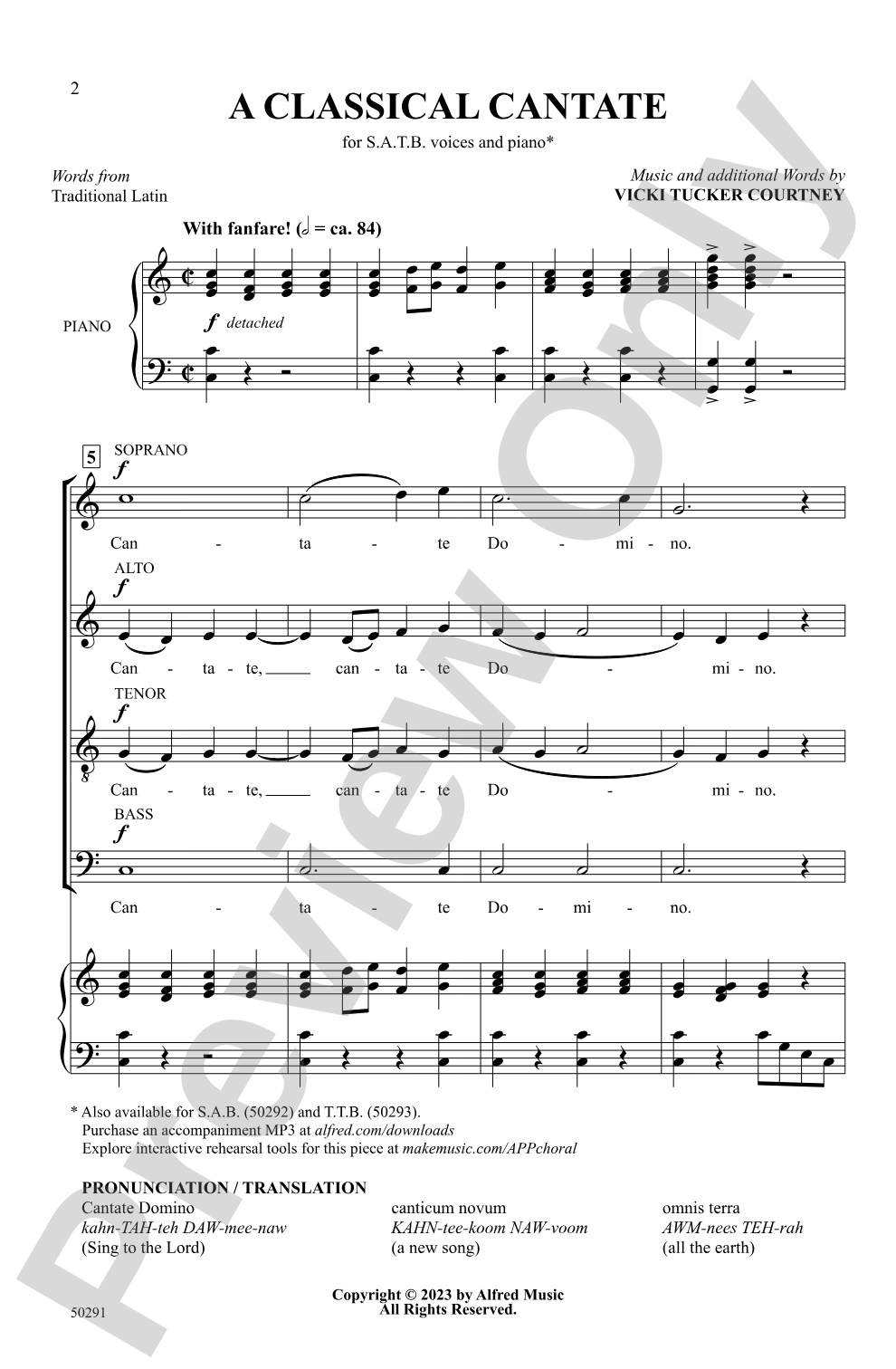
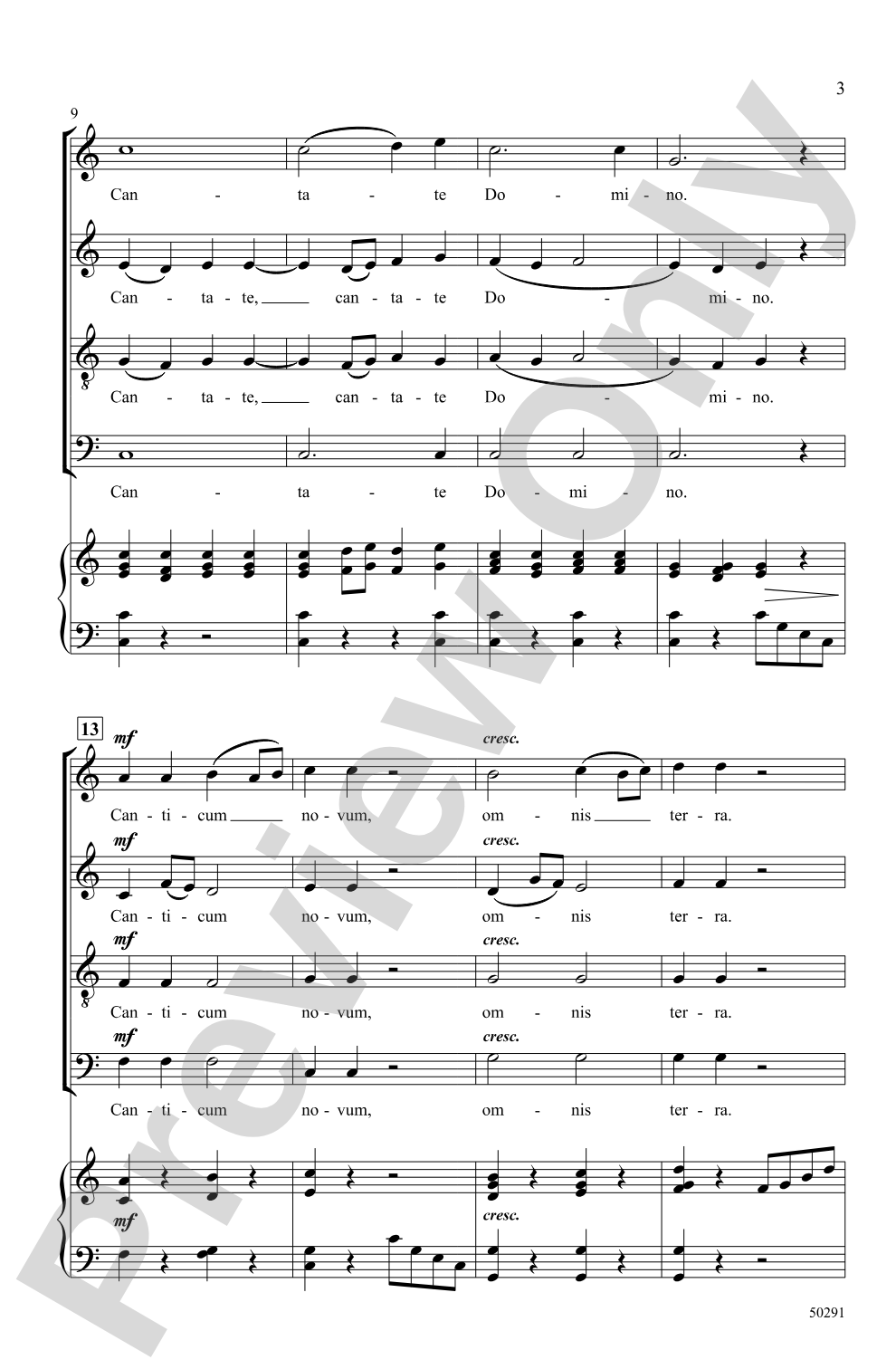
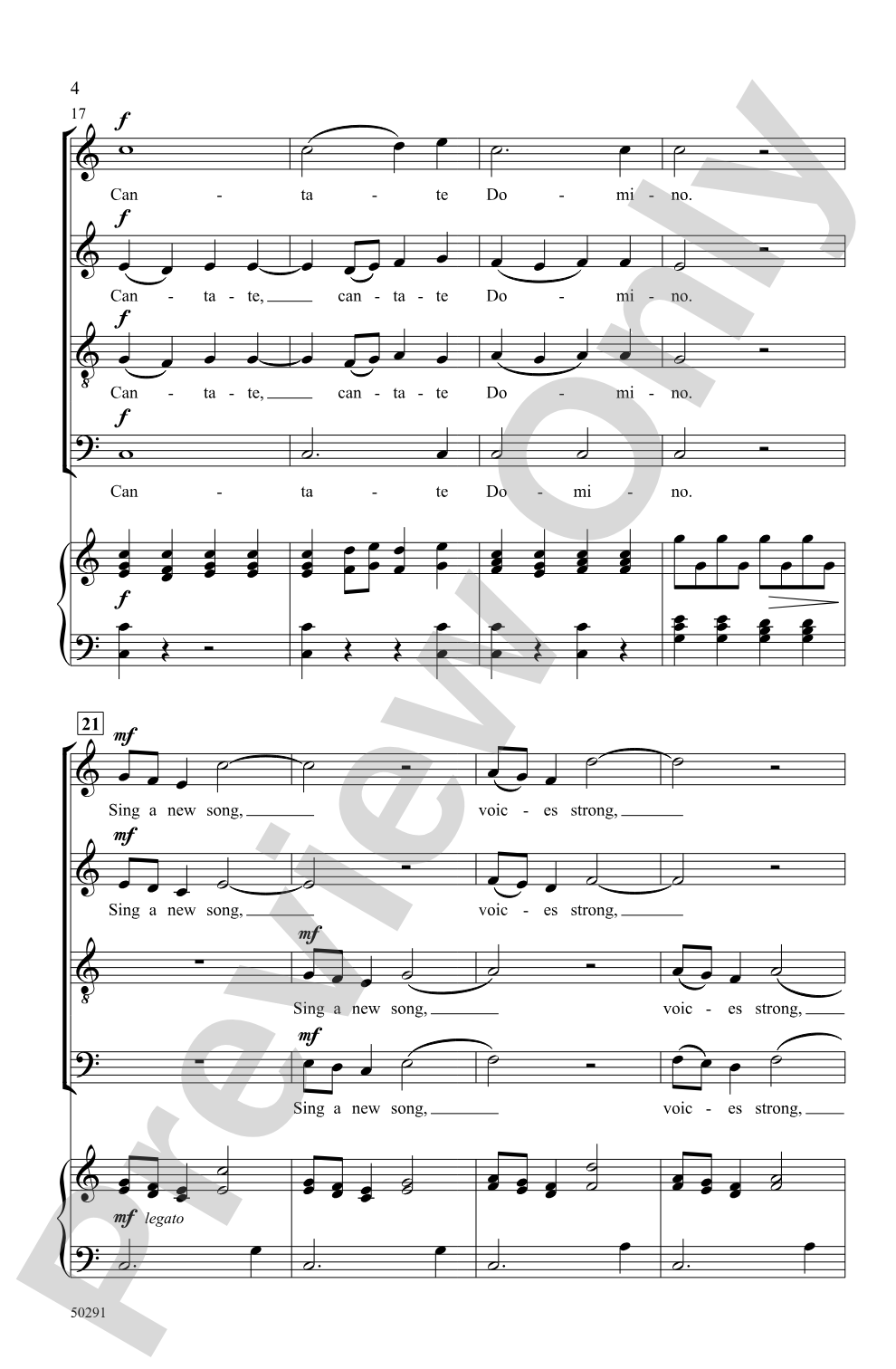
This contemporary original recreates the qualities of a Classical choral work. The resonant A section is accompanied by a staccato piano, while the contrasting legato B section offers buoyant call-and-response in the voices. A combination of English and Latin lyrics delivers a joyful invitation to "sing a new song." A fine choice for festival programs.
The PerformancePlus+ series is an innovative addition to the ever-expanding MakeMusic Cloud interactive library. These engaging selections are presented with educational resources designed to enrich the rehearsal process and create outstanding performances. Including:


The PerformancePlus+ series is an innovative addition to the ever-expanding MakeMusic Cloud interactive library. These engaging selections are presented with educational resources designed to enrich the rehearsal process and create outstanding performances. Including:
- Assignment, recording, and assessment tools within MakeMusic Cloud
- Part-predominant and accompaniment tracks
- Printable sheet music (with a standard MakeMusic Cloud subscription)
- Correlated rehearsal guides and performance notes
- Rights to perform in a live or virtual setting
Don't just read it, hear it, play along with it, and watch your students grow with it. In MakeMusic Cloud, A Classical Cantate comes alive with professional accompaniment, adjustable tempo, and built-in practice tools that turn solo practice into real progress.
Open in the Player
Jump straight in and assign it today.
Start Your Free Trial
Open this title and explore the full library in minutes.
Sample Audio
1
Audio File
--:--
2
Audio File
--:--
Audio File
0:00
0:00
Sample Video
Additional Details
Series:
PerformancePlus+
Page Count:
12
SKU:
00-PO-0007139
More about this title
About the Composer: Vicki Tucker Courtney

Vicki Tucker Courtney began piano study at age four and developed deep expertise in choral accompaniment during her time at North Texas State University. That foundation launched a prolific composing and arranging career spanning choirs, piano, handbells, and solo voice, work that has earned her multiple ASCAP Plus Awards.
She has published over 350 titles since reaching her first milestone of 100 in 2009, and studied composition under Dove Award winner Mark Hayes in 2002 and 2004. A full-time composer based in Columbia, Tennessee, Courtney also maintains an active teaching studio in piano and composition for students across all levels.
Why we love this
Courtney writes with genuine understanding of what makes a choral piece both accessible and musically satisfying. The structural clarity of the A and B sections gives singers something concrete to build on, while the blend of English and Latin text and the interplay between staccato and legato textures create enough musical interest to hold an audience without demanding excessive rehearsal time.
What to expect
The piece radiates joyful invitation. The resonant opening draws listeners in with harmonic warmth, then the legato B section feels like the choir is almost conversing with itself, trading musical phrases back and forth with energy and light. The text's message lands with genuine enthusiasm rather than forced brightness.
Who it's for
This work suits high school and college choirs looking for a concert or festival piece that sounds more substantial than its rehearsal demands suggest. Directors programming secular and sacred mixed repertoire will find it bridges both contexts effectively.
How to get the most out of it
- Differentiate the articulation between sections sharply: the A section's staccato piano should feel crisp and bouncy, creating rhythmic clarity for the harmonic progression underneath the resonant vocal line.
- Shape the call-and-response in the B section by having each group listen closely to the other before entering; this creates dialogue rather than simultaneous singing.
- Balance the text languages intentionally. The Latin text carries a formal quality that benefits from slightly fuller tone, while the English "sing a new song" invitation works best with brightness and forward energy.
How to use it
Place this in the second half of a concert where audiences have settled into listening, letting its contrast with heavier works give the program shape and lift. It works especially well in festival or competition settings where its balance of musicality and accessibility scores well while maintaining artistic integrity.
Skills your students will build
- Shifting between staccato and legato articulation within the same piece
- Maintaining resonance in sustained vowels while supporting harmonic blend
- Executing call-and-response patterns with rhythmic precision and musical communication
- Reading and performing text in multiple languages with appropriate stylistic coloring