A Classic Touch: (wp) B-flat Tuba T.C. Sheet Music Preview

A Classic Touch: (wp) B-flat Tuba T.C.

Arr. Victor López

Grade: 0.5 (Very Easy)

Item: 00-PC-0001453_wpTBBTC

Digital Download
$3.00
Description
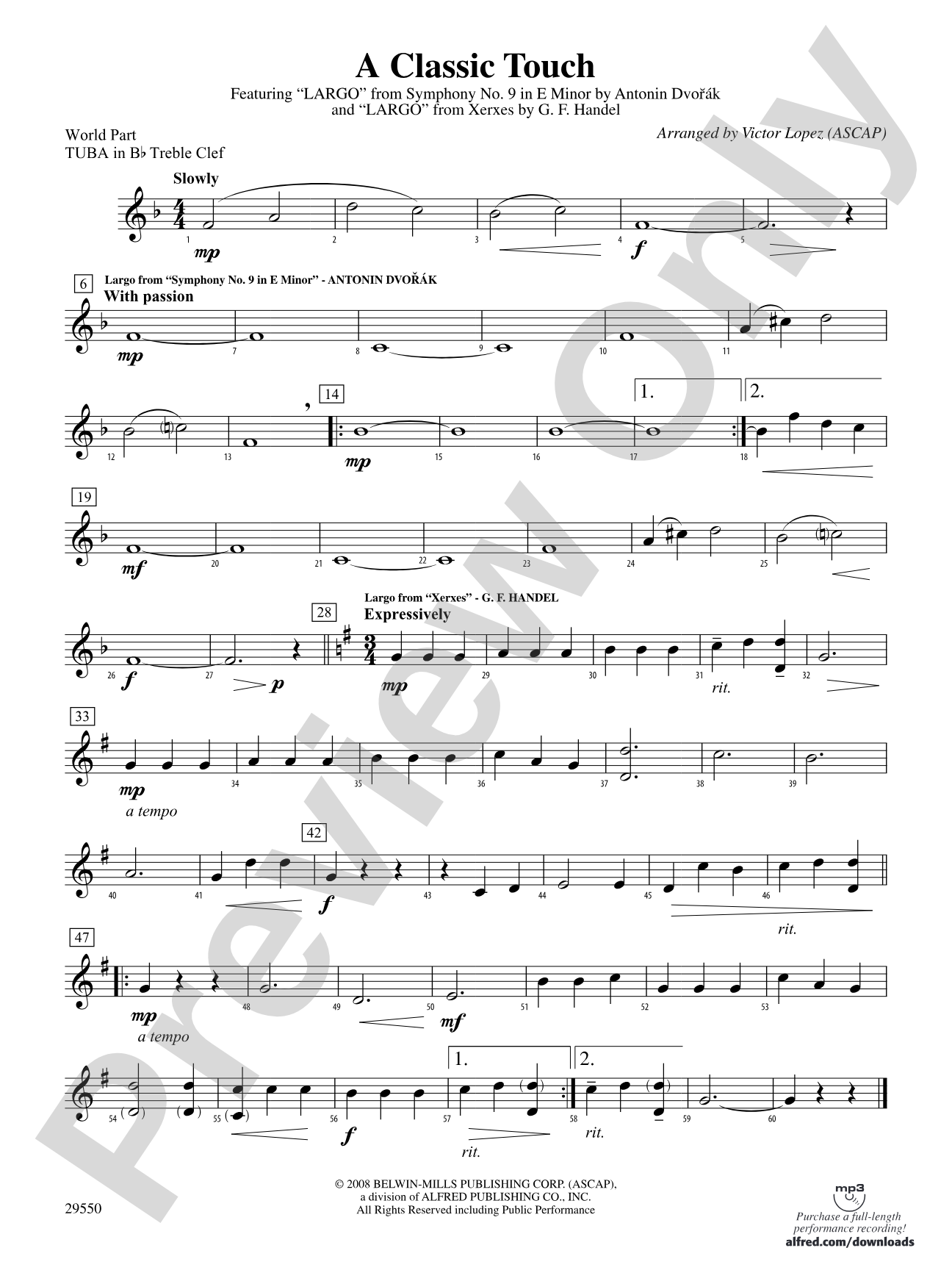
Two famous largo movements join for A Classic Touch. The largo from Dvorák's Symphony No. 9 in E Minor and the largo from Handel's Xerxes both work very nicely for your very beginning ensemble. They can be performed together or used separately as outstanding warm-up chorales. A musical classical choice! (3:45) This title is available in MakeMusic Cloud.

Don't just read it, hear it, play along with it, and watch your students grow with it. In MakeMusic Cloud, A Classic Touch: (wp) B-flat Tuba T.C. comes alive with professional accompaniment, adjustable tempo, and built-in practice tools that turn solo practice into real progress.

Sample Audio
0:00
0:00
Sample Video
Additional Details
Series: Belwin Very Beginning Band
Publisher: Alfred Music
Page Count: 136
SKU: 00-PC-0001453_wpTBBTC

More about this title

About the Arranger: Victor Lopez

Victor Lopez is an arranger and composer whose work has become foundational in music education, particularly in building accessible concert band literature for developing ensembles. His arrangements prioritize clarity and musicality while respecting the technical limitations of young musicians, making him a trusted voice in very beginning band curricula across North America.

Why we love this

This pairing solves a real programming challenge: you get two masterworks that are genuinely playable for a brand-new ensemble without sacrificing musical substance. The fact that these can function as independent warm-up chorales or as a paired concert statement gives you flexibility that most Grade 0.5 repertoire simply doesn't offer.

What to expect

Both movements carry the contemplative dignity of the Baroque and Romantic eras. The Dvorák's long, singing lines open with a gentle melancholy, while the Handel shifts into a more measured, stately character. Together they create a moment of genuine musical reflection without requiring technical virtuosity.

Who it's for

Directors building very beginning concert band programs who need repertoire with real musical weight and historical significance. These arrangements are especially valuable for ensembles that include substantial numbers of first-year players or mixed instrumentation situations where traditional Grade 1 parts demand too much.

How to get the most out of it

  • Balance the melody between your most reliable players and let the harmonic foundation sit underneath; the arrangement is lean enough that every voice matters.
  • Treat these as genuine vocal music transposed to instruments. Shape phrases with vocal inflection and avoid letting young ensembles play mechanically through sustained passages.
  • If performing both pieces back-to-back, allow a breath between the Dvorák and Handel to let the emotional character of each movement land separately.

How to use it

Program these as a concert opener to establish an elegant tone, or use them separately throughout the season as warm-up chorales during sectional rehearsals. They work particularly well early in the school year when your ensemble is still finding its collective sound.

Skills your students will build

  • Sustaining long tones with consistent tone quality
  • Phrasing and musical shaping in slow music
  • Listening to and balancing harmonic parts
  • Reading conductor cues in sustained passages
  • Intonation awareness in chord changes

You May Also Like