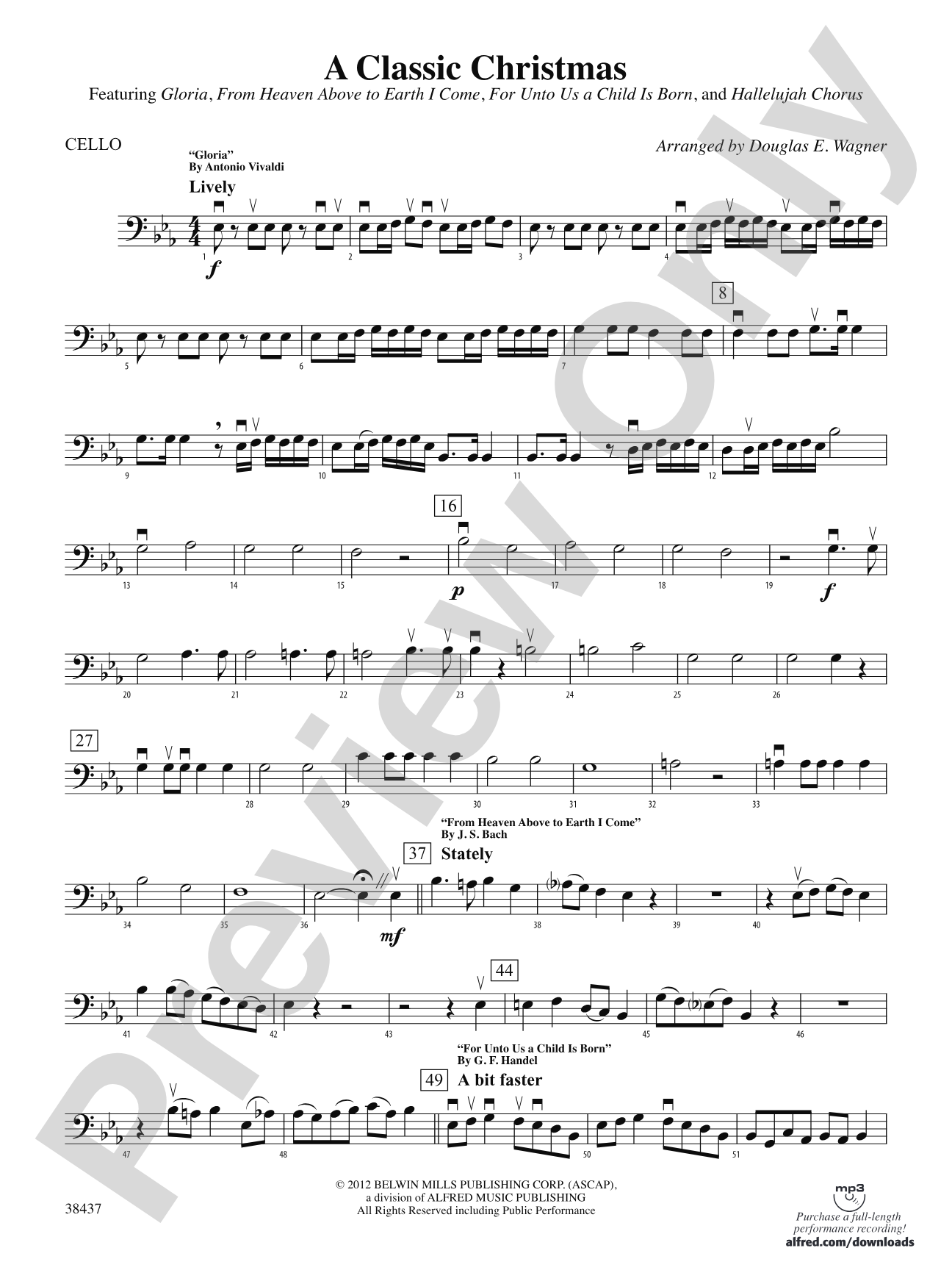
A Classic Christmas: Cello Sheet Music Preview

A Classic Christmas: Cello

Featuring: Gloria / From Heaven Above to Earth I Come / For Unto Us a Child Is Born / Hallelujah Chorus

Arr. Douglas E. Wagner

Grade: 3

Item: 00-PC-0015497_VC1

Digital Download
$5.99
Description
This versatile arrangement can be combined with choir and/or concert band to make a brilliant program finale. Technical accommodations make this piece very playable. Excerpts from three Baroque Christmas masterworks come together in this festive musical celebration of the season. Titles included are "Gloria" by Vivaldi, "From Heaven Above to Earth I Come" by J. S. Bach, and two movements from Handel's "Messiah."

Don't just read it, hear it, play along with it, and watch your students grow with it. In MakeMusic Cloud, A Classic Christmas: Cello comes alive with professional accompaniment, adjustable tempo, and built-in practice tools that turn solo practice into real progress.

Sample Audio
0:00
0:00
Sample Video
Additional Details
Series: Belwin Intermediate String Orchestra
Publisher: Alfred Music
Page Count: 148
SKU: 00-PC-0015497_VC1

More about this title

About the Arranger: Douglas E. Wagner

Douglas E. Wagner

Douglas E. Wagner studied music at Butler University, earning both undergraduate and graduate degrees before spending three decades as a high school music director and administrator. Since stepping away from classroom teaching, he has become one of the most prolific composers and arrangers in American music education, with over 3,500 published works across choral, band, orchestral, and keyboard genres.

Why we love this

Wagner's gift for accessibility never comes at the expense of musicality. This arrangement culls some of the most recognizable moments from the Baroque Christmas canon and stitches them together with such care that the transitions feel inevitable. The flexibility to perform with strings alone or to layer in your choir and band makes this a genuine Swiss Army knife for winter programming.

What to expect

Luminous and celebratory, with the stateliness of Baroque harmony and the warmth of familiar melodies. The orchestration invites lush string sonorities while keeping the writing transparent enough for younger players to hear themselves and each other.

Who it's for

String orchestra directors looking for substantial Christmas repertoire at Grade 3 that can function as a standalone piece or scale up with additional ensembles. This works equally well for concert finale programming, holiday community performances, or as a centerpiece for a winter concert that includes other genres.

How to get the most out of it

  • Establish the baroque character in your first rehearsal by listening to recordings of the original works. Even Grade 3 players will respond to the historical context and can adjust articulation and phrasing accordingly.
  • Balance the three excerpts carefully during sectional rehearsals. Each comes from a different composer and requires slightly different textural treatment; mark these transitions clearly in your score.
  • If combining with choir or band, build in extra rehearsal time for ensemble coordination. Run through the full program several times before the final dress rehearsal to cement the collaborative sound.
  • Pay attention to the technical accommodations Wagner has provided. They're there to free your players to focus on music-making rather than mechanics, so trust the arrangement and resist the urge to add gratuitous difficulty.

How to use it

Program this as a finale for a mixed-ensemble winter concert. Its versatility means you can open the door to collaboration with your choral and band colleagues, turning a string orchestra feature into a full-orchestra celebration. Alternatively, use it as the centerpiece of a string-only holiday concert, where its substantive length and familiar material will satisfy audiences while challenging your players musically.

Skills your students will build

  • Baroque articulation and phrasing conventions
  • Ensemble balance across changing textures
  • Attention to historical context and performance practice
  • Sustained melodic line playing with appropriate stylistic weight
  • Reading and executing technical accommodations without losing musical intent

You May Also Like